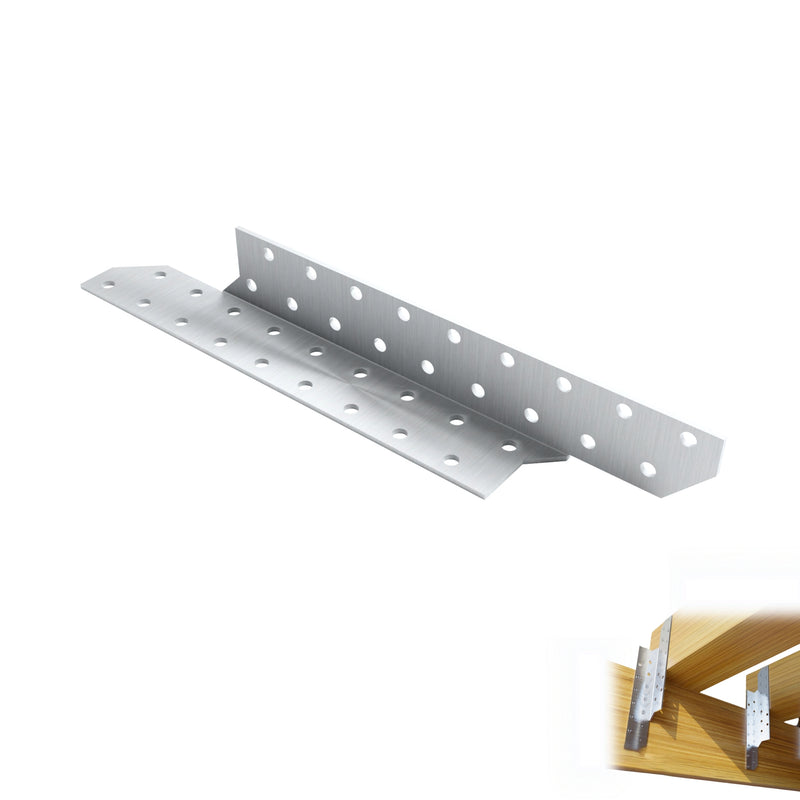
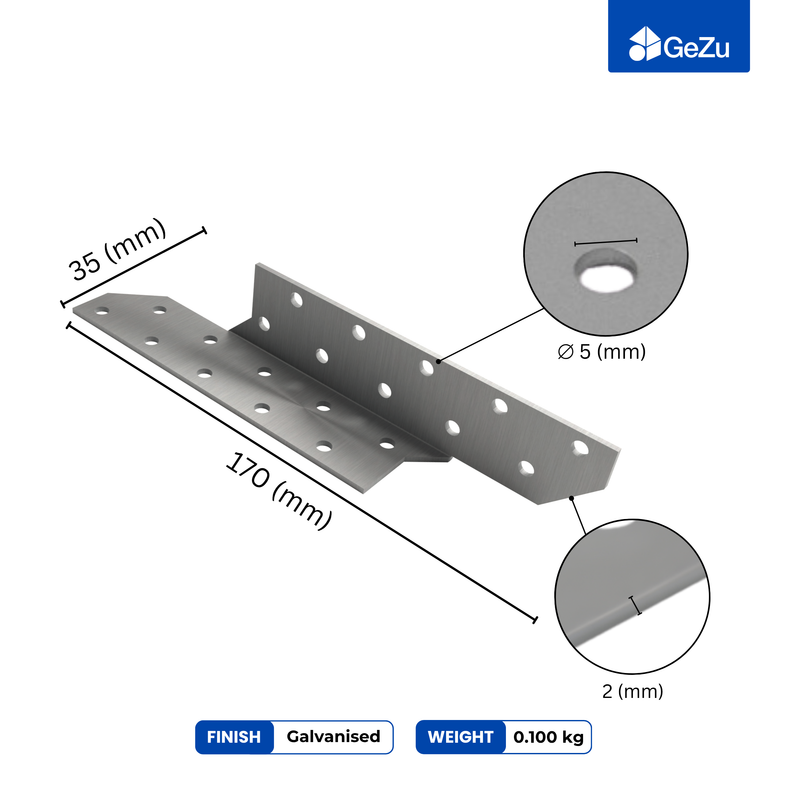
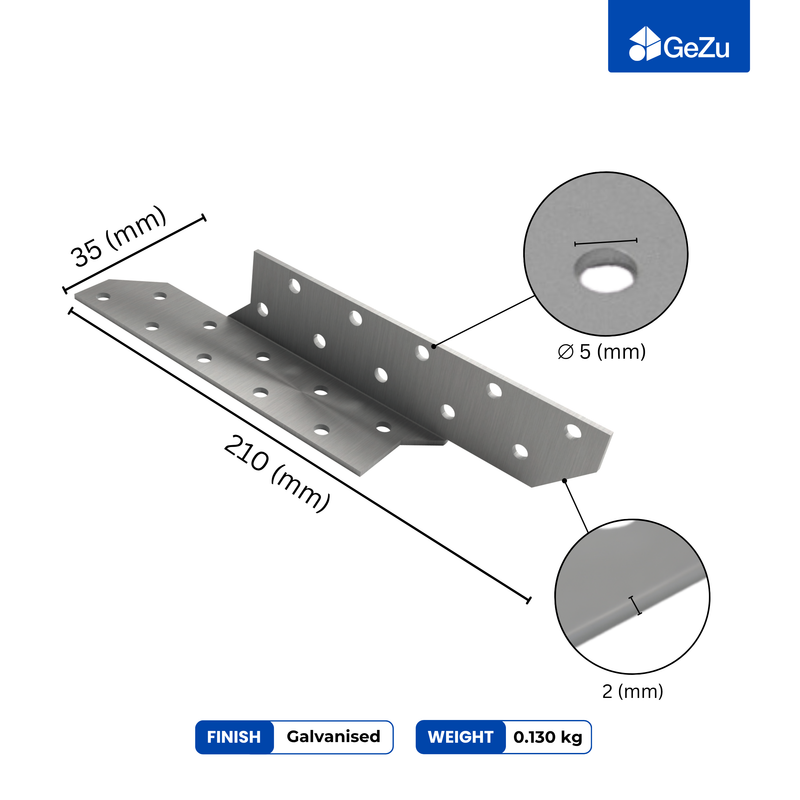
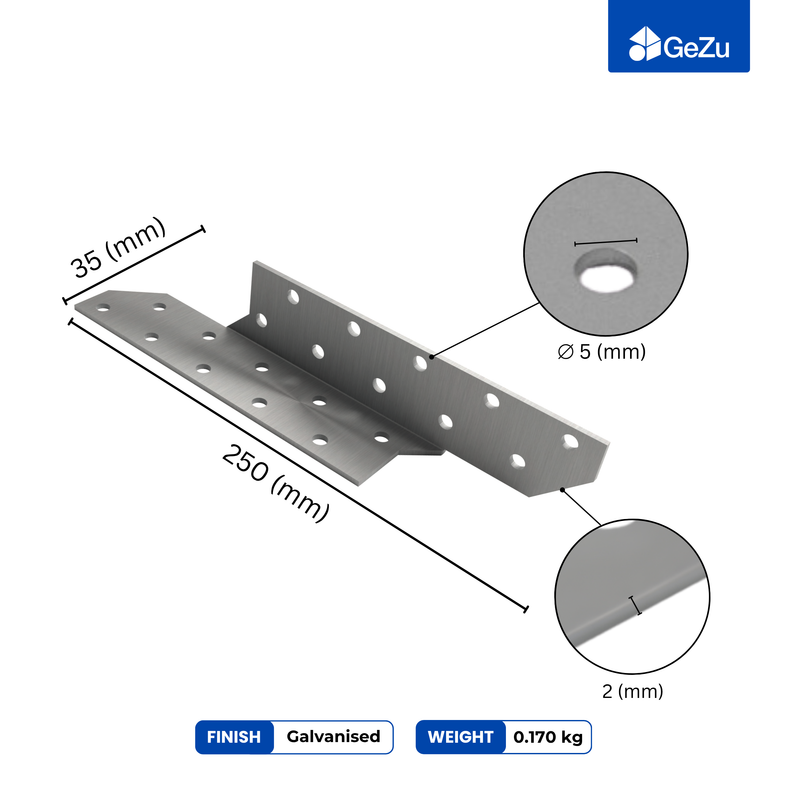
Best adjustable post supports for fence posts in 2026

The best adjustable post support for a fence in 2026 is the height-adjustable post support for its versatility on posts from 70x70 mm to 100x100 mm. For posts set in concrete, the elevated post base with nut remains the most reliable choice. For a tight budget or a temporary fence, the drive-in spike support does the job without any concrete work.
- The height-adjustable post support remains the best adjustable post support for fences in 2026 for its versatility.
- A ground screw anchor avoids pouring concrete on soft ground.
- The drive-in spike support is the most economical option for a temporary fence.
- The elevated base with nut keeps the post foot out of direct contact with concrete and moisture.
Why this choice matters
A badly chosen post support means a post that moves after two winters, a fence that racks out of square, and a costly return visit. Picking the right system comes down to three things: the nature of the ground, the post section and the fixing method you want (screw in, set in concrete, or bolt down).
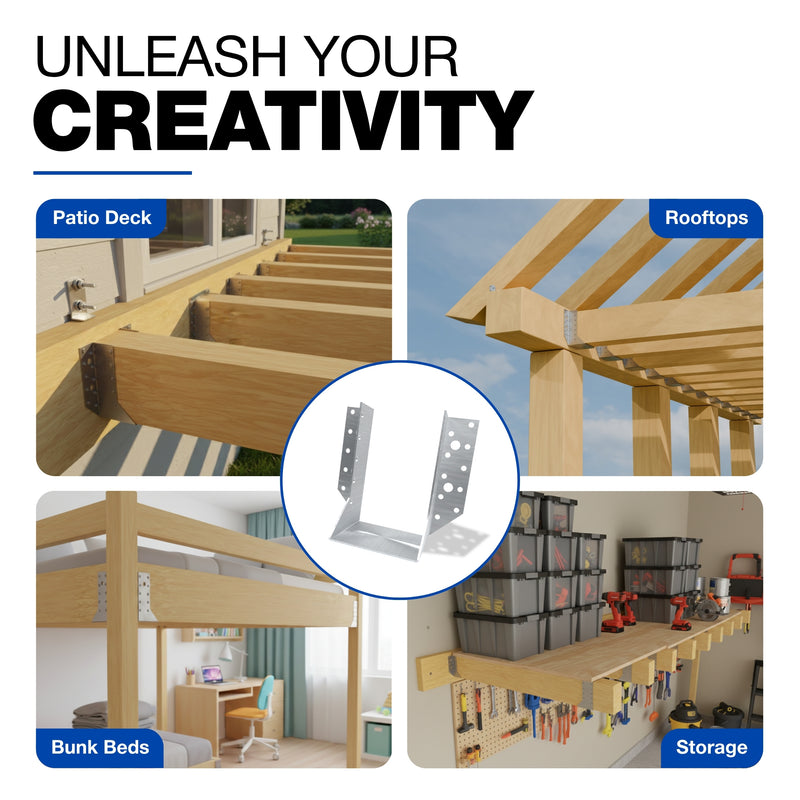
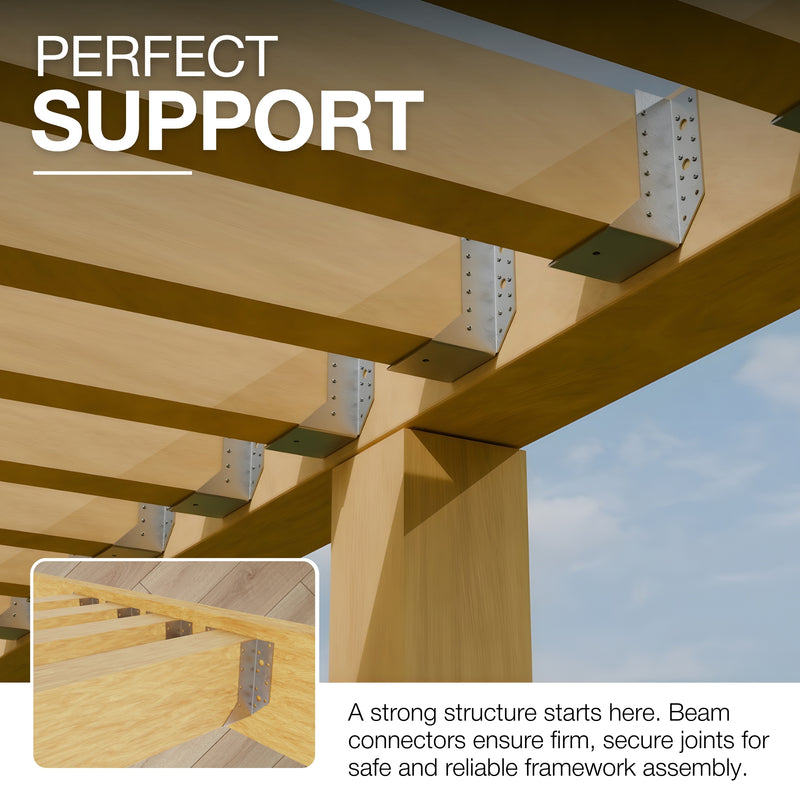
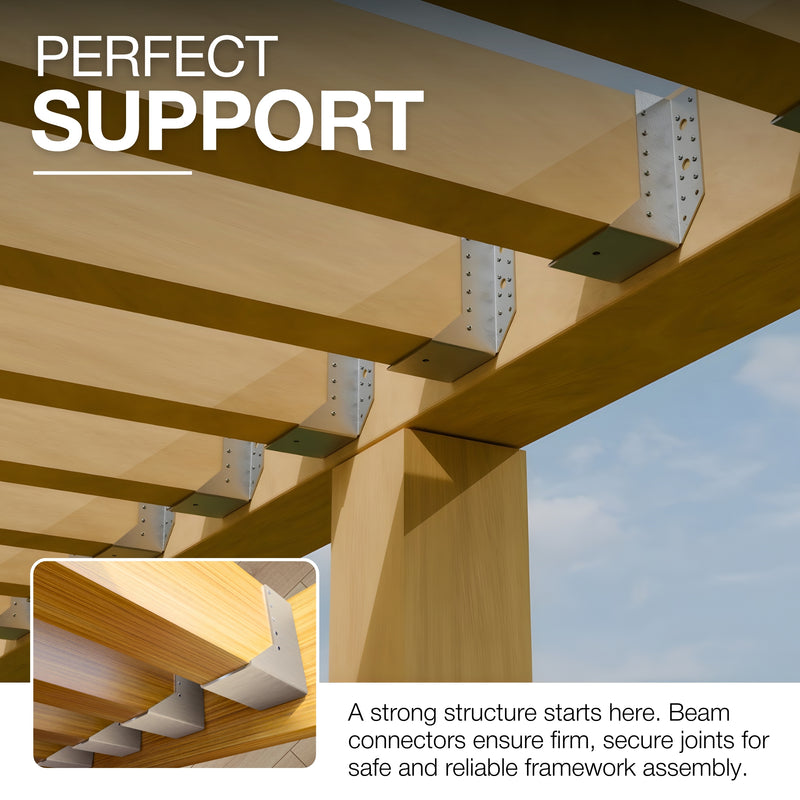
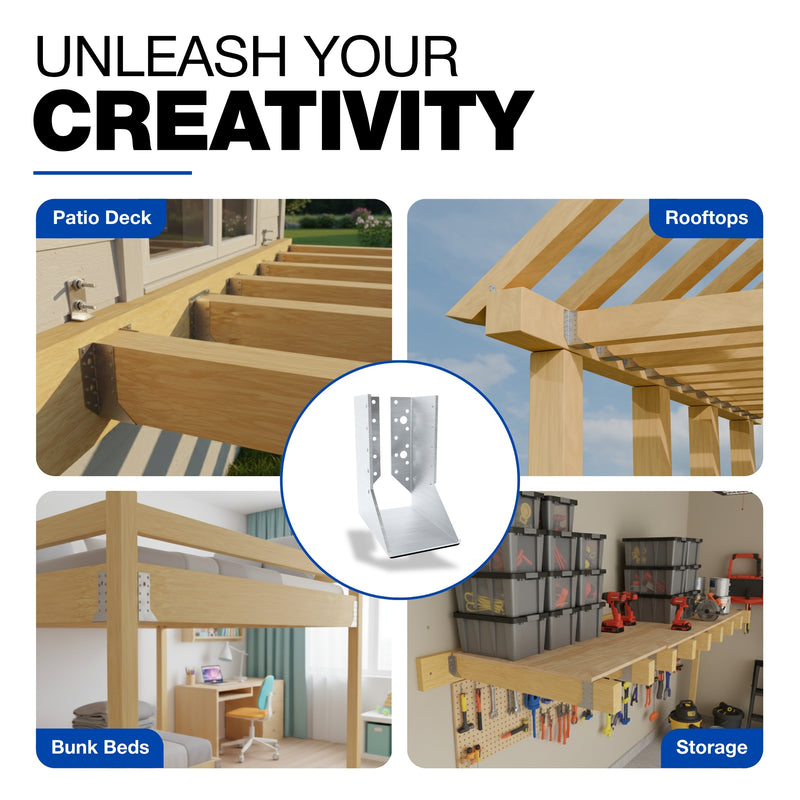
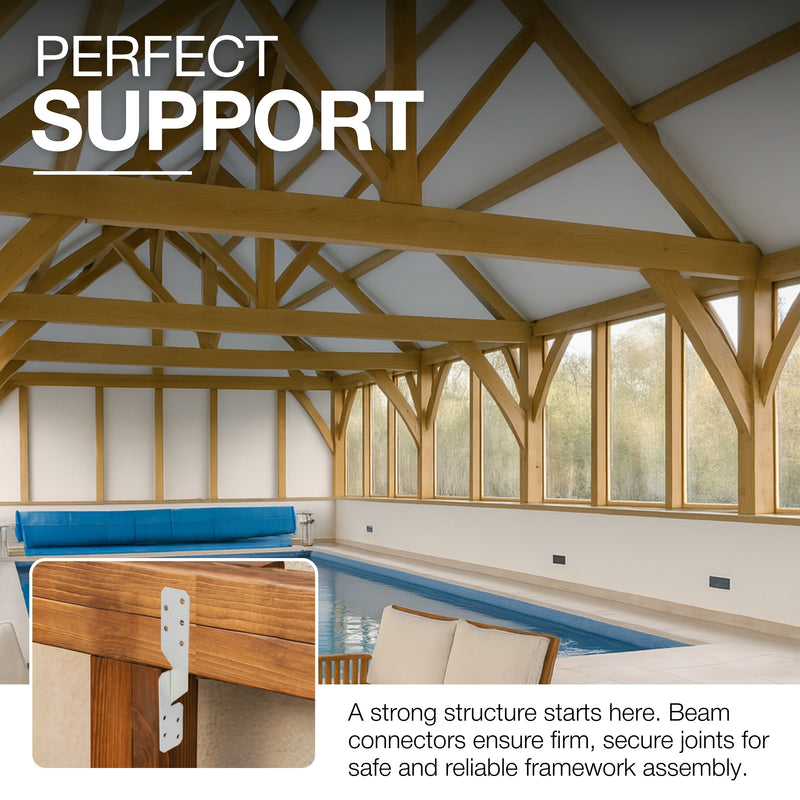
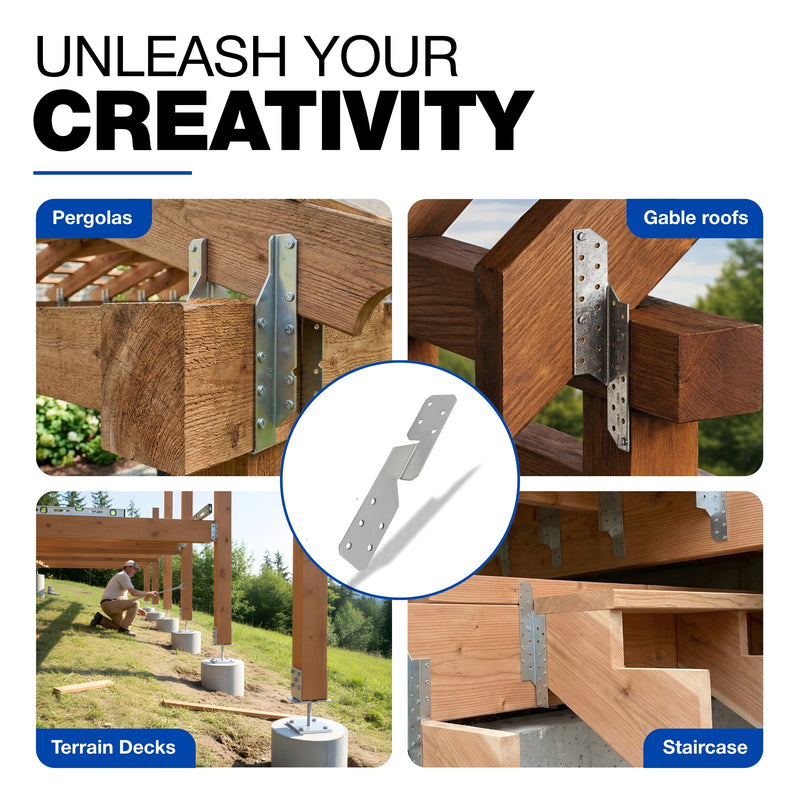
If your project also includes an open pergola-style structure once the posts are up, the guide to the best pergola brackets and connectors pairs well with this comparison.
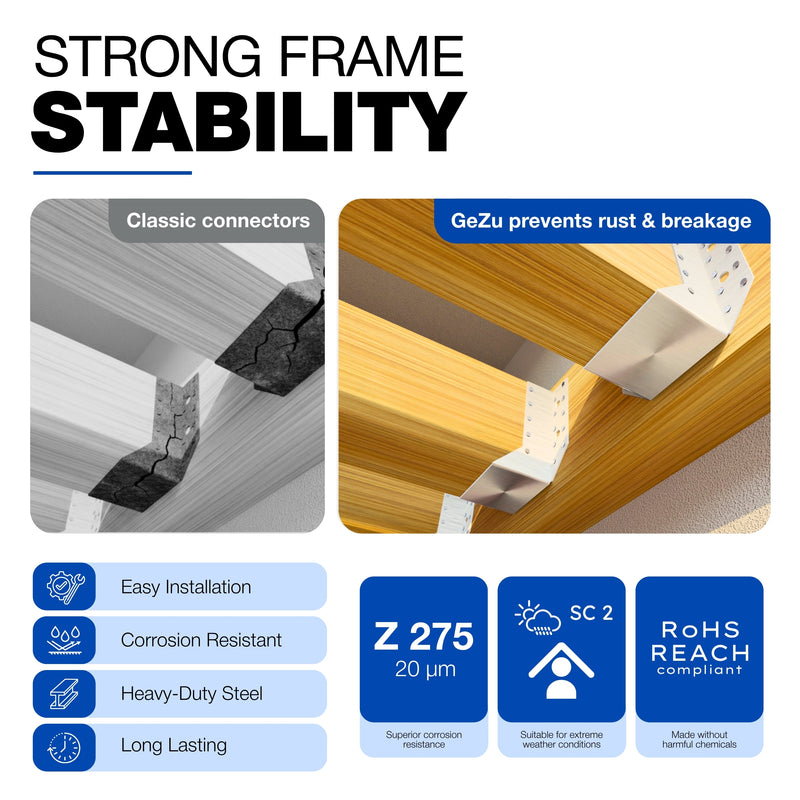
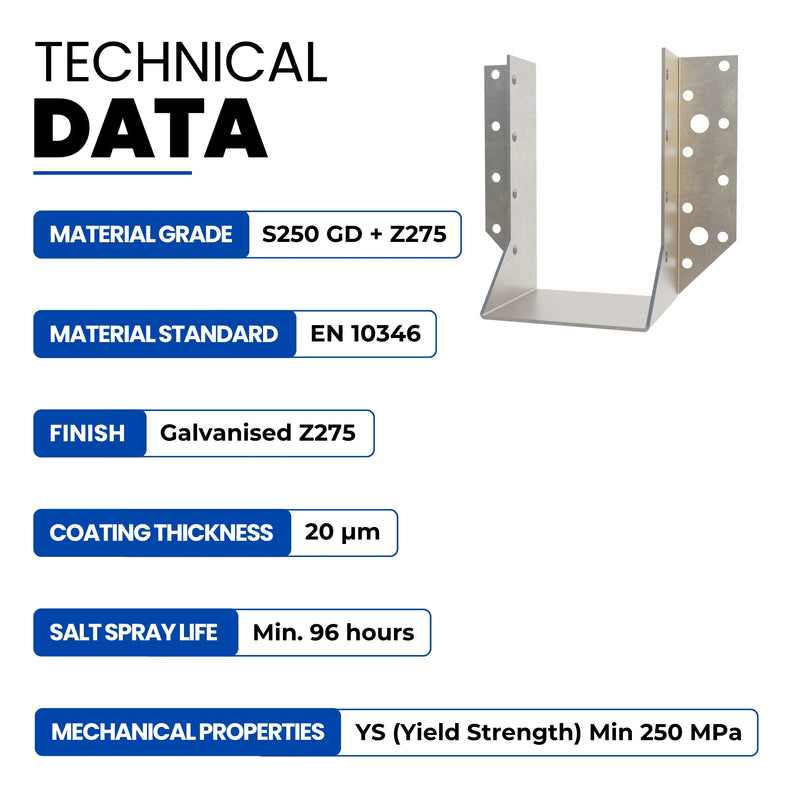
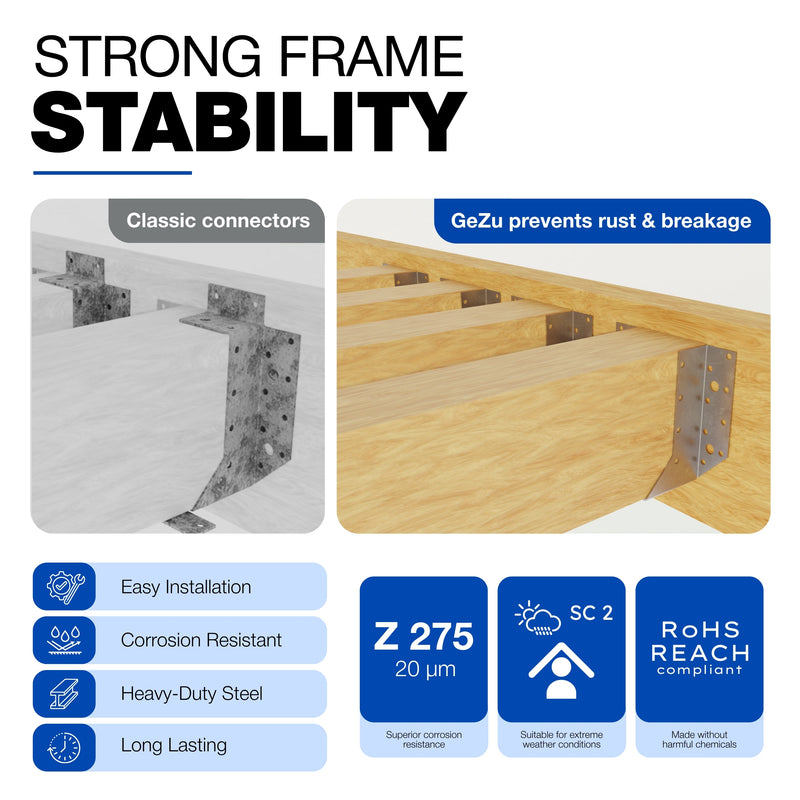
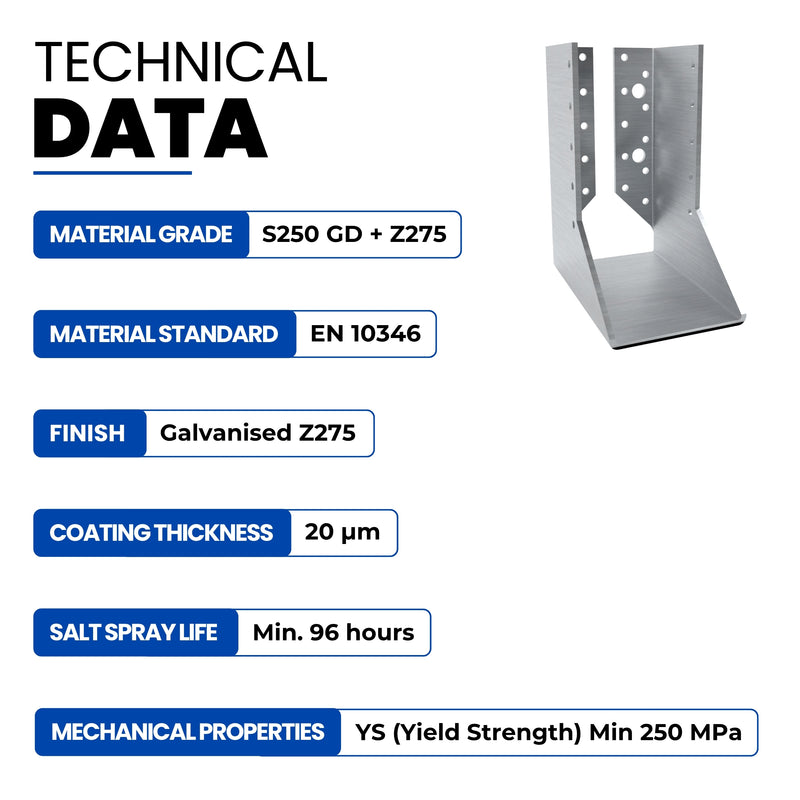
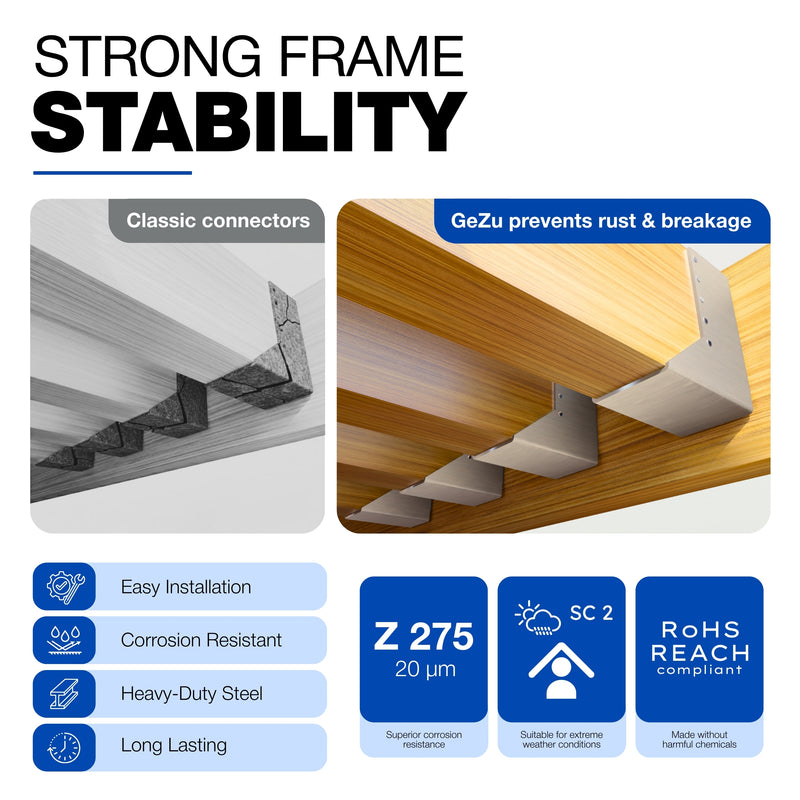
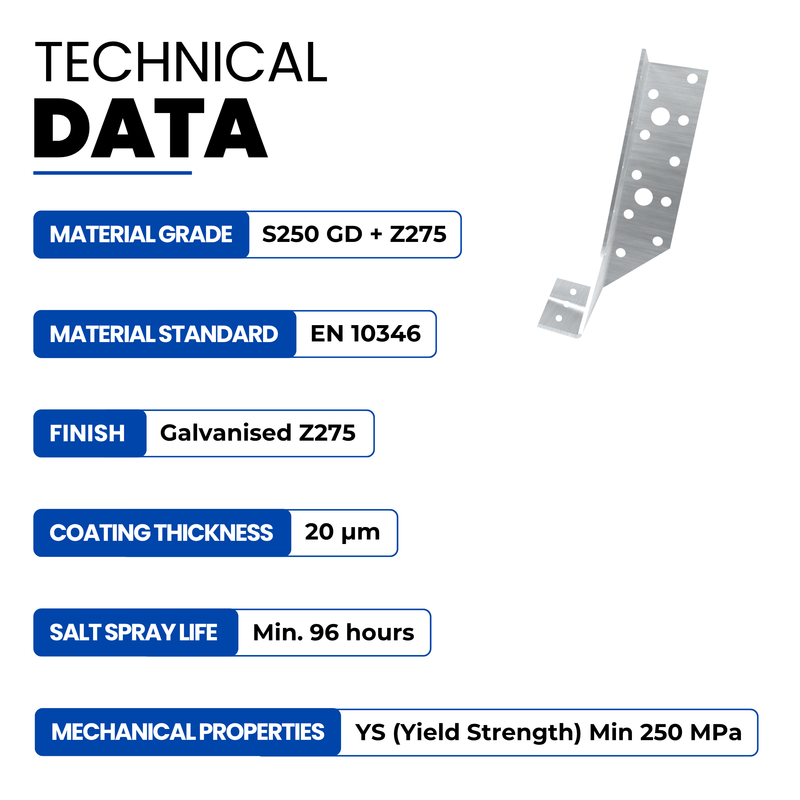
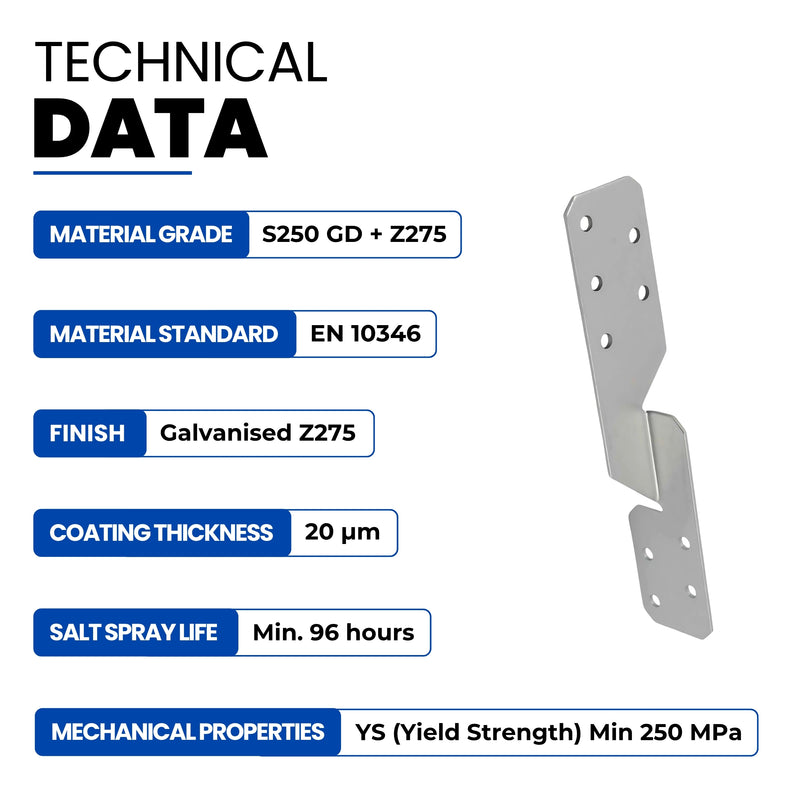
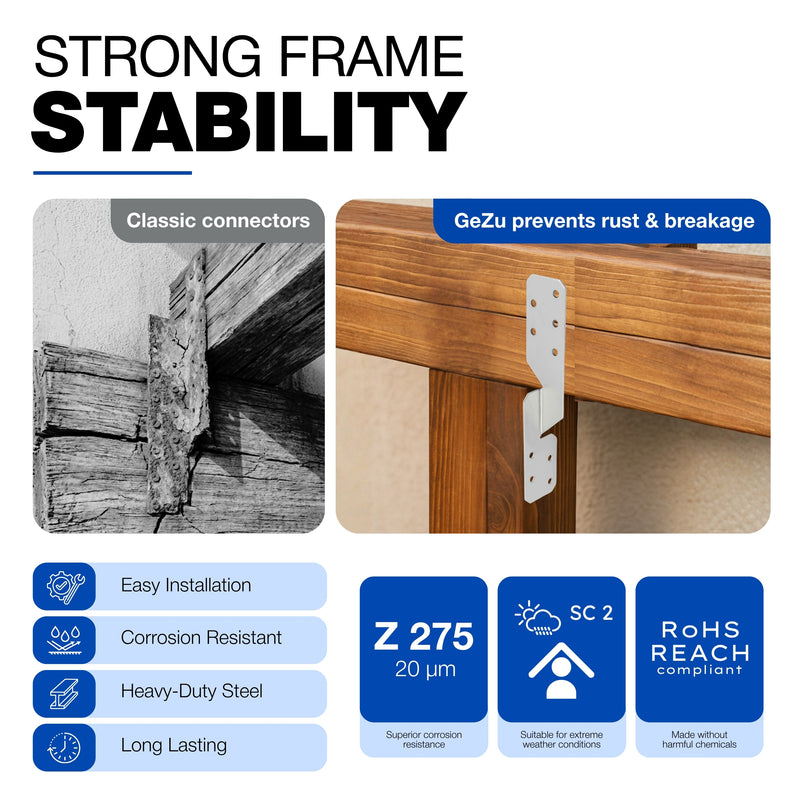
Most adjustable post supports sold in 2026 are hot-dip galvanised to EN ISO 1461, which sets a minimum average zinc coating of about 55 microns. It is that coating, more than the shape of the bracket, that decides how long the support survives outdoors.
What makes a good adjustable post support
- Real adjustment range: height, and sometimes width, adjustable without dismantling the post.
- Fixing type matched to the ground: screw into the soil, set in concrete, or bolt onto an existing slab.
- Compatible post section: most cover the standard 70x70 mm up to 100x100 mm.
- Galvanising thickness and quality: hot-dip rather than electro-galvanised for durable outdoor exposure.
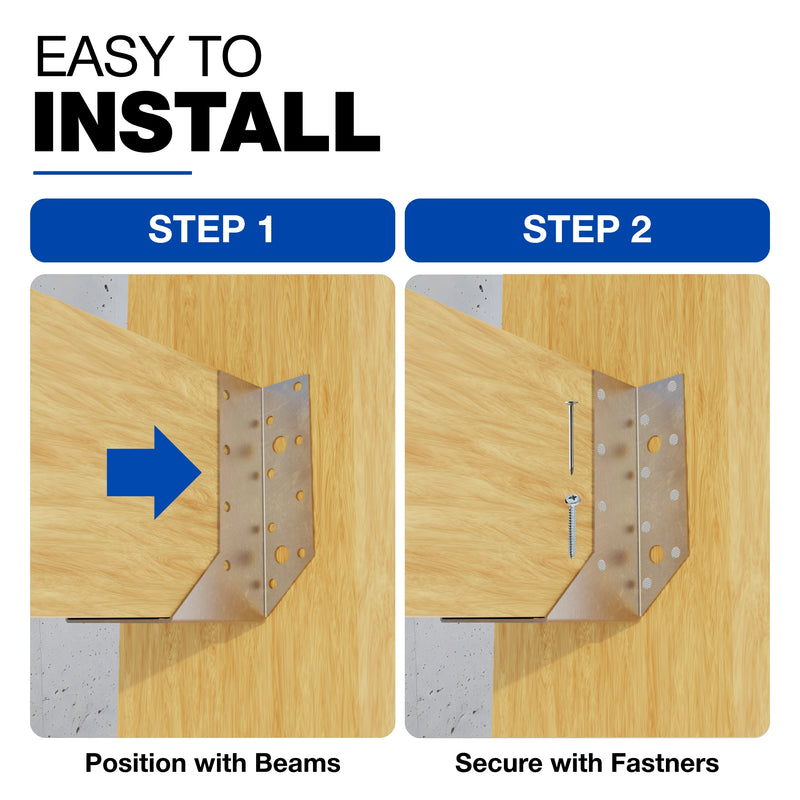
- Ease of installation: some models need no special tools, others want an impact driver or a mixer.
- Stability under side load: a point often overlooked on tall or wind-exposed fences.
At a glance
| Support | Best for | Standout feature | Key limitation |
|---|---|---|---|
| Height-adjustable post support | General use, all post types | Fine adjustment without re-digging the post | Less suited to very soft ground |
| Elevated base with nut | Posts set in concrete | Keeps timber clear of the concrete | Longer install, needs concrete work |
| Ground screw anchor | Soft ground, no concrete | Fast install, no concrete or curing time | Reduced hold in very stony ground |
| Drive-in spike support | Temporary fences, tight budget | Fastest installation in this ranking | Limited stability in clay or waterlogged soil |
| Square bolt-down base | Fixing to an existing slab or deck | Fixes to a surface already in place | Unusable without a flat rigid surface |
| U-shaped width/height adjustable support | Thick or irregular posts | Dual width and height adjustment | Bulkier once installed |
1. Height-adjustable post support: the best all-round choice
The height-adjustable post support allows progressive vertical adjustment once the post is in place, so you do not have to restart the installation if the level is not perfect first time. It suits a fence post just as well as a deck or pergola post.
Height-adjustable post support pros:
- Adjustable after the initial post installation
- Compatible with most standard timber post sections
- Hot-dip galvanised steel for outdoor durability
Height-adjustable post support cons:
- The adjustment mechanism needs occasional maintenance (oil, rust remover)
- Less rigid than a cast-in base on very unstable ground
Best for: projects where the final post height must stay adjustable after installation. Verdict: Buy if you want room for adjustment after the initial set.
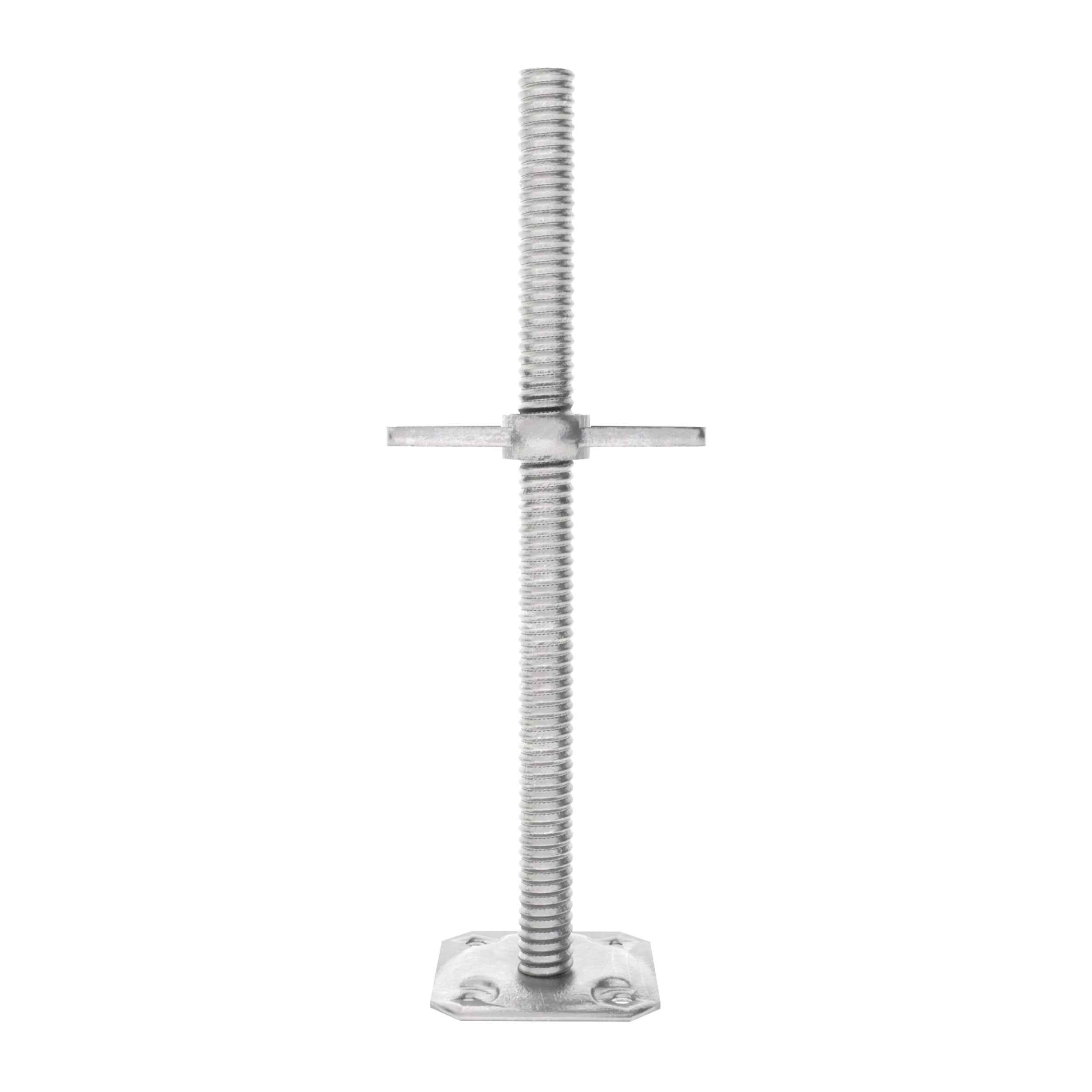
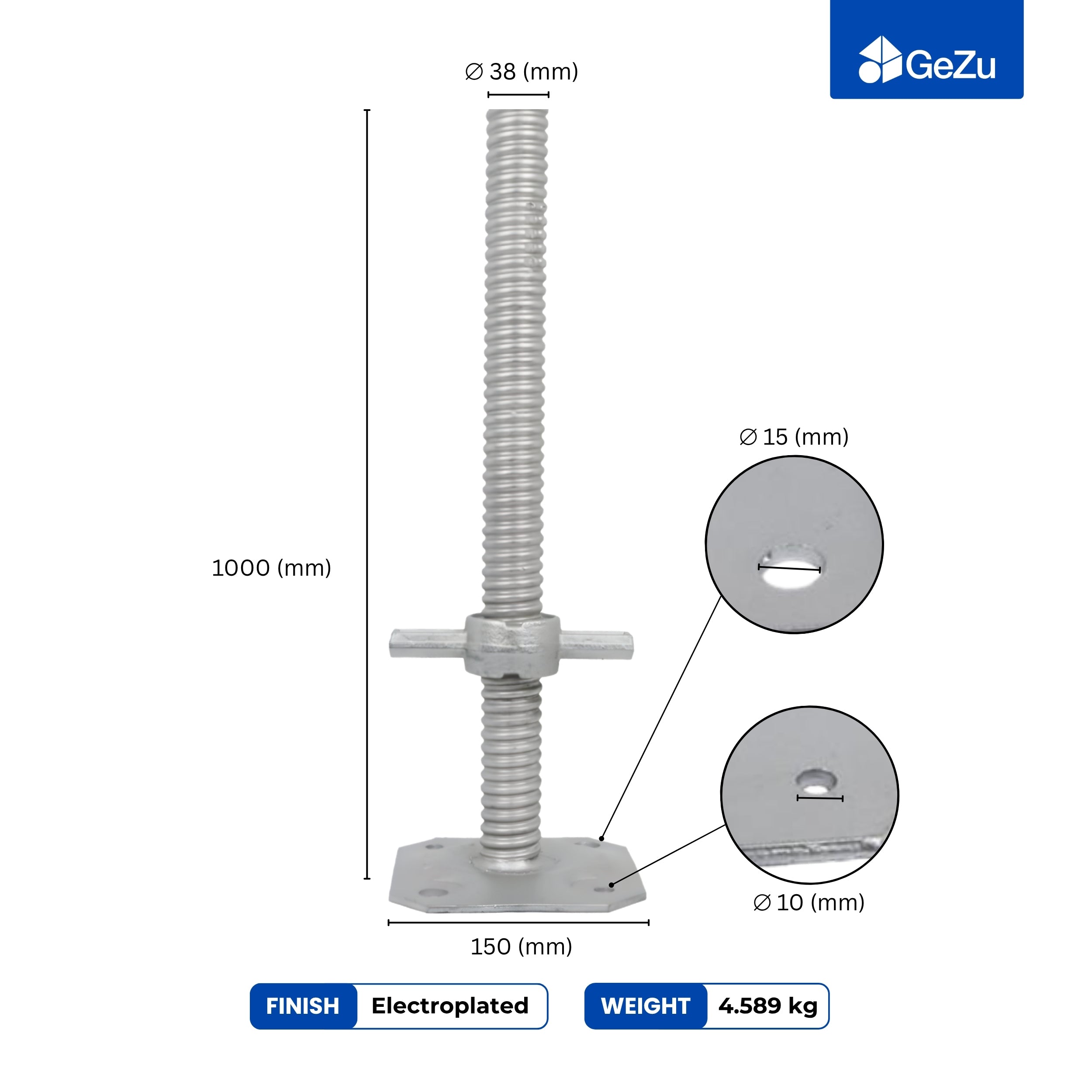
2. Elevated post base with nut: the best choice for posts set in concrete
The elevated adjustable post base with nut is cast into a concrete footing and lifts the foot of the post above ground level. It is the recommended solution when the post sits permanently against a concrete foundation, typical of heavy fences and gates.
Elevated base with nut pros:
- The post never touches damp concrete directly
- Fine height adjustment via the nut before final tightening
- Good resistance to side load, suited to gates
Elevated base with nut cons:
- Needs concrete work and curing time
- Longer to install than screw-in or drive-in models
Best for: heavy fence or gate posts needing a durable concrete foundation. Verdict: Buy for any fence built to last more than 15 years.
3. Ground screw post anchor: the best choice without concrete
The ground screw post anchor screws straight into the soil, with no concrete and no curing time. It is the best option for gardens where you want to avoid handling concrete, or on sites where the fence might be moved later.
Ground screw pros:
- Installs in minutes, no masonry tools
- Reversible: the post can be moved without breaking concrete
- No curing time before loading
Ground screw cons:
- Reduced hold in very stony or sandy ground
- Less suited to tall fences exposed to strong wind
Verdict: Buy on typical garden soil; avoid on rocky ground.
4. Drive-in spike support: the best budget and temporary choice
The drive-in fence post spike support is hammered straight into the ground with a sledgehammer. It is the fastest method in this comparison, often used for light garden fences or temporary installations.
Drive-in spike pros:
- Fastest install in this comparison, no concrete or screws
- Entry-level price across most catalogues
- Easy to pull out if the fence has to move
Drive-in spike cons:
- Reduced stability in clay or soil soaked after rain
- Less suited to tall fences or gates
Verdict: a good budget choice, reserved for short, light posts.
5. Square bolt-down base: for fixing to an existing slab
The square bolt-down base is for when a concrete slab or deck is already in place and you do not want to dig. It anchors with plugs directly onto the existing rigid surface.
Bolt-down base pros:
- No digging or concrete work on an already-poured surface
- Removable without damaging the slab
Bolt-down base cons:
- Unusable on bare earth or uneven surfaces
- Holding power depends on the quality of the existing slab
Best for: decks or concrete slabs already laid where a fence is added afterwards. Verdict: a good choice only if the slab is already in place.
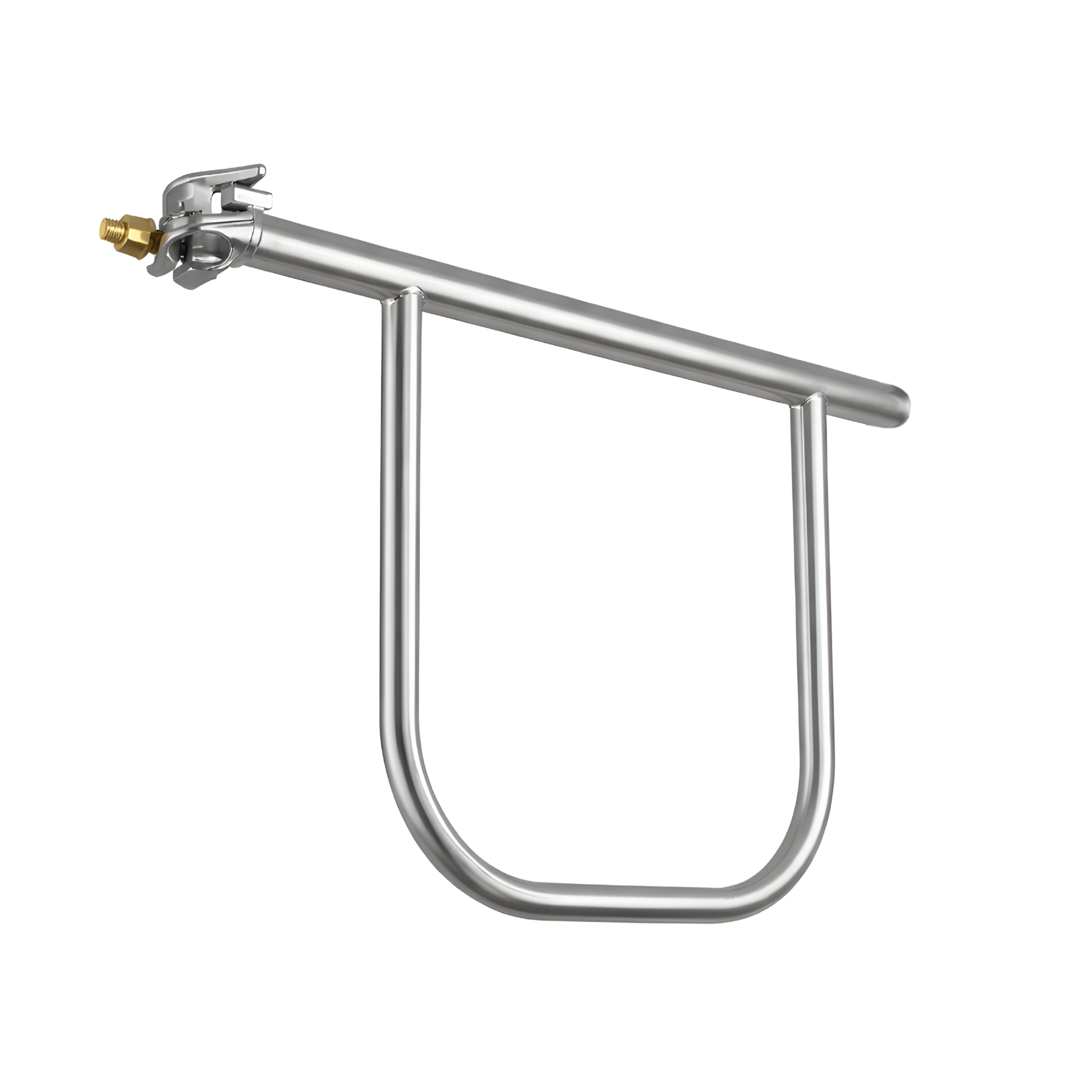
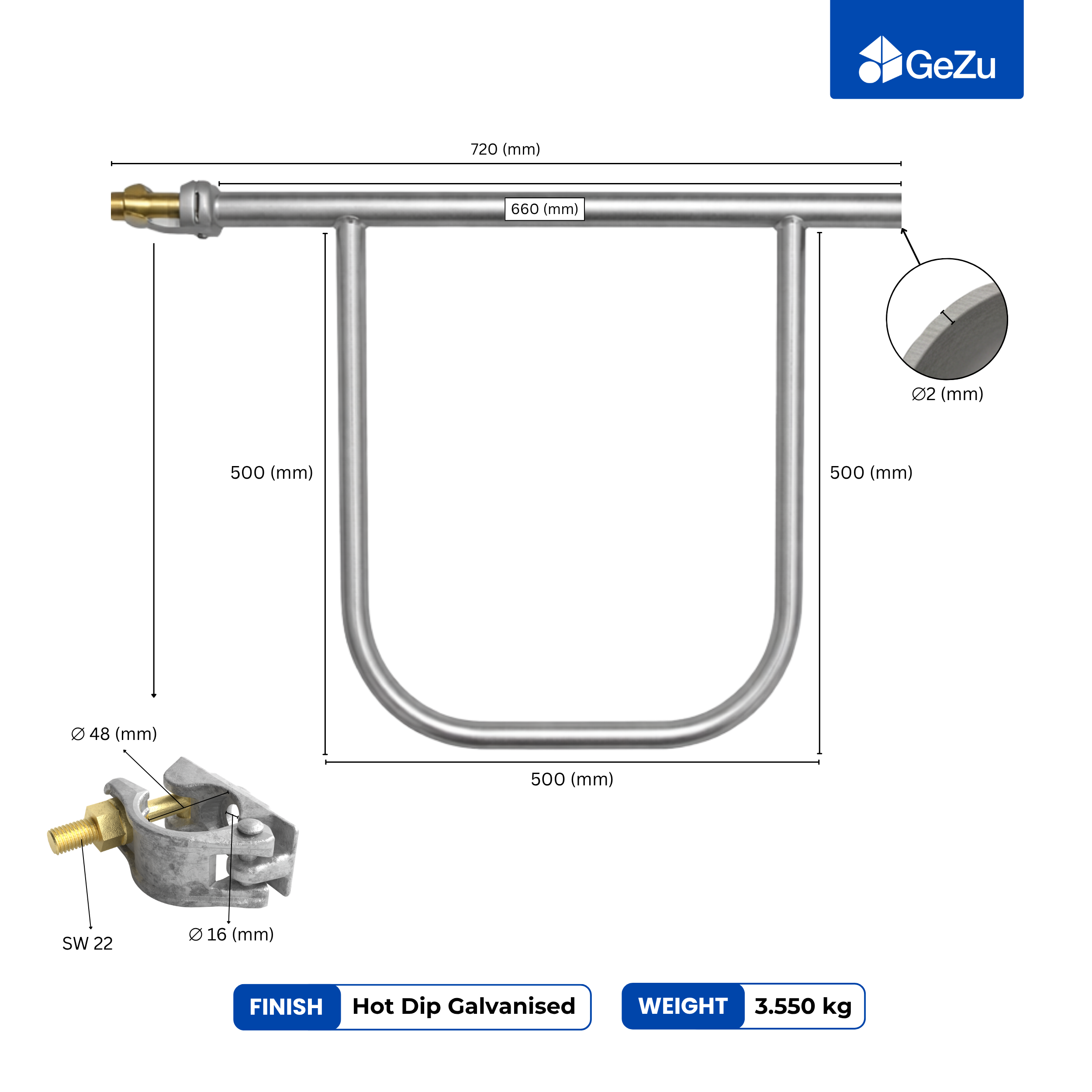
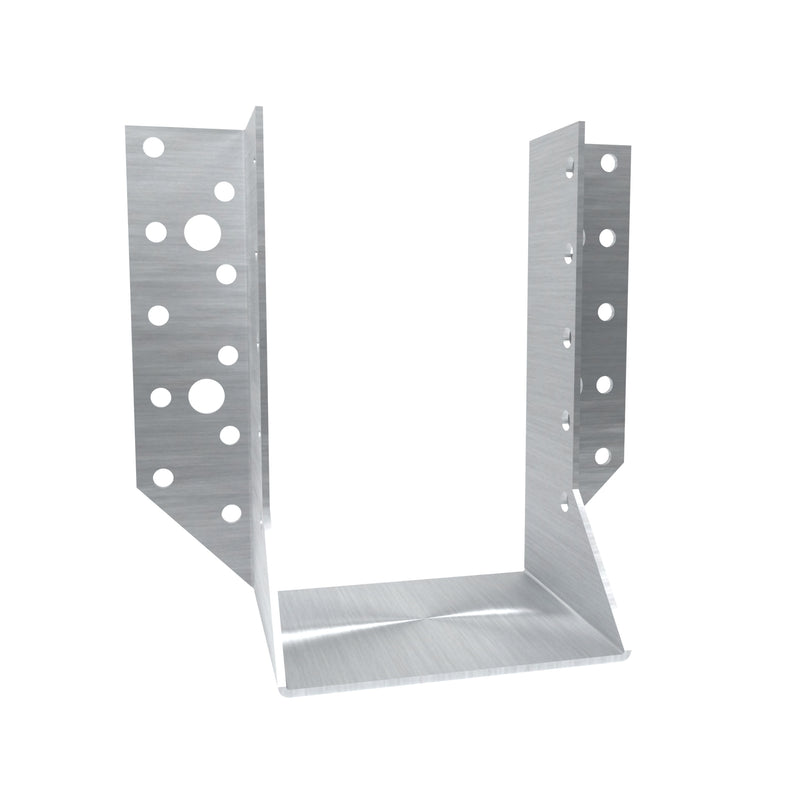
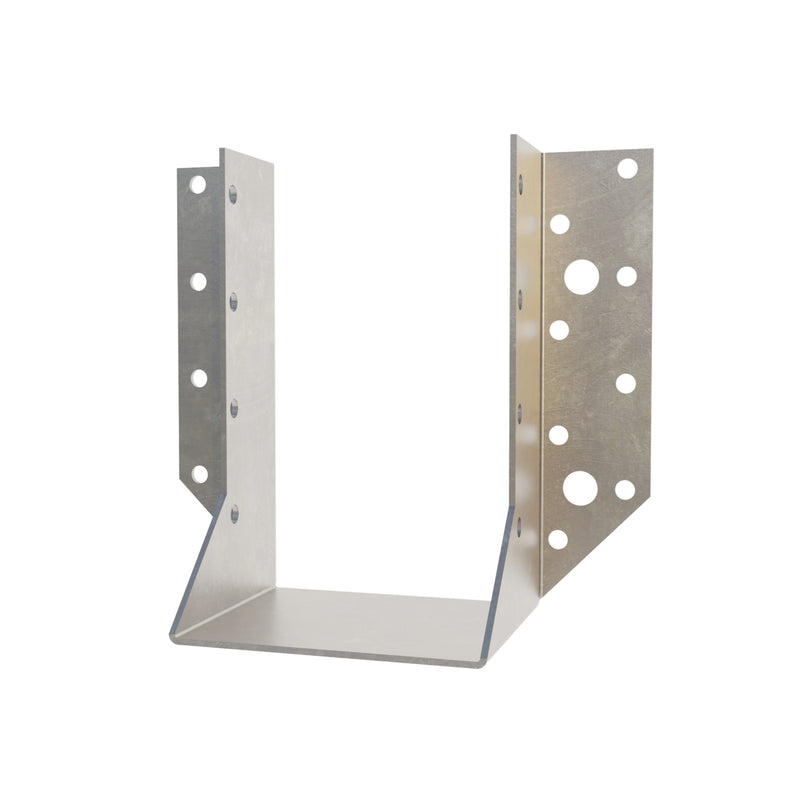
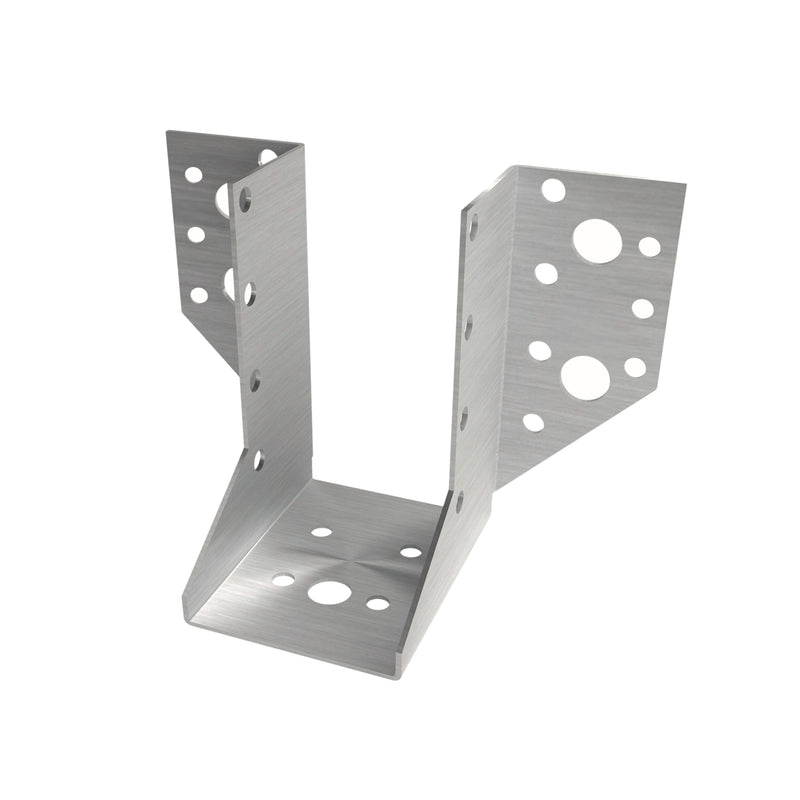
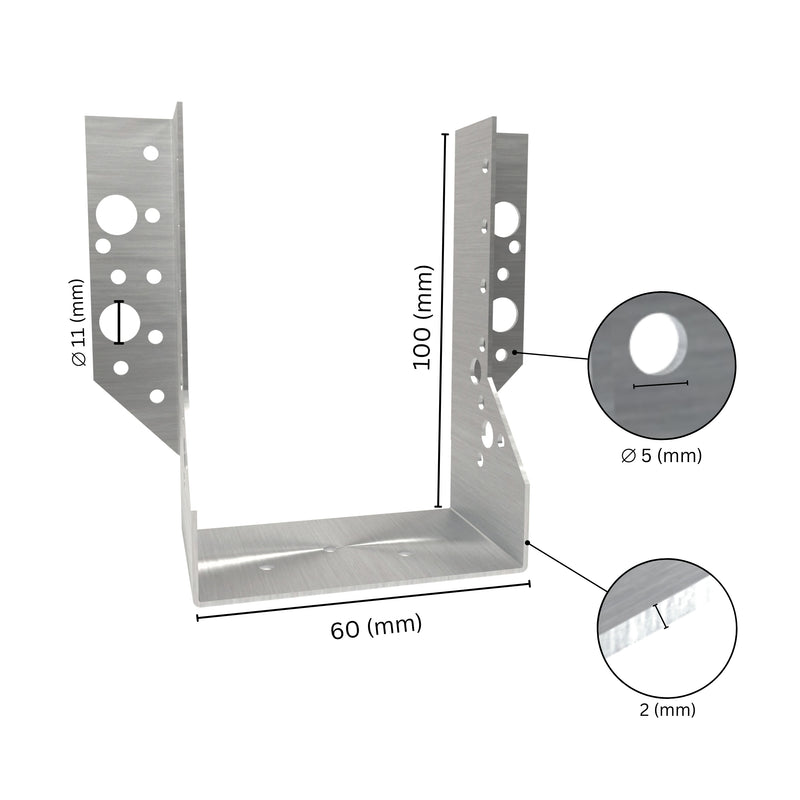
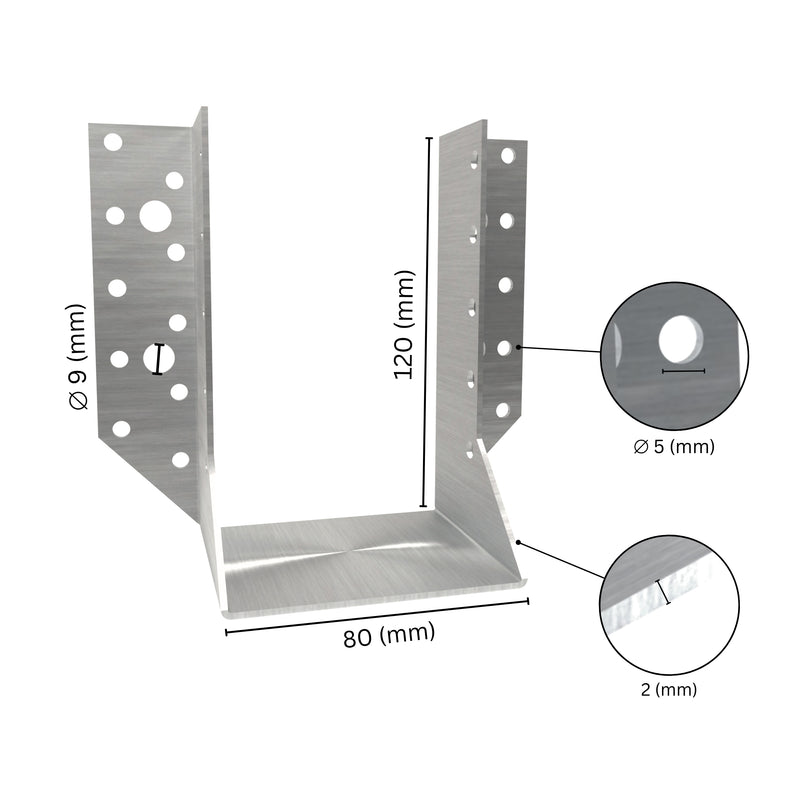
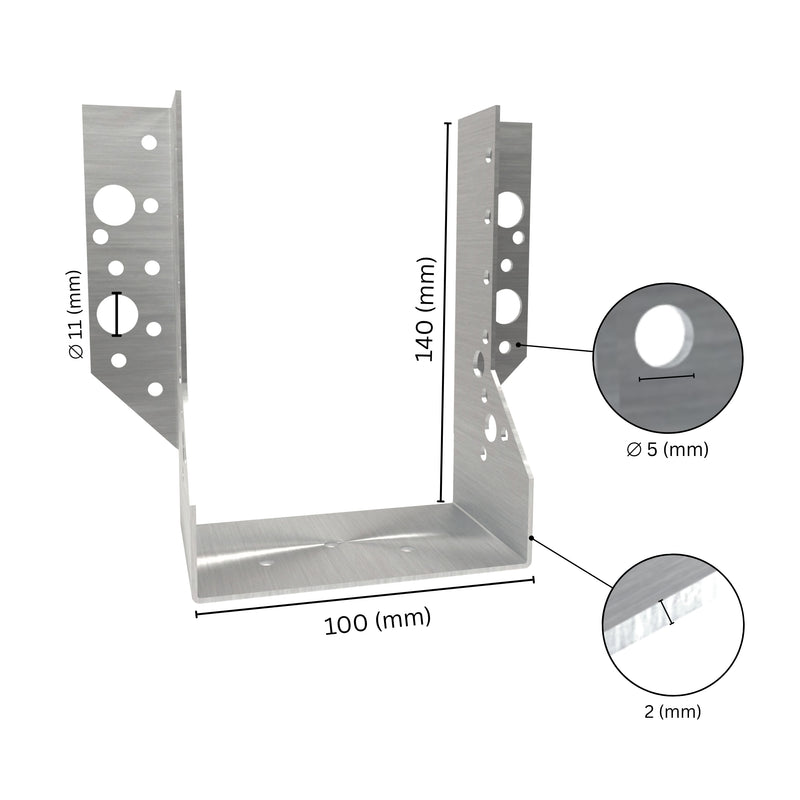
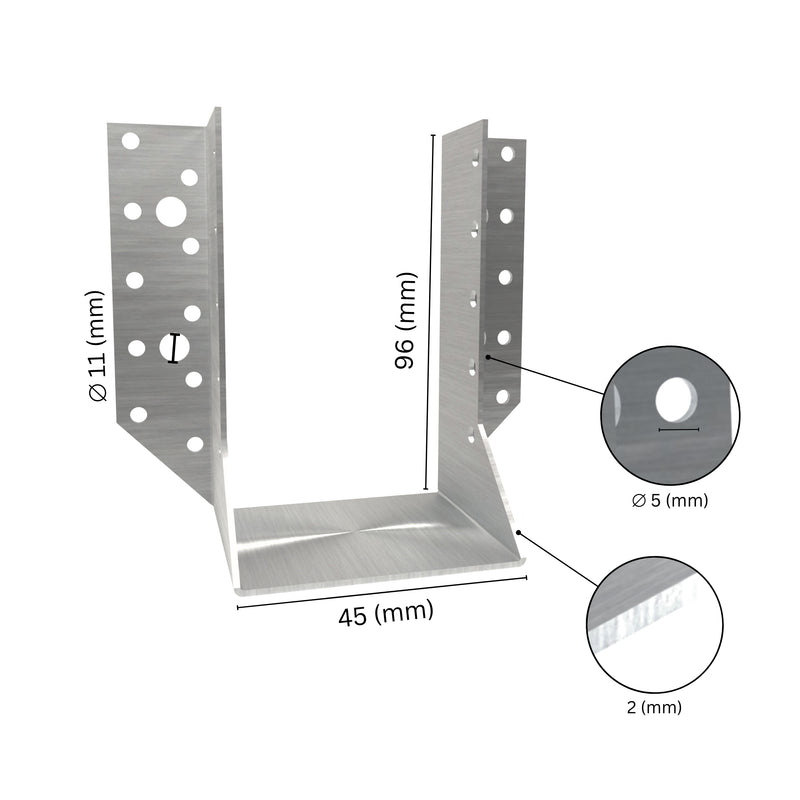
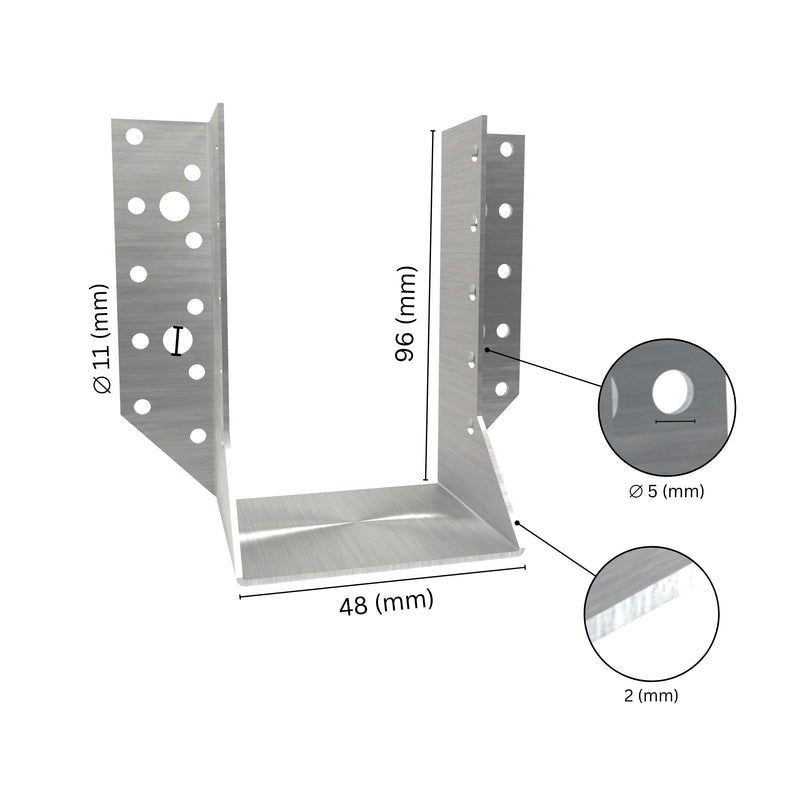
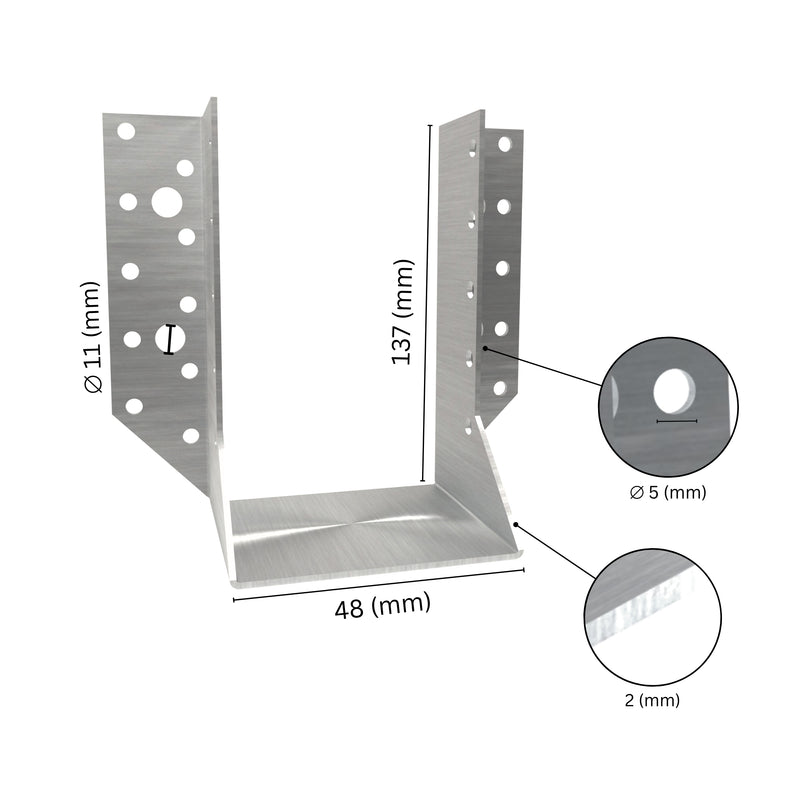
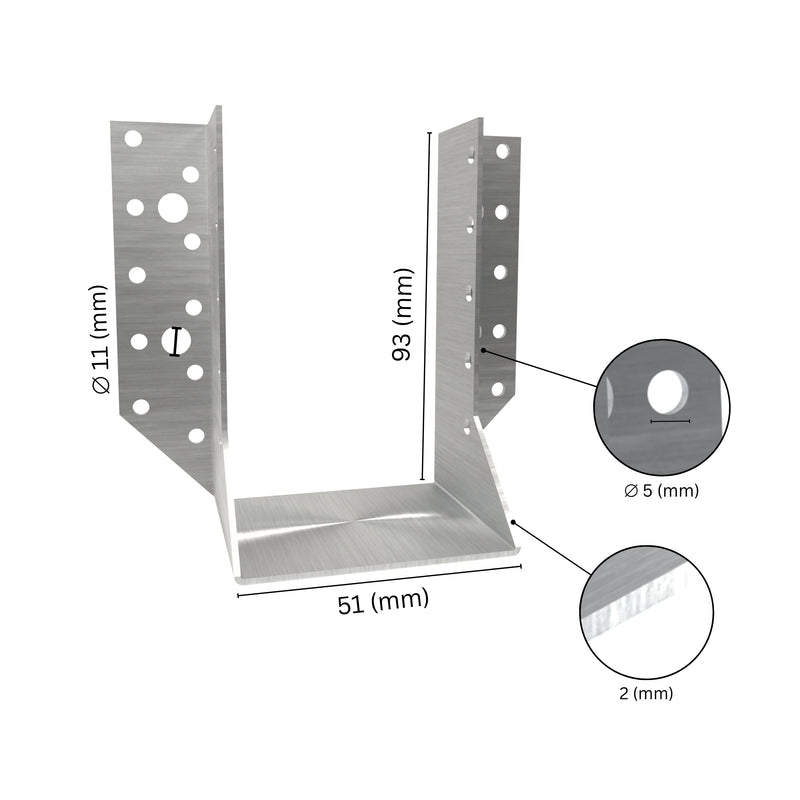
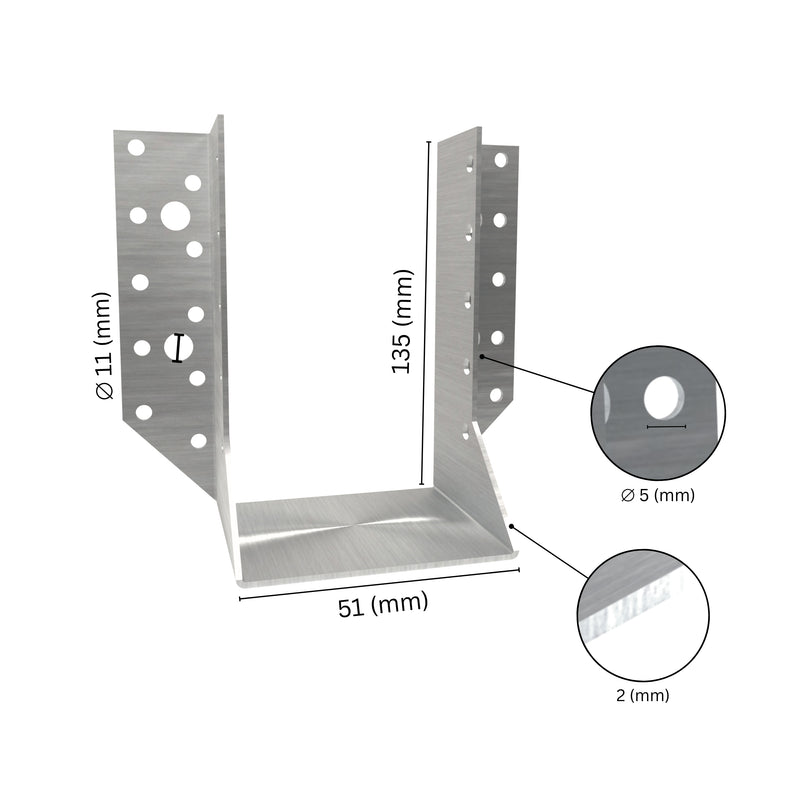
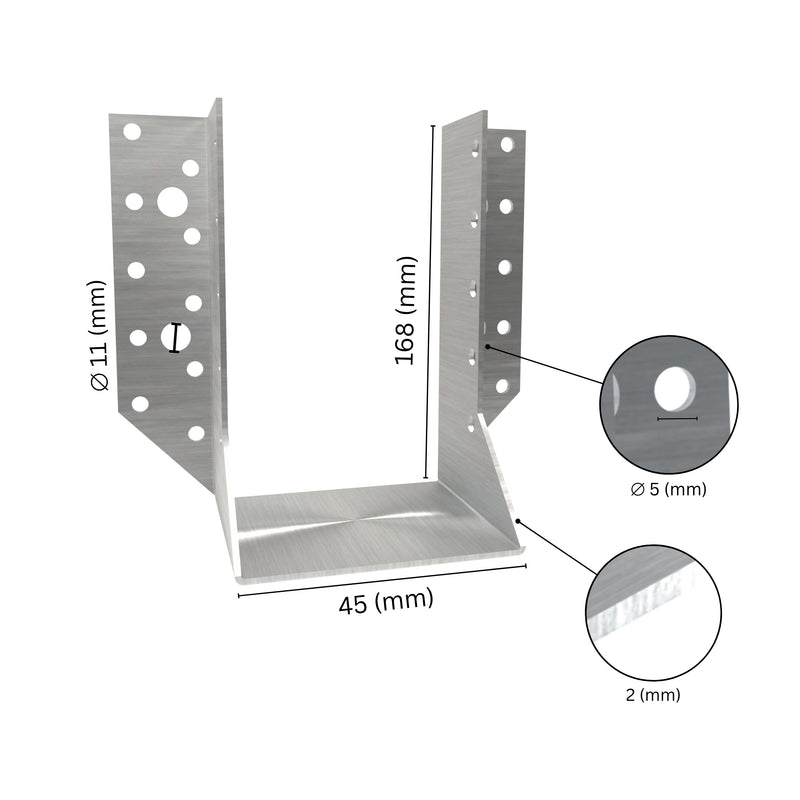
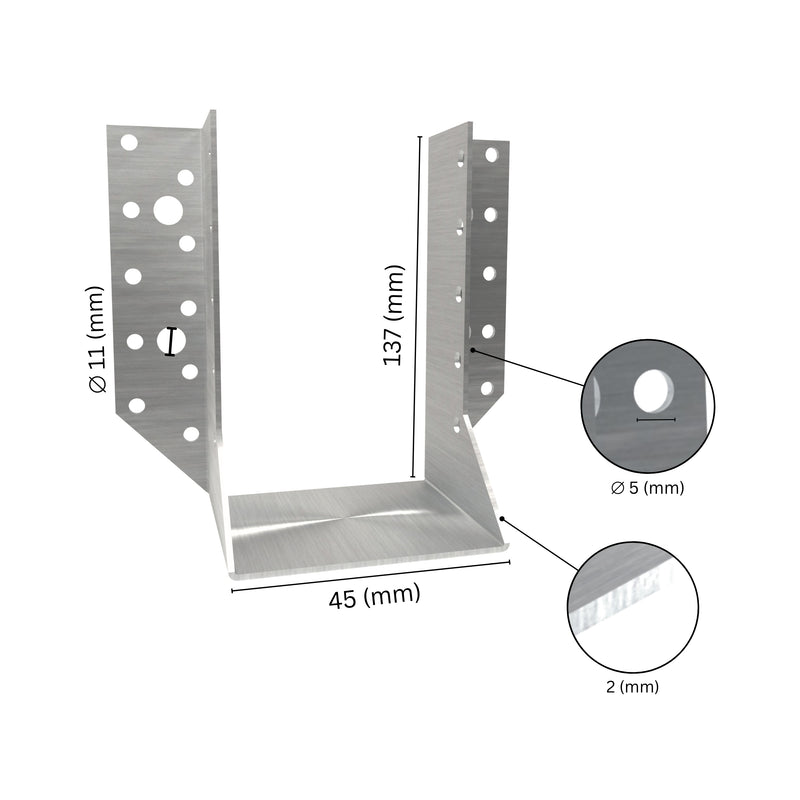
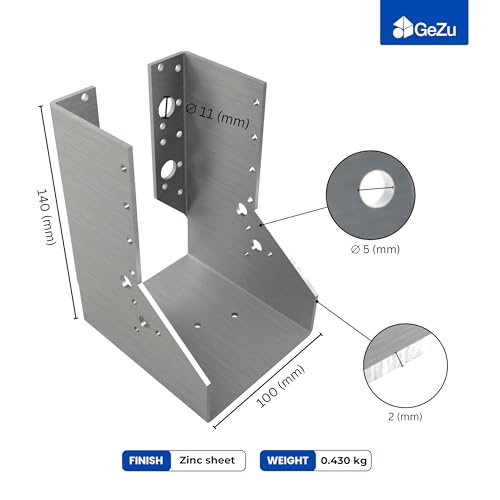
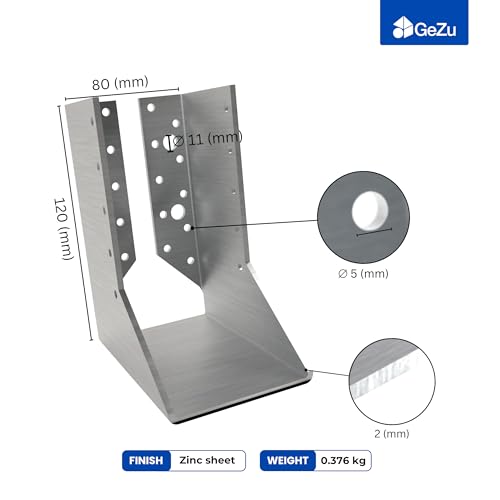
6. U-shaped width and height adjustable support: for thick or irregular posts
This model adjusts both the width that grips the post and its height, which makes it useful when the timber section is not perfectly standard — a frequent case with reclaimed timber or slightly warped posts.
U-shaped adjustable support pros:
- Dual width and height adjustment for variable post sections
- Good lateral grip thanks to the U-shaped wings
U-shaped adjustable support cons:
- More visually bulky once installed
- Dual adjustment takes longer to set than a single-adjust model
Best for: non-standard or slightly irregular post sections. Verdict: a good choice for reclaimed or off-standard timber.
How this ranking was built
The ranking rests on the six criteria listed above: adjustment range, fixing type, compatible post section, galvanising thickness, ease of installation and stability under load. Each support occupies a distinct place because none of the six covers every situation as well as the others.
Which adjustable post support should you choose?
For a standard fence project in 2026, with no particular ground constraint, the height-adjustable post support remains the safest default. On soft ground where you would rather not pour concrete, the ground screw anchor wins. For a gate or a fence meant to last decades, the elevated base with nut justifies the extra installation time.
FAQ
What is the best adjustable post support for a fence in 2026?
The height-adjustable post support remains the most versatile choice in 2026, because it covers standard post sections from 70x70 mm to 100x100 mm and adjusts after the initial installation.
Is a screw-in support as strong as a concrete footing?
No, a ground screw holds well in ordinary soft ground but offers less lateral resistance than a base cast in concrete. It suits light fences, not heavy gates.
How deep does a drive-in support need to go?
Depth depends on the height and weight of the post: the taller the fence, the deeper the drive-in needs to go to compensate for the absence of concrete. On soft ground, stability stays limited whatever the depth.
Can an adjustable post support be reused?
Screw-in and drive-in models pull out and get reused easily. Bases cast into concrete cannot be recovered without breaking the footing.
Hot-dip or electro-galvanised for an outdoor post support?
Hot-dip galvanising gives a thicker coating and far better outdoor life than electro-galvanising. EN ISO 1461 sets a minimum of about 55 microns of zinc for the hot-dip process.
What post size does a standard adjustable support take?
Most adjustable supports on the market take common post sections from 70x70 mm to 100x100 mm. Always check the exact post section before buying.
Do I need a special tool to install a drive-in support?
A sledgehammer is enough for most drive-in models, no power tools required. Some manufacturers recommend a guiding mandrel to keep the post upright while driving.
Does a bolt-down base work on an existing slab?
Yes, the square bolt-down base is designed to fix directly onto an existing concrete slab or deck with anchors, with no extra digging.
One last detail
The difference in lifespan between two supports that look alike almost always comes down to zinc thickness, not bracket shape. A support outside EN ISO 1461 shows visible rust within a few winters, whatever the design promised on the product page.