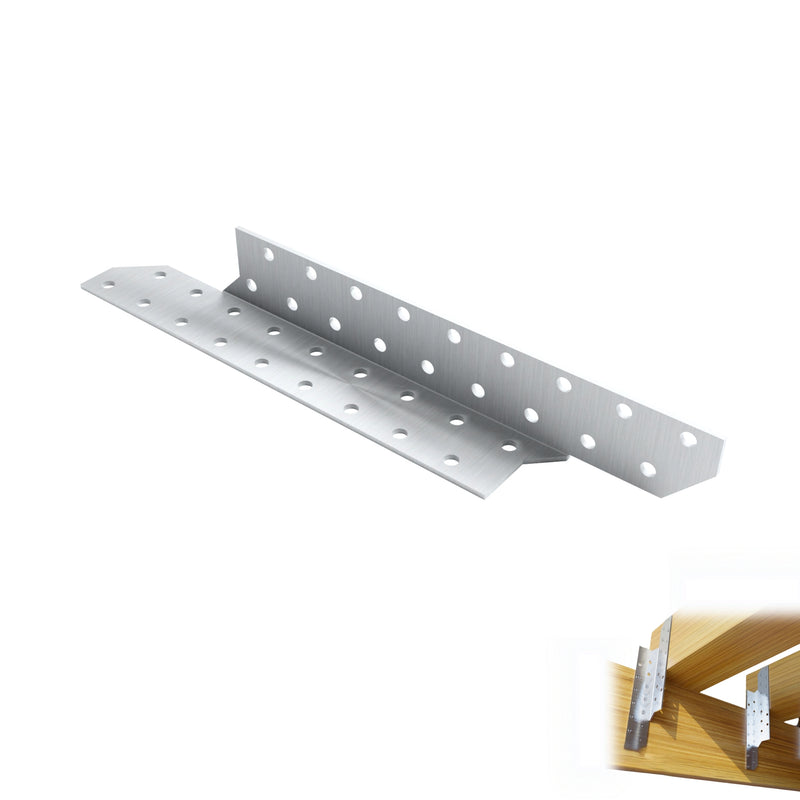
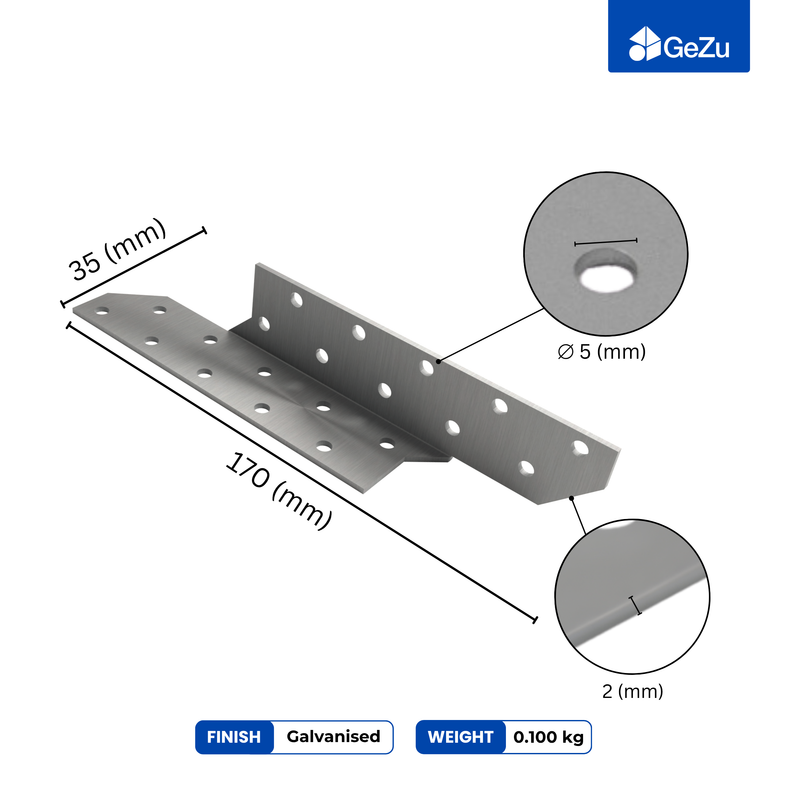
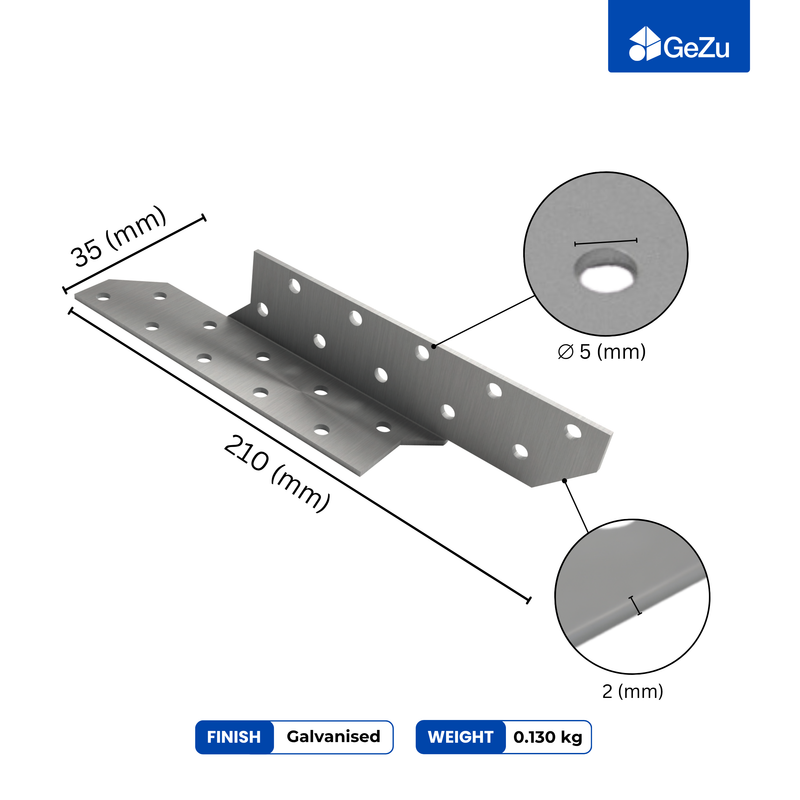
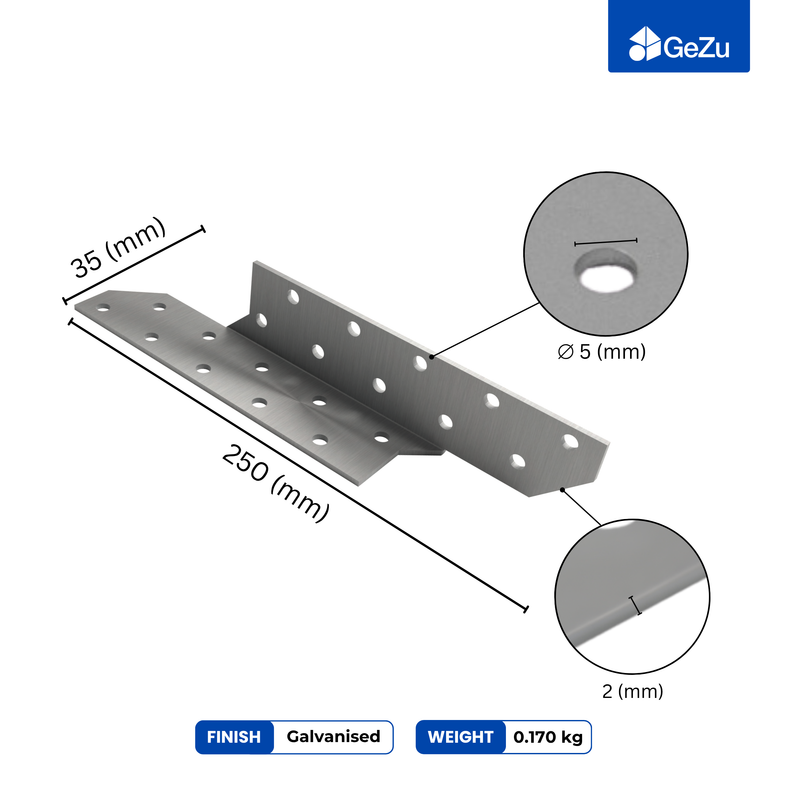
Best Pergola Brackets and Connectors 2026: 7 Ranked

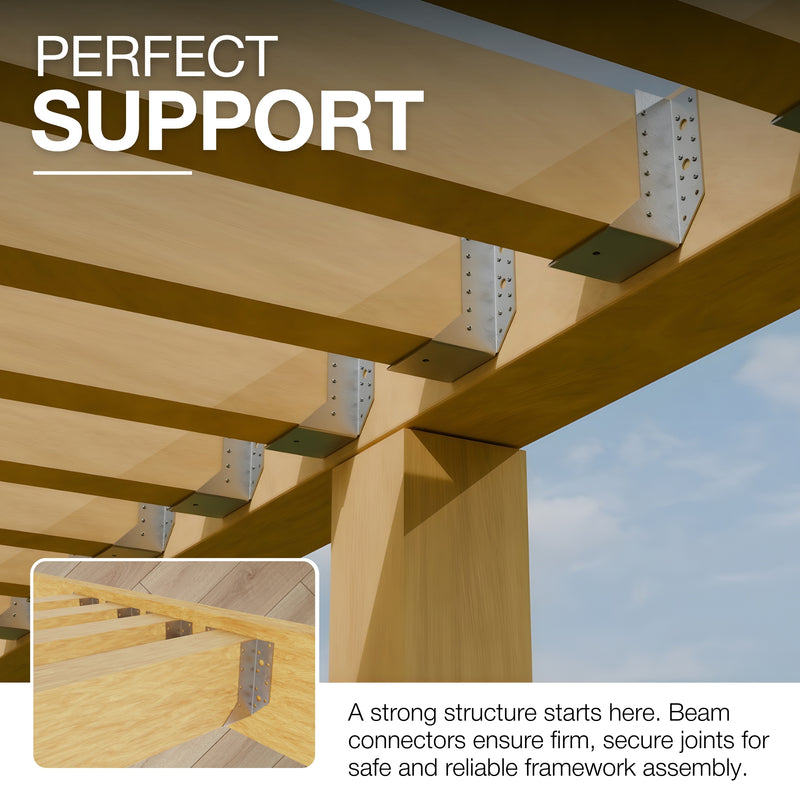
Pergola brackets and connectors join wooden beams and posts at 90-degree angles, and picking the wrong shape means a joint that never sits flush or a post that can't carry the load. Best overall: the L-Shape 2-Way Post Connector for square corner joints. Best for multi-bay pergolas: the X-Shape 4-Way Post Connector. Best for wall-mounted builds: the Pergola Wall Bracket. Best for damp ground or patios: the Elevated Adjustable Post Base.
- The L-Shape 2-Way Post Connector wins for standard square-corner pergolas built in 2026.
- The X-Shape 4-Way Post Connector is the only bracket rated for genuine multi-bay junctions.
- Pergola brackets and connectors fit 71x71mm timber posts as the standard across this range.
- Wall-mounted builds skip the post connector entirely and use a wall bracket instead.
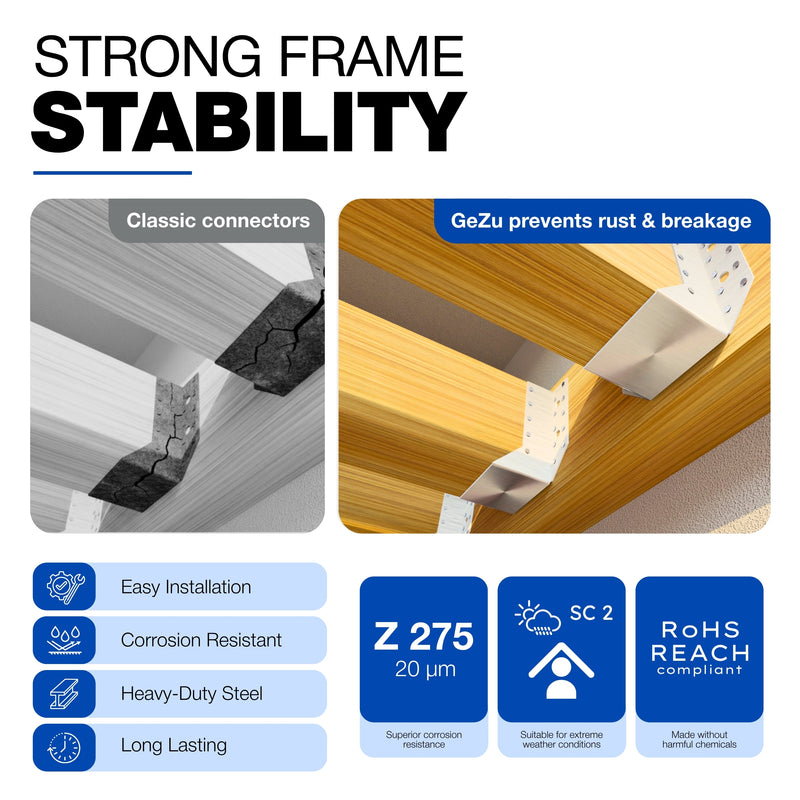
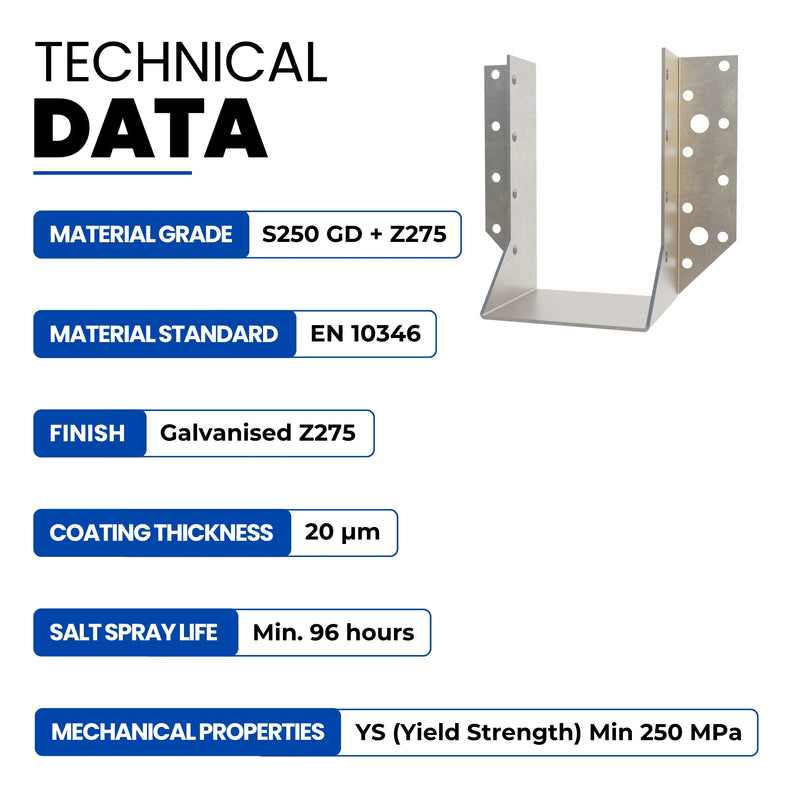
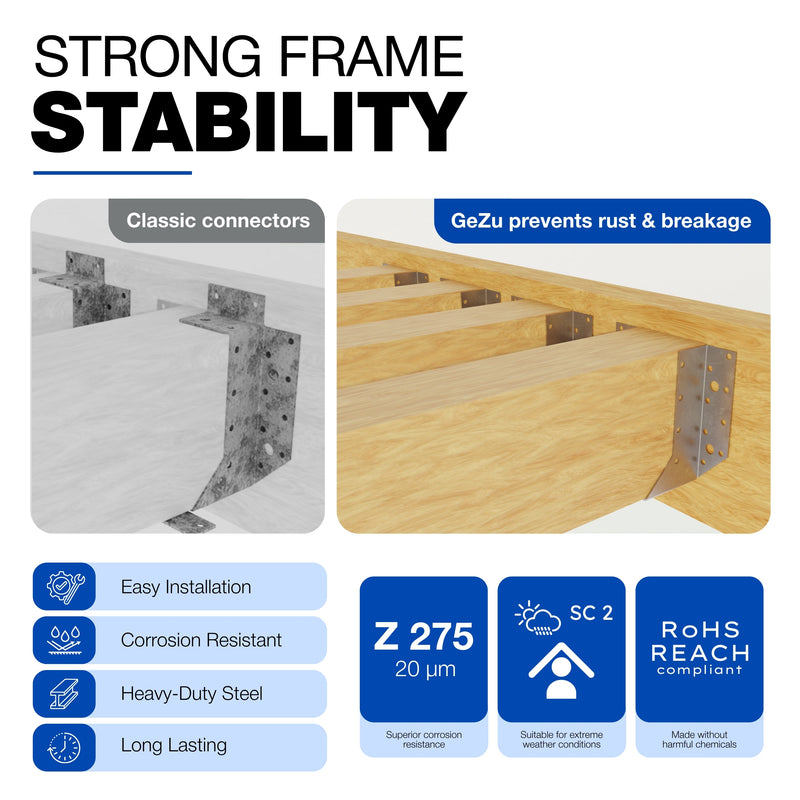
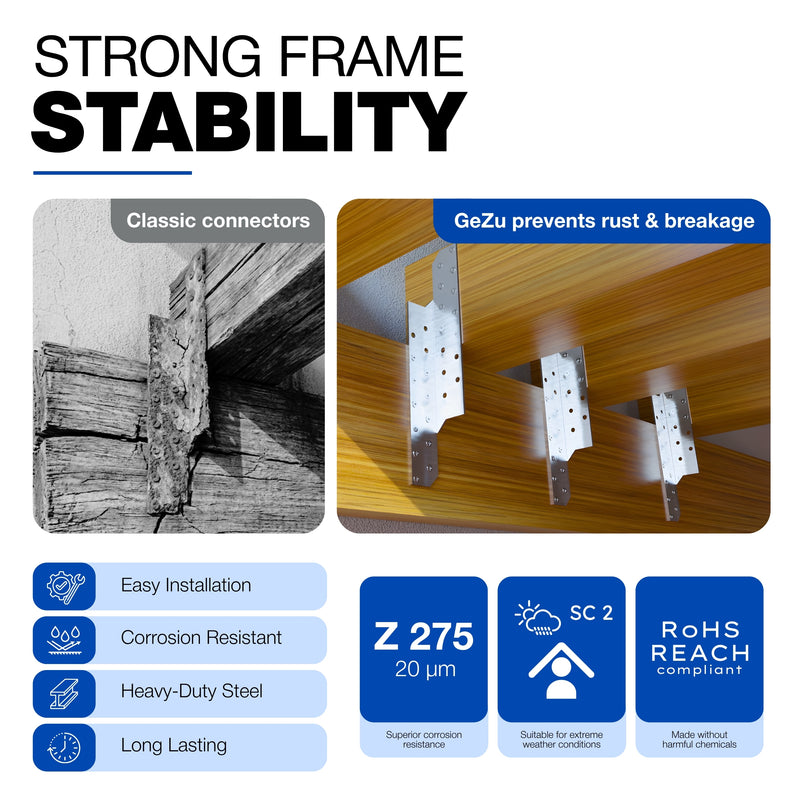
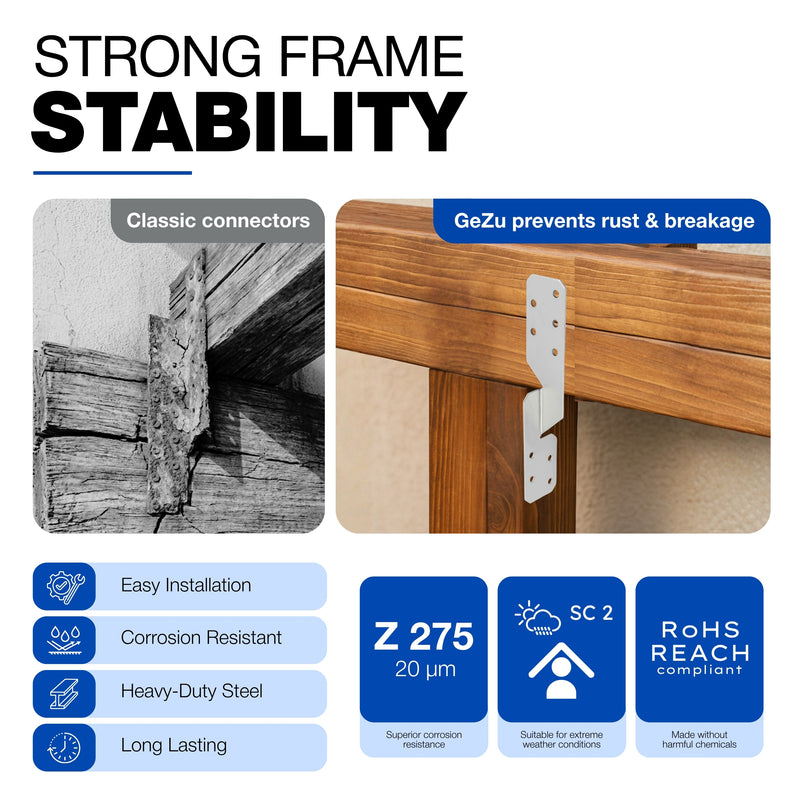
- Hot-dip galvanised finish outperforms powder-coated black on long-term corrosion resistance.
Why this matters
A pergola frame only holds together at the joints, and in 2026 most DIY pergola failures trace back to the wrong connector shape for the layout, not weak timber. An L-shape bracket bolted into what should be a T-junction leaves one beam unsupported. A powder-coated connector left exposed to constant rain corrodes faster than a hot-dip galvanised one, even if both looked identical on the shelf.
The ranking below sorts pergola brackets and connectors by beam configuration and mounting method, not by brand name. Each pick gets a distinct use case, so you're matching the bracket to your actual layout instead of guessing between near-identical corner pieces.
What makes the best pergola bracket
- Post size compatibility – fits standard 71x71mm timber posts used across most pergola kits
- Beam configuration – whether the connector handles a 2-way corner, 3-way T/Y junction, or 4-way X junction
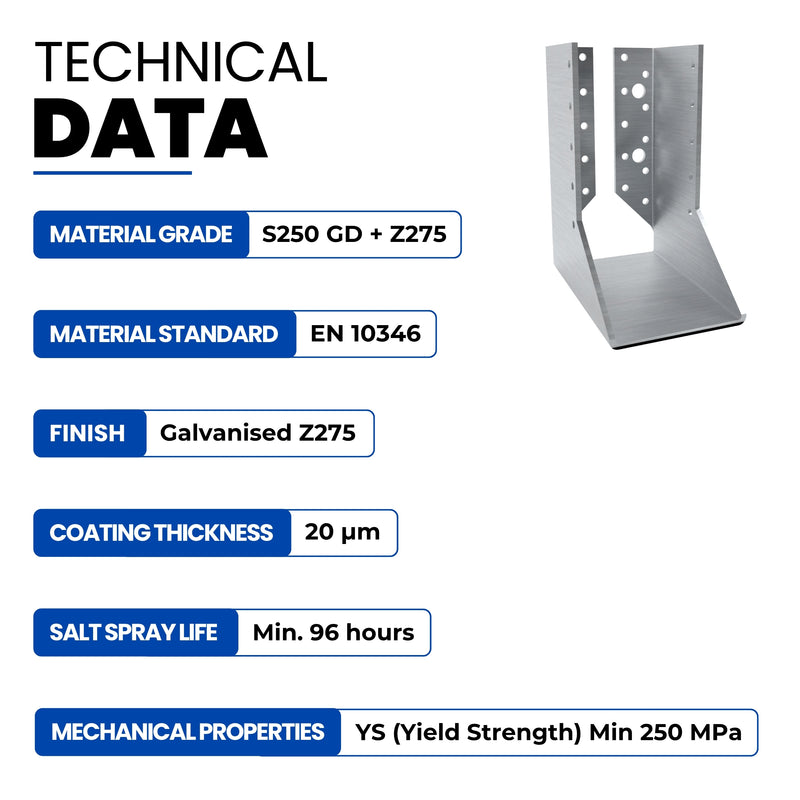
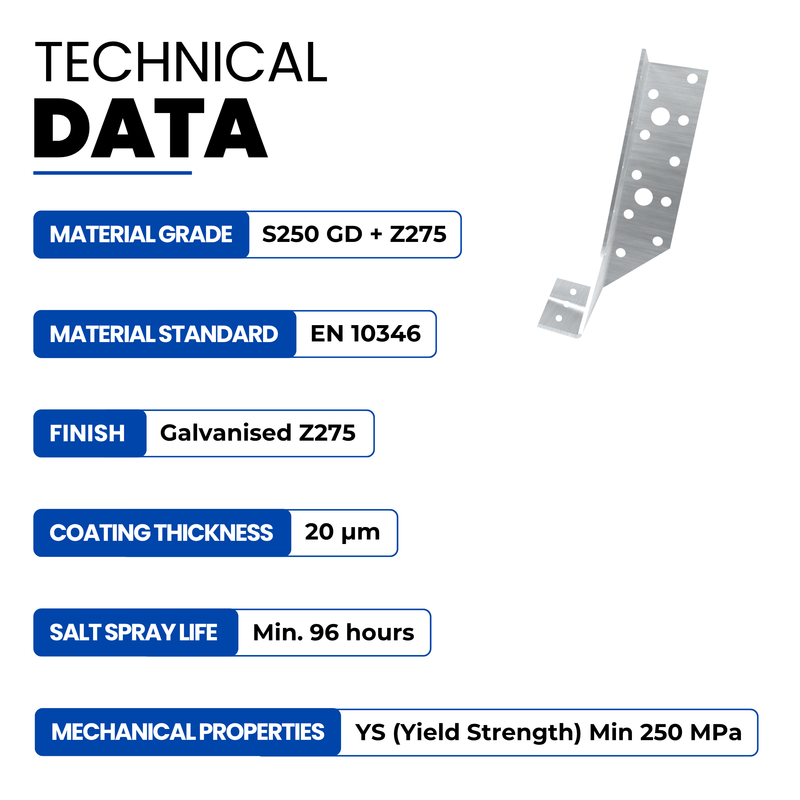
- Steel finish – hot-dip galvanised vs powder-coated black, which changes corrosion resistance outdoors
- Load direction – whether the joint carries vertical roof load, lateral wind load, or both
- Fixing method – bolt-through holes vs coach screws, and how many fixing points the bracket has
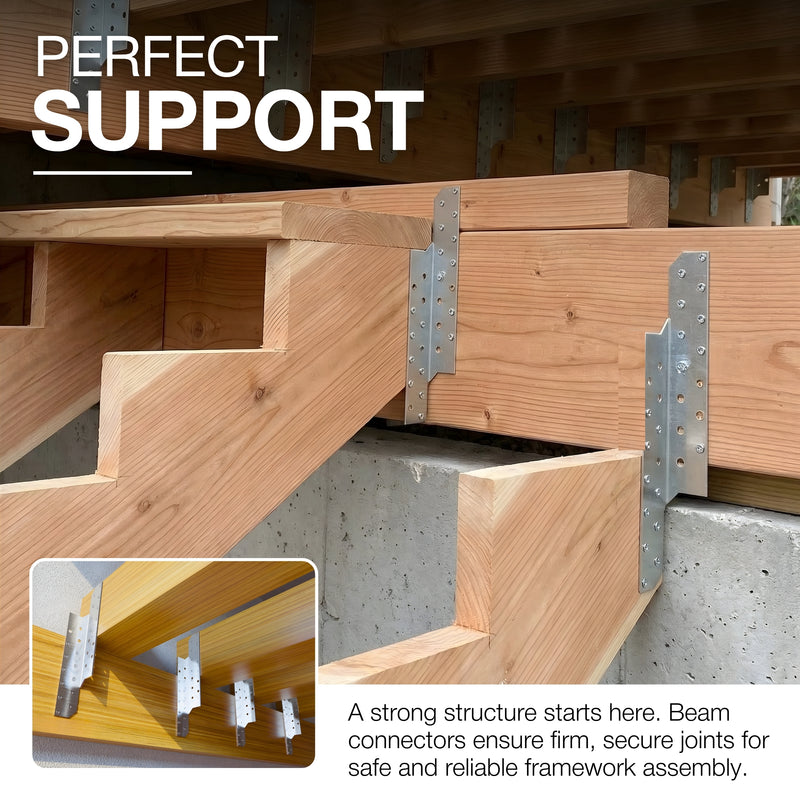
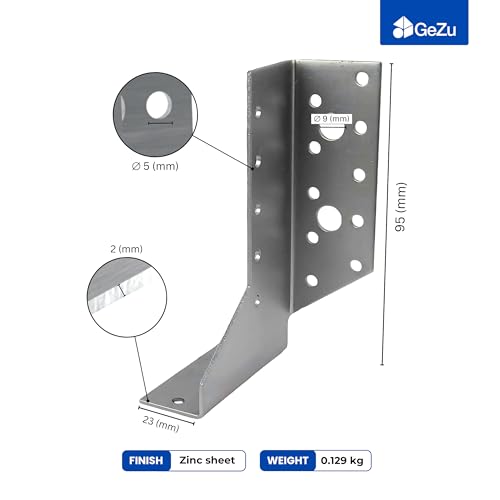
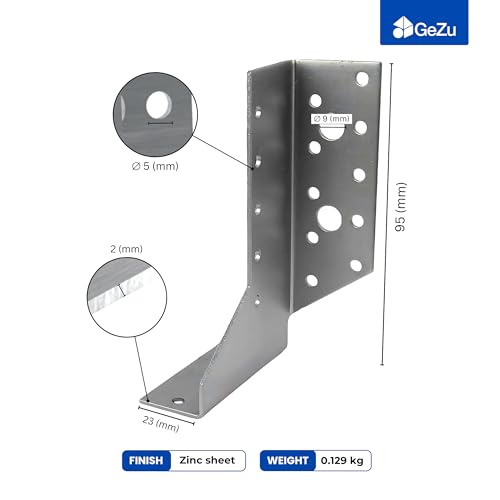
- Open-style design – open brackets let timber breathe and resist trapped moisture at the joint
“If the connector doesn't match your post size, the joint will never sit flush.”
Pergola brackets and connectors at a glance
| Connector | Best for | Beam configuration | Key limitation |
|---|---|---|---|
| L-Shape 2-Way Post Connector | Square corner joints | 2 beams, 90° | No mid-span or multi-bay support |
| Y-Shape 3-Way Post Connector | Mid-span post on a straight run | 2 beams to 1 post | Not built for a 4-way junction |
| X-Shape 4-Way Post Connector | Multi-bay pergolas | 3 beams to 1 post | Needs a post rated for higher load |
| T-Shape 3-Way Post Connector | Wall-adjacent extensions | 2 beams to 1 post | Three-way only, no 4th beam option |
| Pergola Wall Bracket | Wall-mounted pergolas | Beam to wall | Depends on wall condition, not a post substitute |
| H-Post Anchor | Permanent concrete-set posts | Post to footing | Needs poured concrete to cure first |
| Elevated Adjustable Post Base | Patio and decking builds | Post to hard surface | Less lateral stability than concrete-set posts |
1. L-Shape 2-Way Post Connector: best pergola bracket for square corners
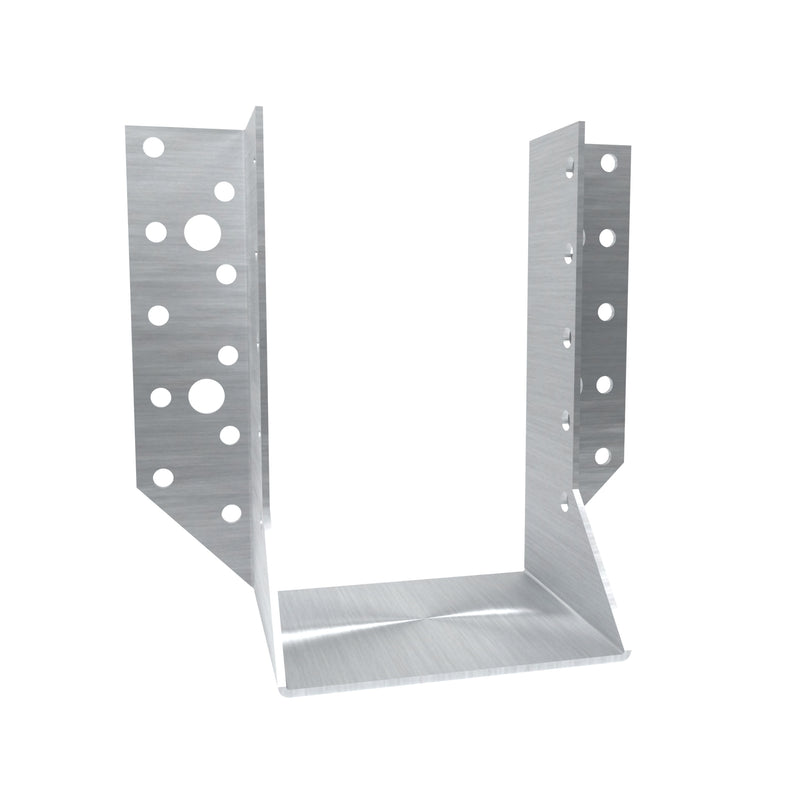
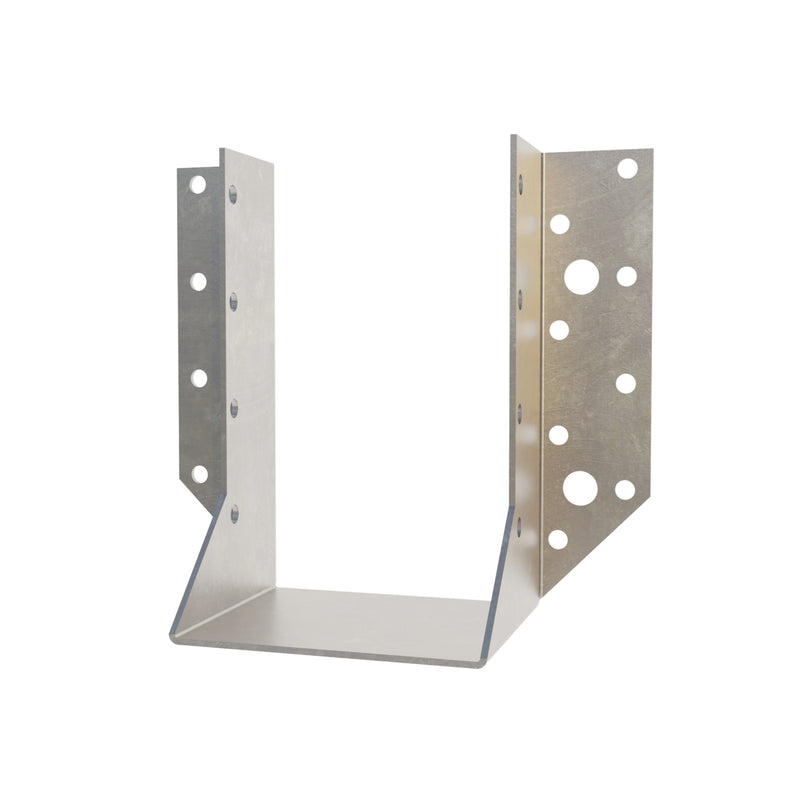
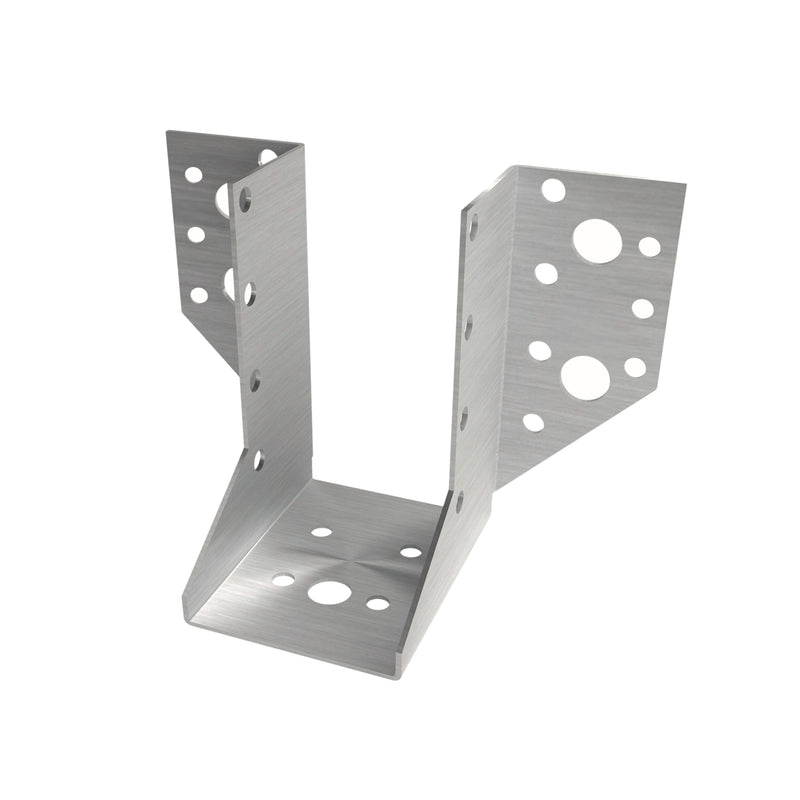
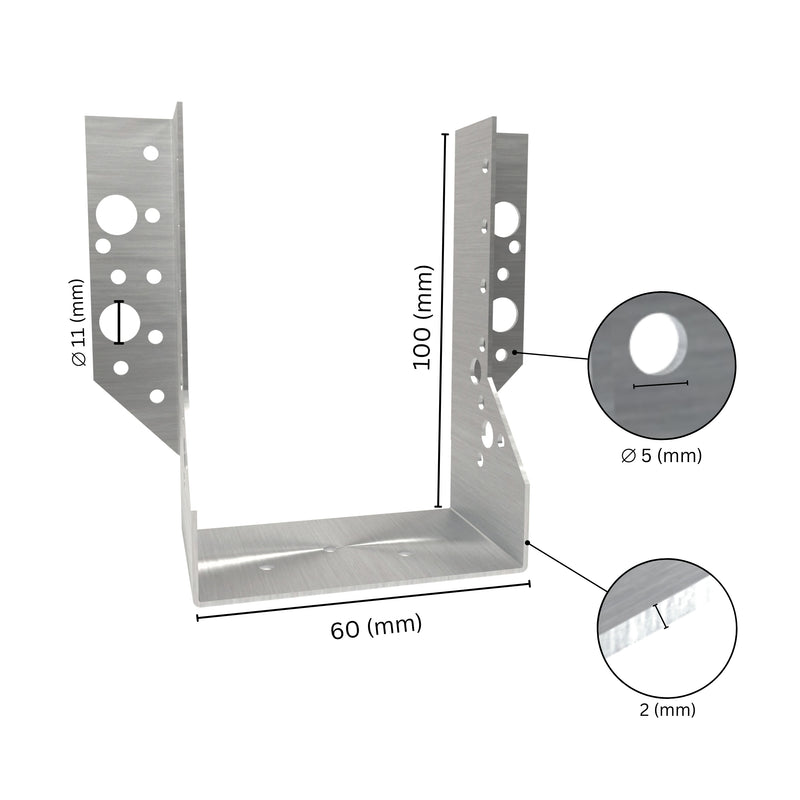
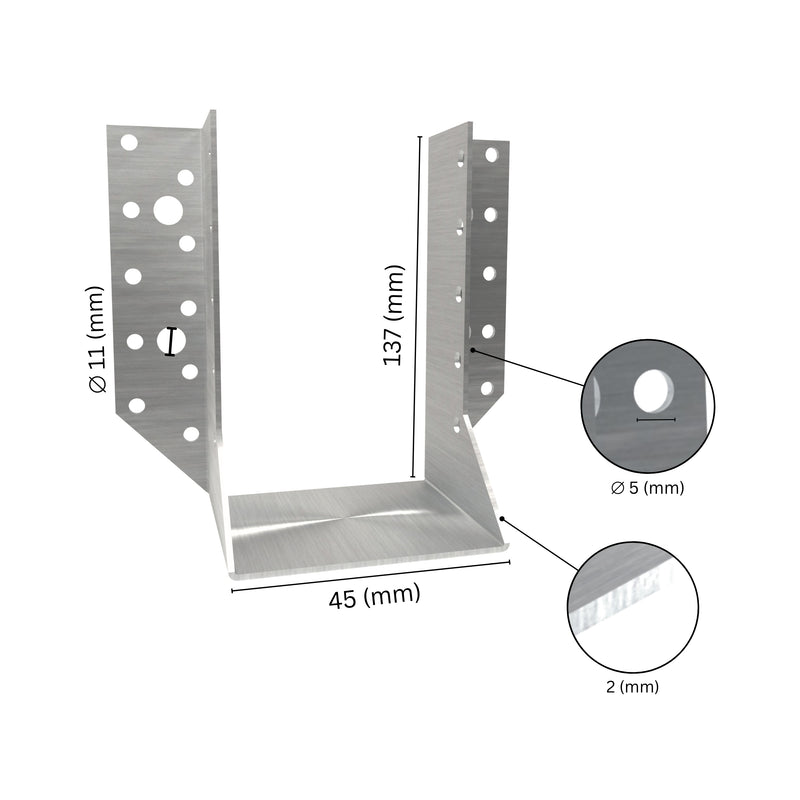
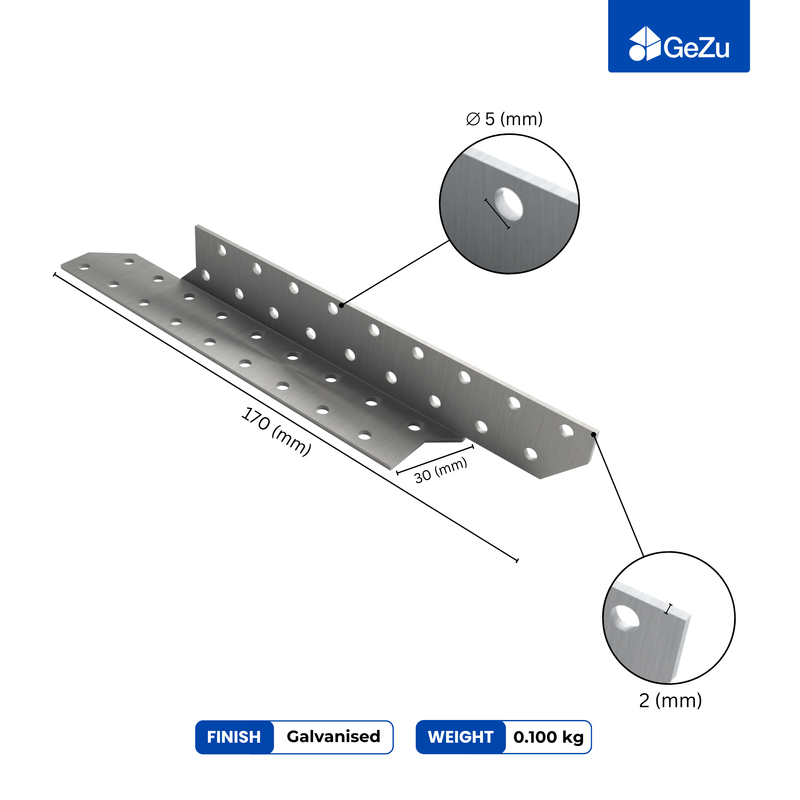
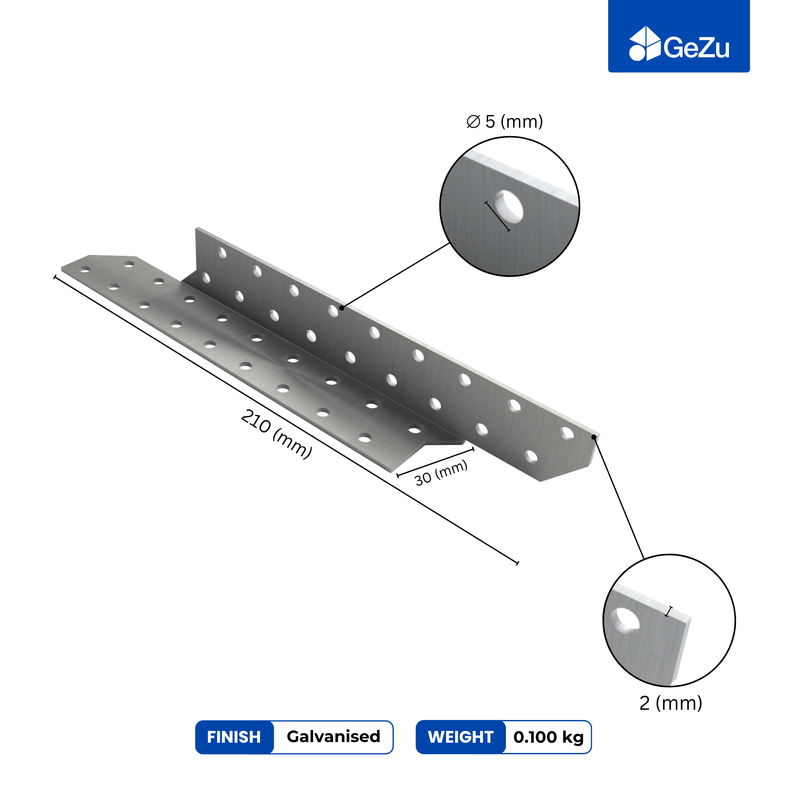
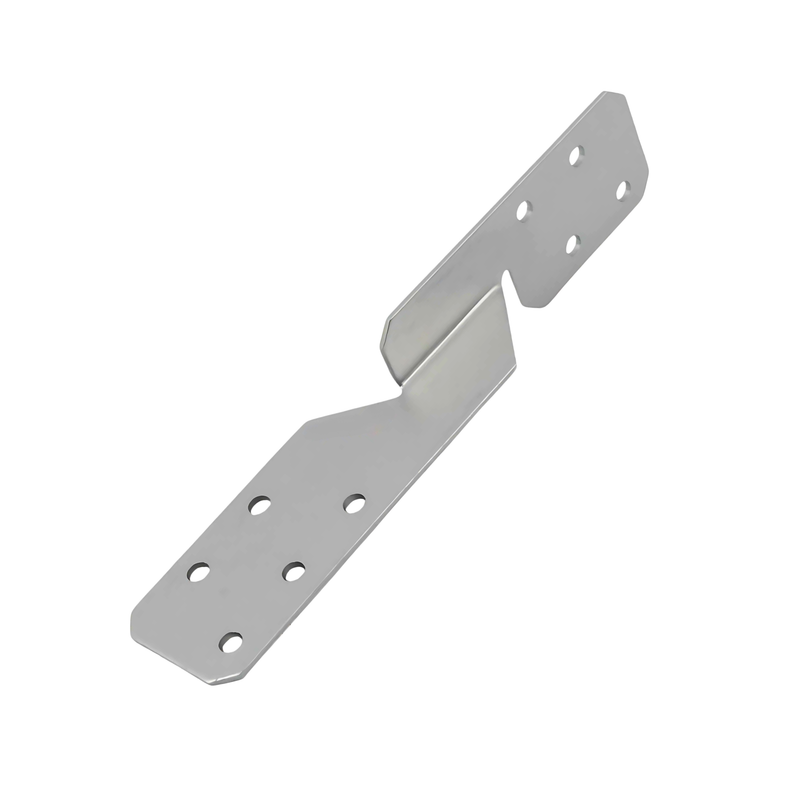
The L-Shape 2-Way Post Connector joins two wooden beams at a 90-degree angle over a shared 71x71mm post, forming the standard corner joint on a rectangular pergola frame.
L-Shape 2-Way Post Connector pros:
- Simple 90° corner joint with a hot-dip galvanised finish as standard
- Fits 71x71mm posts, the size used across most pergola builds
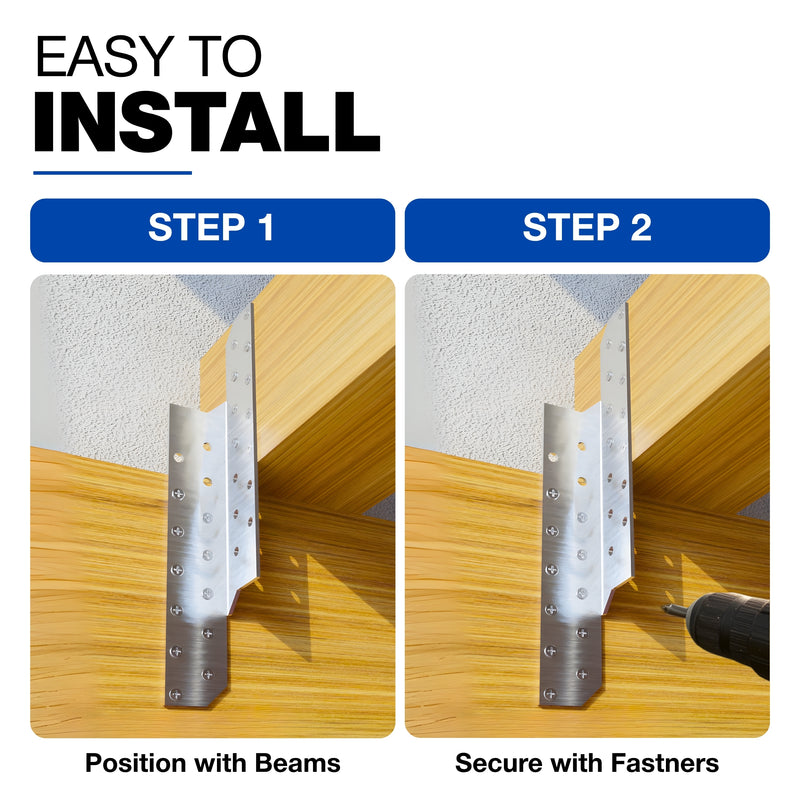
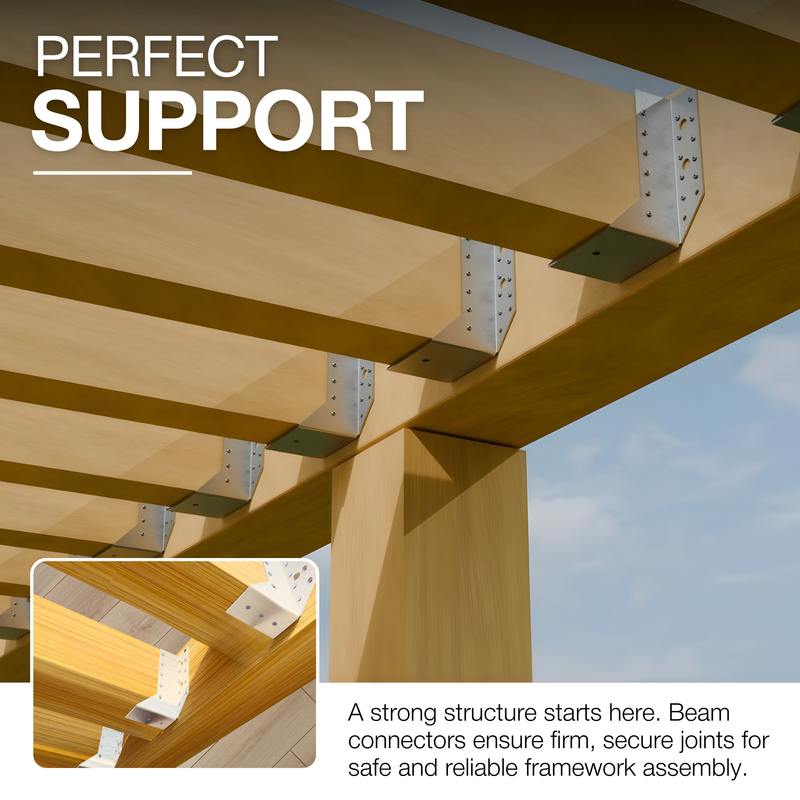
- Bolt-through fixing gives a solid mechanical connection at each corner
L-Shape 2-Way Post Connector cons:
- Only handles two beams — no use on a T-junction or multi-bay layout
- Corner angle is fixed at 90°, so it won't work on an angled frame
Best for: a first pergola build with four corners and no planned extensions. Verdict: Buy.
2. Y-Shape 3-Way Post Connector: best for a mid-span support post
The Y-Shape 3-Way Post Connector connects two beams to a central post at 90°, used where a straight run needs a supporting post partway along rather than at a corner.
Y-Shape 3-Way Post Connector pros:
- Adds a mid-span post without breaking the beam run
- Keeps beams aligned along one axis
- Same 71x71mm fit and hot-dip galvanised finish as the L-shape
Y-Shape 3-Way Post Connector cons:
- Doesn't handle a full 4-way junction
- Open-style design leaves fixing bolts visible on the finished joint
Best for: long pergola runs that need a supporting post every few metres. Verdict: Buy for multi-metre runs, Skip if your design has no mid-span post.
3. X-Shape 4-Way Post Connector: best for multi-bay pergolas
The X-Shape 4-Way Post Connector joins three beams to a central post at 90-degree angles, the connector used at internal junctions where a pergola extends across multiple bays.
X-Shape 4-Way Post Connector pros:
- Only bracket in this range built for a genuine 4-way junction
- Spreads load across more fixing points than the L-shape or T-shape
- Keeps a shared post carrying beams running in three directions
X-Shape 4-Way Post Connector cons:
- Overkill for a single-bay, four-corner pergola
- Needs a post rated for the combined load of three beams
Best for: multi-bay pergolas with an internal post carrying beams in two directions. Verdict: Buy for multi-bay builds, Skip for a simple frame.
4. T-Shape 3-Way Post Connector: best for wall-adjacent extensions
The T-Shape 3-Way Post Connector connects two beams to a central post in a T-junction, suited to extending a pergola against an existing structure or wall line.
T-Shape 3-Way Post Connector pros:
- Handles wall-adjacent T-junctions cleanly
- Available in a black powder-coated finish for a different look than raw galvanised steel
- Same bolt-through fixing as the rest of the connector range
T-Shape 3-Way Post Connector cons:
- Three-way only, no upgrade path to a fourth beam without switching to the X-shape
- Powder-coated finish needs weighing against hot-dip galvanised for long-term outdoor exposure
Best for: T-junction joints where an extension meets an existing pergola run at a right angle. Verdict: Buy for wall-adjacent extensions, Hold if you need galvanised only.
5. Pergola Wall Bracket: best for wall-mounted pergolas
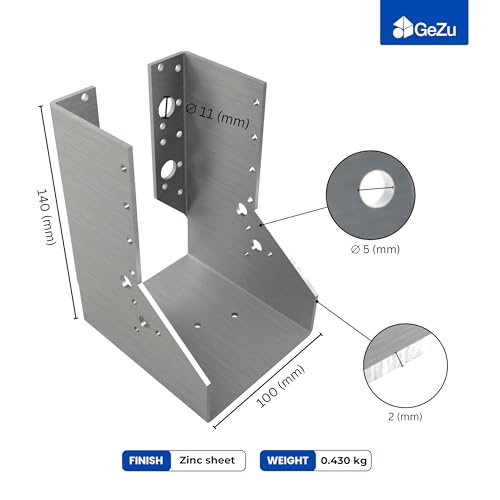
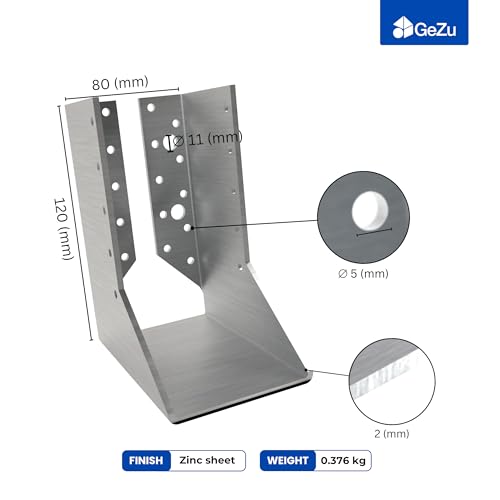
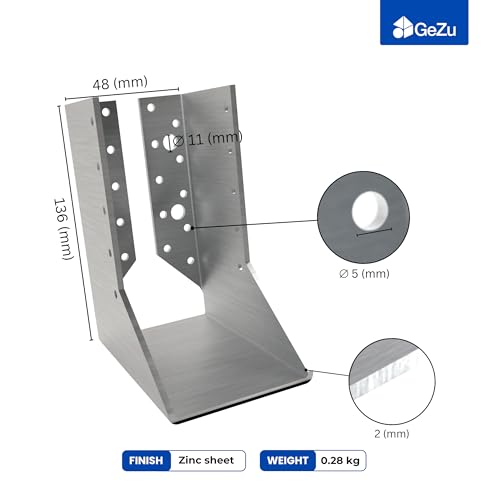
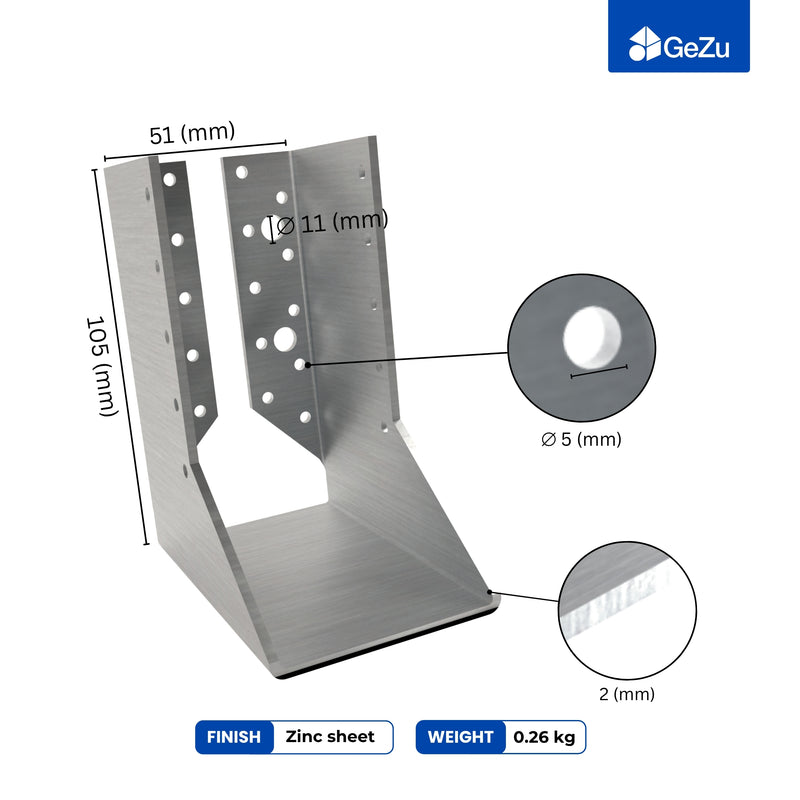
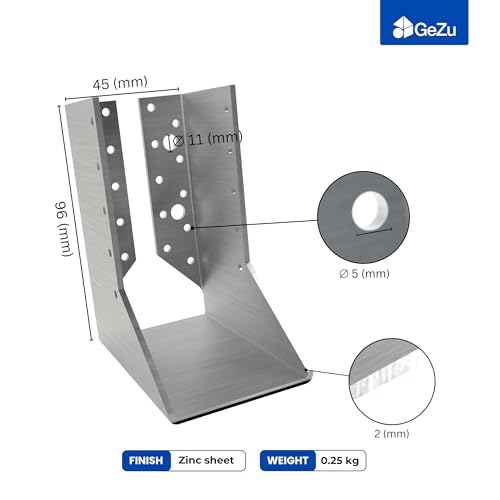
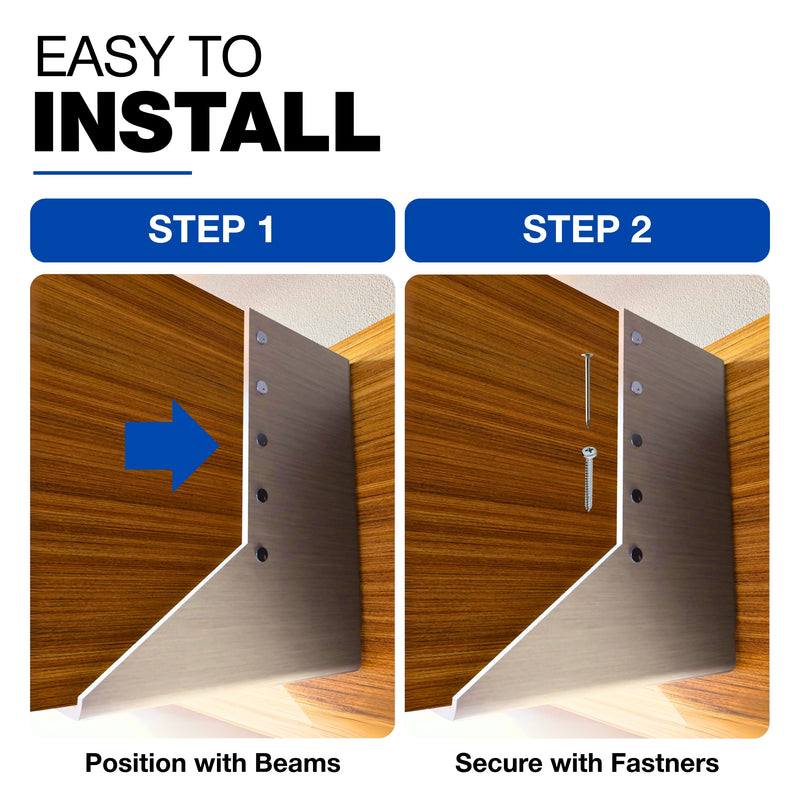
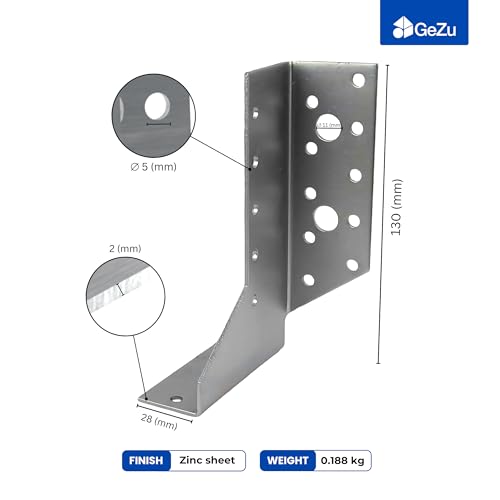
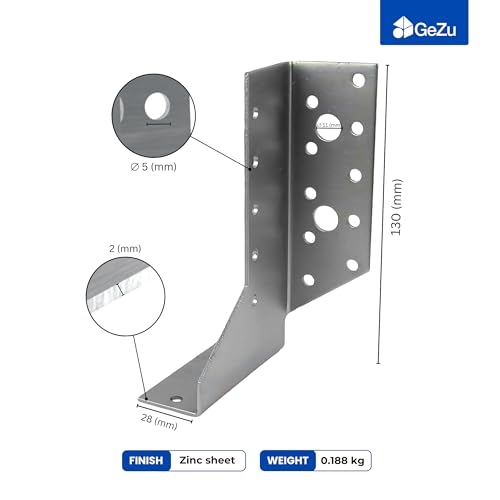
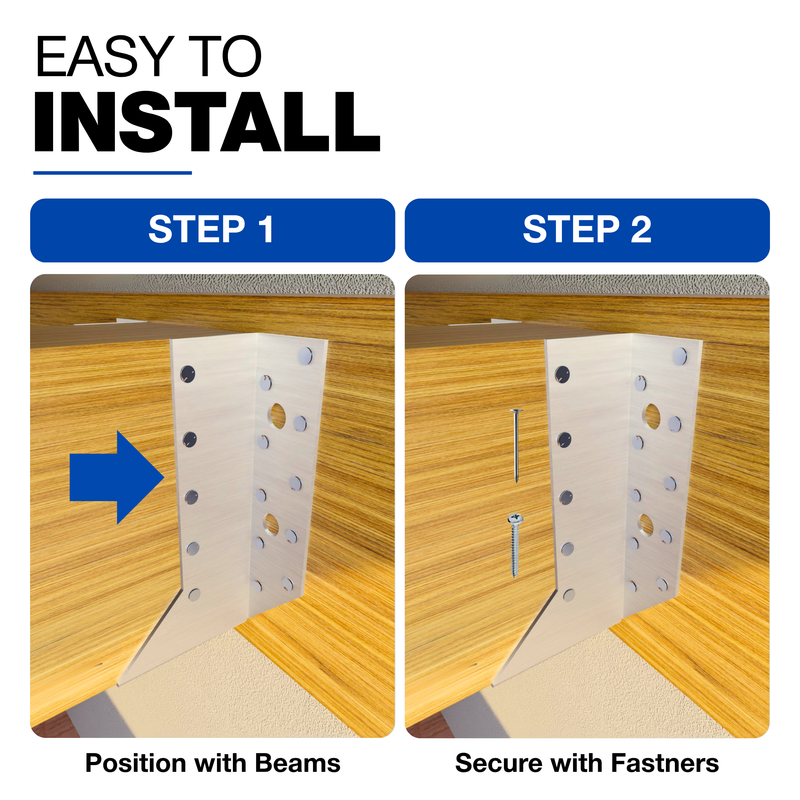
The Pergola Wall Bracket attaches wooden beams directly to a brick or concrete wall, removing the need for a post on the wall-facing side of the structure.
Pergola Wall Bracket pros:
- Eliminates one post entirely on wall-mounted designs
- Works on brick or concrete
- Open-style design suited to timber beams
Pergola Wall Bracket cons:
- Needs a sound masonry wall to fix into
- Not a substitute for a post connector on the open side of the frame
Best for: wall-mounted pergolas attached to a house or garden wall. Verdict: Buy for wall-mounted builds, Skip for free-standing designs.
6. H-Post Anchor: best for permanent concrete-set posts
The H-Post Anchor sets a pergola post directly into a concrete footing, giving a permanent, below-ground fixing rather than a surface-mounted base.
H-Post Anchor pros:
- Sets the post below ground level for extra stability
- Suited to permanent installations that won't move
- Works alongside any of the beam connectors above
H-Post Anchor cons:
- Needs concrete poured and cured before the post goes in
- Harder to adjust position once installed
Best for: permanent pergolas set into a concrete footing. Verdict: Buy for permanent installs, Skip for a deck or patio build.
7. Elevated Adjustable Post Base: best for patio and decking builds
The Elevated Adjustable Post Base raises a post off the ground and allows minor position adjustment after fixing, used on patios, decking or damp ground where digging a footing isn't practical.
Elevated Adjustable Post Base pros:
- Keeps the post foot off wet ground, reducing rot risk
- Adjustable after fixing for last-minute alignment
- Bolts to hard surfaces without concrete work
Elevated Adjustable Post Base cons:
- Needs a solid surface to bolt into
- Less lateral stability than a concrete-set post
Best for: pergolas built on paving, decking or patios. Verdict: Buy for patio and decking builds, Skip if you're setting posts in concrete anyway.


How we ranked these pergola brackets and connectors
Each connector was scored against the six criteria above: post size fit, beam configuration, steel finish, load direction, fixing method and open-style design. No two items compete for the same layout — a 2-way corner, a mid-span post, a 4-way junction, a wall mount, and two ground-fixing methods each get their own slot, so the list reads as a decision tree based on your pergola layout, not a popularity contest.
Which pergola bracket should you choose?
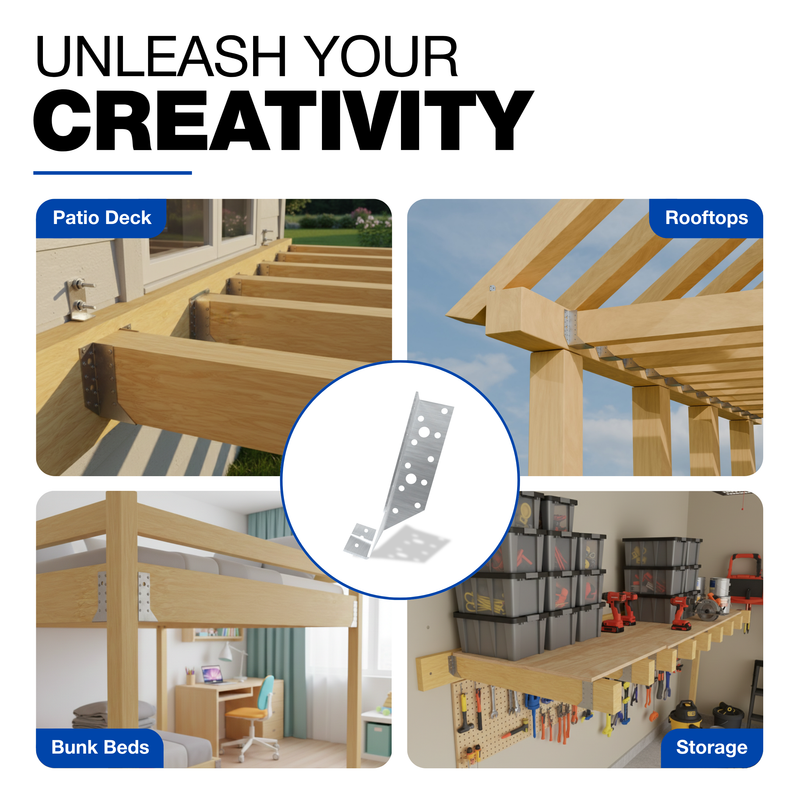
For a standard rectangular pergola with four corners, the L-Shape 2-Way Post Connector is the default pick for 2026 builds. Extending across more than one bay pushes you toward the X-Shape 4-Way Post Connector, since it's the only bracket rated for a genuine three-beam junction. Building against a house wall means skipping post connectors altogether for the Pergola Wall Bracket, and any post going into paving or decking rather than concrete needs the Elevated Adjustable Post Base under it.
FAQ
What's the best pergola bracket for a multi-bay pergola in 2026?
The X-Shape 4-Way Post Connector is the best pergola bracket for multi-bay layouts in 2026 because it's the only connector in most ranges rated for three beams meeting a central post. Single-bay pergolas don't need this configuration and should use the L-Shape 2-Way Post Connector instead.
Is a 4-way connector better than a 3-way connector for pergolas?
Neither is universally better — a 4-way connector suits an internal post carrying beams in three directions, while a 3-way connector suits a T-junction or mid-span post. Using a 4-way bracket where only two beams meet wastes fixing points and adds unnecessary load capacity.
What size posts do pergola brackets fit?
Most pergola brackets and connectors, including the L, T, X and Y shapes covered here, are built for 71x71mm timber posts. Check your post dimensions before ordering, since a mismatch means the joint won't sit flush.
Do I need a post anchor if I'm using a wall bracket?
Only on the open side of the structure — the wall bracket handles the wall-facing beam connection, but any post standing free of the wall still needs a ground fixing such as an H-Post Anchor or an elevated post base.
Should pergola connectors be hot-dip galvanised or powder-coated?
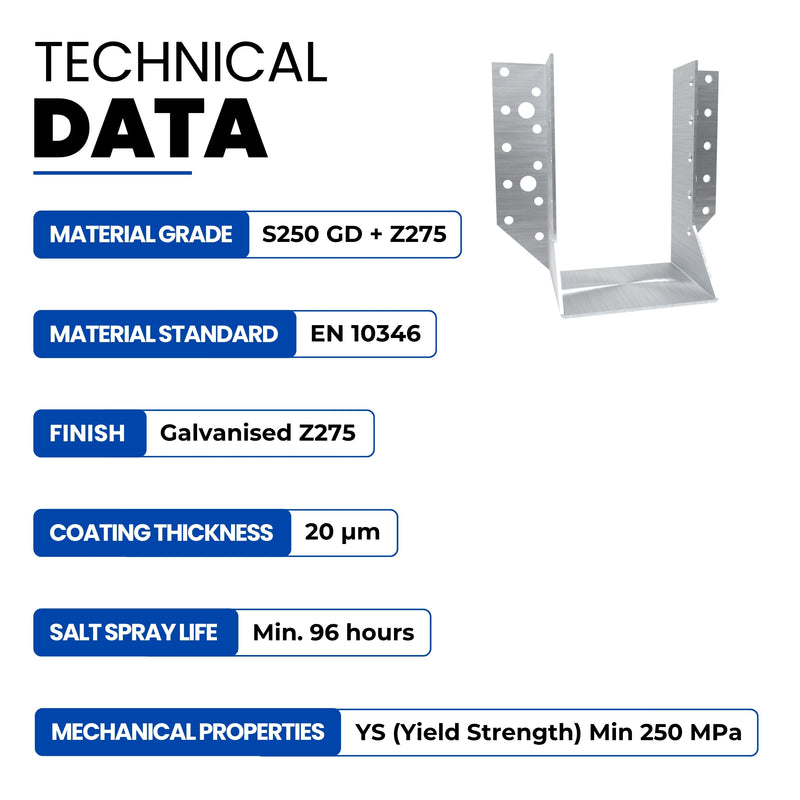
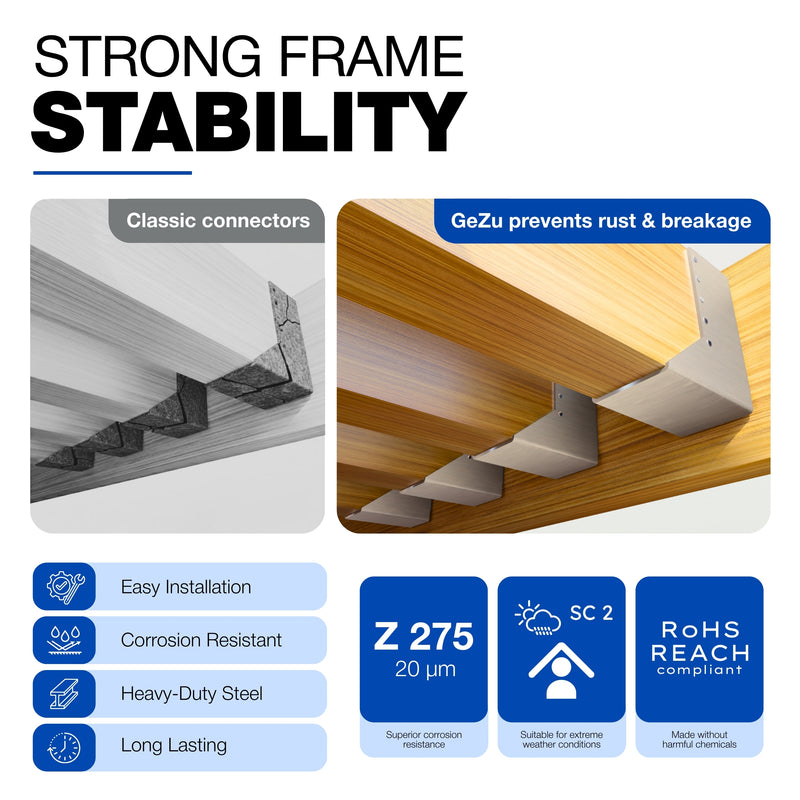
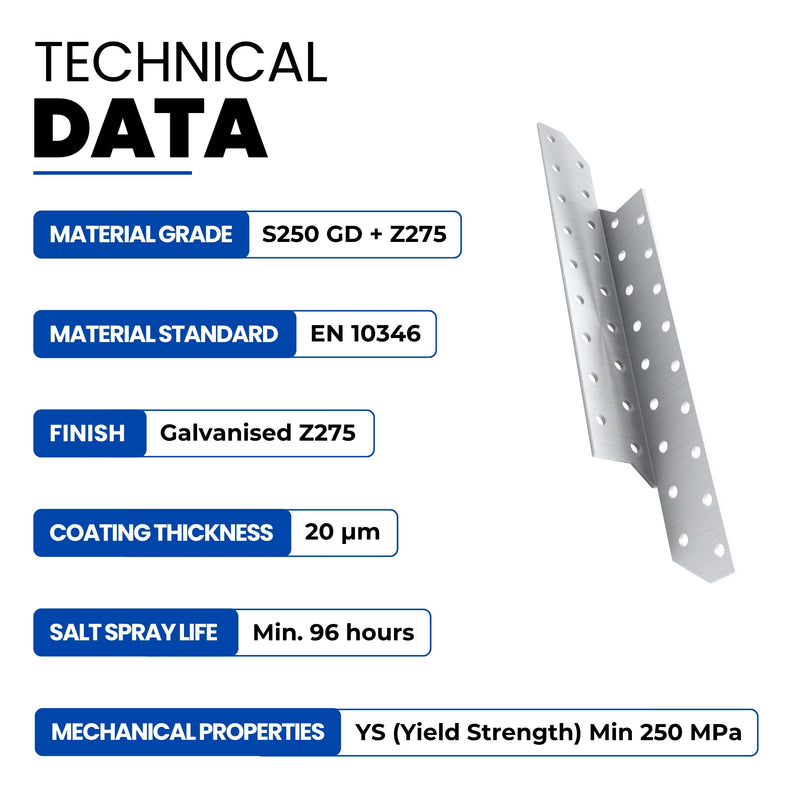
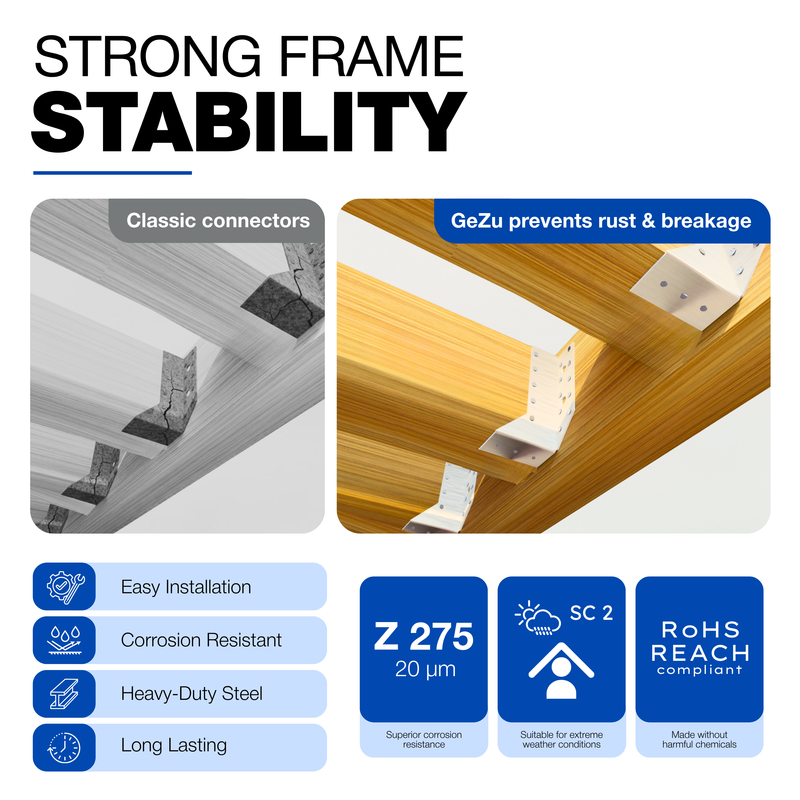
Hot-dip galvanised steel provides a thicker zinc coating and stronger bonding than powder-coated or electro-galvanised finishes, giving longer-lasting corrosion resistance outdoors. Powder-coated black connectors work fine but need more attention on ongoing weather exposure.
Can I mix post connector shapes on the same pergola?
Yes — most pergola builds use a mix, with L-shapes at the outer corners, Y or T-shapes at mid-span or wall junctions, and X-shapes only where an internal post genuinely carries three beams. Matching the shape to each joint beats using one connector type throughout.
How do I attach a pergola to a house wall?
A pergola wall bracket bolts directly into brick or concrete and takes the place of a post connector on the wall-facing beam. The rest of the frame still needs standard post connectors and ground fixings on the free-standing side.
What's the difference between an L-shape and a T-shape post connector?
An L-shape connector joins two beams at a single 90-degree corner, while a T-shape connector joins two beams to a central post positioned mid-run rather than at a corner. The L-shape suits frame corners; the T-shape suits extensions and wall-adjacent junctions.
One last thing
The open-style design on most of these connectors isn't a cost-cutting shortcut — it lets timber beams dry out after rain instead of trapping moisture behind a closed steel box, which is exactly where rot starts on a 2026-built pergola left standing through a wet winter. If you're choosing between a hot-dip galvanised and a powder-coated black finish for the same shape, the hot-dip coating is thicker and bonds more strongly to the steel, so it holds up longer against weather even though the black finish looks sharper on day one.