Bolt Down U-Shaped Post Support vs Concrete In: Which Is Better

Bolt down onto sound existing concrete. Concrete in when you're starting from bare soil, or when the fence is tall and exposed. That's the short answer, and for most gardens it's the whole answer: a bolt down post support is faster, reversible and perfectly strong enough for a patio pergola or a low fence, while a concrete in post support buries a steel rod in a fresh footing and wins on raw holding power.
The choice is really a question about what is already under your feet. Everything else, the adjustability, the finish, the price, follows from that.
Bolt Down U-Shaped Post Support vs Concrete In: Quick Comparison
| Bolt-down U post support | Concrete-in U post support | |
|---|---|---|
| Fixes to | Existing concrete, paving, decking | Fresh concrete poured into a dug hole |
| Install time | Under an hour per post | Dig, pour, then wait for the cure |
| Holding power | As good as the slab and the anchors | Higher; the footing does the work |
| Wind and leverage | Fine to roughly 1.5 m fence height | The sensible choice above that |
| Reversible? | Yes, unbolt and move it | No, it's permanent |
| Frost heave | Depends entirely on the slab | Better, if the footing goes deep enough |
| Typical price here | From about €3.59 | From about €4.89 |
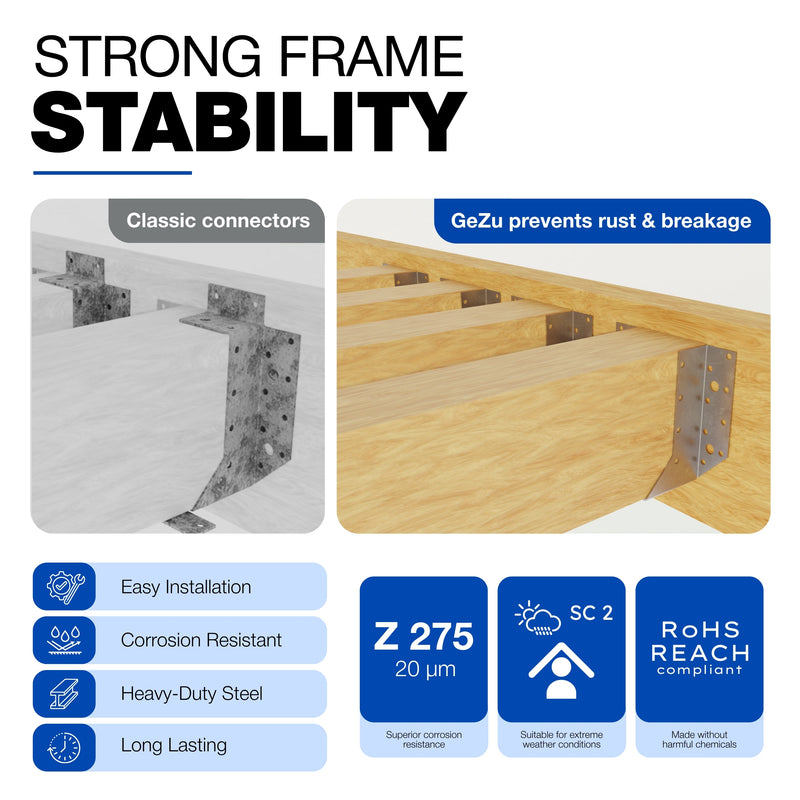
One thing worth clearing up before anything else, because it causes more confusion than the rest of this article put together: a concrete-in post support is not the same as concreting the post in. The old method drops the timber itself into the hole and pours around it. Concrete holds water against wood, so that post rots at the ground line, usually within a decade. Both support types here keep the timber up on steel, out of the wet. That shared feature matters more than the bolt-down versus concrete-in argument does.
What Is a Bolt-Down Post Support?
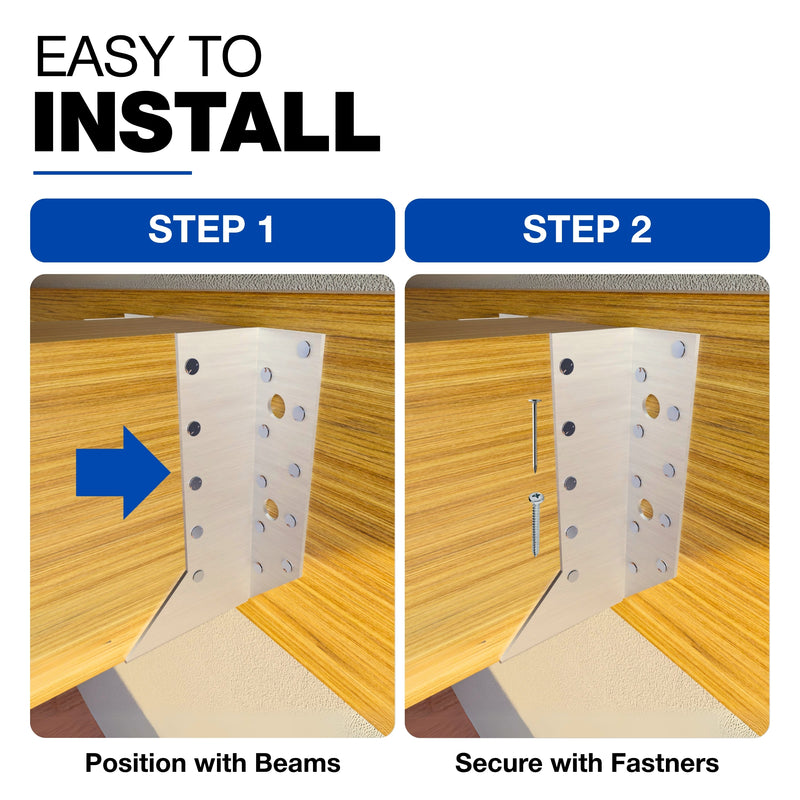
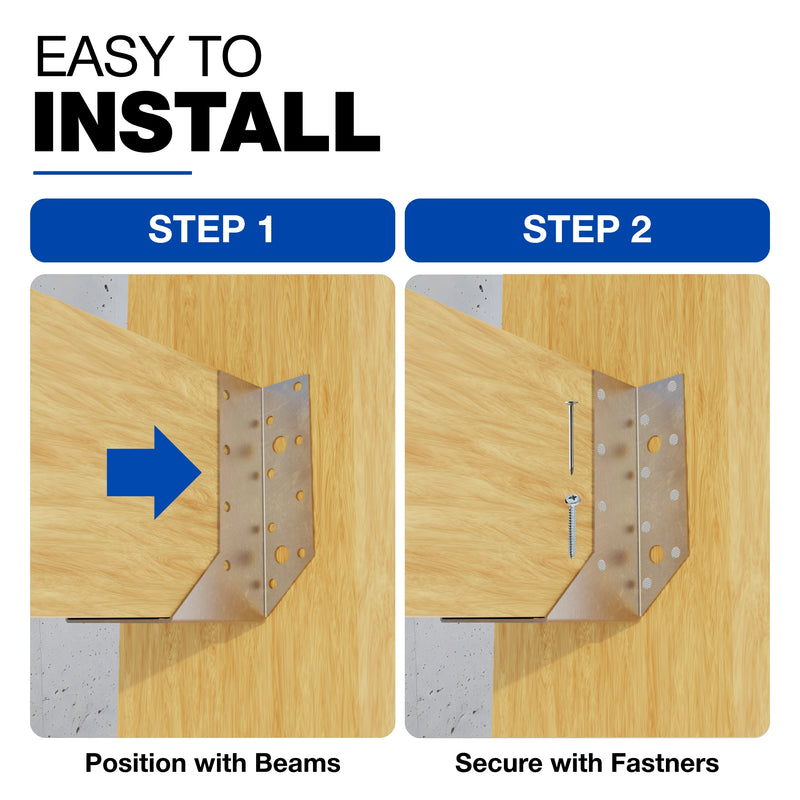
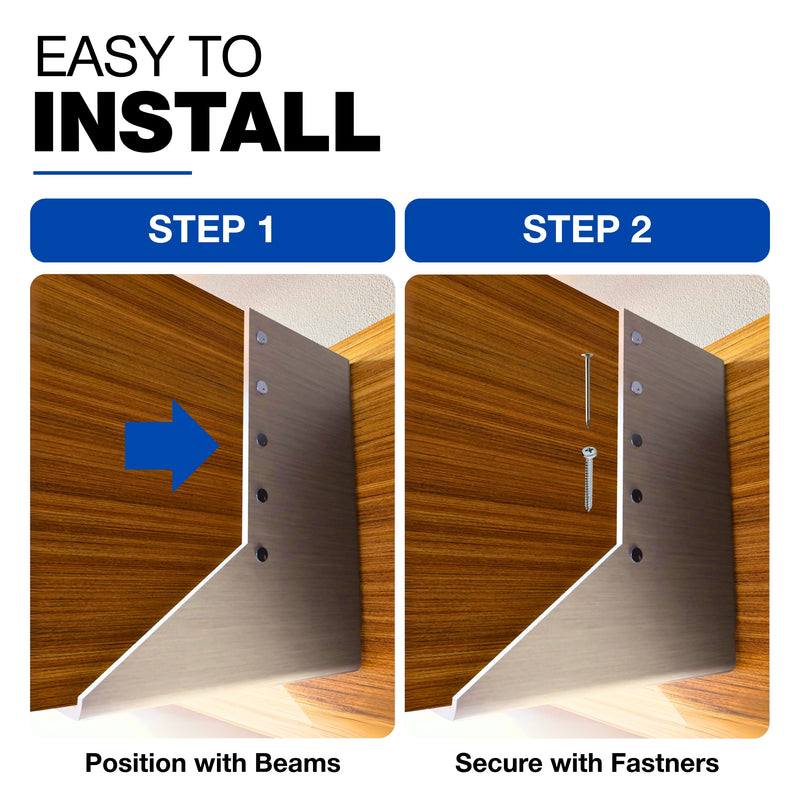
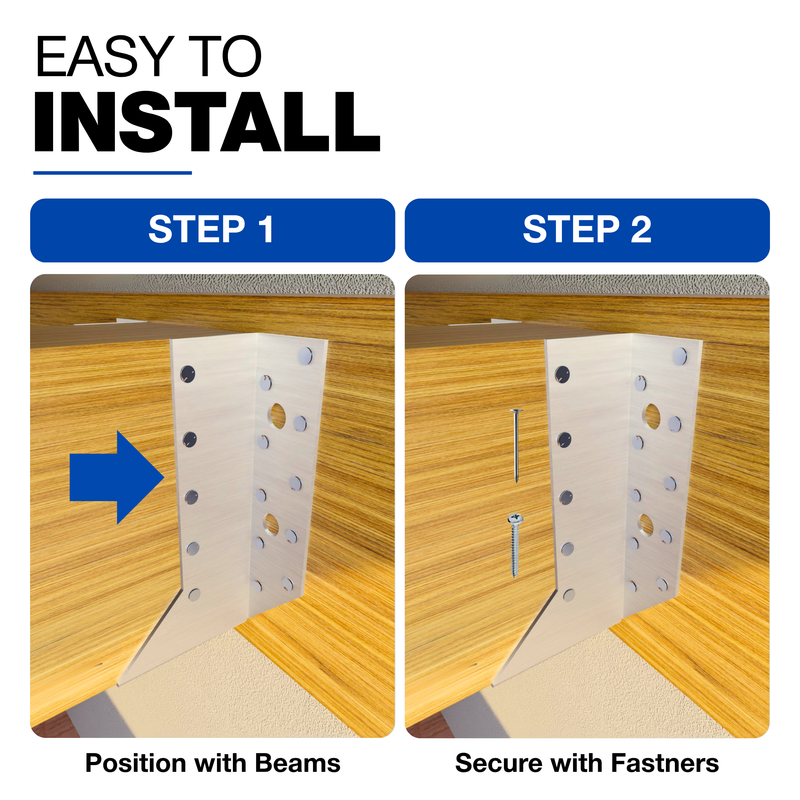
A bolt-down post support, also sold as a post shoe or a bolt-down post anchor, is a galvanised steel bracket with a flat base plate that fixes onto a surface that already exists: a concrete slab, a paved patio, a wall top or a deck frame. You drill the hardstanding, drop in expansion anchors or resin studs, and bolt the base plate down. The post then sits inside the U-shaped head and takes screws through the side plates. No digging, no wet trades, and the post comes off again if you ever change the layout.
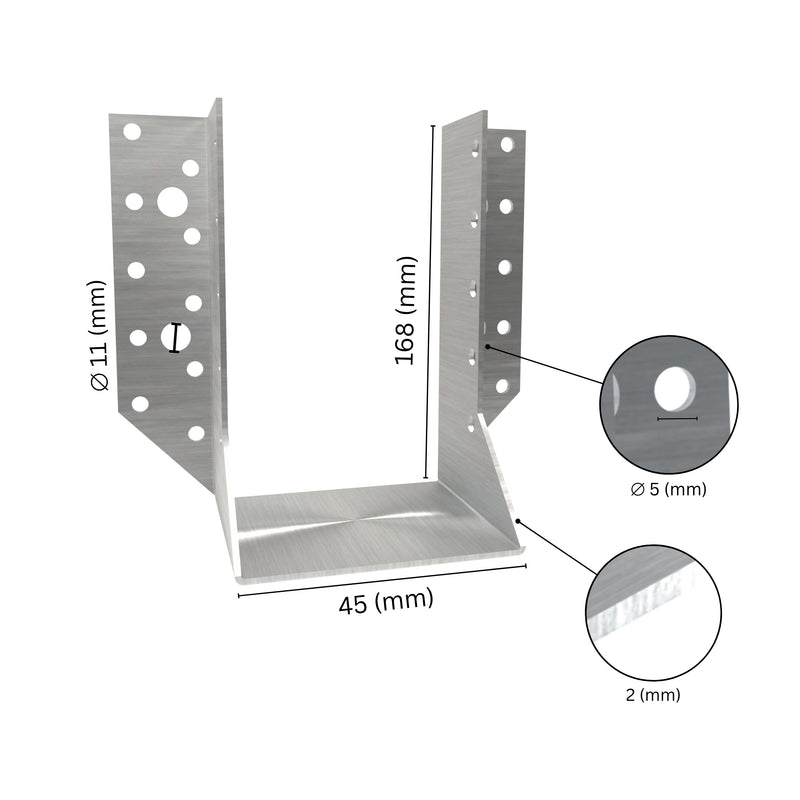
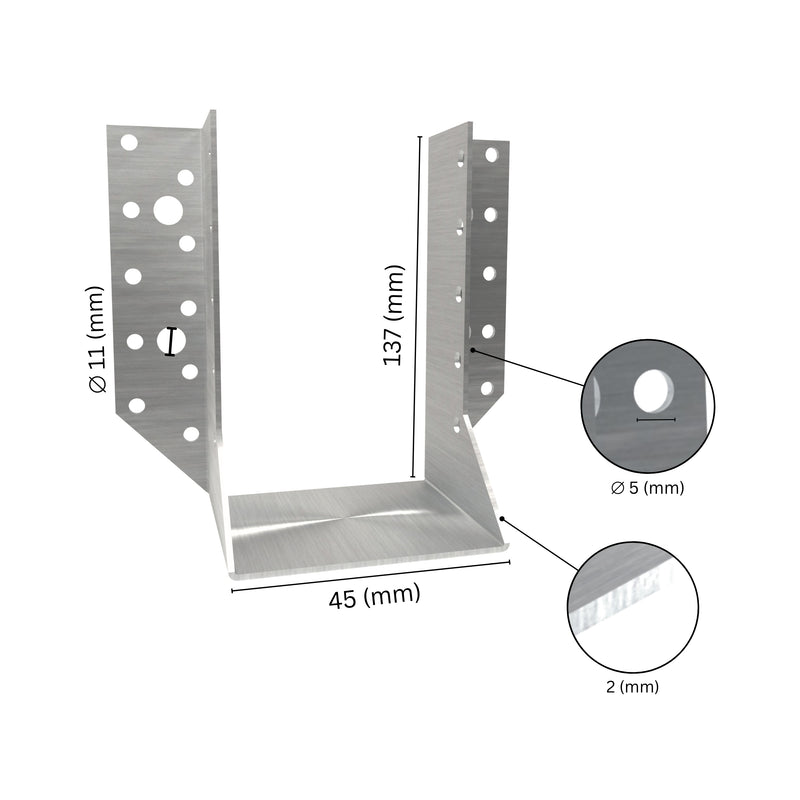
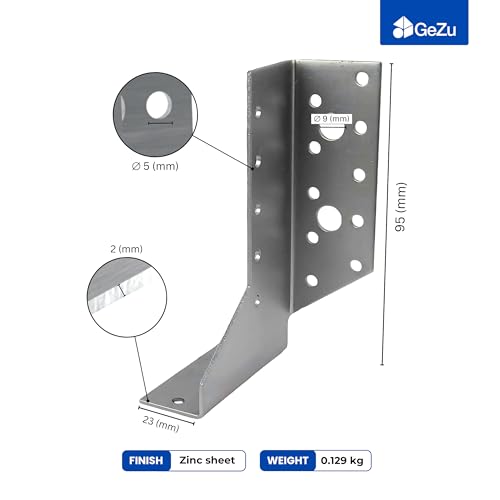
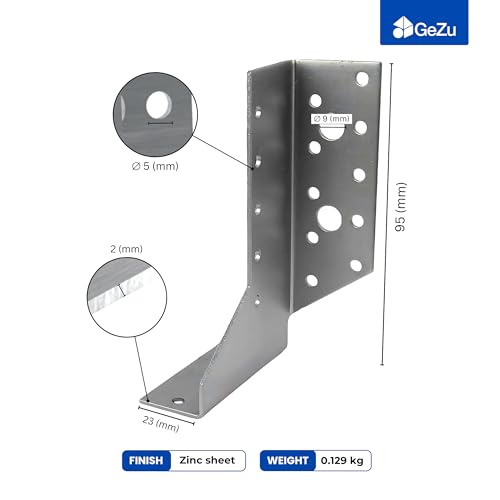
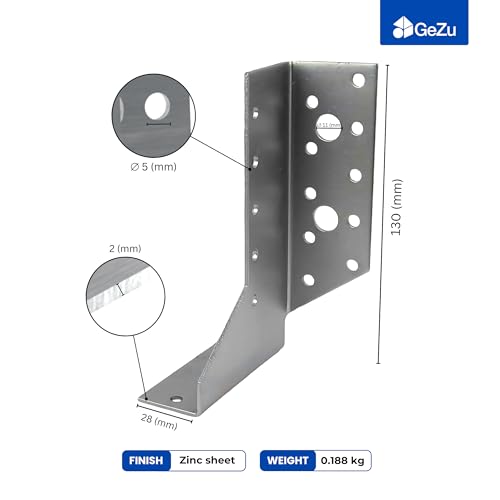
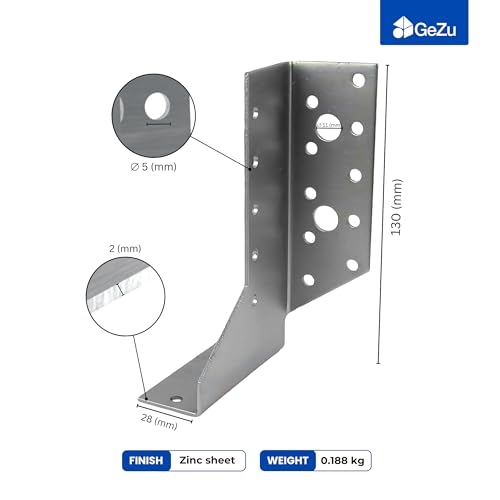
Bolt-Down U-Shaped Bracket With Bend

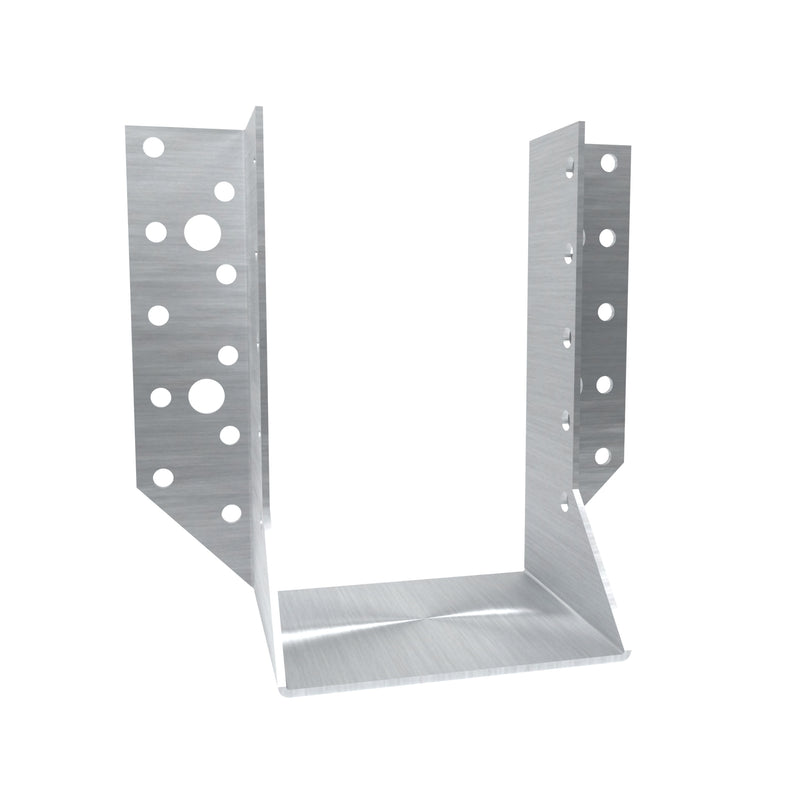
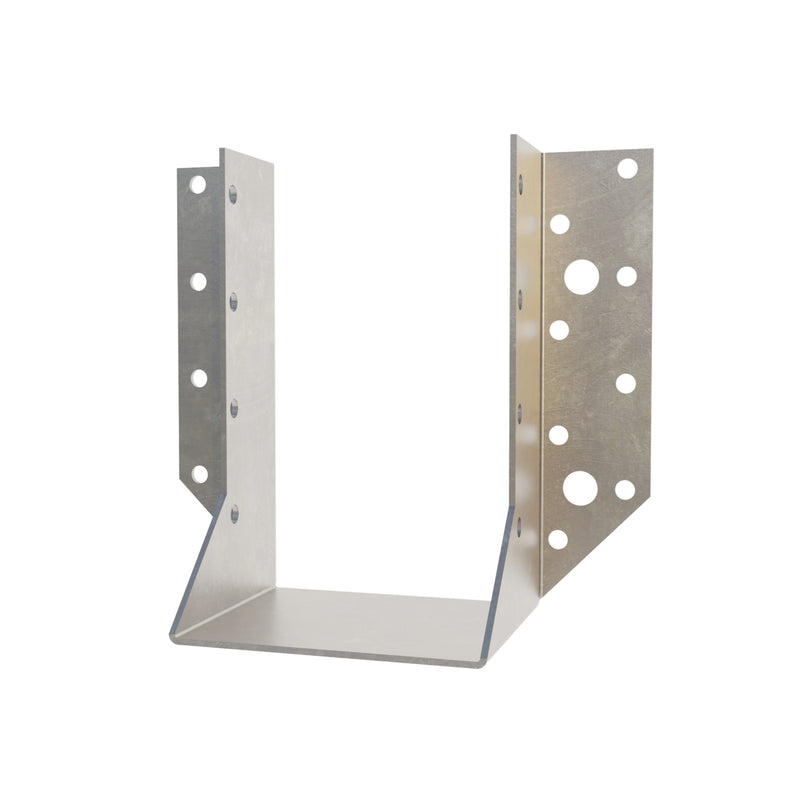
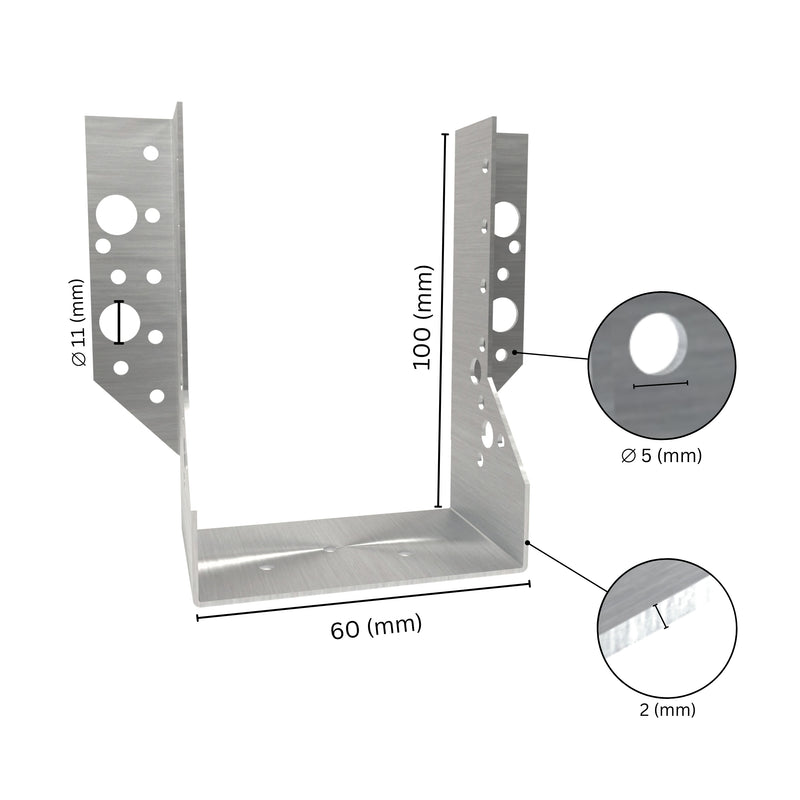
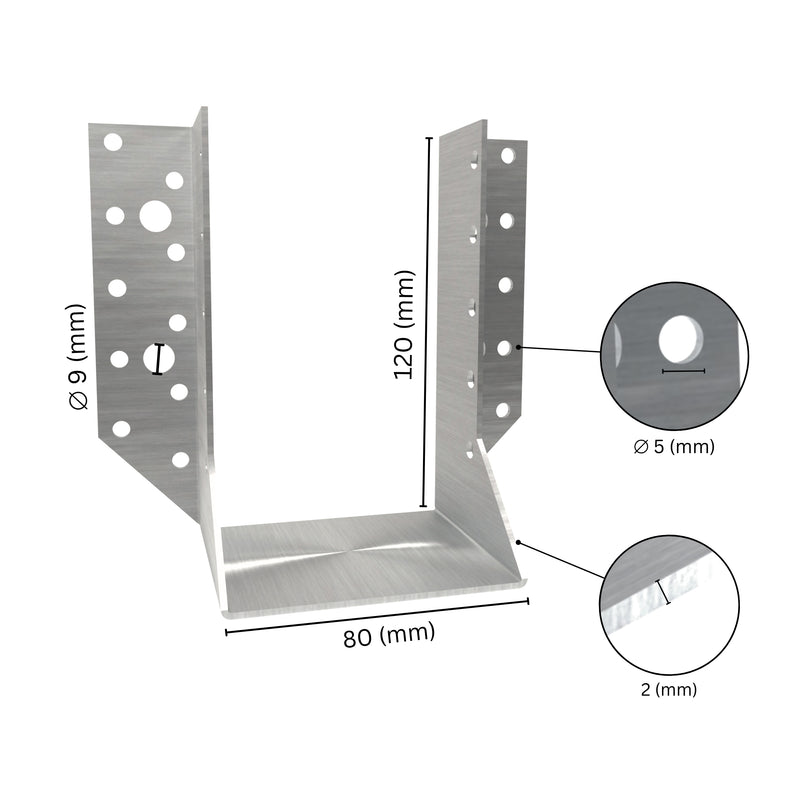
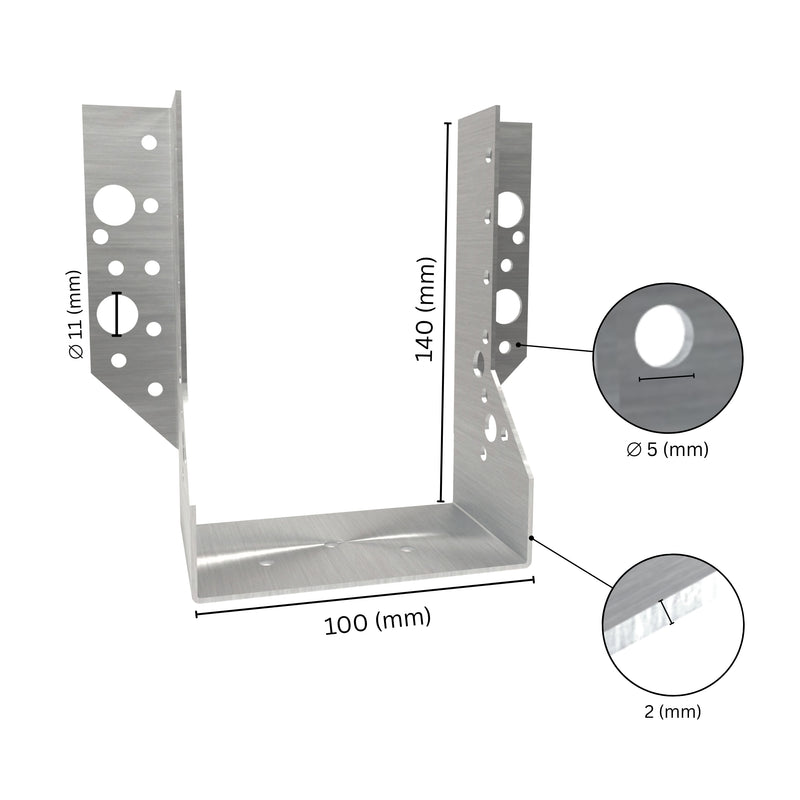
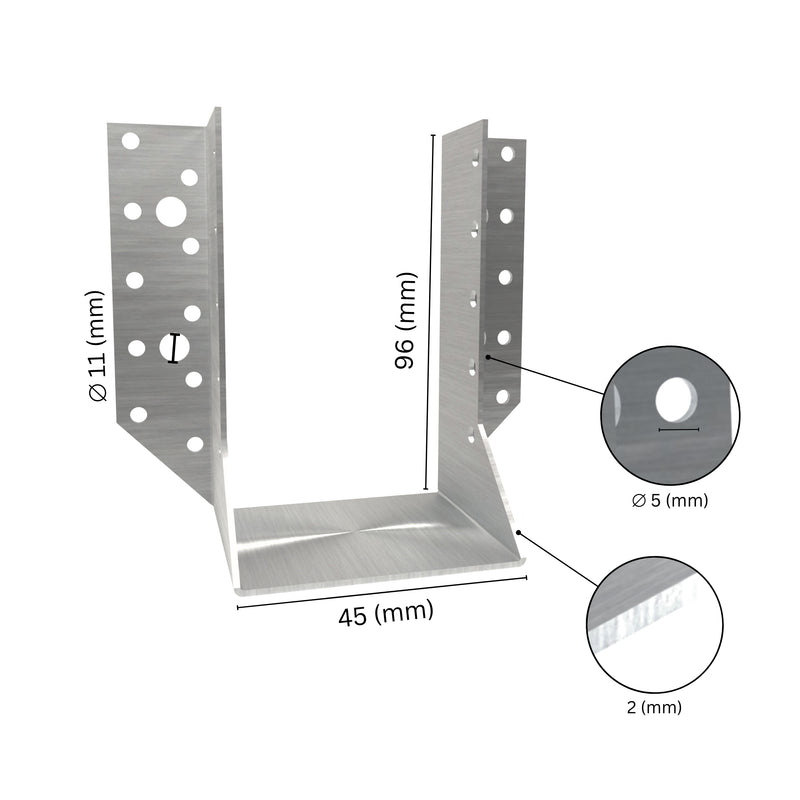
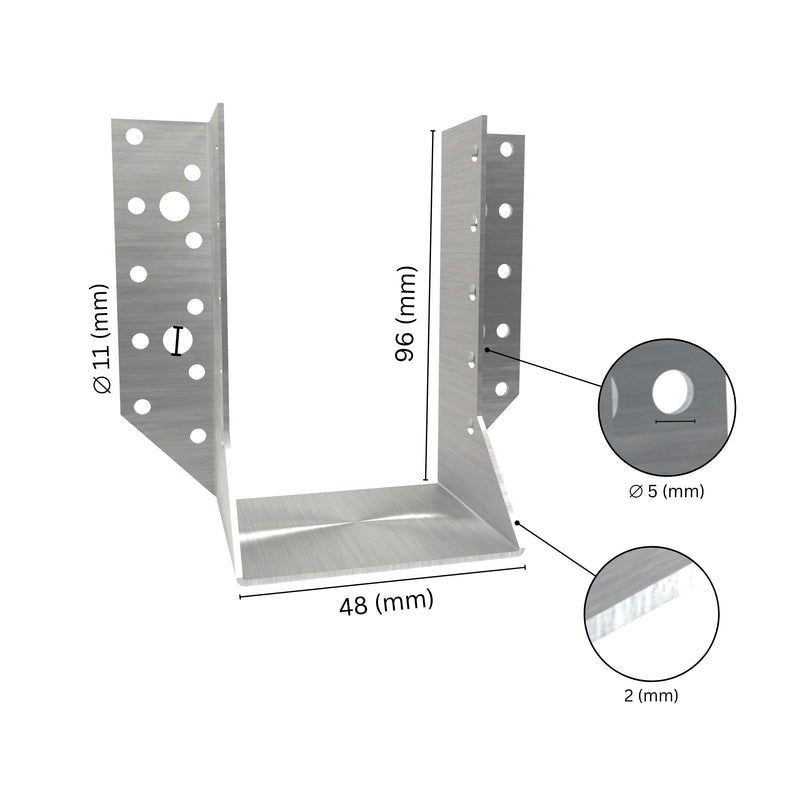
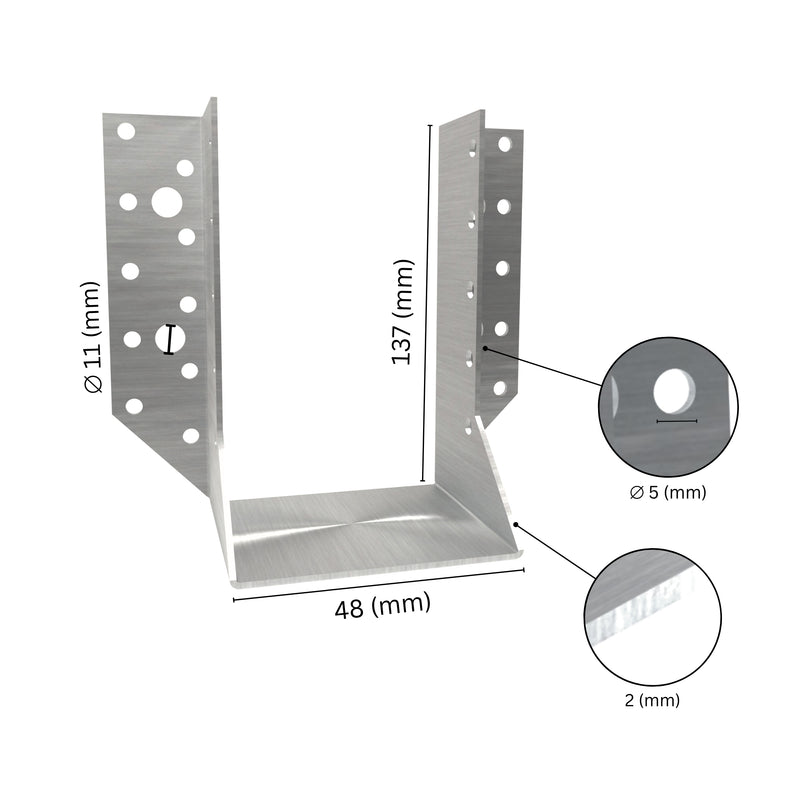
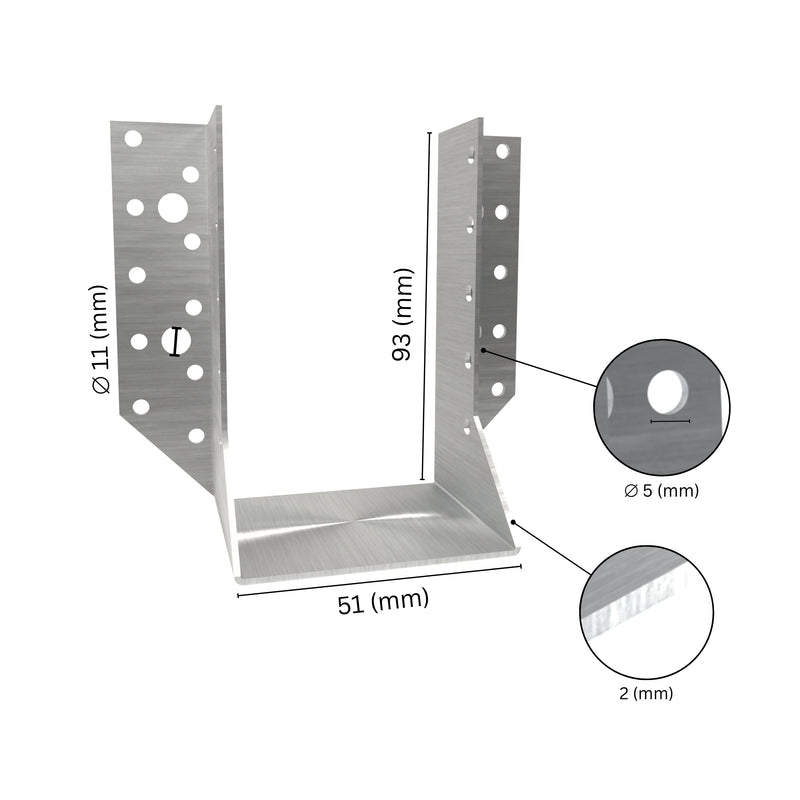
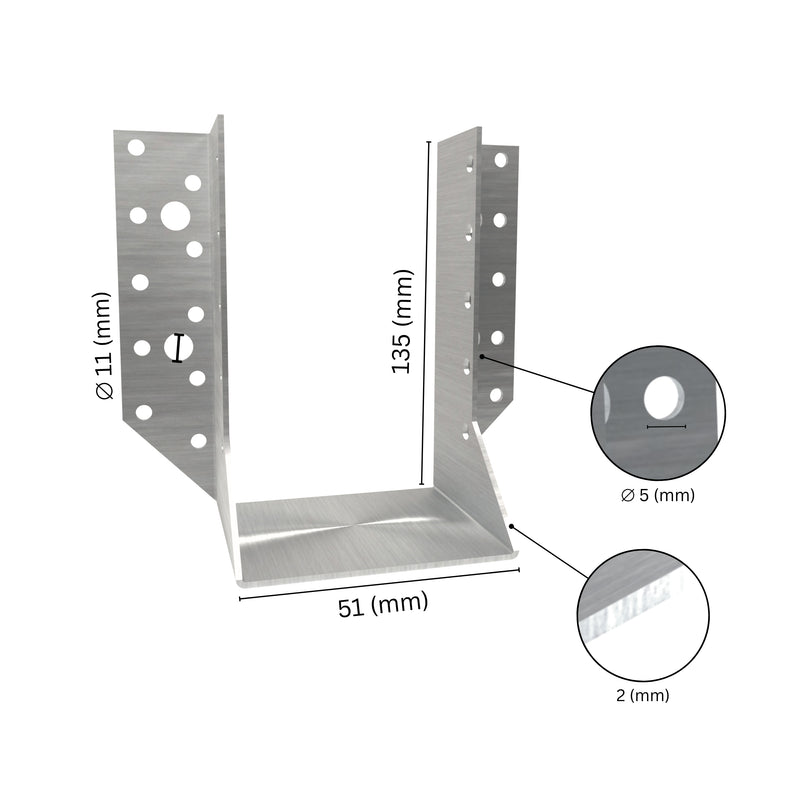
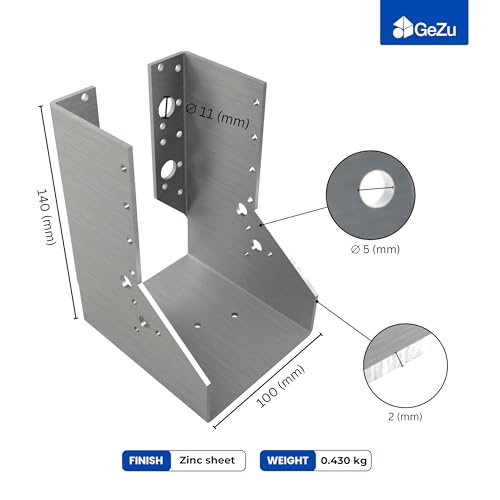
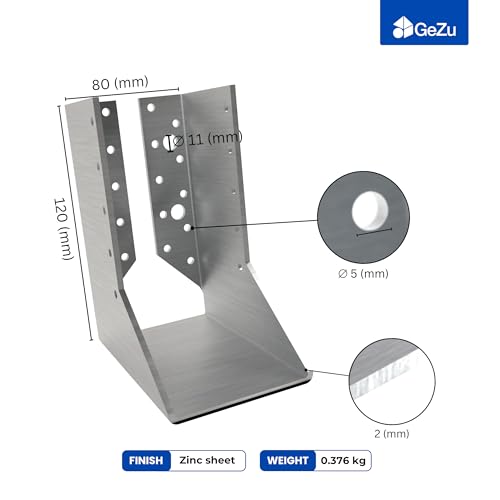
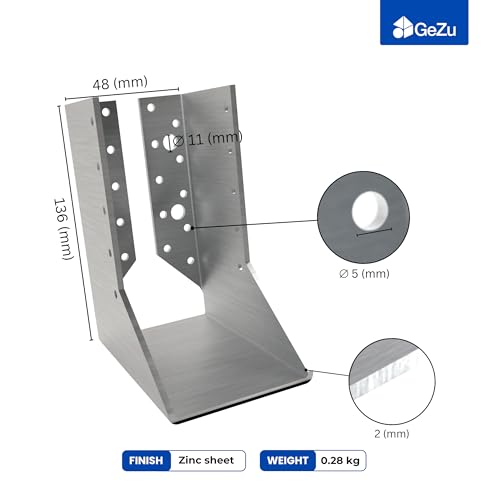
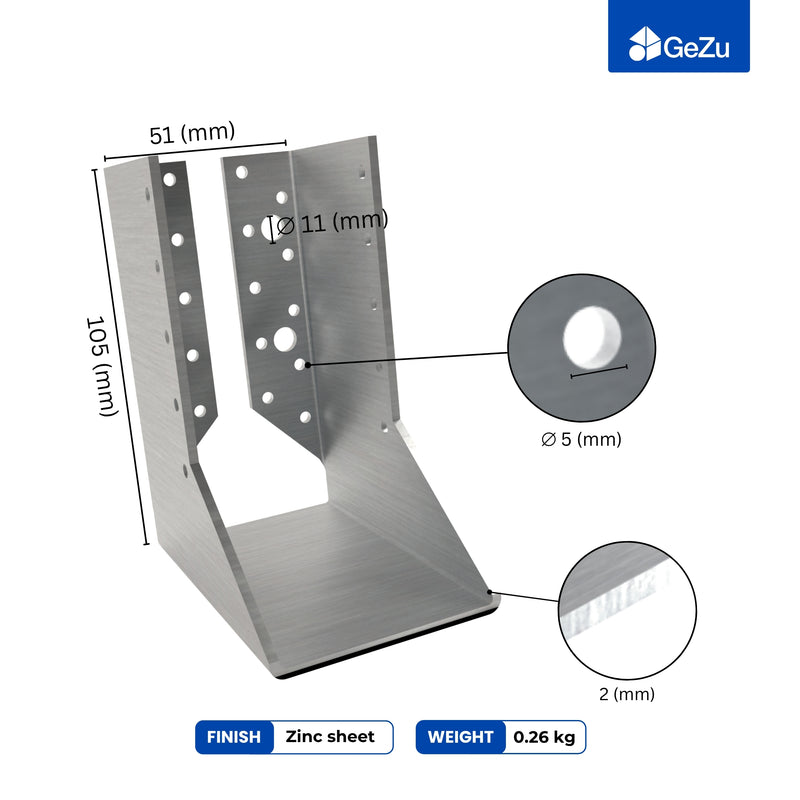
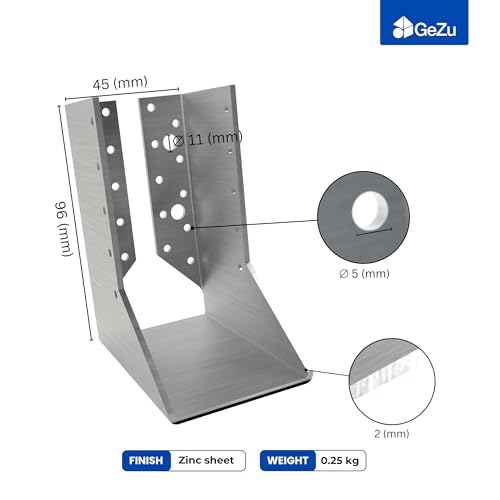
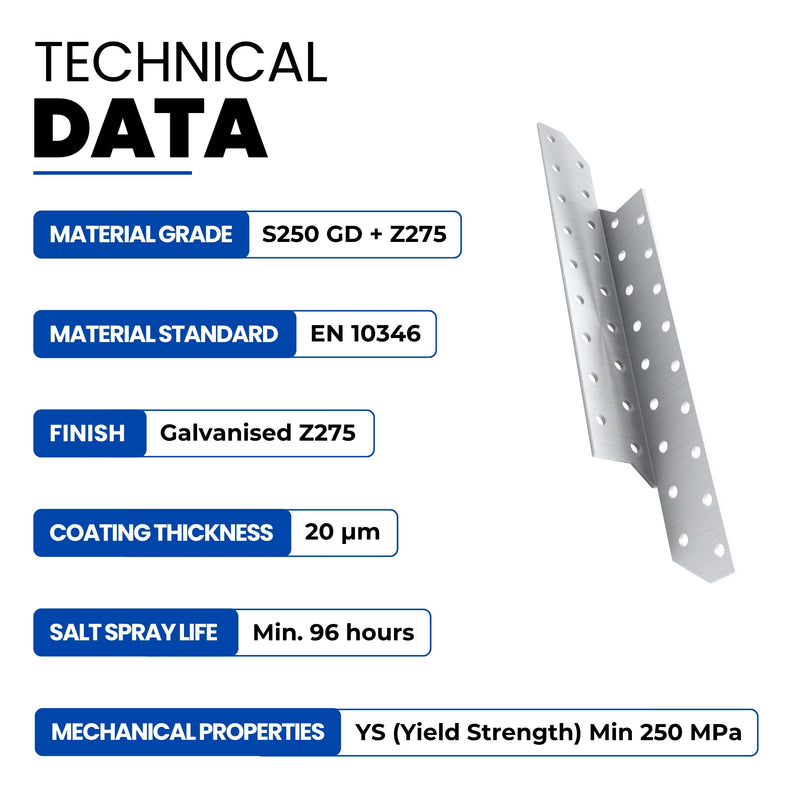
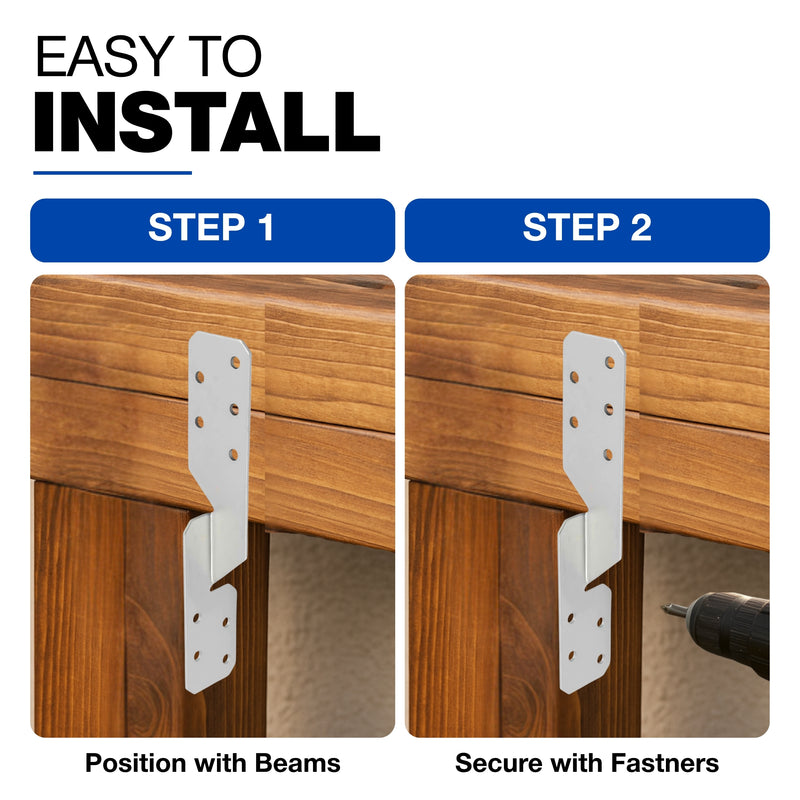
The simplest and cheapest way to put a timber post on a slab. The side plates step outward into a kinked bend that forms the foot, so the whole bracket is pressed from one piece of steel with no welds to fail, and three holes along the bottom take the anchor bolts. Post width options run from 71 to 141 mm, in hot-dip galvanised steel for outdoor work or stainless for coastal sites, from about €3.59.
Use it for decking posts, pergola legs and light fence posts on a patio. The single-row bolt pattern suits posts that carry weight downwards more than sideways, which is exactly what a deck or pergola leg does. If you want the full size and finish options, the U-shaped bracket with bend page lists every variant.
Bolt-Down U-Shaped Fence Post Bracket

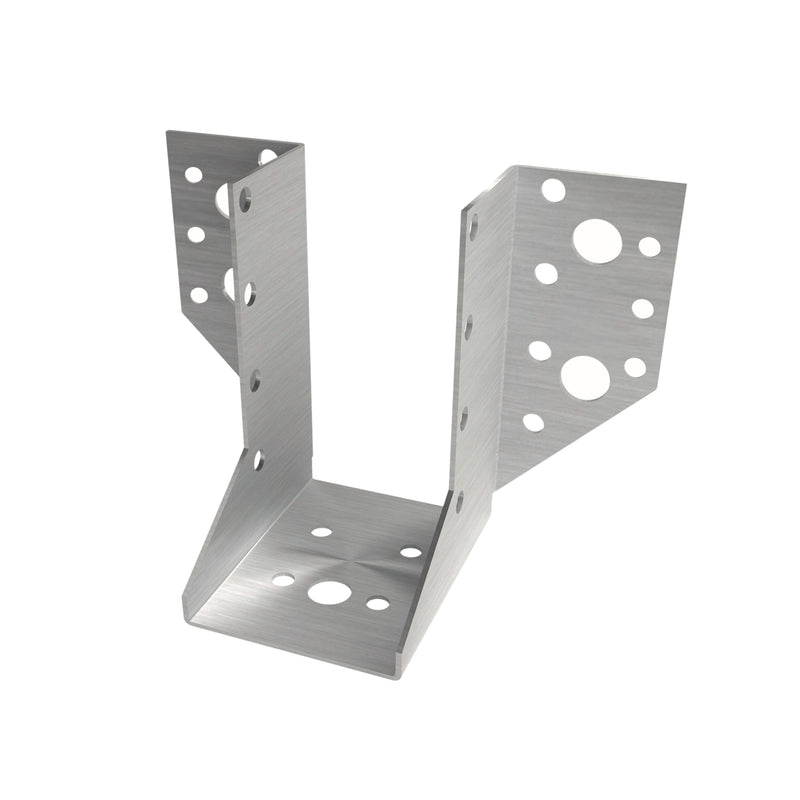
The same idea built for sideways load. A full rectangular base plate carries four corner holes instead of three in a line, and the wider bolt pattern spreads the load and resists twisting, which is what a fence post needs when the wind pushes the panels. The uprights are 200 mm tall, so there is plenty of timber to screw into, and the 4 mm plate takes the leverage without flexing.
This is the bracket for fence posts on a concrete base, gate-side posts on a wall, and carport legs that see side loads. It comes in post widths from 71 to 141 mm, hot-dip galvanised, from about €4.21.
Width-Adjustable Bolt-Down U Post Support

The two side plates slide along a slotted cross member, so one bracket grips anything from 0 to 160 mm instead of one fixed width. That matters because timber is rarely the size the label says: a sawn 100 mm post can turn up at 95 mm, and a fixed bracket 5 mm too wide lets the post rock. Clamping to the actual timber removes the play entirely.
The side plates also flip inward or outward, which lets the same part work as a beam saddle, and it's the answer when you're replacing a post and don't know what size you will find under the old bracket. The width-adjustable post support with base plate is electroplated and costs €8.49.
Width and Height Adjustable U Post Support

Adds a telescoping stem between the base plate and the U head, adjustable from 135 to 200 mm, on top of the same 80 to 160 mm width range. Wind the stem and the post rises or drops, so four pergola legs on a sloping patio can all finish dead level without cutting a single post to a different length.
It earns its €17.97 on slopes and on renovation work where new posts have to meet an existing beam height. On a flat slab it's more bracket than you need, and the height range starting at 135 mm lifts the post noticeably. Full dimensions are on the width and height adjustable U post support page.
What Is a Concrete-In Post Support?
A concrete-in post support, often listed as a concrete post bracket or concrete-in post shoe, swaps the base plate for a steel rod or pin that sets into wet concrete. You dig a hole, part-fill it, stand the support in the pour, hold it plumb while the concrete goes off, and come back the next day to fit the post. The buried steel transfers the load into the whole footing rather than into four anchor bolts, which is why this family holds more.
Concrete-In U Post Support With Ribbed Rod

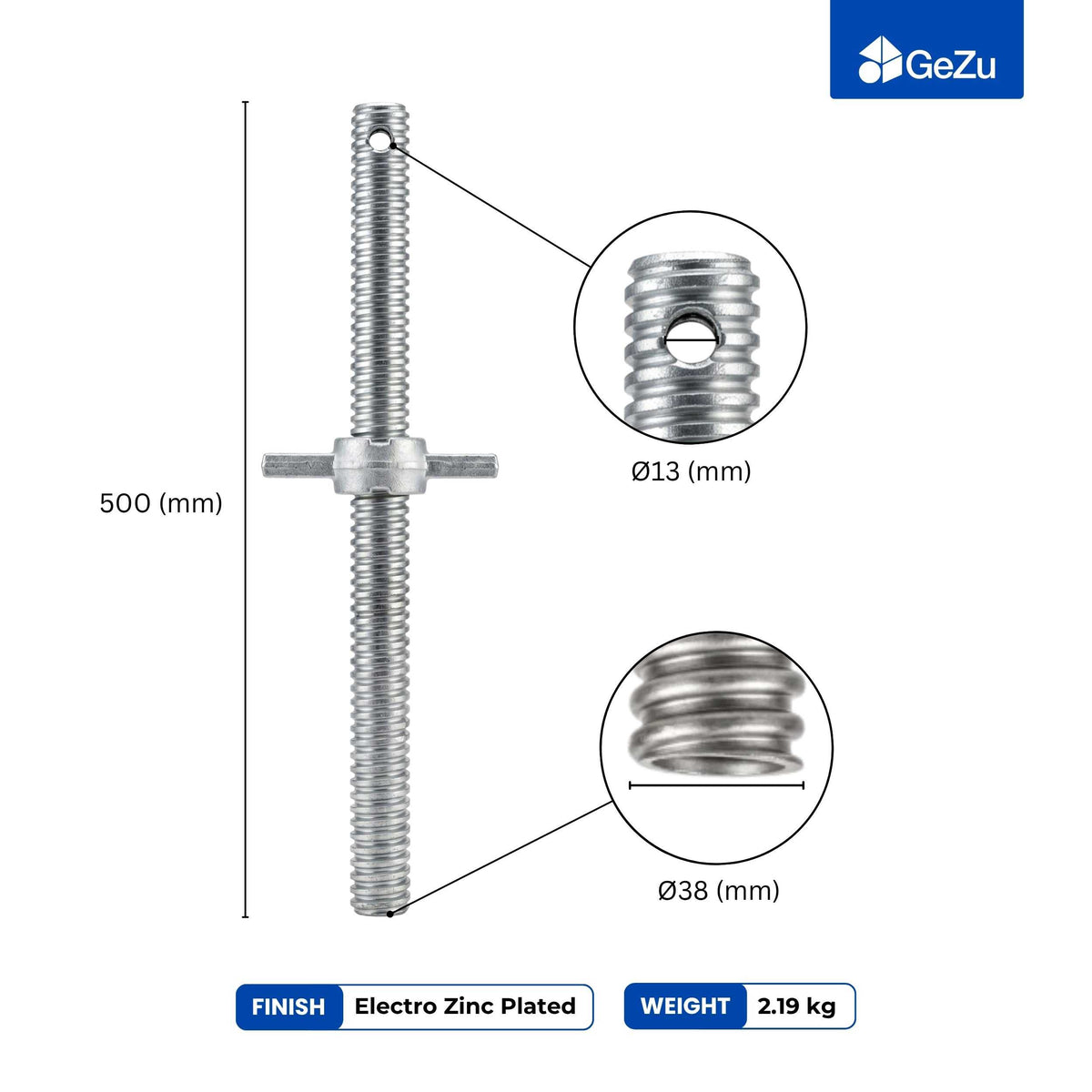
The workhorse of the concrete-in family. The U head sits on a ribbed steel rod, and the ribs are the point: they key into the concrete the same way rebar does, so the rod can't pull out or spin once the footing has cured. Hot-dip galvanised throughout, with post widths from 71 to 151 mm, from €4.89.
This is what we would use for a boundary fence that has to stand up to a gale, a pergola leg out on the lawn, or a gate post, where the swinging load works on the fixing all day. The timber stays up on the steel, clear of the concrete, so the footing holds without rotting the post.
Concrete-In U Post Holder With T-Pin

A flat T-shaped blade instead of a round rod. The blade resists rotation over a shorter buried length, so it suits a smaller footing where a full-length rod won't fit, for example when you are pouring next to an existing path or service run.
The U post holder with T-pin comes in 71 and 91 mm widths at about €8. We would keep it to windbreak fencing and garden structures up to roughly 1.5 m; above that, go for the ribbed rod and a deeper footing.
Width-Adjustable Concrete-In U Post Support

The adjustable head from the bolt-down version mounted on a rod. The same 0 to 160 mm width range grips whatever the sawmill actually delivered, and you can pick a 200 mm or 400 mm rod to suit how deep your footing is going. €9.11 to €12.07.
Handy when you are setting several posts of different sizes in one afternoon and don't want to order four part numbers, or when the posts are reclaimed timber that was never a standard size to begin with.
Concrete In U-Shaped Post Support vs Bolt Down: Pros and Cons
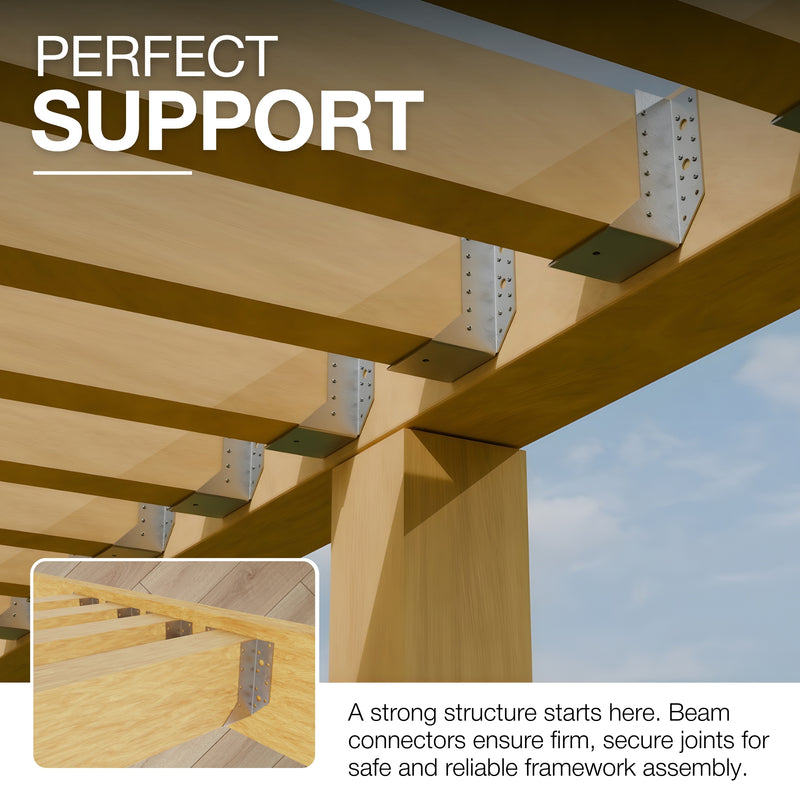
Bolt-down wins on speed and reversibility. You can set a whole pergola in a morning and unbolt it in an hour if you change your mind, and it lets you build where digging isn't an option at all: over a membrane, on a roof terrace, on a slab you can't break up.
What it gives up is margin. A bolt-down support is only ever as strong as the concrete underneath it, and a lot of garden slabs are thinner than people assume. Under about 100 mm, cracked, or fixed close to an edge, the anchors will win the argument with the concrete eventually.
Concrete-in wins on holding power and on frost. The footing does the work rather than four bolts. The cost is time and permanence: you dig, you pour, you wait, and a post in the wrong place comes out with a breaker.
There's a third option this comparison ignores, and sometimes it's the right one: on soft soil with a low fence, a drive-in spike skips concrete entirely. Our guide to setting fence posts without concrete covers when that works.
When To Use a U-Shape Bolt-Down Post Support?
Use a bolt-down post support when you already have a sound hard surface and the structure is modest. In practice that means a patio, a driveway, a concrete path, a deck frame, or an existing footing from a previous build.
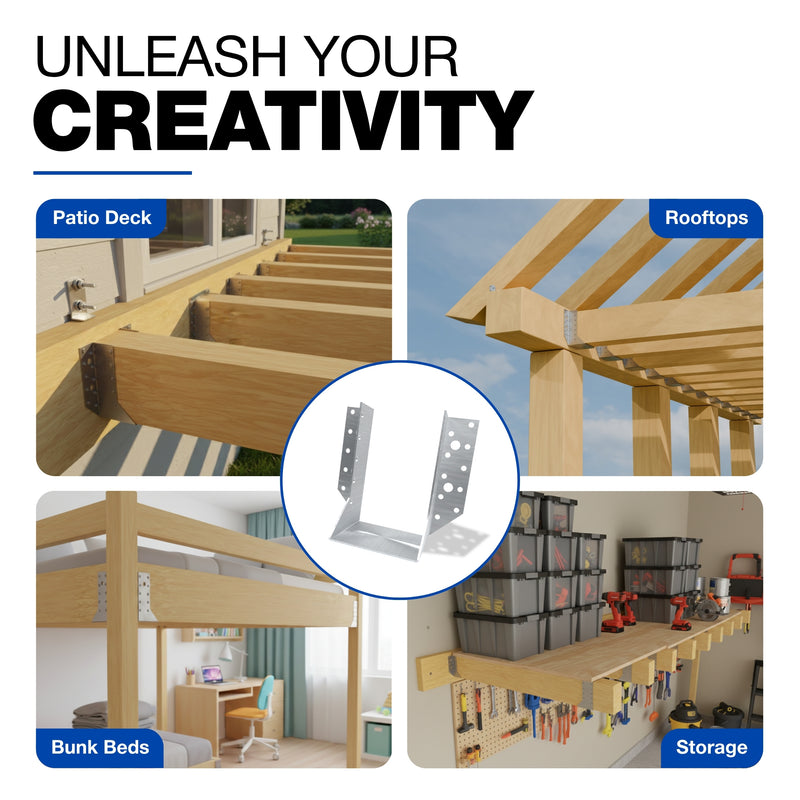
It suits pergola and carport legs on a slab, decking and handrail posts, balustrades, fence posts up to roughly 1.5 m on a sheltered boundary, and anything you might want to move later.
When To Use a U-Shape Concrete-In Post Support?
Use a concrete-in post support when you're starting from soil, or when wind load is the governing problem. A tall fence is a sail, and the taller it gets the more leverage lands on the fixing at the bottom.
Go concrete-in for boundary fences above about 1.5 m, exposed or coastal sites, gate posts (a swinging gate loads the hinge post constantly, in one direction), carport and heavy pergola legs standing in the garden, and anywhere the ground freezes hard enough to lift a shallow fixing. If you're unsure how deep the footing needs to be, our piece on how deep a fence post should be set gives the rule of thumb and the reasoning.
Which Size Post Support Do You Need?
Most people search for a 75 mm, 90 mm or 100 mm post shoe because that is what the timber yard calls the post. Our U heads come in 71, 91, 101, 121 and 141 mm (plus 151 mm in the concrete-in rod version), which map onto the common European sawn sizes those names describe.
The size that matters is the one on your tape measure, not the label. Sawn and planed timber routinely comes up a few millimetres under nominal, and a U head that is 5 mm too wide lets the post rock no matter how good the fixing below it is. Measure the actual post, pick the head at or just above that figure, and pack or clamp the small difference. If your posts are mixed sizes, or you haven't bought the timber yet, the adjustable heads take the question away entirely; our guide to sizing and installing an adjustable post support walks through it.
What Should You Check Before Buying U Post Supports?
Measure the post, not the nominal size. Put a tape across the actual timber. A "100 mm" post might be 95 or 97 mm, and a bracket that's 5 mm too wide lets the post rock. If your sizes are all over the place, the adjustable heads solve it in one part number.
Check what you're bolting into. Slab thickness, condition and edge distance decide whether a bolt-down fixing holds. Sound concrete at least 100 mm thick is the sensible floor, fixed with expansion anchors or resin studs rated for concrete, not coach screws and plastic plugs.
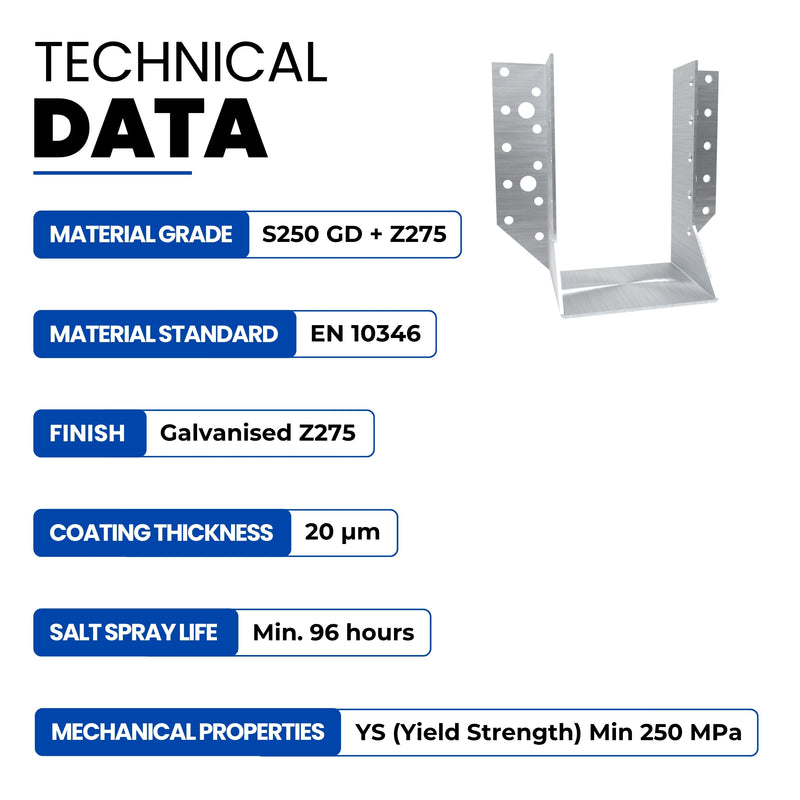
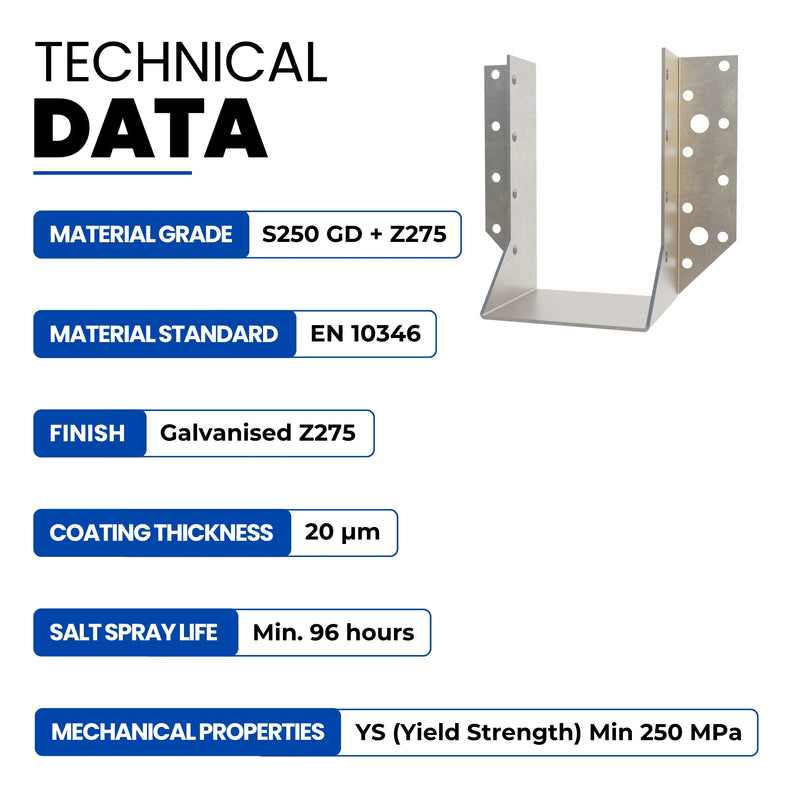
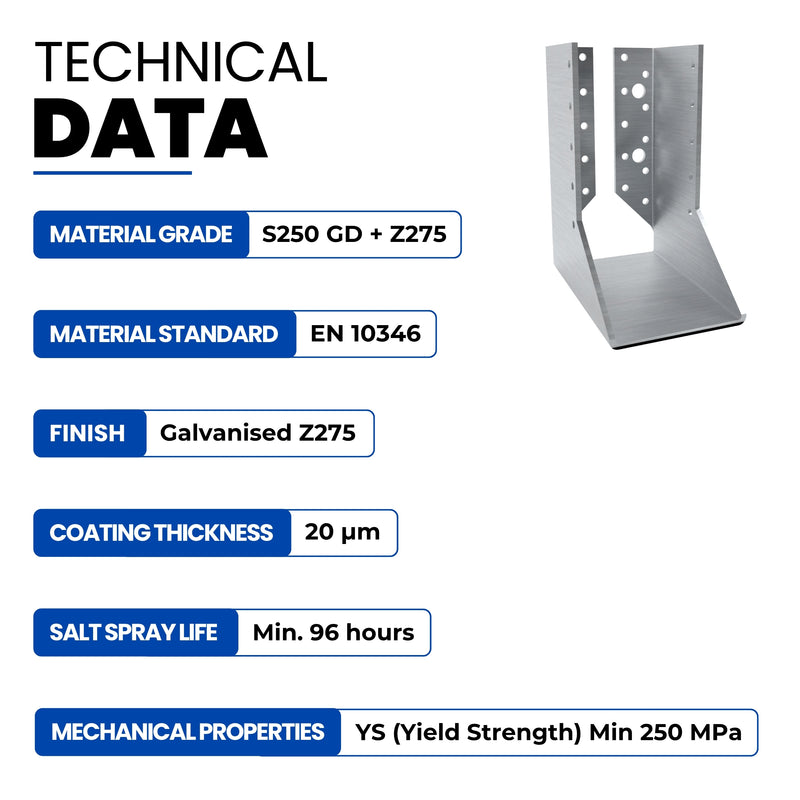
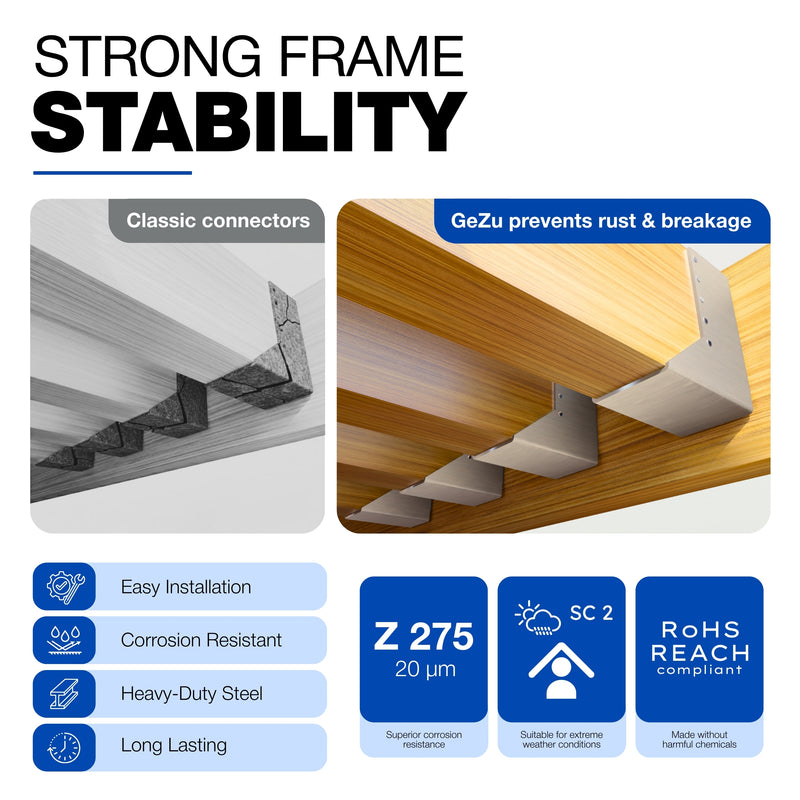
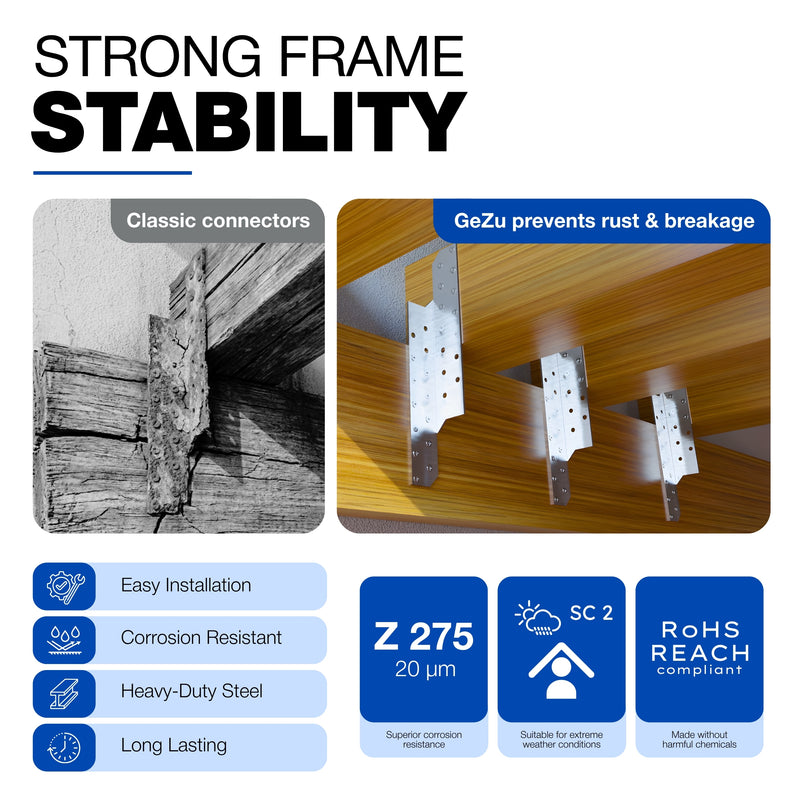
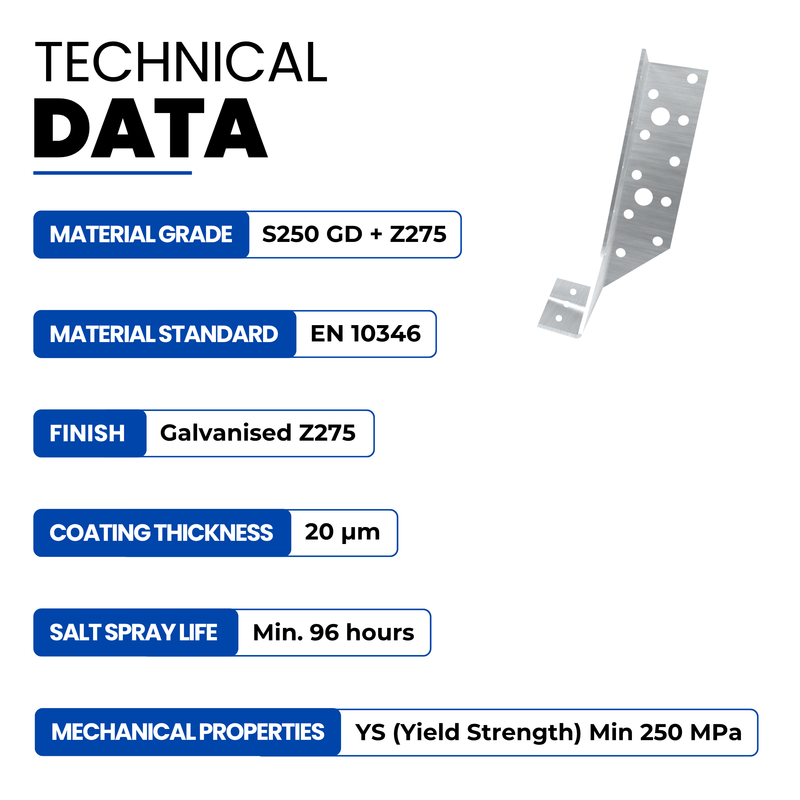
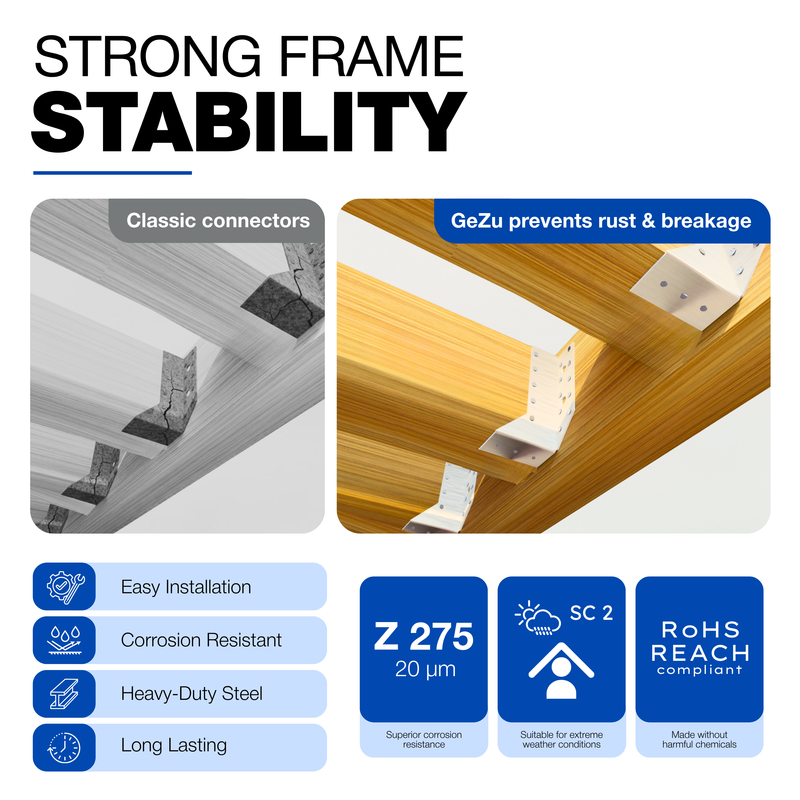
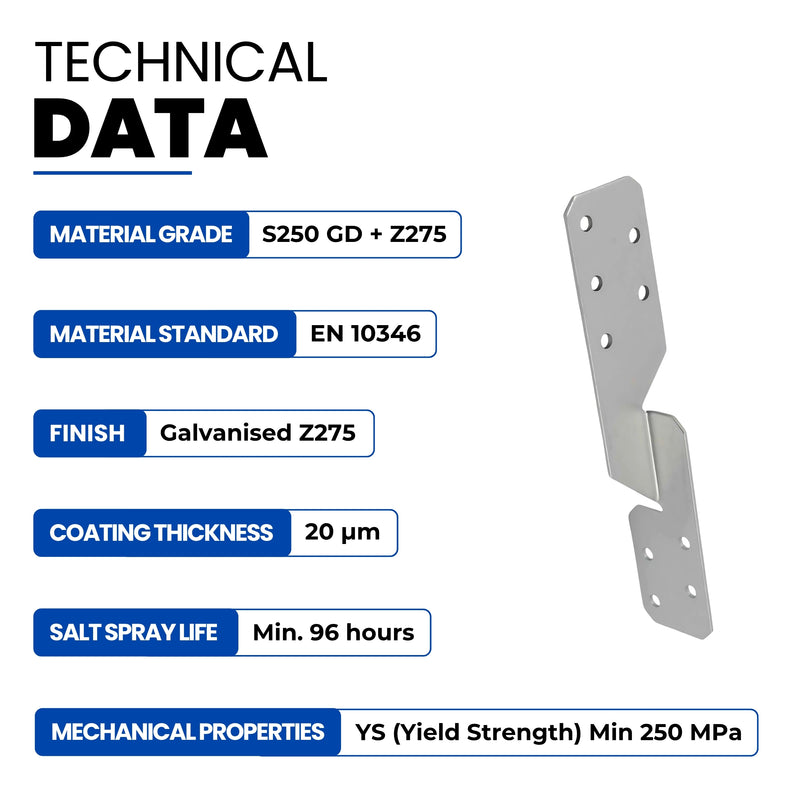
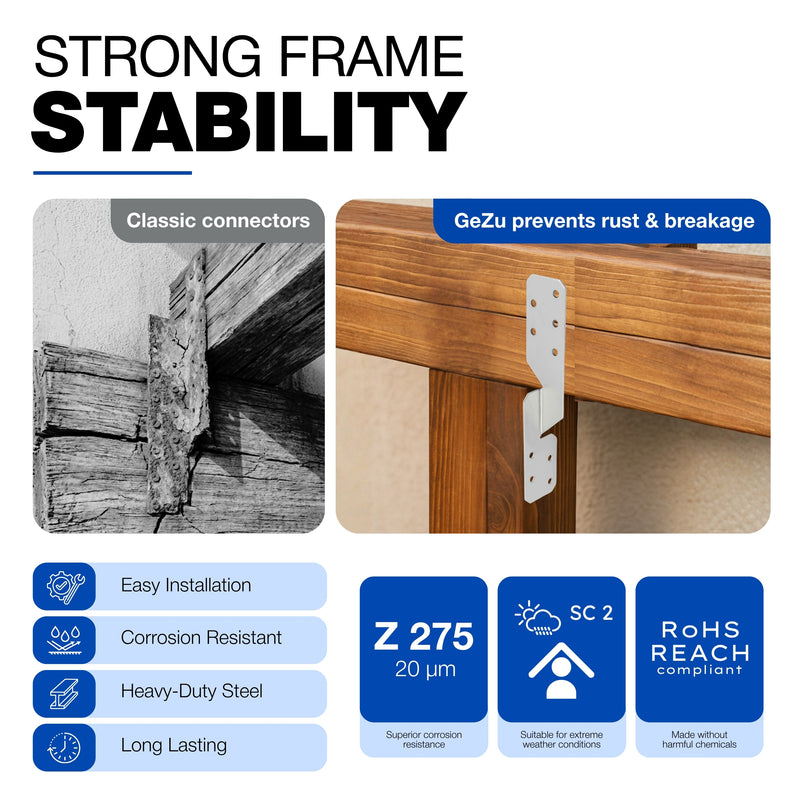
Match the finish to the site. Hot-dip galvanised is right for almost everything outdoors. Electroplated is a thinner coating and better kept to sheltered or indoor work. Within sight of the sea, pay for stainless. We wrote about how sellers use the word galvanised if you want the detail on why that difference matters.
Buy the fixings separately and buy them outdoor-grade. Brackets almost never come with bolts, and a galvanised bracket held on by bright zinc screws will bleed rust down your patio within a season.
Leave the drainage gap. Both types hold the post clear of the concrete. Don't undo that by packing the gap with mortar or sealant to tidy it up; that traps water exactly where you were trying to avoid it. If rot at the base is the thing worrying you, protecting fence posts from rot covers the rest of it.
FAQs About Bolt-Down and Concrete-In Post Supports
What Is the Difference Between a Fence Post Anchor and Concrete?
A fence post anchor is a steel bracket that holds the timber above the ground, either bolted to a slab or set into a footing. Concreting a post means burying the timber itself in the pour, which holds well at first but traps water against the wood until it rots at the ground line. The strongest durable setup is the combination: a steel anchor set in concrete, with the post up on the bracket where air can reach it.
Is a Bolt-Down Post Support Strong Enough for a Fence?
For a fence up to about 1.5 m on a sound slab, yes. Above that, or on an exposed boundary, the wind load on the panels starts to lever hard against the anchors and a concrete-in support is the safer choice. The limiting factor is almost always the concrete you're bolting into, not the bracket.
How Do You Concrete In a Post Holder?
Dig the hole below the local frost line, put a layer of gravel in the base for drainage, and part-fill with concrete. Stand the support in the wet pour, check it twice with a level, and brace it plumb. Top the pour up to just below ground level, slope the surface away from the steel so water runs off, and leave it to cure for at least a day or two before hanging any weight on the post.
What Kind of Concrete Should You Use for a Post?
For a handful of garden posts, bagged post-mix poured dry into the hole around the support and watered is the easy route and plenty strong enough. For bigger footings or a long fence run, a site-mixed general-purpose concrete from ballast and cement is cheaper per hole. Either way, keep the wet concrete below the U head so the timber never sits in it.
Can I Bolt a Post Support Onto Paving Slabs?
Only if the slabs are thick, sound and properly bedded on a solid base. A paver sitting on sand will lift out with the bracket still attached. If you're not sure, cut out one slab and cast a small footing instead, or use a concrete-in support.
Do Posts Still Rot in a Concrete-In Post Support?
Far less than a post concreted straight into the ground, because the steel holds the timber above the concrete and lets air get to it. Rot needs trapped moisture. Keep the gap clear and use a galvanised or stainless support and the base of the post will usually outlast the panels.
Buy the Right U-Shaped Post Support for Your Project
Start with the surface. Sound concrete already there, modest structure, want it reversible: a bolt down post support. Bare soil, tall fence, gate post, hard winters: a concrete in post support. Then measure your timber properly and match the width, or take an adjustable head and stop worrying about it.
Both families sit together in our U-type post support collection if you want to compare sizes and finishes side by side, and the broader guide to post support types covers the H, L and T shapes for the jobs a U doesn't suit.