Fence Post Spikes: What Size Do You Need?

The sizing rule for fence post spikes is short: the spike's box section must match your post size exactly, and the spike's length is set by your fence height. A 600 mm spike carries a fence up to about 1.2 m; for a 1.8 m fence you want 750 mm, and in soft or sandy ground go longer still. Get those two numbers right and a spike will hold a timber post plumb for years without a bag of concrete in sight.
That's the answer. The rest of this guide is the detail that stops the two mistakes we see most often: buying a spike that's a size too big "to be safe" (the post rattles, then leans), and putting a standard spike under a tall solid fence on an exposed site, where honestly concrete is the better tool.
How fence post spike sizing works
A fence post spike has two dimensions that matter: the internal box section at the top, and the overall driven length.
The box section must match the post. A 71 × 71 mm box fits a planed 70 × 70 mm post snugly; the clamping bolts take up the last millimetre. If the box is a size too big, no amount of bolt-tightening makes the post truly rigid, and the first autumn storm finds the slack. Measure the actual post, not the label on the timber pack: "7 × 7 cm" sawn timber often measures 68–69 mm once planed, which is exactly why spike boxes run slightly over the nominal size.

The length determines holding power. The spike resists wind load purely through the soil gripping its driven shaft, so a longer spike holds a taller fence.
Here's the full size range we stock, matched to what each one is for:
| Post size | Spike box section | Length | Typical use |
|---|---|---|---|
| 70 × 70 mm | 71 × 71 mm | 750 mm | Garden fences to ~1.8 m, screens |
| 90 × 90 mm | 91 × 91 mm | 750 mm | Heavier fence lines, light pergolas |
| 100 × 100 mm | 101 × 101 mm | 750 or 900 mm | 1.8 m fences, gate posts, pergolas |
| 120 × 120 mm | 121 × 121 mm | 750 or 900 mm | Exposed runs, heavier structures |
| 140 × 140 mm | 141 × 141 mm | 750 mm | Chunky posts, statement pergolas |
| 50 × 100 mm | 51 × 101 mm | 750 mm | Rectangular rails and slim screens |
| Ø 80 / Ø 100 mm round | 81 or 101 mm round cup | 600 mm | Round rustic posts, low fences |
Single spikes run from about €5 for the 71 mm size to just under €10 for the 141 mm version, so over-speccing the steel costs little. The expensive mistake is over-speccing the box relative to the post.
What length spike does your fence height need?
Use 600 mm for anything up to about 1.2 m, and 750 mm for a full-height 1.8 m (6 ft) fence. That's the industry rule of thumb, and it assumes reasonable soil.
Two situations push you up a length. Light, sandy or recently disturbed soil grips the shaft poorly, so a 900 mm spike does there what a 750 mm does in firm loam. And a solid fence (close-board or full panels with no gaps) catches far more wind than a picket or trellis of the same height, which loads the spike harder. Tall plus solid plus sandy is the combination where you should stop reading about spikes and jump to the honest section below.
Round posts follow the same logic at lower heights: our round drive-in spikes are 600 mm, which suits rustic post-and-rail and border fencing up to about 1.2 m.

When fence post spikes are the right choice (and when they aren't)
Spikes are the right call for most garden fence lines in normal soil: no digging, no concrete to mix and cart, no two-day cure, and the post sits clear of the wet ground so the end grain isn't drinking water all winter. That last point is quietly the biggest one. Posts set directly in soil or concrete usually fail by rotting at ground level; a spike-mounted post simply doesn't have that failure mode, which is why how deep a fence post needs to be set matters so much more for concreted posts than for spiked ones. A spike is also completely reversible: if you move the fence, you pull it and leave a lawn, not a lump of buried concrete.
They are the wrong call in three situations, and we'd rather tell you now than process the return later:
- Stony or rocky ground. A spike that hits a stone halfway down deflects off it and arrives at depth pointing somewhere else. You can't steer it back. On stony plots, a concrete-in support or a bolt-down base on a small pad does the same job without the gamble.
- Exposed sites with tall solid fencing. A 1.8 m close-board fence on an open site is a sail. Forum threads are full of spiked 6-footers that leaned after their first winter, and the complaint is fair. That is a job for posts concreted to proper depth.
- Waterlogged, heavy clay. Ground that saturates and freezes can work a short spike loose over repeated frost cycles. Longer spikes resist this far better; standing water says choose another method.
For everything between those extremes (border fences, screens up to shoulder height, pergola legs in sheltered gardens, post-and-rail) a galvanised drive-in fence post spike is the fastest solid fixing there is. We've compared all the no-concrete methods, spikes included, in our guide to setting wooden fence posts without concrete.
How to drive a post spike in straight
Crooked spikes cause more bad reviews than weak spikes ever have, and the fix is technique, not strength.

- Mark the post positions, then push the spike tip firmly into the ground by hand, standing it as plumb as you can by eye.
- Never hammer the box section directly; it distorts, and then no post fits. Use a driving dolly, or a 30 cm offcut of the fence post itself dropped into the box to take the blows.
- Drive it a few blows at a time with a sledgehammer. After every few strikes, hold a spirit level on two adjacent faces of the box and correct early. A spike 2° off at 100 mm depth is correctable; the same error at 500 mm is permanent.
- If progress suddenly stops or the spike kicks sideways, you've found a stone. Pull it out, move 100 mm along the line or probe the hole, and try again rather than forcing it.
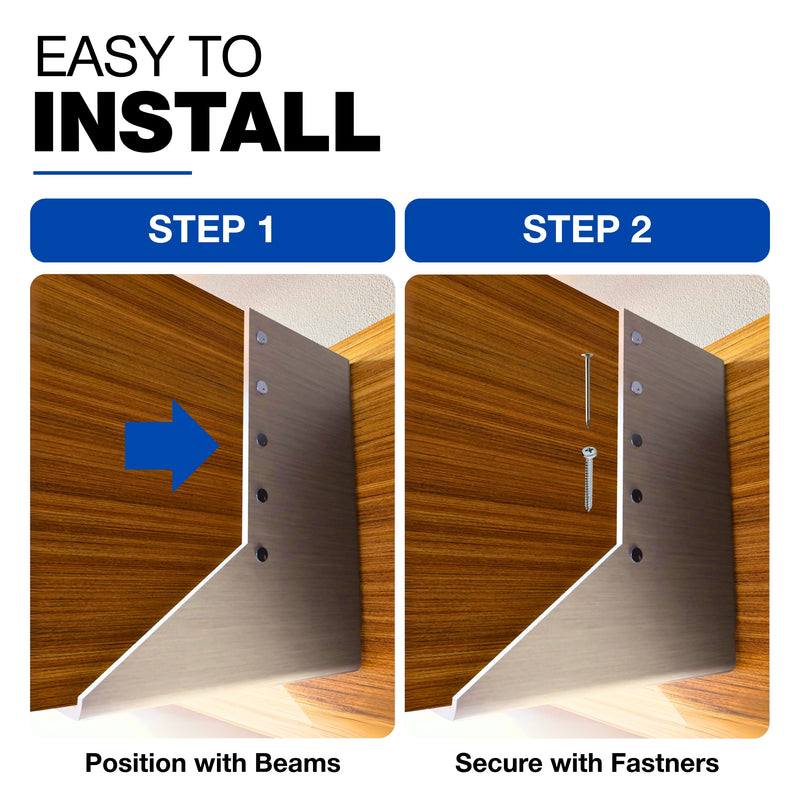
- Drive until the base plate of the box sits at ground level, drop the post in, and tighten the clamping bolts. Swift-clamp style spikes squeeze the box walls onto the post instead; same idea, faster adjustment.
Plan roughly one spike per 2 m of fence run, same spacing as concreted posts.
One post size today, a different one tomorrow
Fences rarely use one timber size throughout. There's a 70 mm intermediate post, 90 mm at the gate, something else again for the corner. If you're mixing timbers, or you simply don't want to measure, an adjustable width post spike closes around anything from 70 to 140 mm, so one spike model covers the whole fence line. It costs about the same as a fixed 100 mm spike, and it's what we'd hand you if you walked into the warehouse unsure of your post size.

Repairing a rotted post? That's a repair spur, not a standard spike
If an existing post has rotted or snapped at ground level, you don't need to dig the old concrete out. A repair spur drives in beside the stub (or into the old concrete collar) and bolts to the sound timber above the break. Searches for "fence post repair spike" and sizing searches for new spikes get mixed together a lot, but they're different tools, and a standard spike needs virgin ground. We've covered the full rescue job, spurs included, in how to fix a leaning fence post.
Quick answers
Are fence post spikes strong enough for a 6 ft fence?
Yes in sheltered positions with 750 mm spikes and sound 100 mm posts; no on exposed, windy sites with solid panels. Wind load on a solid 1.8 m fence is substantial, and on open ground concrete to 600 mm depth is the dependable choice.
Will frost push post spikes out of the ground?
In free-draining soil, no: frost heave needs waterlogged ground to get a grip. In heavy clay that holds water, choose the 900 mm length or concrete the posts instead.
What size spike fits a 100 × 100 mm post?
A 101 × 101 mm box spike. Planed "100 mm" posts measure a shade under 100 mm, so the 101 mm box plus clamping bolts gives a tight fit. Use the 750 mm length for fences, 900 mm in soft ground.
Can I put fence post spikes in rocky ground?
We don't recommend it. Any stone bigger than a fist will deflect the tip and the spike arrives crooked at depth. Use a concrete-in support or a bolt-down base plate on a pad instead.
Pick the spike, then the post goes in tonight
Match the box to the measured post, pick 600, 750 or 900 mm by fence height and soil, and keep spikes for the ground they're good at. Do that and fence post spikes are the rare shortcut with no catch: a fence line stood in an afternoon, posts that can't wick water, and nothing to dig out when plans change. Every size in the table above, in hot-dip galvanised steel, is in our post support collection, shipped from Eindhoven across Europe.