How to Choose Heavy Duty Castors: Load, Wheel and Brake Guide

Quick answer: to choose heavy duty castors, add the weight of the trolley or frame to the heaviest load it will ever carry, divide that total by three (not four), and pick castors rated above the result. Then match the wheel material to your floor, the wheel diameter to the surface you roll over, and decide how many castors need brakes. Get those four things right and the castors will roll easily and last.
We pack and ship castors from our warehouse every week, and the questions we get are nearly always the same: how much weight can these take, will they mark my floor, and do I need brakes on all four? This guide answers each one in order, with the two castor lines we stock as worked examples.
Step 1: Work Out the Load Each Castor Must Carry
The load rating printed on a castor is the weight that one castor can carry. It's not the weight of the whole trolley. So the first job is turning your total weight into a per-castor figure.
- Add up the total weight. Take the weight of the trolley, bench or frame itself and add the heaviest load you expect to put on it. Use the maximum, not the typical load.
- Divide by three, even if you fit four castors. Floors are never perfectly flat. As a trolley rolls over a joint, a drain cover or a slight dip, one castor lifts or goes light and the other three take the whole weight. Castor suppliers widely recommend sizing for that moment rather than the ideal case.
- Round up to the next rating. If your figure lands between two ratings, pick the higher one. Rough floors, jolts and off-centre loads all add stress that a calculation on paper doesn't show.
Worked example: a 50 kg welded trolley that will carry up to 400 kg of steel stock weighs 450 kg in total. Divided by three, each castor needs to handle 150 kg. A castor rated at 200 kg gives you a sensible margin; one rated at exactly 150 kg doesn't.
If you fit six castors under a long platform, the same logic applies: divide by one less than the number of castors you fit, then round up.
Step 2: Match the Wheel Material to Your Floor
Load rating gets most of the attention, but the tyre material decides how the trolley actually feels to push and what it does to the floor.
- Solid rubber is quiet, grips well and is kind to finished floors such as sealed concrete, tiles and timber. It soaks up small bumps, which protects whatever is on the trolley. It's our usual recommendation for workshops, stores and anywhere people work nearby.
- Polyurethane tyres are harder, so they roll with less effort under very heavy loads and resist cuts and wear on rough concrete. They're common on industrial and scaffold castors.
- Steel or cast iron wheels carry the most but are noisy and will damage most floors. They belong on rails, steel plate or factory floors built for them.
If you're not sure, start from the floor and work back. A soft or finished floor points to rubber; rough site concrete and very heavy loads point to polyurethane.
Step 3: Choose the Right Wheel Diameter
Bigger wheels roll over cracks, cables and gravel more easily and need less push to get moving. Small wheels drop into gaps and stall. As a rule of thumb, go for the largest diameter your design allows. Most heavy duty castors start at around 100 mm, and for anything moved outdoors or across a site we'd look at 150 mm and up.
Remember that a larger wheel also raises the height of whatever sits on it. Check the overall height of the castor (from floor to the top of the mounting plate) before you finalise a workbench or trolley design.
Step 4: Decide on Swivel, Fixed and Braked Castors
Most trolleys use a mix rather than four of the same type:
- Four swivel castors give the best manoeuvrability in tight spaces, but the trolley can wander when pushed in a straight line.
- Two swivel and two fixed steers like a supermarket trolley. It tracks straight over longer distances and still turns at one end.
- Braked castors stop the wheel turning so the load stays put while you work. On a workbench or tool trolley, two braked castors on diagonal corners is usually enough. On anything people stand on, such as a mobile scaffold tower, every castor needs a brake that's locked before anyone climbs.
Not sure what makes a castor different from a plain wheel in the first place? Our explainer on the difference between castors and wheels covers swivel forks, offsets and mounting plates.
Step 5: Check the Mounting Type
Castors for heavy loads usually fix one of two ways. Top plate castors bolt through four holes into a timber or steel base, which suits trolleys, benches and machine stands. Stem castors push or screw into a tube, which suits scaffold towers and tube frames. Use bolts with nuts and washers rather than wood screws for heavy loads; screws can pull out of timber when the trolley gets knocked over a kerb.
Heavy Duty Castors We Stock
We keep two castor lines for heavy loads on the shelf. Here's how they compare on the specs listed for each product:
| Castor | Wheel size | Listed load rating | Brake | Mounting | Best for |
|---|---|---|---|---|---|
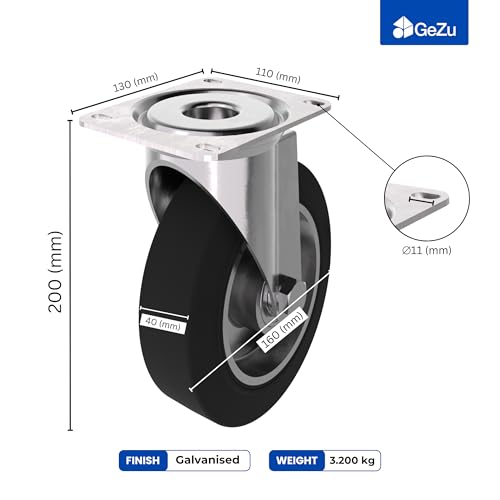
| Solid rubber castor wheels | 160 x 40 mm or 200 x 40 mm | 200 kg (160 mm) or 430 kg (200 mm) | No | Swivel, top plate | Workshop trolleys, benches, machine stands, carts |
| Adjustable scaffolding caster wheel with brake | 150 x 50 mm or 200 x 50 mm | 600 kg, 700 kg or 1,000 kg depending on version | Yes, foot brake | Adjustable threaded stem (26 mm or 38 mm, 500 mm) | Mobile scaffold towers and tube frames |
Solid Rubber Castor Wheels
Our solid rubber castor wheels are swivel castors with a black solid rubber tyre on a metal wheel centre, a silver steel swivel fork and a four-hole top plate. They come in two sizes: 160 x 40 mm with a listed load of 200 kg, and 200 x 40 mm with a listed load of 430 kg.
- What they're for: moving heavy equipment and furniture without lifting it.
- Features: solid tyre that can't puncture, resists cracking, fading and corrosion, rolls smoothly indoors and outdoors.
- Benefits: quiet running and floor-friendly rubber, so they suit workshops and stores where a hard tyre would mark the floor.
- Applications: workshop and tool trolleys, mobile workbenches, machine and compressor stands, garden and log carts, shop fittings.
- Sizing tip: using the divide-by-three rule, four 160 mm castors suit a total weight up to about 600 kg, and four 200 mm castors suit up to about 1,290 kg. Leave a margin below those figures for rough floors.
These castors don't have a brake, so if your bench needs to stay put, pair them with a chock or a separate floor lock. If you're building a frame from tube to carry them, our guide to building a modular workbench from pipe connectors shows how the base comes together.

Adjustable Scaffolding Caster Wheel With Brake
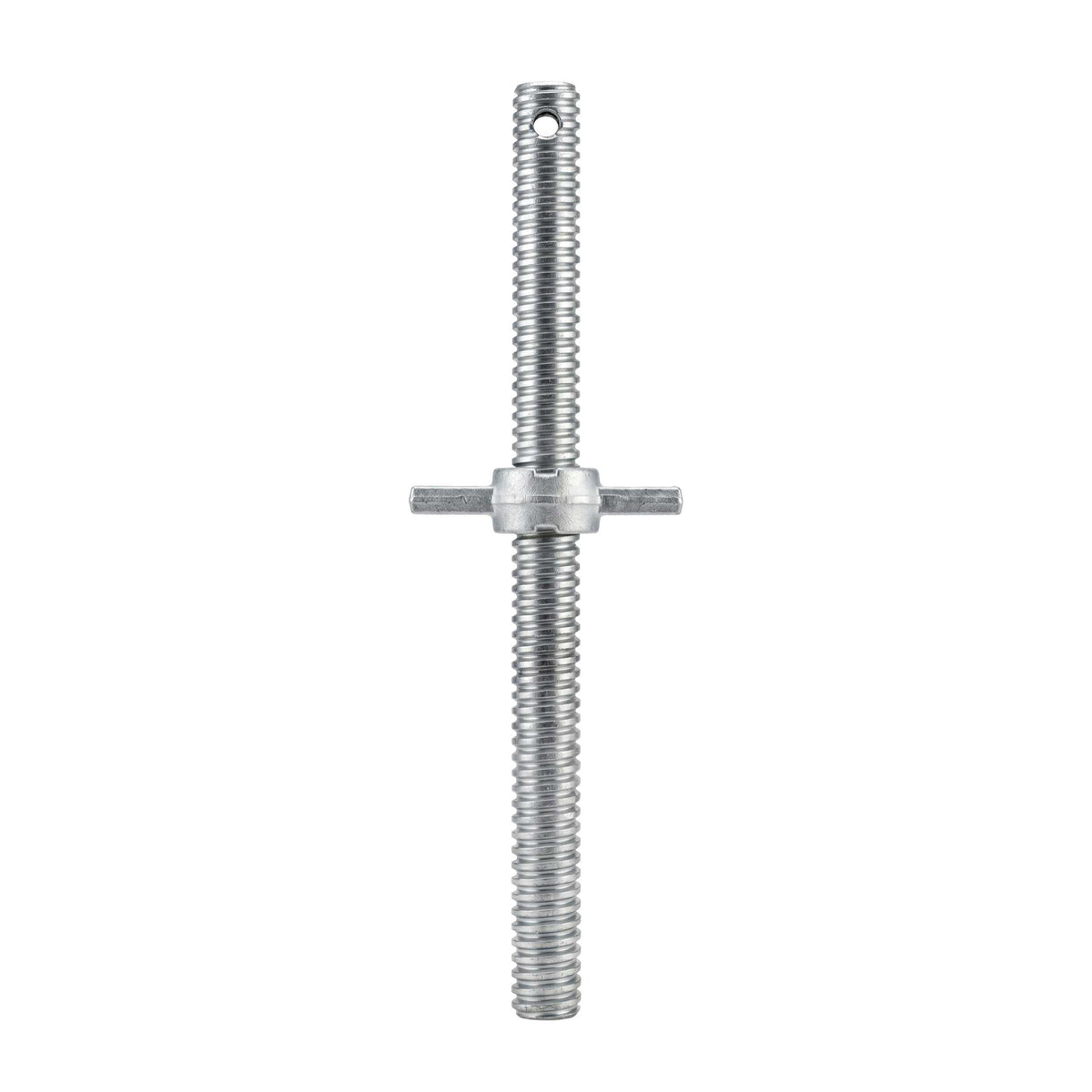
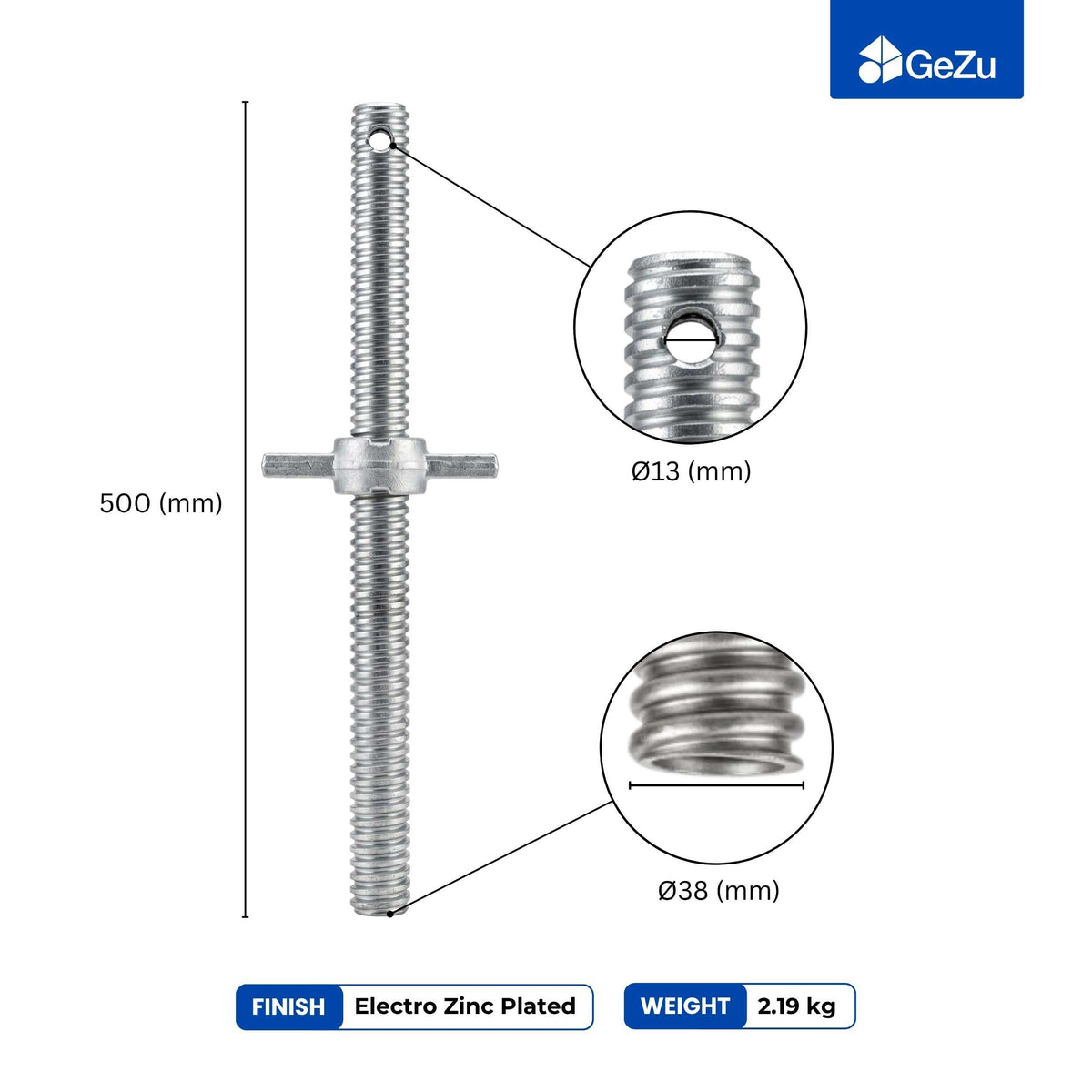
The adjustable scaffolding caster wheel with brake is built for mobile scaffold towers. A threaded 500 mm stem with an adjusting nut slides into the scaffold standard, so you can level the tower on a slightly uneven floor, and a foot brake locks the wheel once it's in position.
- What it's for: moving and repositioning a scaffold across a worksite without taking it apart.
- Features: integrated foot brake, height-adjustable threaded stem, electroplated finish, wheel sizes of 150 x 50 mm or 200 x 50 mm.
- Benefits: one part does the job of a castor and a levelling jack, and the brake gives a stable, locked base while people work.
- Applications: mobile tube and clamp towers, rolling access platforms, heavy tube-frame trolleys on site.
- Sizes: stem 26 mm or 38 mm diameter by 500 mm; listed loads of 600 kg (150 mm wheel), and 700 kg or 1,000 kg (200 mm wheel), depending on the version. Check the stem size against the inside of your tube before you order.
On any mobile tower, lock every brake before anyone climbs and never move the tower with someone on it. The castor stem works on the same principle as a screw jack, so our guide to base jacks in scaffolding is worth a read if you're levelling on slopes. For the wider safety checks on a home-built tower, see whether tube and clamp scaffolding is safe for DIY use.
Common Mistakes We See
- Dividing by four. It looks fine on paper and then a castor fails the first time the trolley crosses an uneven joint.
- Ignoring the floor. A hard wheel on a soft or finished floor leaves marks; a small wheel on rough concrete stalls and needs a shove.
- Too few brakes. A bench that creeps while you're drilling or sawing is a hazard.
- Weak fixings. The castor is only as strong as the bolts and the base it's fixed to.
Frequently Asked Questions
How do I calculate the load capacity I need for castors?
Add the weight of the trolley to the heaviest load it will carry, then divide by three for a four-castor trolley. Choose castors rated above that figure. For six castors, divide by five.
Is rubber or polyurethane better for heavy duty castors?
Rubber is quieter and gentler on finished floors. Polyurethane rolls more easily under very heavy loads and stands up better to rough concrete. Pick by floor first, then by load.
How many castors should have brakes?
On a workbench or trolley, two braked castors on opposite corners is usually enough. On a mobile scaffold tower, every castor should be braked and locked before use.
Does a bigger castor wheel carry more weight?
Often, yes, and larger wheels also roll over bumps more easily. But the rating depends on the whole castor, including the fork, bearing and tyre, so always check the listed load rather than assuming from the diameter.
Should I use swivel or fixed castors?
Four swivels turn best in tight spaces. Two swivel plus two fixed tracks straighter over longer runs. Choose by how and where the trolley will be pushed.
Still weighing up options for a specific trolley or tower? Send us the total weight and the floor it'll roll on, and our warehouse team will point you to the right castor.