Gate Hardware Checklist: Hinges, Latches and Bolts

Every garden gate needs the same four jobs done: something to hang it, something to keep it shut, something to lock or pin it, and something to stop it swinging too far. That's two or three hinges, one latch, at least one bolt and, ideally, a gate stop. Double gates add a throw-over latch and a bolt that drops into the ground. Get those parts right for the size of the gate and you won't be back out with a screwdriver next spring.
We pack hinges, latches and bolts every day in our warehouse, and the orders that come back are almost never faulty parts. They're the wrong parts for the gate: a 150 mm hinge on a 1 m gate, a latch that only opens from one side, no bolt on the second leaf. This checklist is the one we'd run through before ordering.
The Gate Hardware Checklist at a Glance
| Part | What it does | Single gate | Double gates |
|---|---|---|---|
| Hinges | Carry the weight and let the gate swing | 2 (3 if over about 1.8 m tall) | 2 or 3 per leaf |
| Pintle or hinge pin | The fixed pivot on the post for a band hinge | 1 per band hinge | 1 per band hinge |
| Latch | Holds the gate closed in everyday use | 1 | 1 throw-over latch across both leaves |
| Bolt | Locks the gate, or pins a leaf to the ground | 1 (optional on light gates) | 1 vertical bolt on the fixed leaf, plus 1 for security |
| Gate stop | Holds the gate open and stops it over-swinging | Recommended | 1 per leaf you want to hold open |
| Fixings | Coach bolts and screws in a matching finish | Always | Always |
Measure two things before you pick anything: the width of each leaf and its height. Width decides hinge length. Height decides how many hinges. Everything else follows from how the gate is used.
1. Gate Hinges: Size Them to the Width
Hinges are the one part of the list you can't economise on. A gate is a cantilever, and the top hinge is being pulled away from the post all day, every day. Our rule is simple: the hinge strap should reach at least halfway across the leaf, and nearer two thirds on a heavy ledged-and-braced gate. We go through the full reasoning, post sizes and fixing order in our guide to hanging a wooden gate so it won't sag.
T hinges. A galvanised T hinge has a long tapered strap that screws to the gate and a short flat leaf that screws to the post. It's the quick, tidy choice for light side gates, shed doors and bin stores. Features: a galvanised finish for outdoor use and a long strap that spreads the load along the rail. Sizes: 100, 150, 200, 250, 400 and 500 mm, plus heavier 200 x 85 mm, 400 x 110 mm and 500 x 110 mm versions with a wider post leaf. Benefit: no pin to set out, so it's the fastest hinge to hang.
Band hinges and pintles. For a standard 900 mm garden gate and anything heavier, we'd hang it on a gate band hinge that drops onto a pin. The band is a flat steel strap with a rolled eye, bolted right across the gate rail. Sizes run 300, 400, 500, 600, 700, 800, 900 and 1,000 mm, in an electroplated finish. It pairs with a pintle hinge bracket, the fixed half of the hinge, which plates onto the face of the post in 21 mm or 35 mm depths. The benefit is the load path: band to pin to post, rather than relying on a few screws in the edge of the timber. Bonus: you can lift the gate off its pins to paint it.
Not sure which style suits your gate? We compare them side by side in T hinge vs band hinge.
2. Gate Latch: Pick It by How the Gate Is Used
A gate latch is the part you touch every day, so choose it by who uses the gate and from which side. The questions we ask: does it need to open from both sides, should it catch by itself when the gate swings shut, and does it need to take a padlock?

- Auto gate latch (56 x 44 mm, galvanised). A self-catching latch: the gate swings shut and the latch engages on its own. Use it on busy side gates and anywhere you want the gate to close without anyone thinking about it. Hang the gate so it swings shut under its own weight and the latch does the rest.
- Farmer's gate latch set (185 x 25 mm, galvanised). A thumb-lever latch that opens from either side. It's the one for garden gates where people come and go from both directions and nobody wants to reach over the top.
- Garden gate latch with handle (100 x 80 mm, galvanised). A lever-operated drop bar: lift the ball knob and the bar clears the keep. One-handed, firm against wind and pets, and the bar takes a padlock when you need it locked.
- Double gate latch (450 mm, electroplated). A throw-over bar that swings across the meeting stiles and holds both leaves together. This is the standard double gate latch for driveway and garden pairs.
Fit the latch last, with the gate held closed in its final position. Mark the keep then, not while the gate is hanging free. For security-led picks, see our round-up of heavy duty gate latches, and if you're still matching names to mechanisms, our explainer on types of latches covers the lot.
3. Gate Bolts and Drop Bolts
A latch keeps a gate closed. A bolt keeps it shut. On a single gate, that's a slide bolt on the inside face for security. On double gates it's also the drop bolt: a vertical bolt on the fixed leaf that drops into a hole or keep in the ground, so that leaf can't move while the other one opens. Without it, the throw-over latch has nothing solid to close against and the pair twists at the bottom.
- Monkey tail bolt (400 x 75 x 15 mm, galvanised). A long sliding gate bolt with a curled handle you can work with one hand, even in gloves. It's our go-to for wide garden gates, barn doors and the inside of a side gate.
- Tower bolt (175 x 50 mm, galvanised). A solid round bolt on a backplate. Mounted vertically on a light gate leaf with its keep set into a slab or a sleeve in the ground, it works as a short drop bolt. Heavy driveway gates want a longer dedicated drop rod.
- Cranked flat bolt (100 x 50, 120 x 50 and 140 x 55 mm, electroplated). The offset crank reaches round a frame or rebate, so it's the bolt for gates that sit in front of the post instead of flush with it.
All three sit in our gate bolts and latches range next to the latches above.

4. Gate Stop: The Part Everyone Forgets
An open gate in a gusty garden is a hinge-breaker. Every time the wind slams it back against a wall or fence, it levers the top hinge and loosens the screws. A floor gate stopper (120 x 60 x 125 mm, galvanised) screws to the ground and holds the gate open with a snap-lock catch, then lets it go when you release it. It's cheap insurance for the hinges you've just paid for.
5. Fixings and Finish
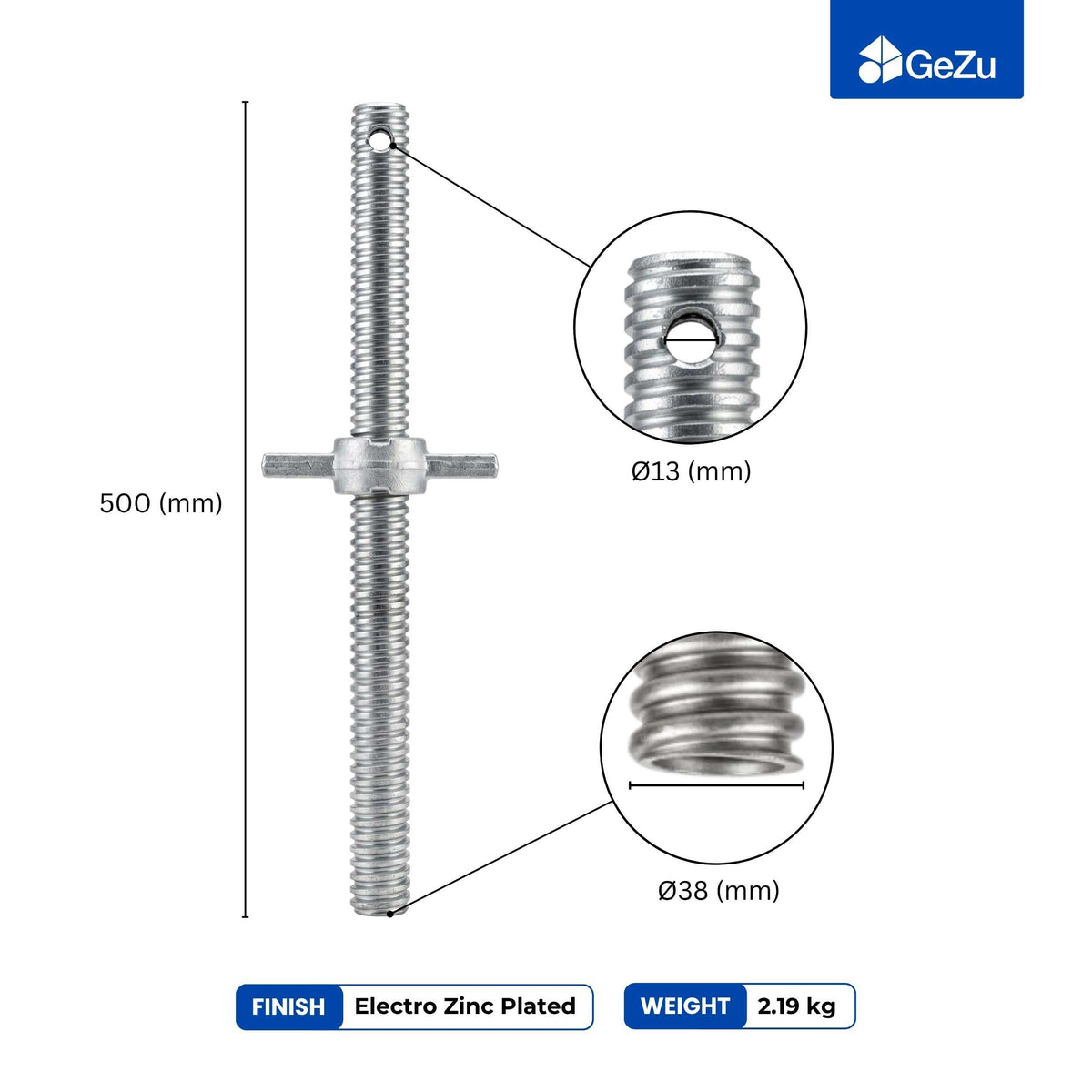
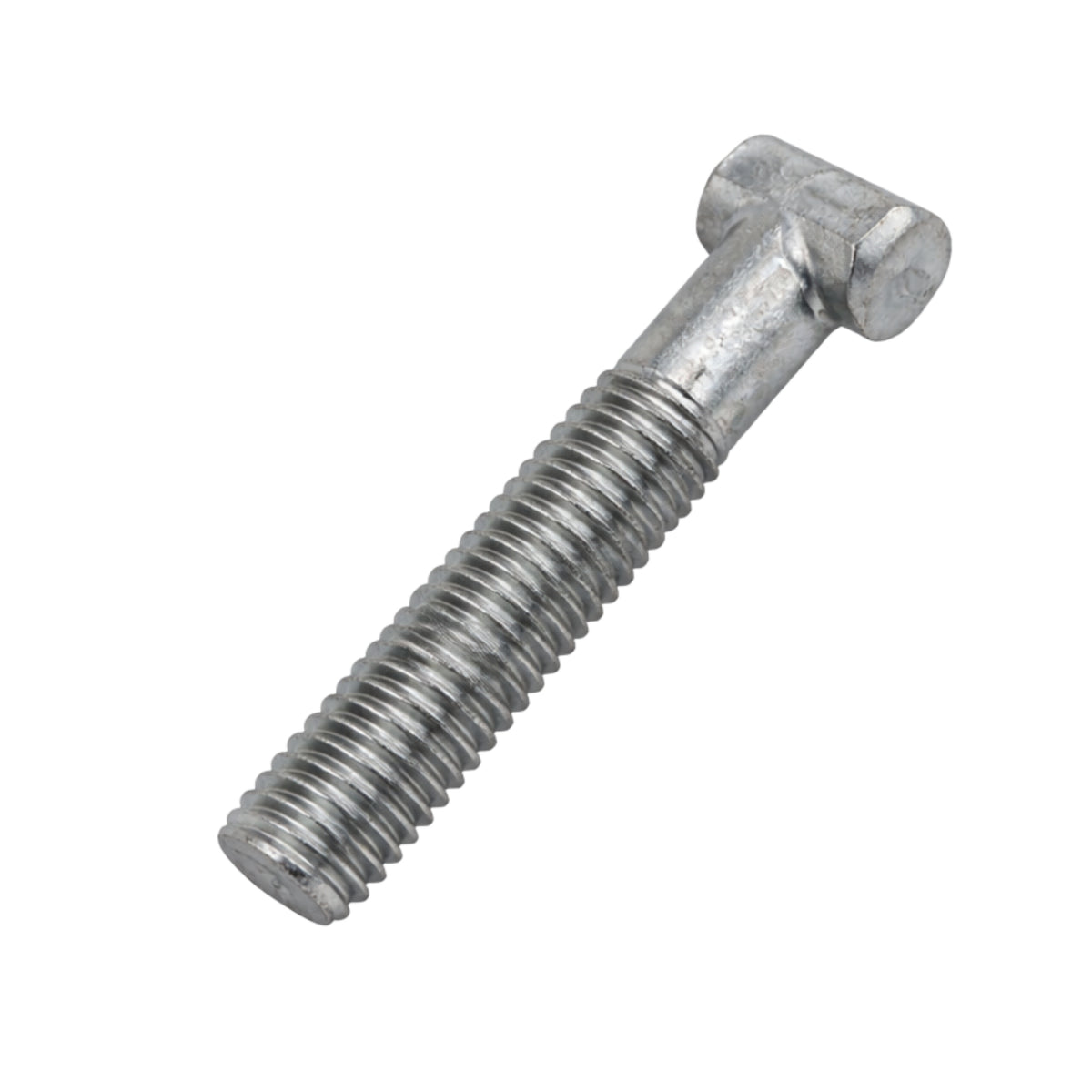
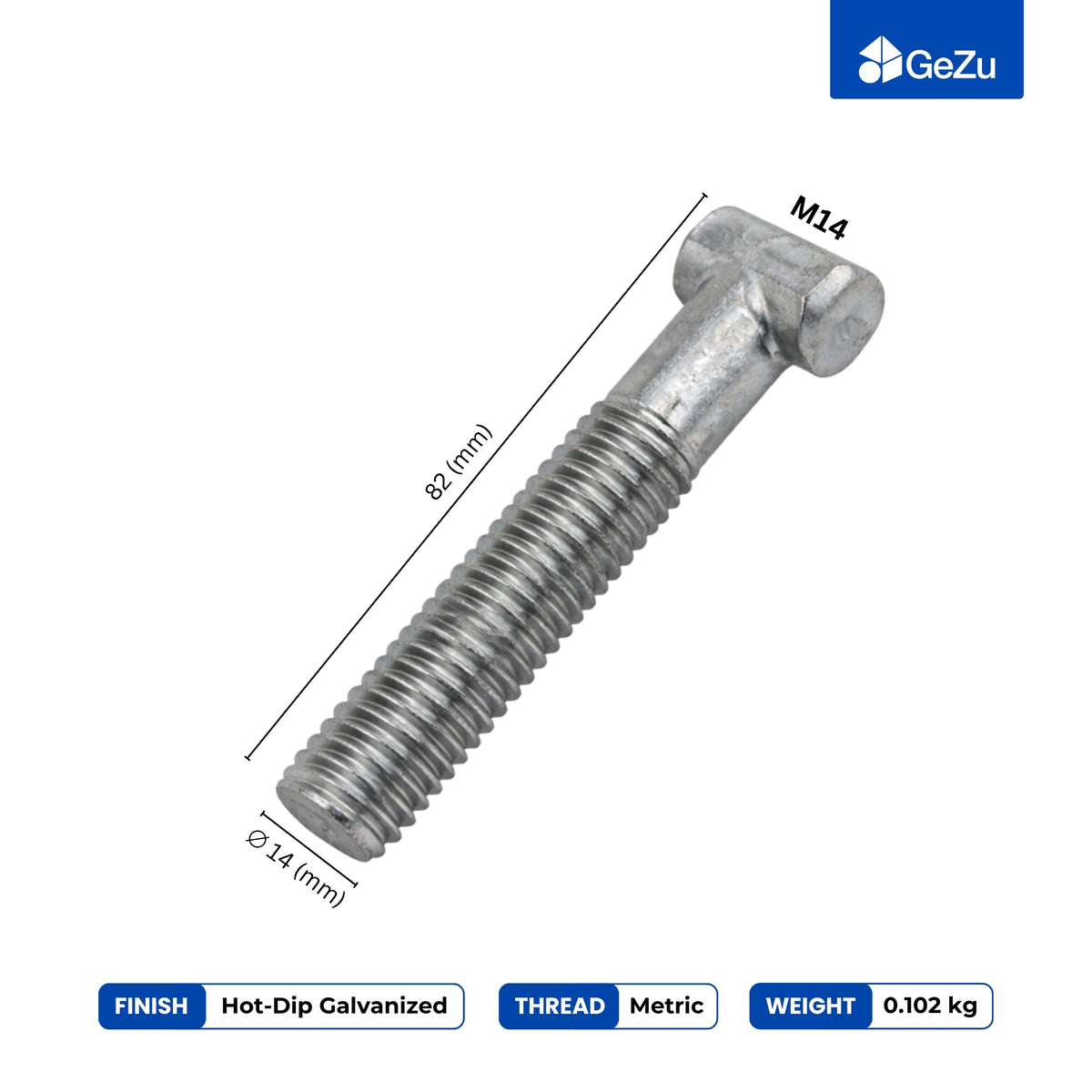
Through-bolt hinge straps where they cross a gate rail, with M8 coach bolts for most garden gates and M10 for heavy or double gates, plus a washer under each nut. Bolts can't pull out the way screws can. Use screws only where a bolt won't fit.
Match the finish across the whole set. Galvanised parts belong outside full-time. Electroplated zinc is a thinner coating, fine on sheltered gates and worth a coat of paint in exposed spots. Mixing a bright zinc screw into a galvanised hinge is the classic way to get rust streaks running down a new gate. Our finish guide explains which coating lasts where.
Single Gate vs Double Gates: What to Order
Single garden gate, 900 mm wide, 1.8 m tall: a pair of 500 or 600 mm band hinges with two pintle brackets, one latch (farmer's latch if it's used from both sides, auto latch if it should catch on its own), one monkey tail bolt on the inside, one gate stop, and M8 coach bolts.
Light side gate, 600 mm wide: a pair of 250 to 400 mm T hinges, an auto gate latch and a small bolt if it needs locking.
Double gates, 1,200 mm per leaf: band hinges on both leaves (three per leaf if they're over about 1.8 m tall), one 450 mm throw-over double gate latch, a vertical bolt on the fixed leaf into a ground keep, and a gate stop for each leaf you want to hold open.
Gate Hardware FAQ
How many hinges does a gate need?
Two for most garden gates. Add a third in the middle once the gate is taller than about 1.8 m or genuinely heavy, because tall gates twist as well as drop.
What size hinge do I need for my gate?
Measure the leaf width and pick a strap that reaches at least half of it, ideally two thirds on a heavy gate. A 900 mm gate wants roughly 450 to 600 mm hinges.
What is a drop bolt on a gate?
A vertical bolt fitted low on a gate leaf that drops into a hole or socket in the ground. It holds the fixed leaf of a double gate still and stops the bottom of the gate twisting or being pushed open.
Which side of the gate does the latch go on?
On the opposite stile to the hinges, at a comfortable hand height, usually around 1 m. On double gates the throw-over latch goes across the two meeting stiles.
Can I lock a garden gate with a padlock?
Yes. Choose a latch or bolt with a padlock eye, such as our garden gate latch with handle, and fit it on the inside face so the fixings can't be reached from outside.
Order the Full Set in One Go
Write down the leaf width, the height and whether it's a single or a pair, then work down the checklist: hinges, pins, latch, bolt, stop, fixings. Everything above is in our gate hinges collection and the bolts and latches range. If you're not sure what suits your gate, send us the measurements and we'll tell you exactly which gate hardware we'd fit.