Galvanised, Stainless or Zinc Flake: Picking a Finish That Lasts

Match the finish to where the part ends up, not to what it costs. Dry and indoors, electroplated zinc is enough, and anything thicker is money you never get back. Outdoors, buried in concrete, or within a few kilometres of salt air, it's hot-dip galvanised or stainless, and choosing between those two comes down to what the part is bolted to rather than how exposed it is.
The email we answer most often isn't about load ratings. It's somebody two winters into a build, sending a photo of a bracket that's gone orange around the bolt holes while the rest of it still looks factory-fresh. Usually the finish was right for the job it was specified for and wrong for the garden it actually ended up in.
Corrosion has a scale. Find yours first.
Steel doesn't rust at one speed. ISO 9223 sorts atmospheres into categories by how much zinc a test coupon loses in its first year of exposure, and once you know roughly which band your site sits in, most of the finish argument settles itself.
| Category | What that looks like | Zinc lost, first year |
|---|---|---|
| C1 (very low) | Heated, dry interiors. Offices, heated workshops. | up to 0.1 µm |
| C2 (low) | Unheated barns and stores, dry rural air. | 0.1–0.7 µm |
| C3 (medium) | Most Dutch and Belgian outdoor sites. Urban, suburban, light industry. | 0.7–2.1 µm |
| C4 (high) | Industrial estates, roads that get salted, coastal but set back. | 2.1–4.2 µm |
| C5 (very high) | Permanently damp industrial, harbours, the seafront itself. | 4.2–8.4 µm |
Figures from ISO 9223. Do the arithmetic once and a lot of arguments end. A hot-dip coating measured in tens of microns, sitting in C3 air, is a multi-decade part. The same coating at the harbour wall is spent in a fraction of that time. Nothing about the steel changed. Only the air did.
The finishes we stock, and what each is actually for
Hot-dip galvanised
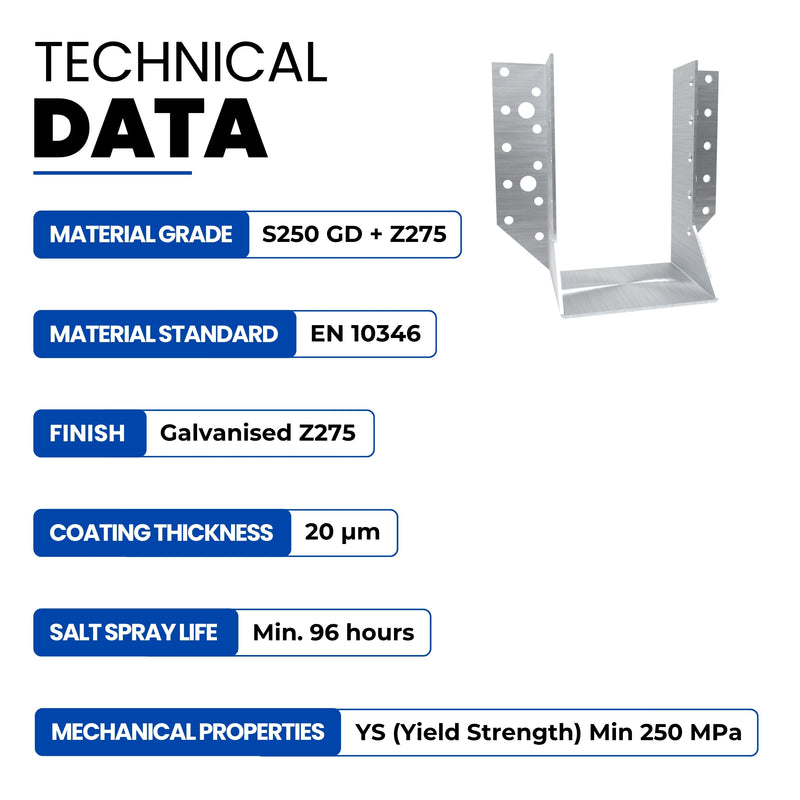
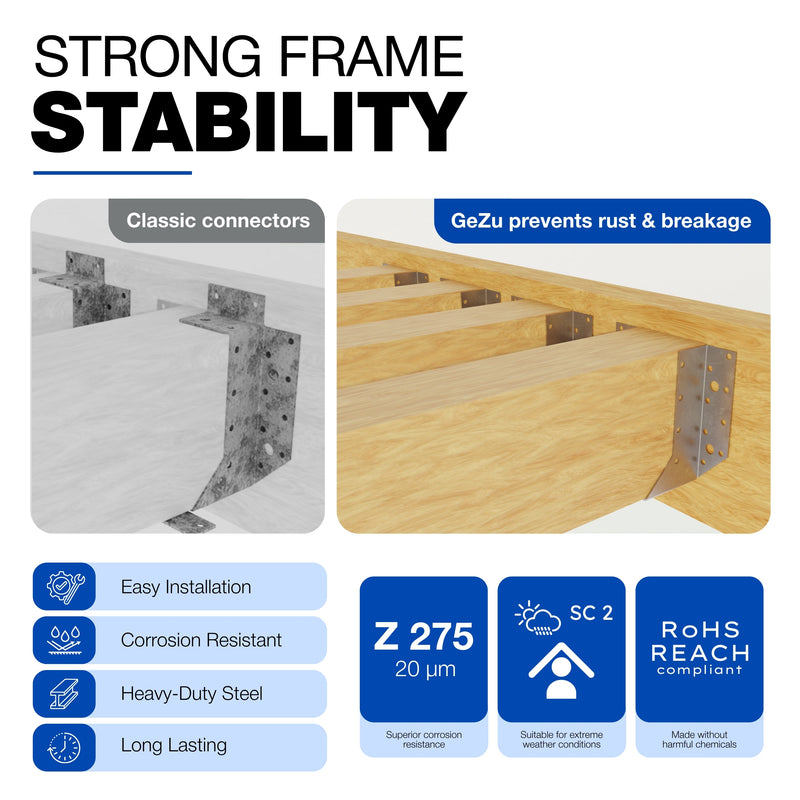
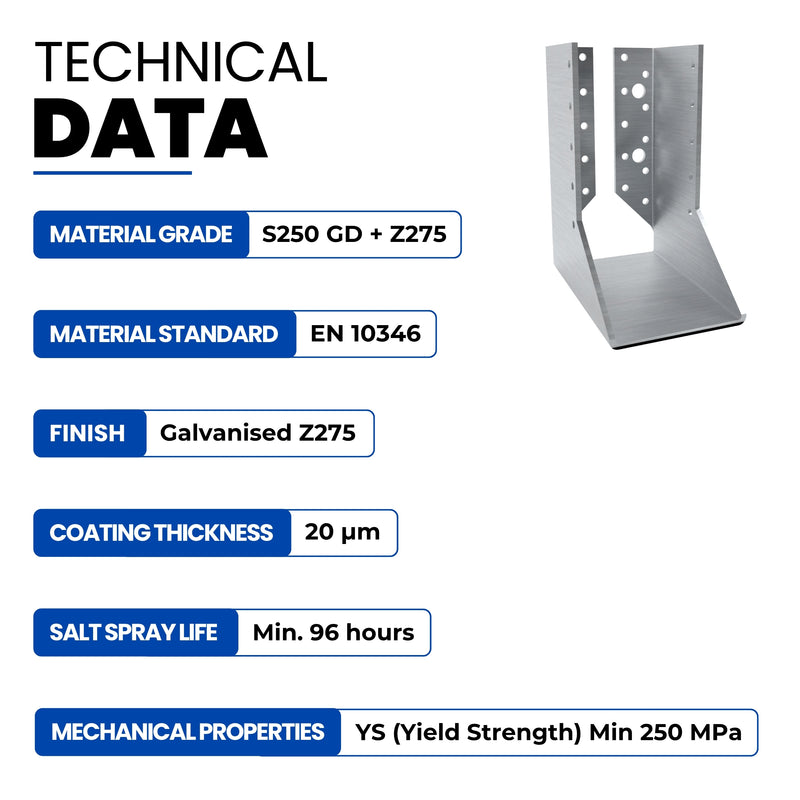
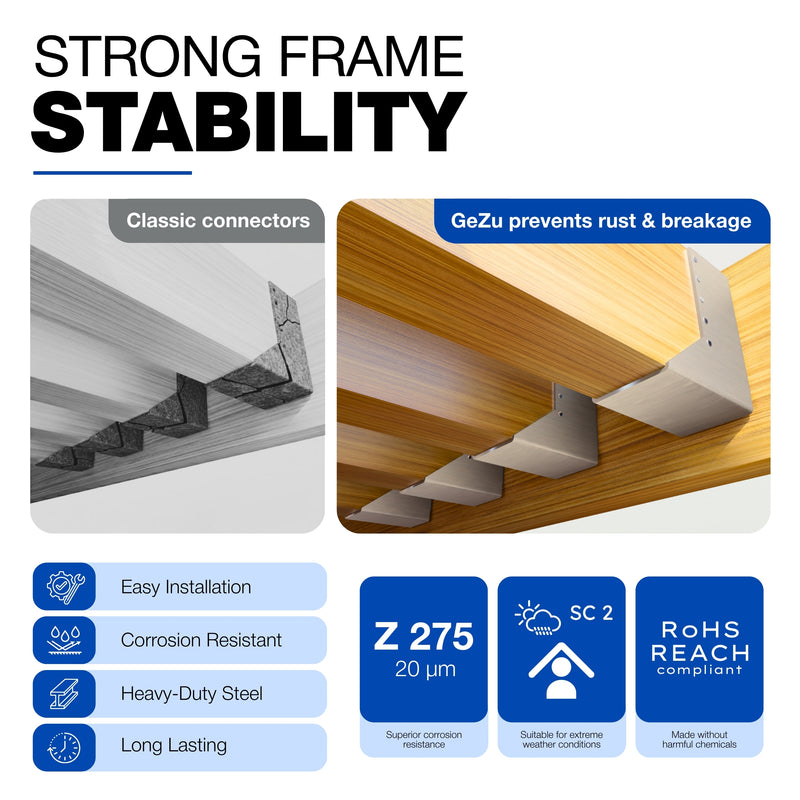
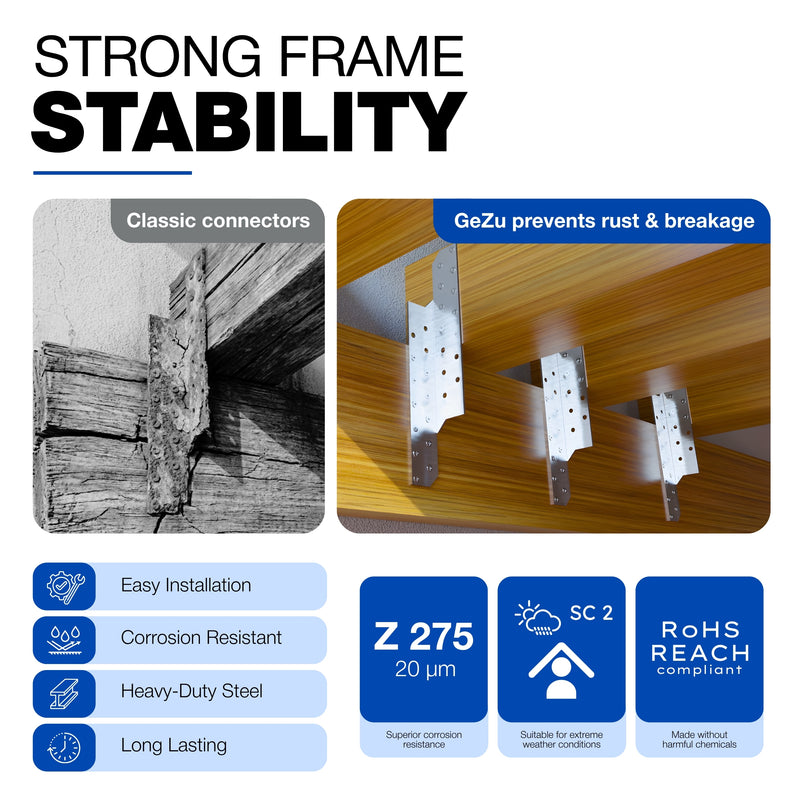
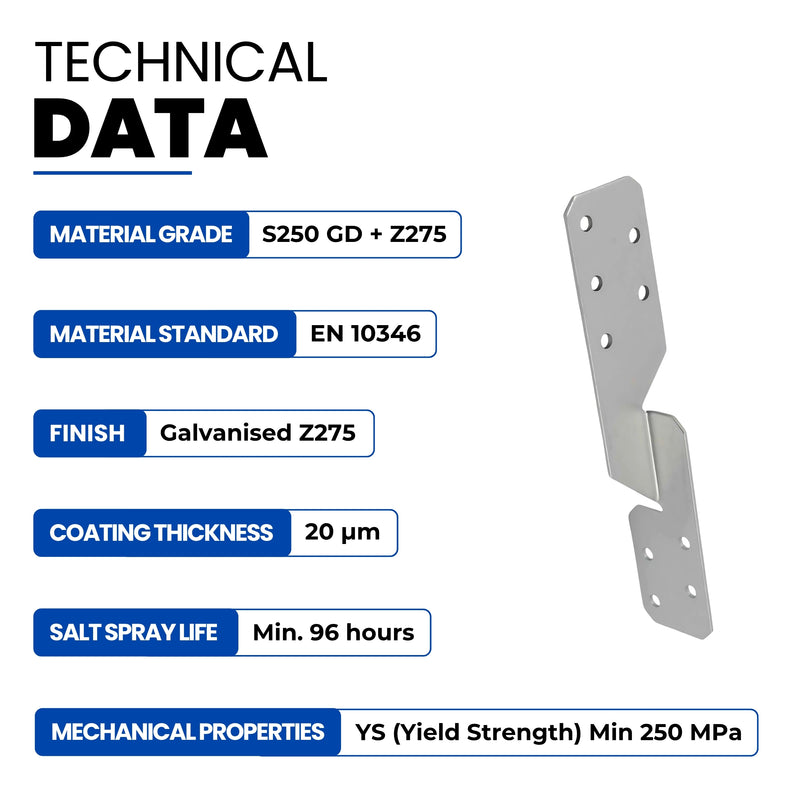
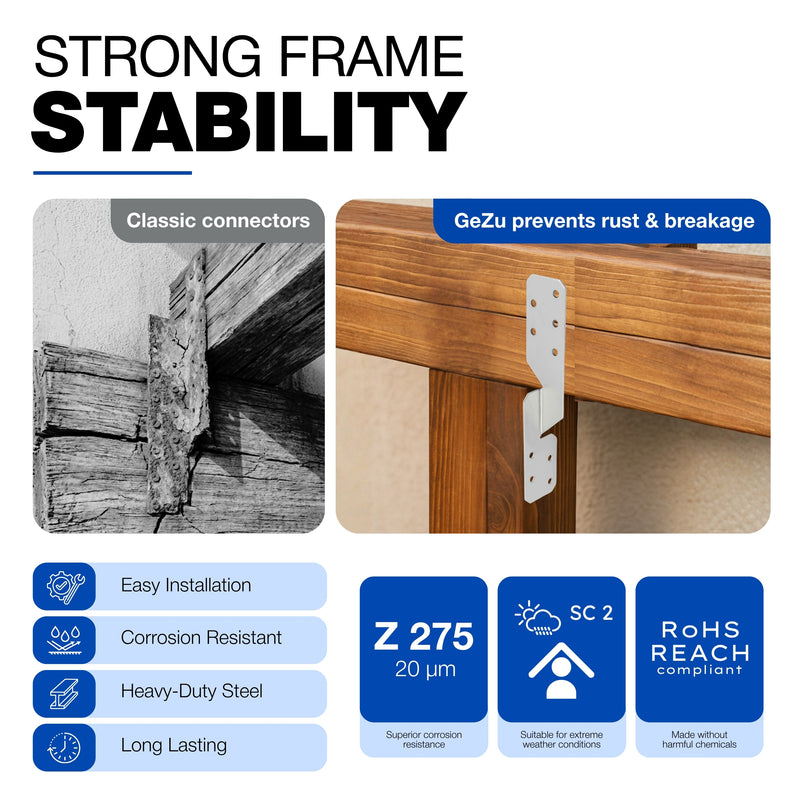
Steel dipped in molten zinc at around 450 °C. The coating is thick, it bonds metallurgically rather than sitting on top, and it flows into inside corners, weld seams and hollow sections that a sprayed or plated coating never reaches. Small scratches heal themselves, because the surrounding zinc corrodes in preference to the exposed steel. In return you get a rough, spangled surface and a part that's very slightly fatter than it was.
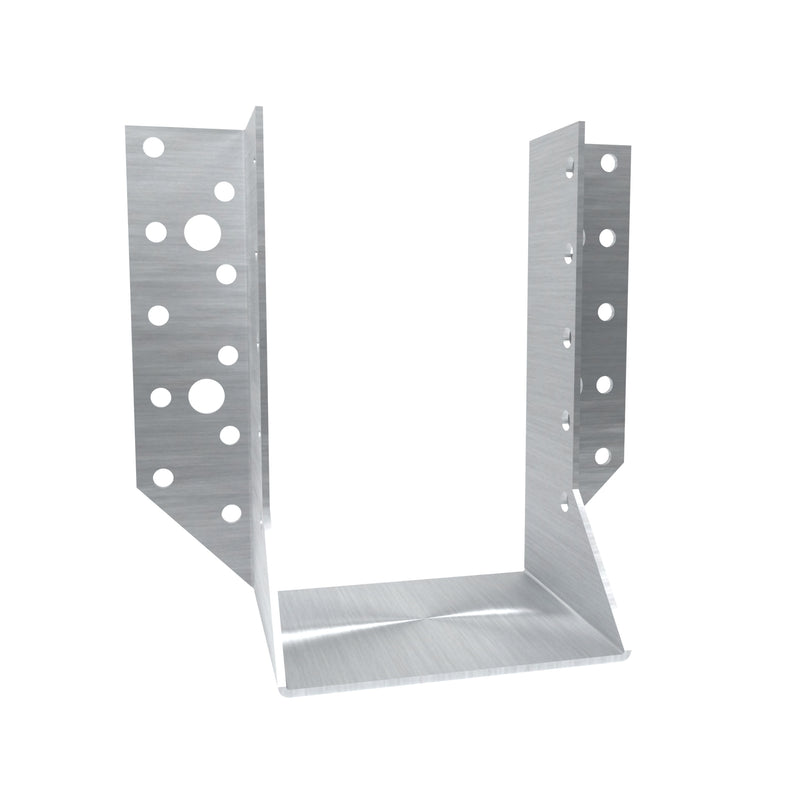
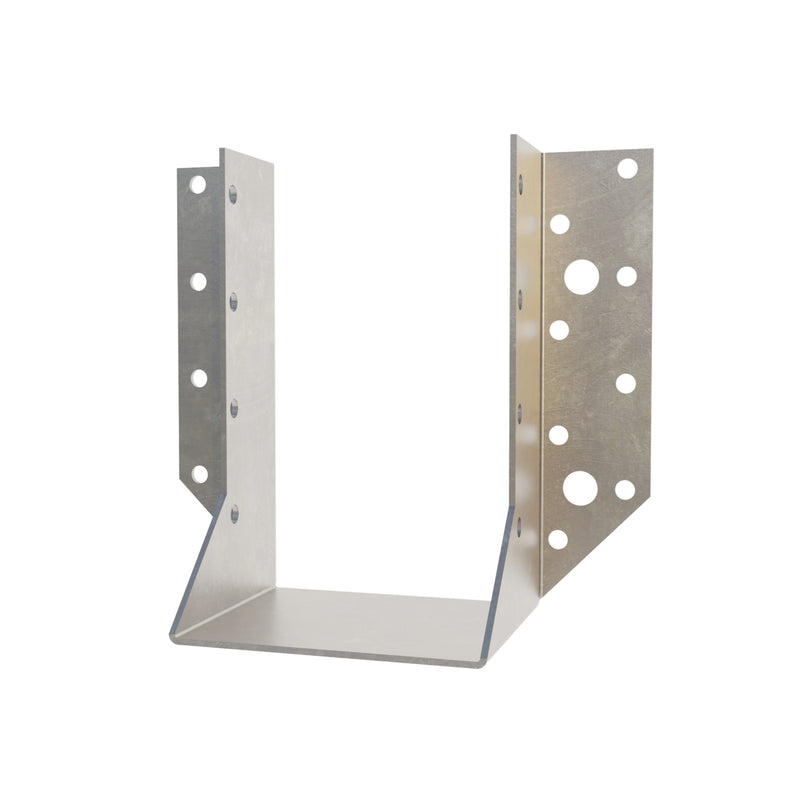
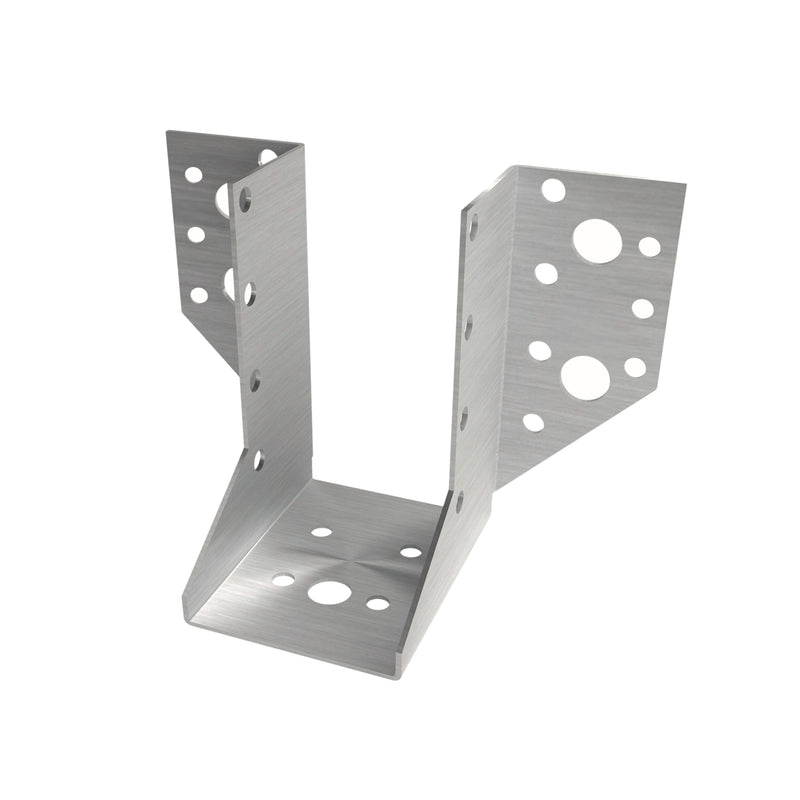
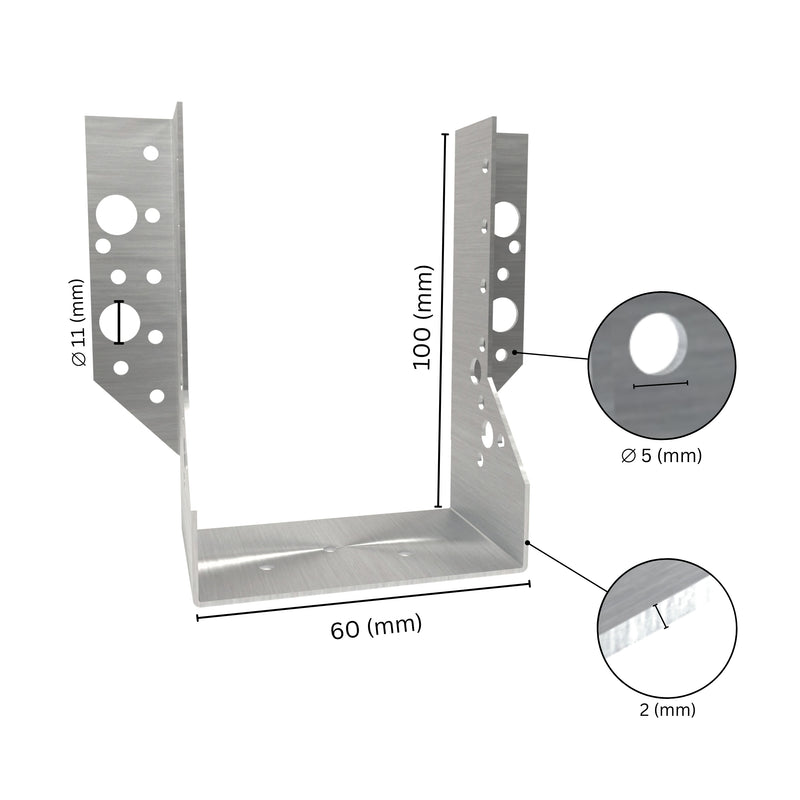
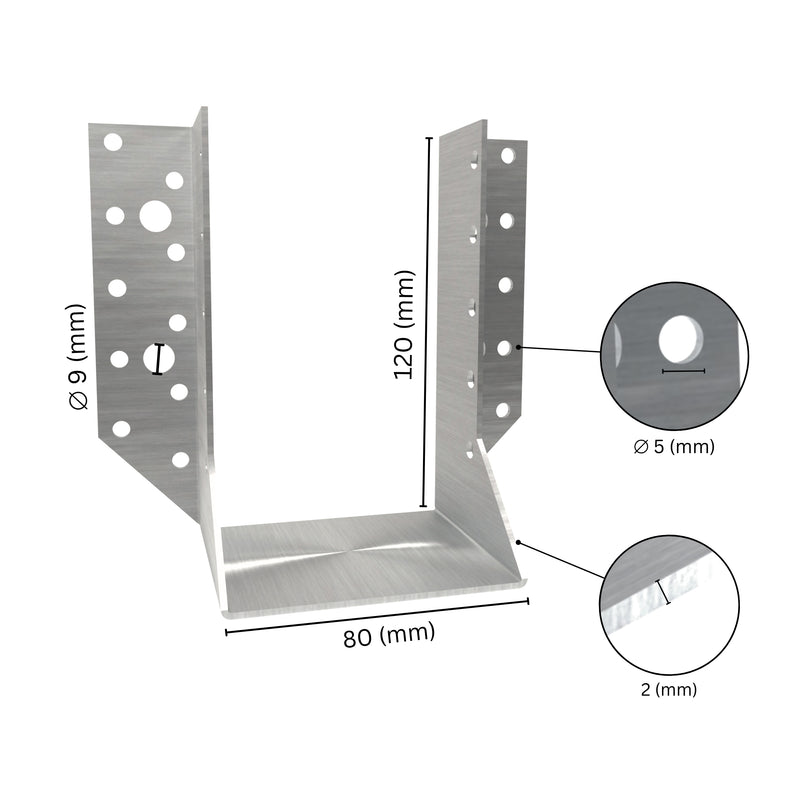
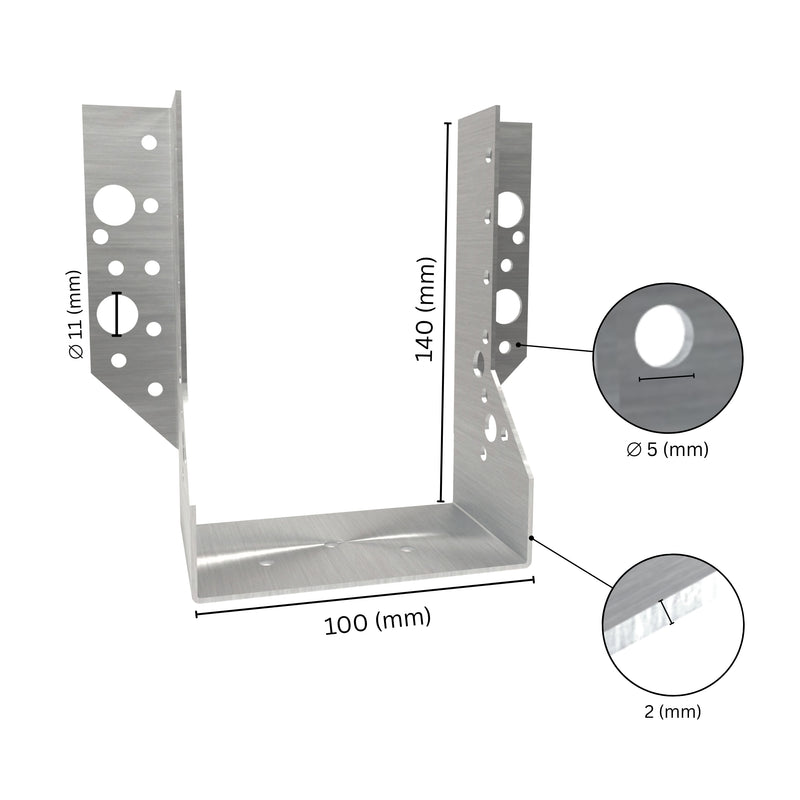
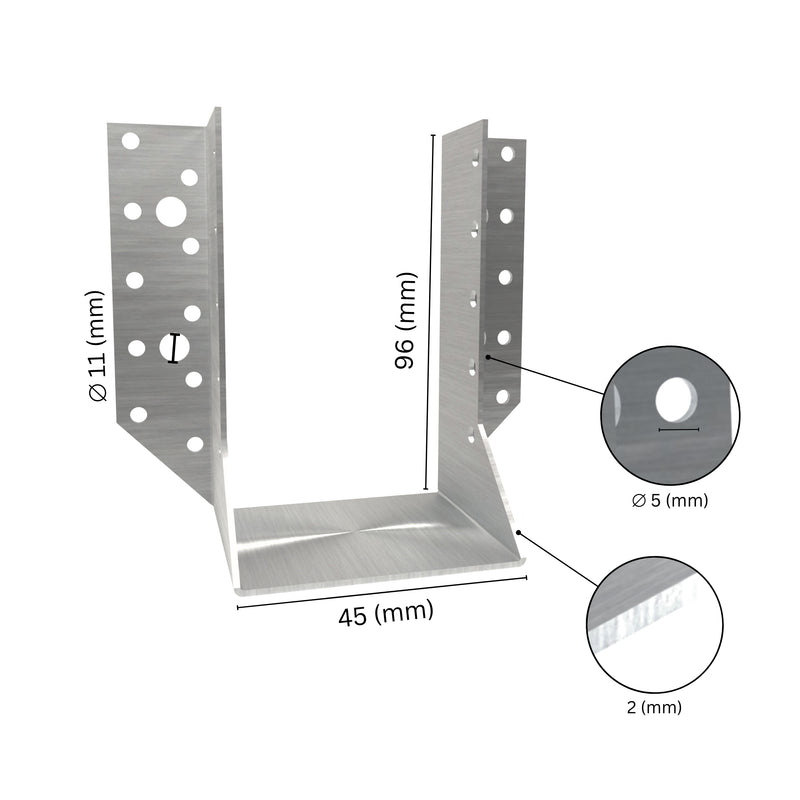
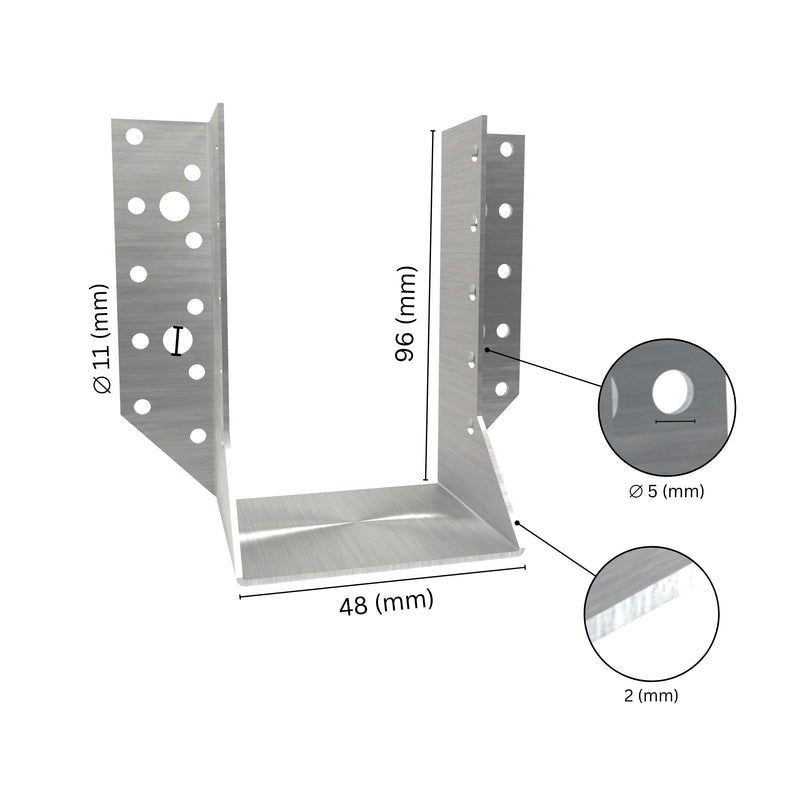
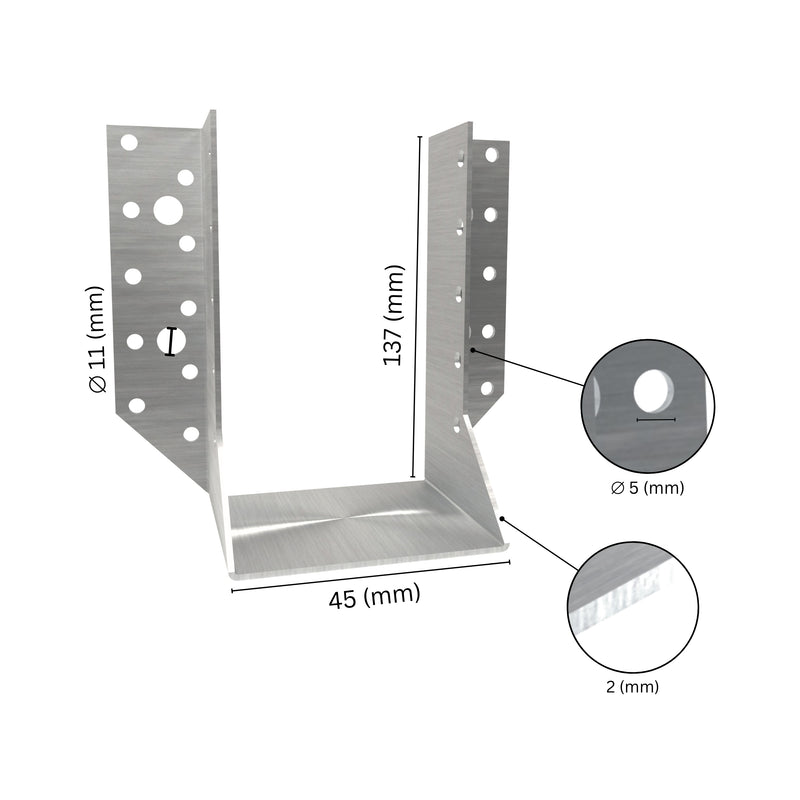
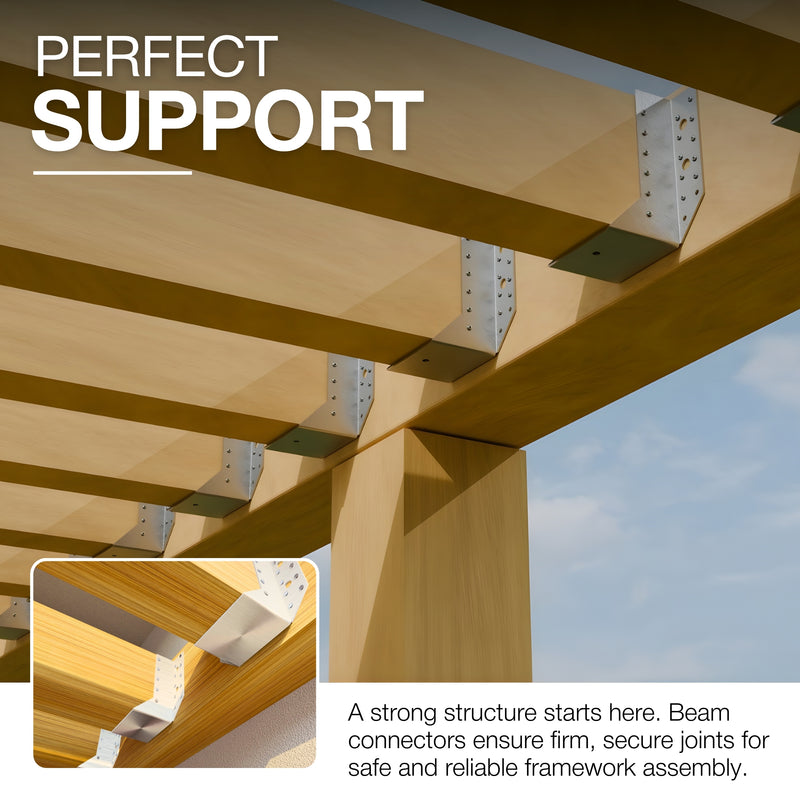
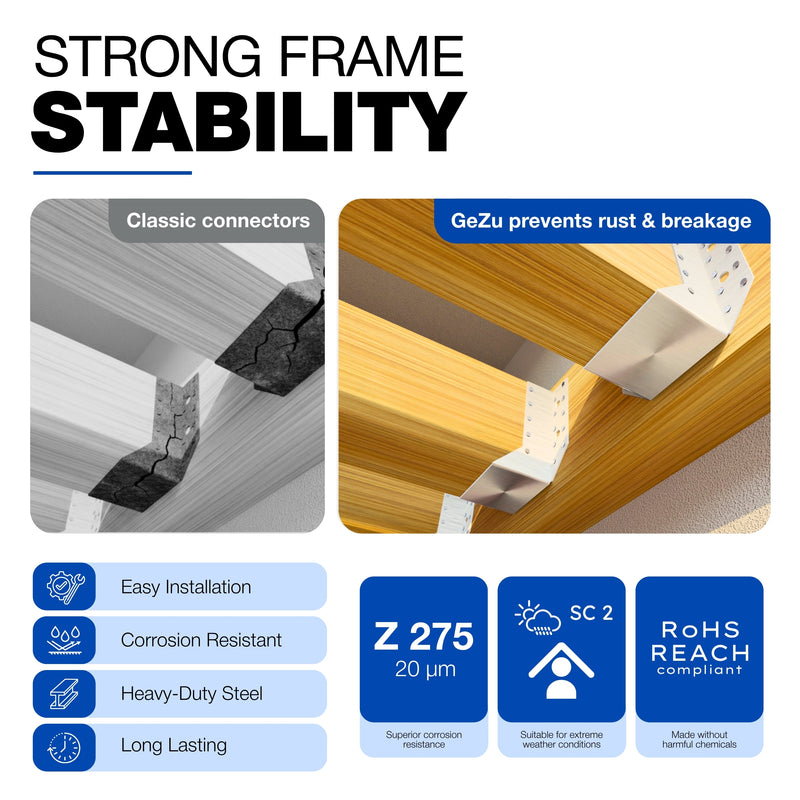
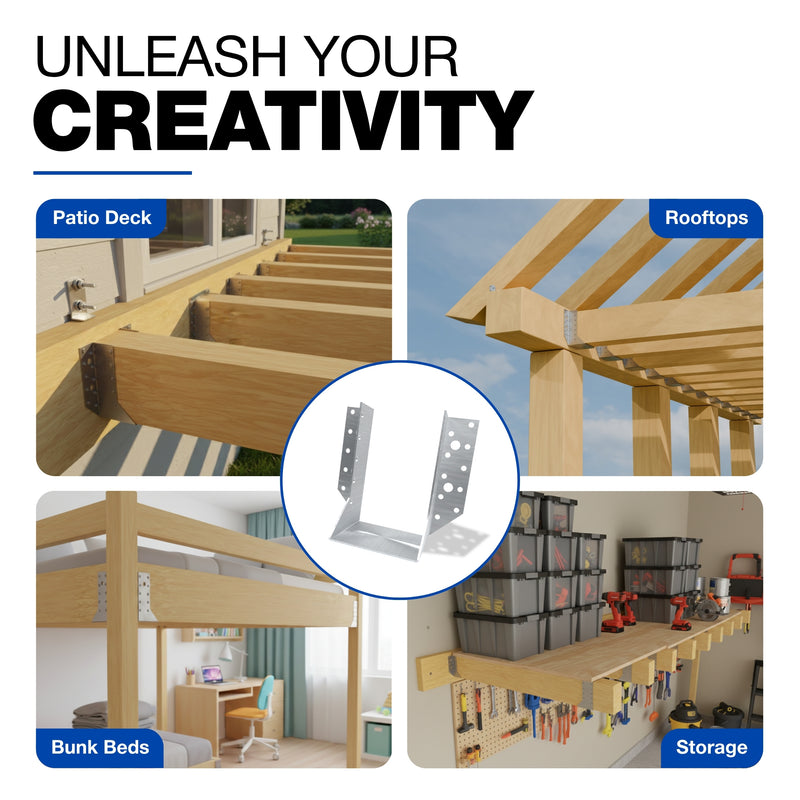
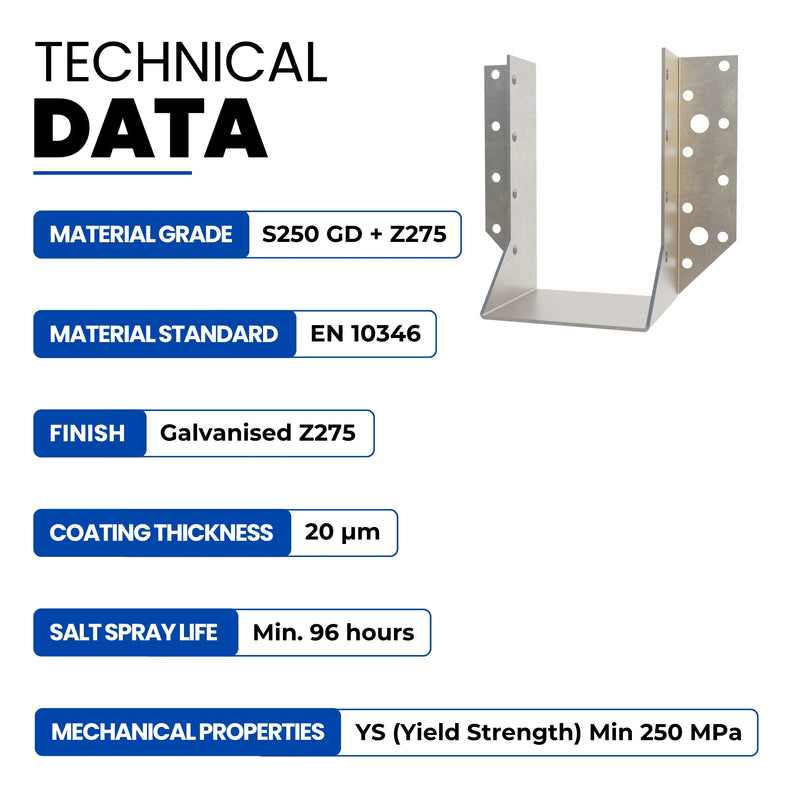
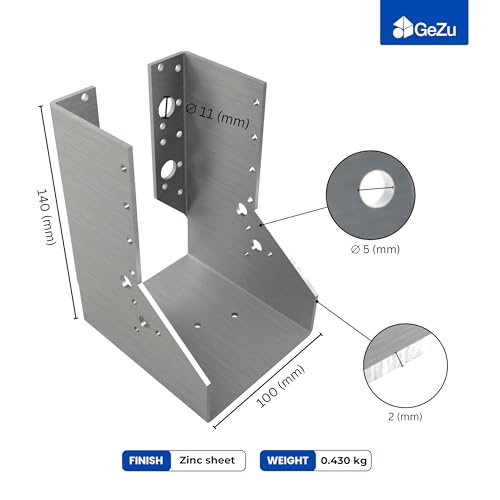
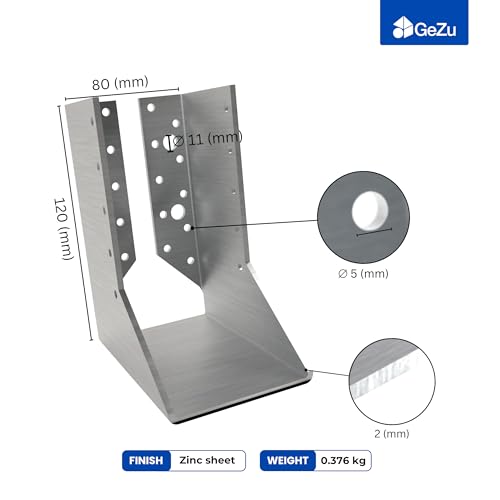
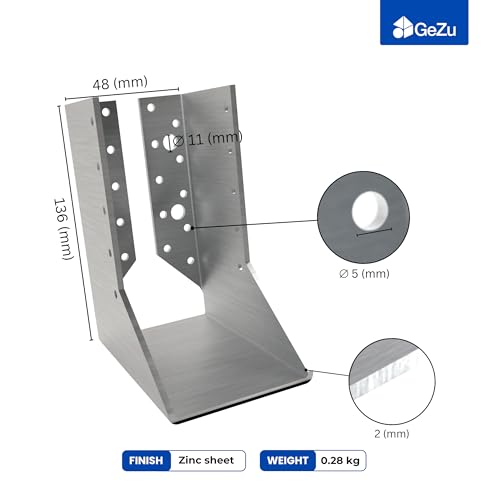
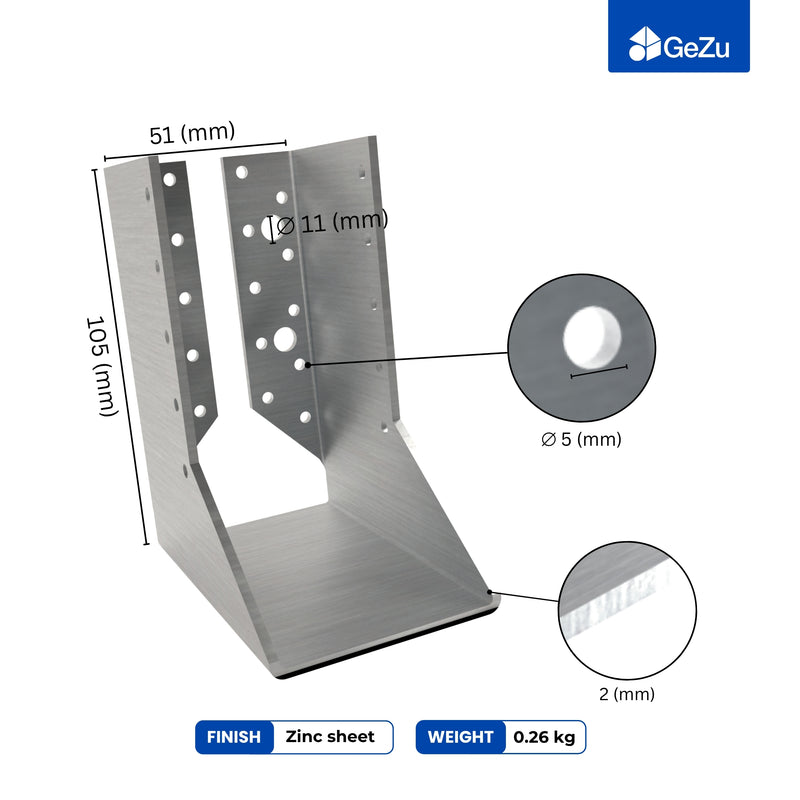
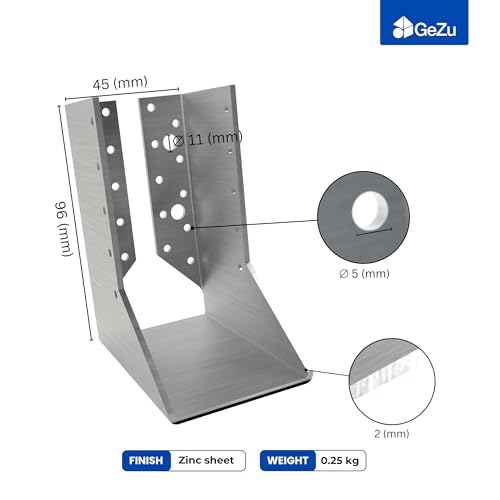
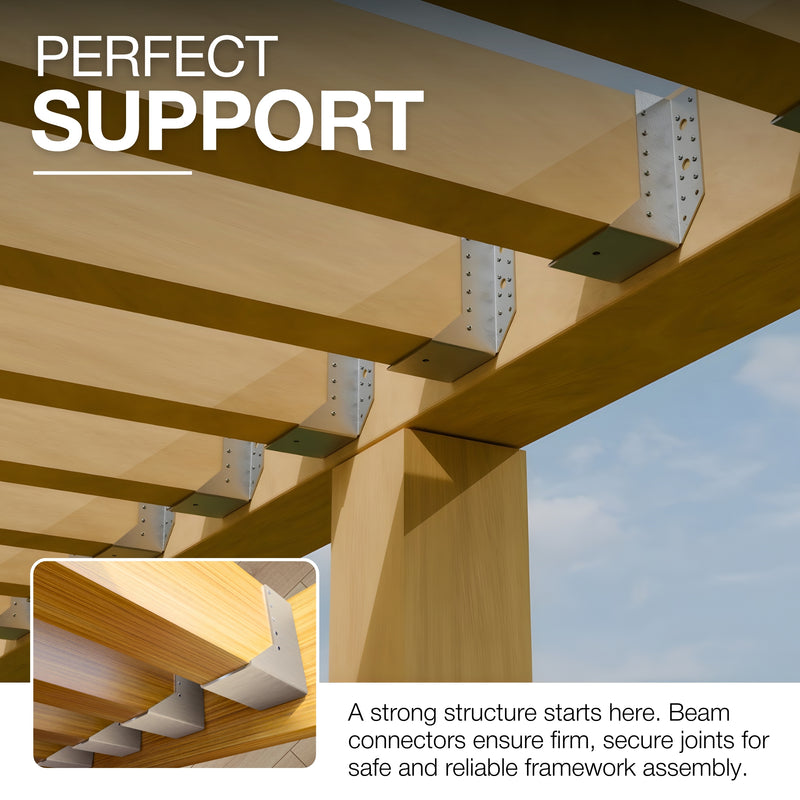
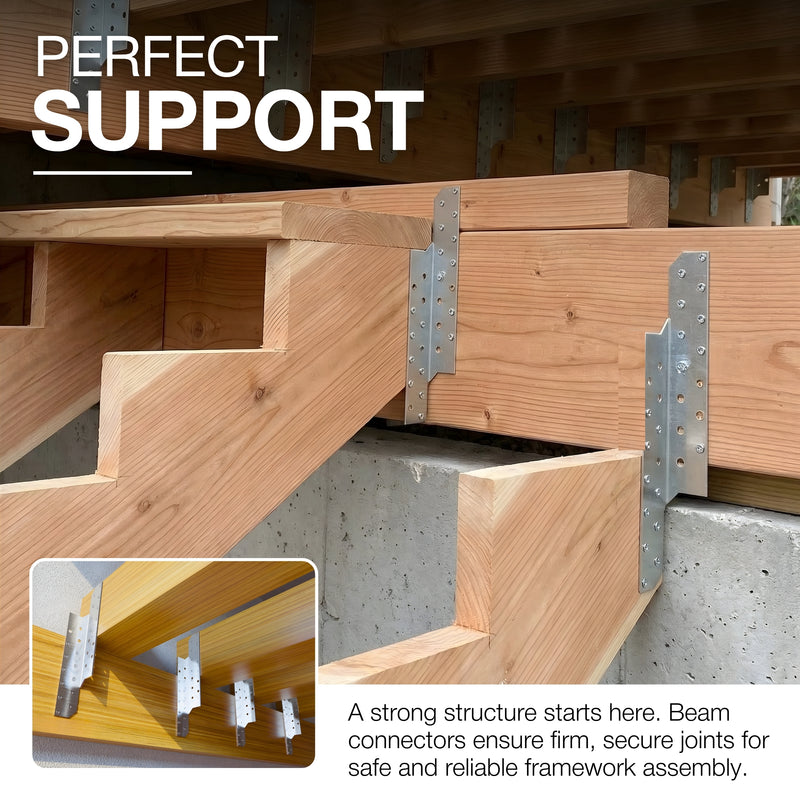
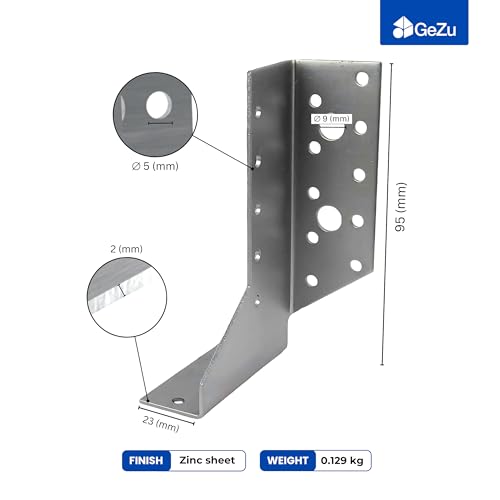
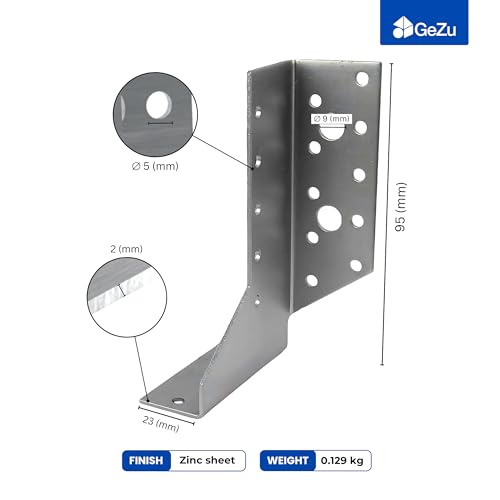
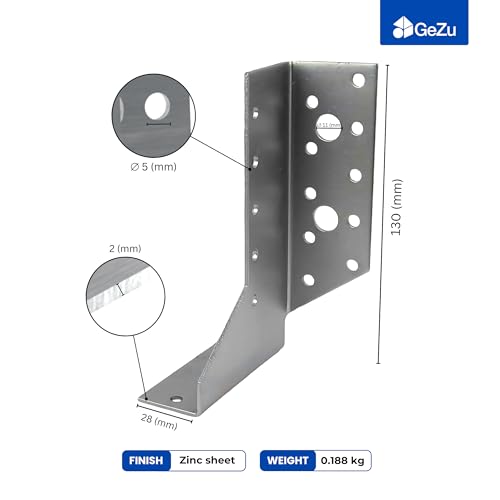
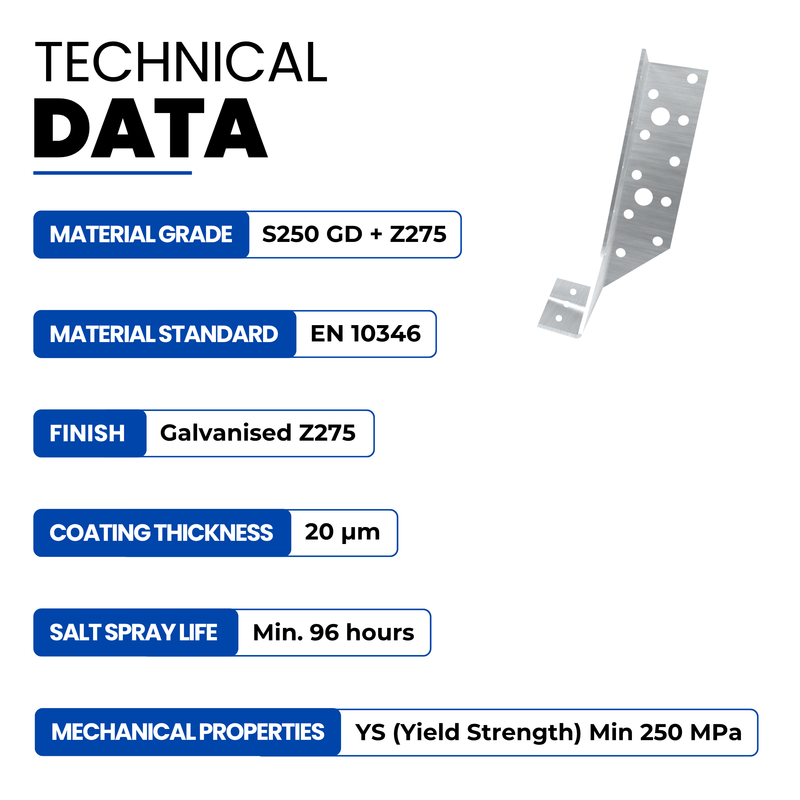
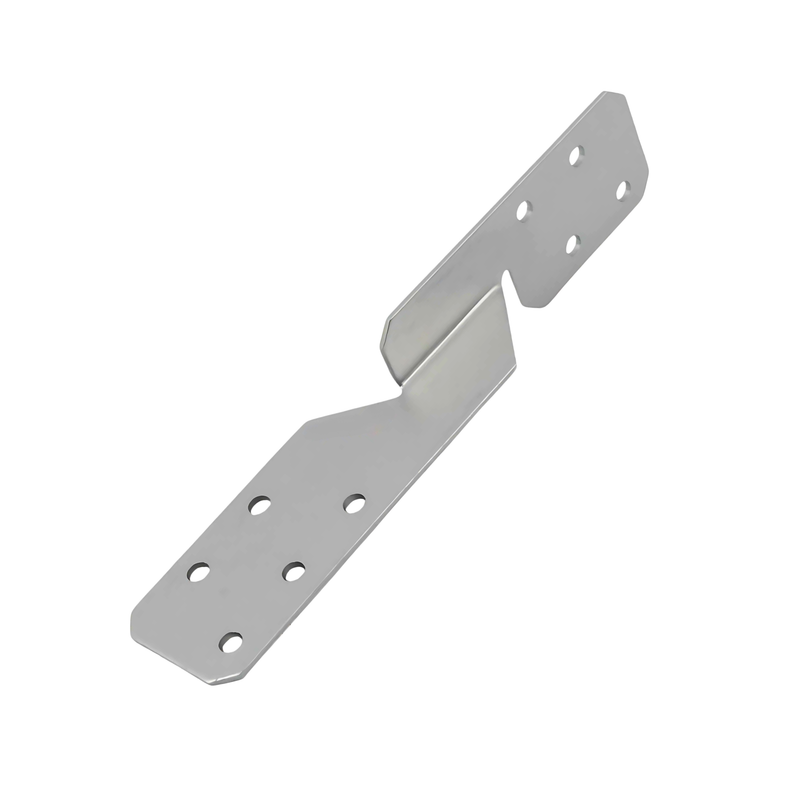
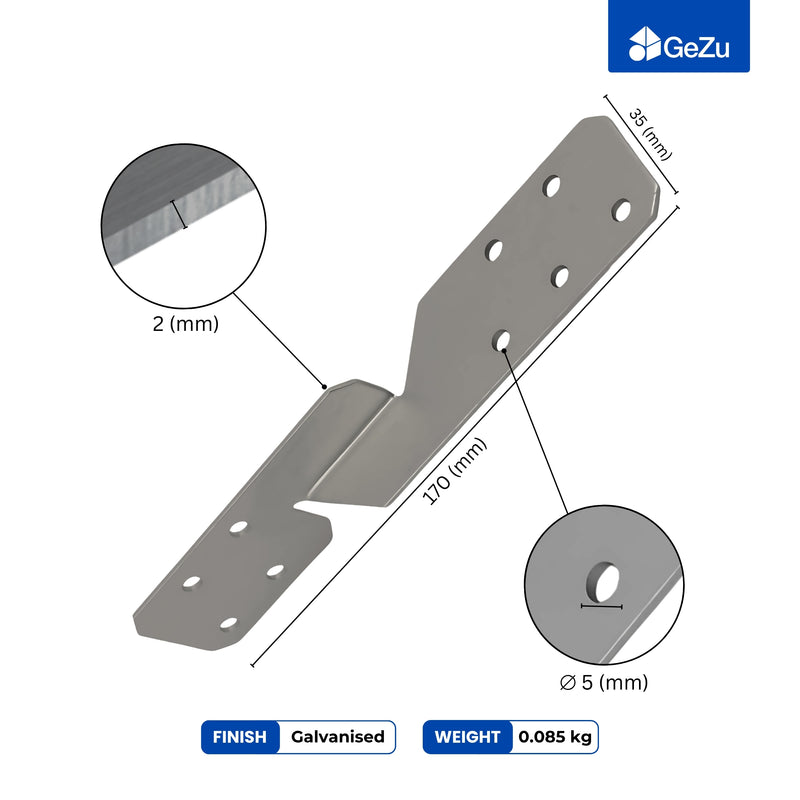
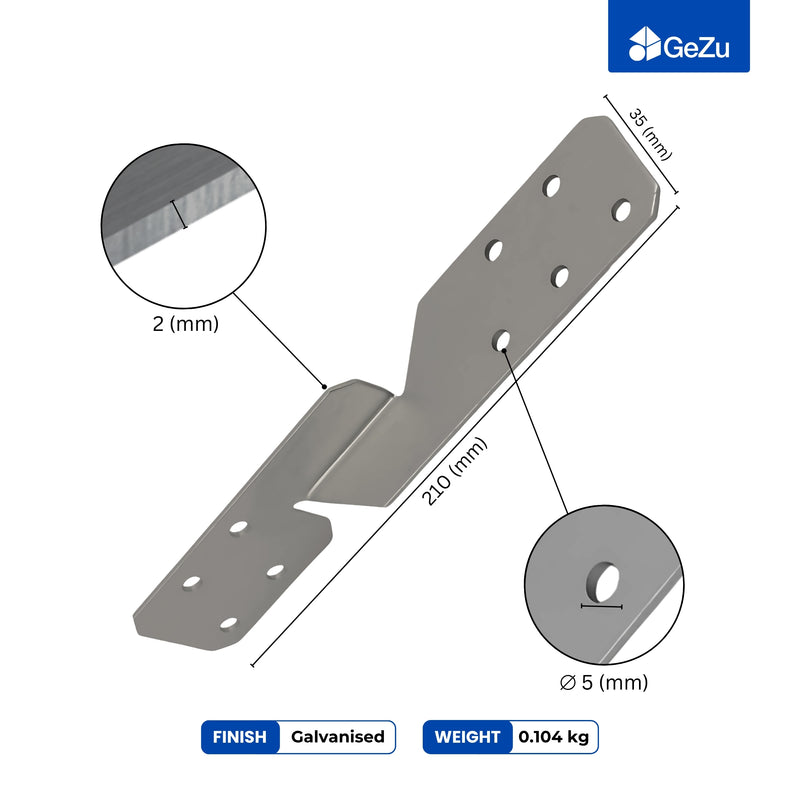
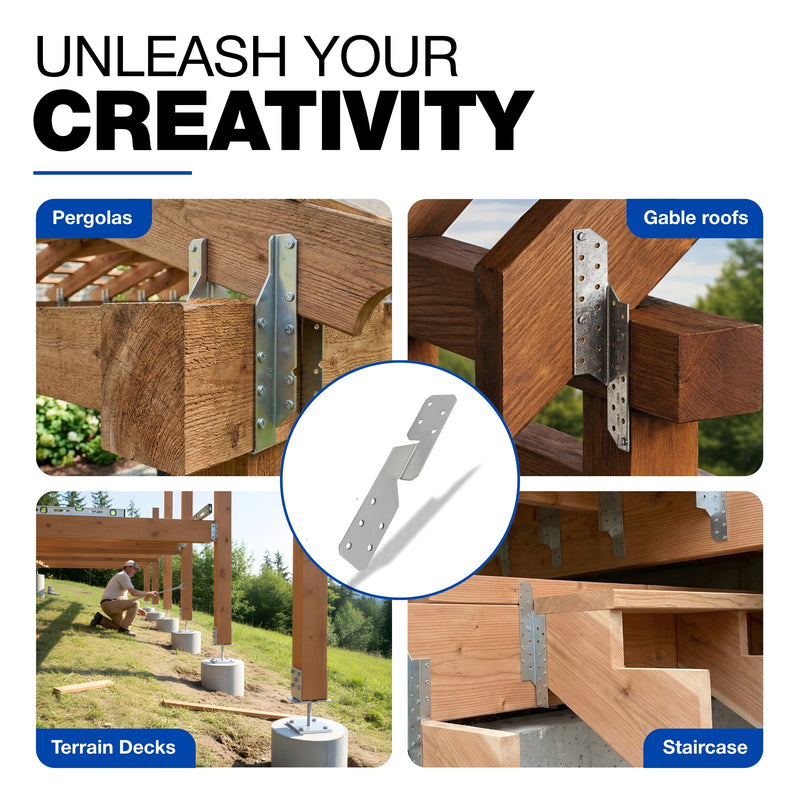
It's the default for anything of ours that lives outside. Our post supports and wood connectors lean on it heavily: every H-post anchor we sell (€5.95 to €15.39 depending on fork width and length) and every pergola corner bracket (€12.96 to €16.09) is hot-dip only. There's no honest case for anything thinner on a part that gets cast into a footing and then has a carport built on top of it.
Electroplated zinc
Thin, bright, smooth, cheap. Zinc deposited electrically, so the coating follows the part precisely and doesn't clog threads or change dimensions. It also stops at the outside; recesses and internal faces get very little. Our right angle couplers come both ways, electroplated or hot-dip, from €4.92, and the choice is genuinely situational. A hire stack that lives in a van and under cover between jobs is fine electroplated. A tower standing through a wet Dutch winter is not. If you want the process detail, we wrote about what sellers mean when they say "galvanised" a while back.
Zinc flake
The one most buyers have never heard of, and the one that quietly solves the hardest problem. Zinc and aluminium flakes suspended in a binder, applied and baked on, covered by ISO 10683. It lands at roughly 8 to 15 µm, thin enough to leave thread tolerances alone, and it's applied without the electrolytic step that can drive hydrogen into high-strength steel. Salt-spray performance starts around 480 hours in the standard and commercial systems go a long way past that on a coating you can barely see.
Our height-adjustable bolt-down post supports offer it alongside hot-dip and electroplated, across sizes from 50×50 mm up to 100×100 mm with adjustment ranges to 480 mm, €3.85 to €17.29. If the part has a threaded adjuster that has to keep turning years from now, this is the finish to look at.
Stainless
Different mechanism entirely. There's no sacrificial layer to wear through; the chromium oxide film reforms every time the surface is scratched. That makes it the answer wherever a coating would simply be abraded away, and wherever the material the part is fixed into is chemically hostile to zinc. Our terrace and decking screws are stainless (€18.95 for 200, up to €56.33 for 1000), as are the Spengler roofing screws with their pre-mounted EPDM washers, €8.20 to €11.14 in silver or anthracite grey.
Grade matters more than the word does. A2 (304) is fine inland; A4 (316), with molybdenum in it, is what you want within sight of the sea. Our product pages state the material rather than the grade, so if you're building on the coast, ask us before you order rather than after.
Black, or no finish at all
A legitimate choice, not just the cheap one. Our tube clamps and pipe fittings come in black or galvanised at nearly the same money (a 90° elbow is €3.79 to €8.44 either way), and black is often the better-looking pick. A black pipe handrail in a stairwell will outlive the building. Put the identical fitting on a balcony and you'll be wire-brushing it before the second summer.
Finish by exposure
| Where the part lives | Buy | Skip | The thing that catches people |
|---|---|---|---|
| Heated, dry interior | Electroplated, or black for looks | Hot-dip | Nothing much. Spend the money on the part instead. |
| Unheated store, barn, covered stack | Electroplated | Stainless | Condensation on cold mornings, especially on steel brought in from a cold van |
| Outdoors, general (C3) | Hot-dip galvanised | Electroplated | Cut ends and field-drilled holes |
| Ground contact or cast into concrete | Hot-dip, in the heaviest section you can justify | Electroplated, black | The wet–dry cycling right at the soil line, which is where these parts always fail |
| Coastal, or roads that get salted (C4–C5) | Stainless where the budget reaches, hot-dip everywhere else | Electroplated, black | Mixing the two badly. See below. |
| Bolted into copper-treated timber | Stainless, or hot-dip | Electroplated | The preservative itself, not the weather |
| Threaded fasteners, high-strength steel | Zinc flake | Hot-dip, which fills the threads | Hydrogen embrittlement from electroplating heat-treated parts |
Three ways a correct finish still fails
You mixed metals without thinking about area
Put a stainless bolt through a galvanised bracket, add water, and you've built a small battery. Zinc is the anode and it goes first. Whether that matters at all comes down to the ratio of exposed areas: a handful of small stainless screws into a large galvanised plate is usually survivable for years, because the zinc has plenty of area to lose slowly. Reverse it, so a large stainless assembly hangs off one small zinc-coated fixing, and that fixing is the thing that disappears. Keep a joint in one family where you can. Where you can't, make sure the stainless is the small part.
The timber is doing the corroding
Copper-based preservatives replaced CCA across Europe, and they're considerably harder on zinc than what came before. The published work puts it plainly: copper in ACQ-treated timber accelerates corrosion of galvanised fasteners by an order of magnitude compared with CCA, and the standing recommendation for copper-treated timber in the weather is 304 or 316 stainless, with hot-dip galvanised the only coating generally accepted alongside it. Electroplated screws driven into wet treated decking are a one-season fixing dressed up as a permanent one.
You cut it after it was coated
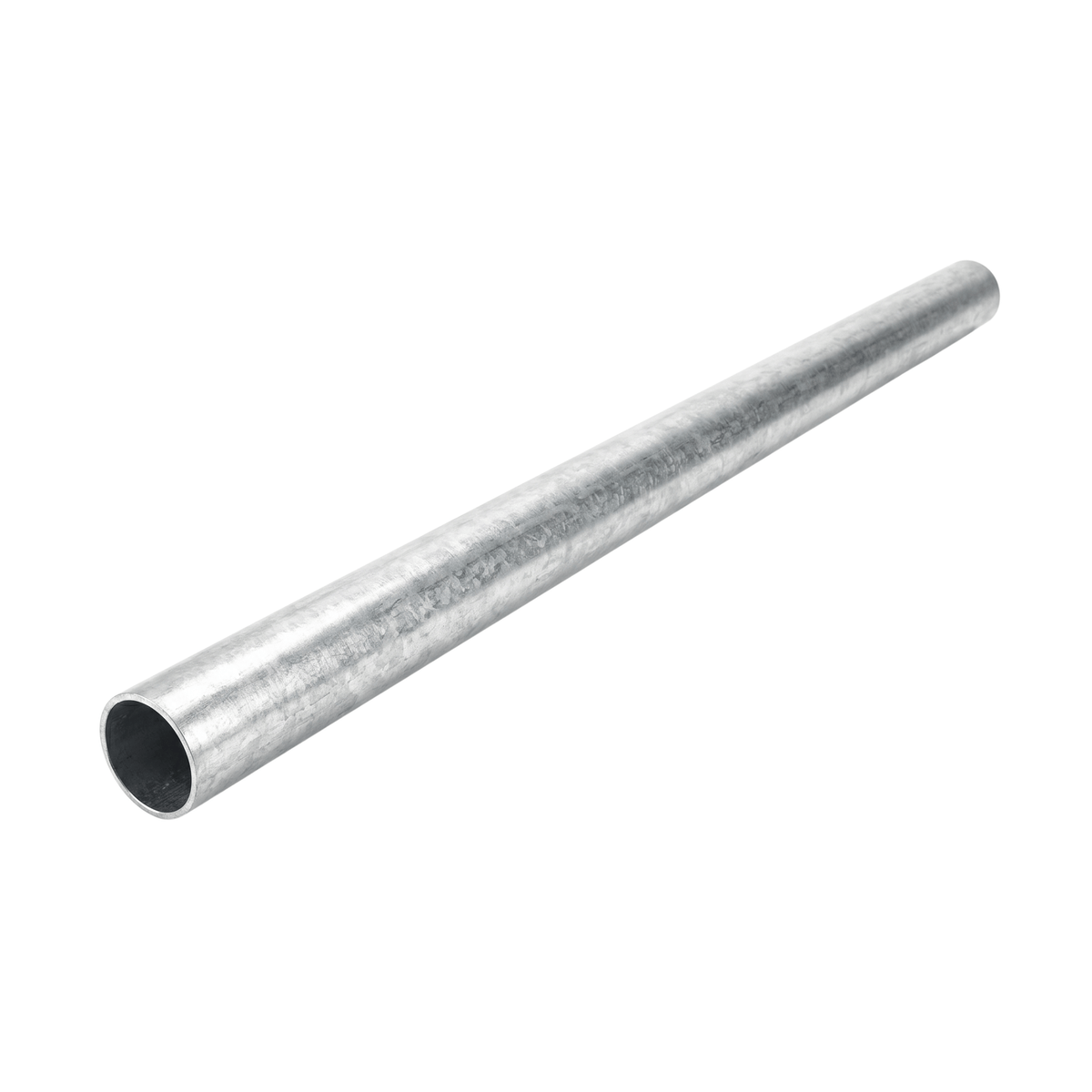
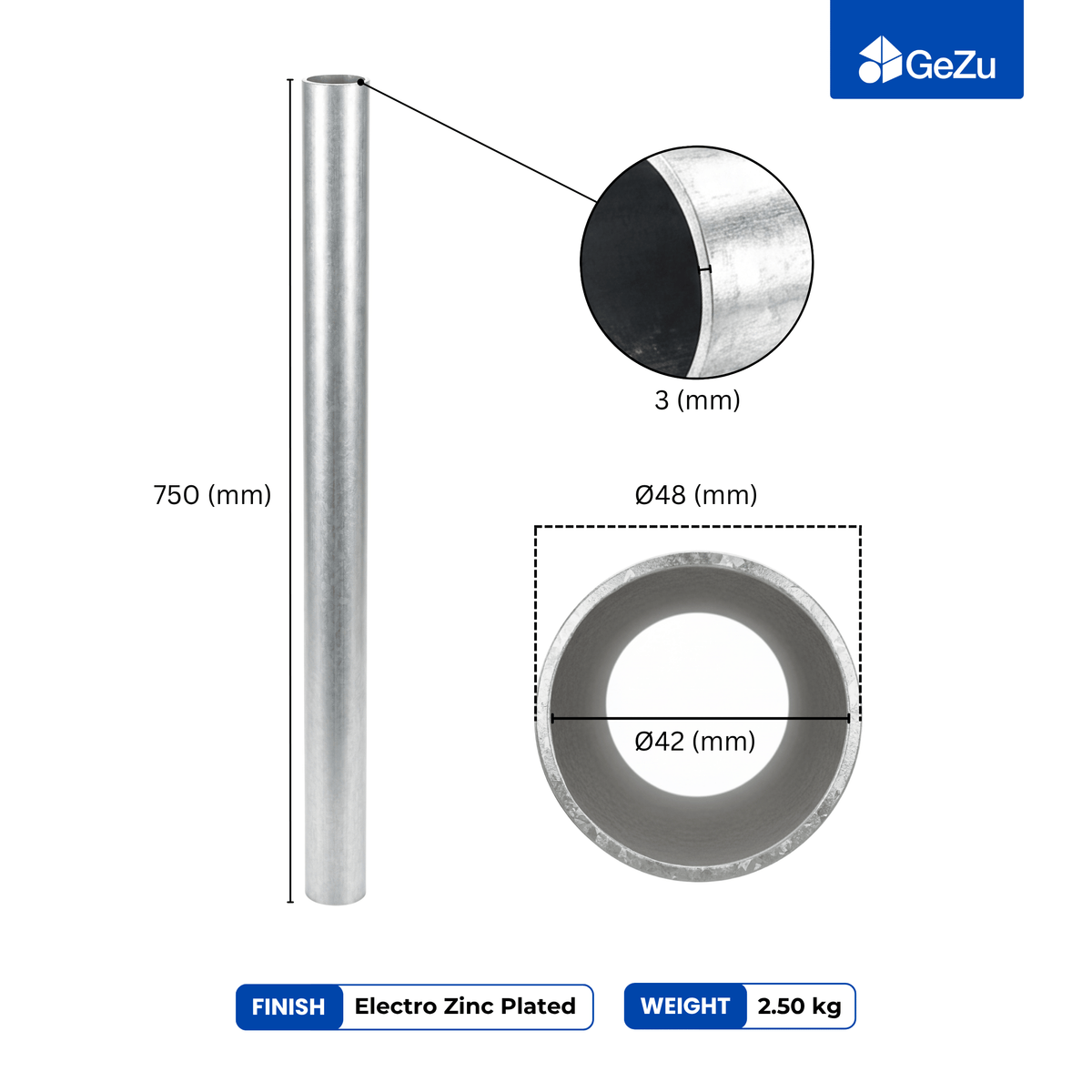
Cut a galvanised tube to length and the fresh face has no zinc on it at all. The surrounding coating will protect a millimetre or two sacrificially and then stop. Same for holes drilled on site, and for the burr around them. A zinc-rich repair stick costs a few euro and takes a minute per cut. Skip it and the structure rusts from the places you made yourself, which is how most galvanised assemblies begin to fail.
What we'd buy, for five real jobs
A scaffold tower going up for three weeks on a dry site, then straight back in the van: electroplated couplers, and pocket the difference. That same tower left standing from October to March: hot-dip, every time, and the extra two euro a fitting stops mattering the first time you don't have to replace them.
A garden pergola: hot-dip brackets, which is the only way we sell them, so there's no decision to make. Fence posts on a plot behind the dunes: hot-dip post supports, stainless fixings, and you're mixing metals in the harmless direction. An indoor pipe handrail: black tube clamps, and enjoy not looking at galvanising spangle in your own stairwell.
Questions we get asked
Is galvanised or stainless better?
Neither, on its own. Stainless resists a wider range of attacks and needs no coating to stay intact, but it costs several times more and it's the wrong answer for a large structural part that a thick zinc coating protects perfectly well. Hot-dip galvanising gives you decades in ordinary C3 air for a fraction of the price. Stainless earns its money at the coast, in threaded fasteners, and anywhere in contact with treated wood.
Can I use stainless screws with galvanised brackets?
Usually yes, as long as the stainless is the small part and the galvanised is the large one, which is the normal way round. Keeping the joint dry helps a great deal. What you should avoid is the reverse: small zinc-coated fixings carrying a large stainless assembly in a wet location.
How long does hot-dip galvanising actually last outside?
Take the zinc loss figure for your corrosivity category and divide the coating thickness by it. In C3 air, which covers most inland European sites, that arithmetic lands in the decades. At the seafront it can be a quarter of that or less. This is why a coating that performs beautifully in Eindhoven can disappoint somebody building in Zeeland with identical parts.
What is zinc flake actually for?
Threaded parts and high-strength steel, mainly. It gives real salt-spray performance in a coating thin enough not to interfere with threads, and it's applied without generating hydrogen, which matters on heat-treated components. On a plain bracket sitting in a garden, hot-dip is still the sensible choice.
Still not sure?
Tell us where the part is going and roughly how long it needs to last, and we'll tell you which finish to order. Most of our scaffolding couplers are stocked in both hot-dip and electroplated, most fasteners in more than one material, and picking the right one costs nothing at the point of order. It only costs something later.