Fence Post Spikes vs Concrete-In Post Supports: Which Should You Use?

For most garden fences up to about 1.8 m on firm, undisturbed ground, a fence post spike is the better fixing: it goes in within ten minutes, needs no digging or curing, and holds the timber clear of wet soil so the post lasts longer. Set the post on a concrete-in post support instead, a steel bracket cast into a concrete footing, when the fence carries solid panels in an exposed spot, when the ground is loose, sandy or full of rubble, or when the post must never move, think gate posts and corners. That is the whole decision; the rest of this guide is the detail behind it.
We sell both fixings, so we have no reason to push you one way. What follows is the same advice we give by email every week.
Fence Post Spikes vs Concrete-In Post Supports: Quick Comparison
| Post spike | Concrete-in post support | |
|---|---|---|
| Installation time | 10–15 min per post | 30–60 min per post, plus 24–72 h curing |
| Digging | None | Hole roughly 3× the post width, a third of the post length deep |
| Holding strength | Good in firm soil | Strongest, the footing takes the wind load |
| Best for | Fences to ~1.8 m, firm clay or loam | Tall or solid-panel fences, gates, corners, loose ground |
| Rot protection | Post sits fully above soil | Post bolts to steel above the footing, never touching concrete |
| Repositioning | Can be removed and re-driven | Permanent; digging out concrete is hard work |
| Cost per post | From about €7, nothing else needed | Support from about €5.49 plus one or two bags of post mix |
How a Fence Post Spike Works
A fence post spike is a long, pointed steel section, usually 750 or 900 mm, with a square socket welded on top. You drive it into the ground with a sledgehammer (use a driving dolly or an offcut of post to protect the socket), then clamp or screw the post into the socket. The soil itself grips the spike along its full length, the same way it grips a tent peg, only with far more surface area.

Our drive-in post spikes are hot-dip galvanised, which means the steel is dipped in molten zinc for a matte grey coating that survives decades outdoors. Sockets come in sizes to match the standard timber posts, in 750 mm and 900 mm lengths, from about €7 each. Picking the exact socket size has its own guide; the short version that matters here is 750 mm for fences to around 1.5 m and 900 mm for anything taller.
They're used for garden fences, screens, pergola posts and mailbox posts, anywhere the ground is firm and you'd rather not dig. The big practical benefit besides speed: the post sits entirely above the soil line, so the end grain never sits in wet earth. Ground contact is the main reason wooden fence posts rot at the base.
How a Concrete-In Post Support Works
A concrete-in post support puts steel in the ground instead of timber: you dig a hole roughly three times the post width, stand the support's ribbed anchor in it, and fill around it with concrete or post mix. Post mix (sold under brand names like Postcrete) is a dry blend you pour into the hole and simply wet; it stiffens in minutes and cures hard enough to hang panels the next day. The post itself bolts to the bracket above ground, so no timber ever enters the hole.
That above-ground bolt is the whole point. The old method of setting bare timber straight into concrete lets water pool in the gap between wood and concrete, and the post rots at exactly that line. With the support, the steel takes the ground contact and the timber stays dry, which is why this comparison is spike versus support, not spike versus buried post.

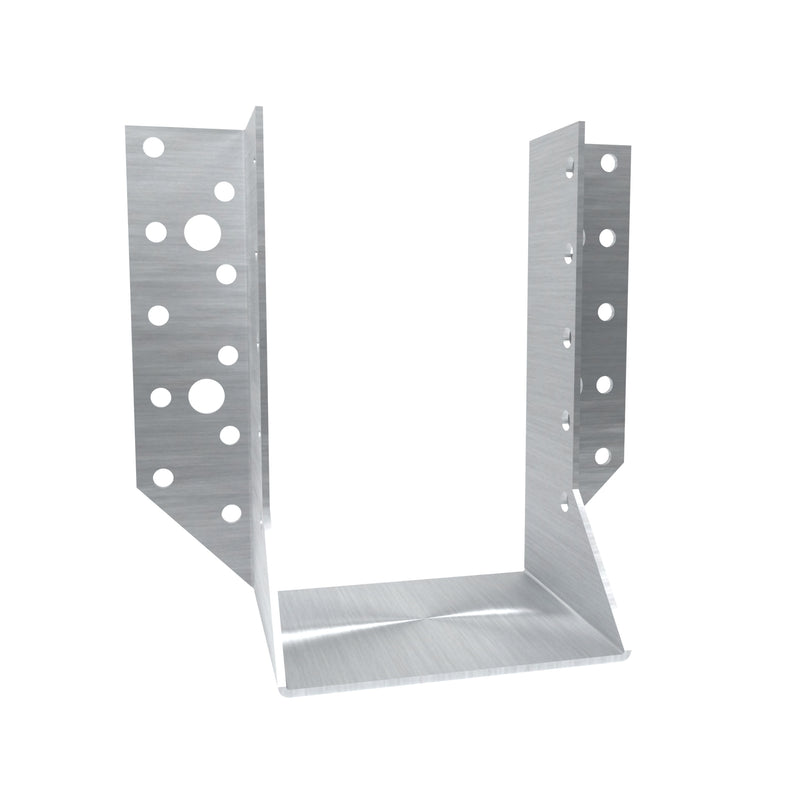
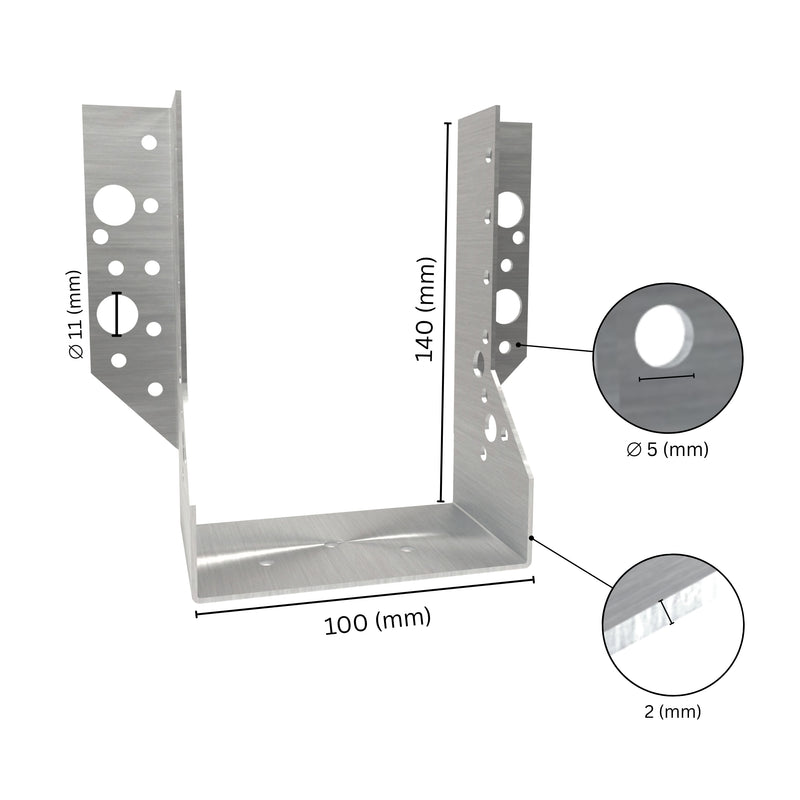
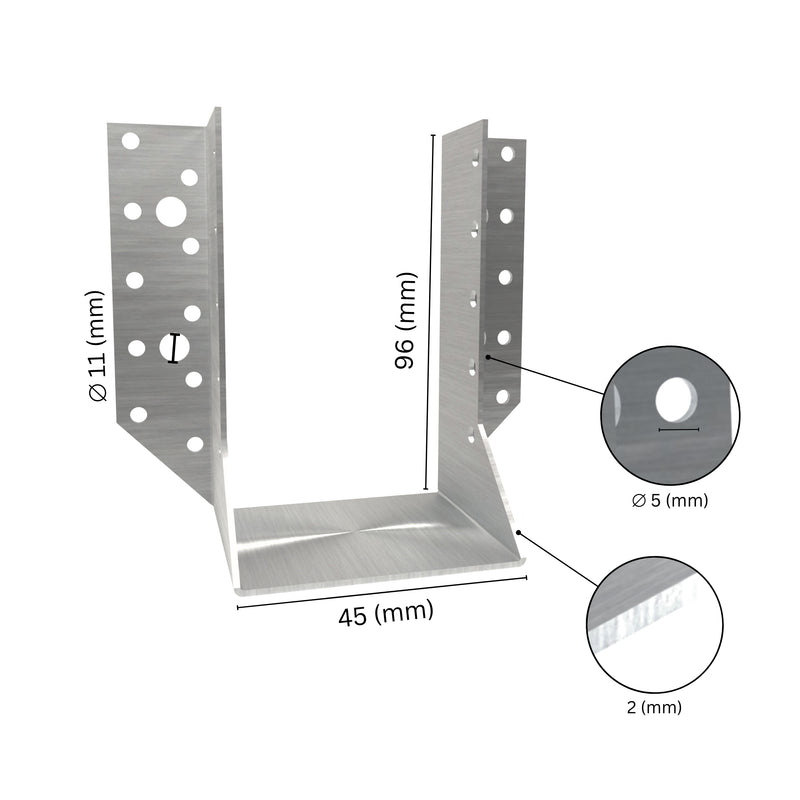
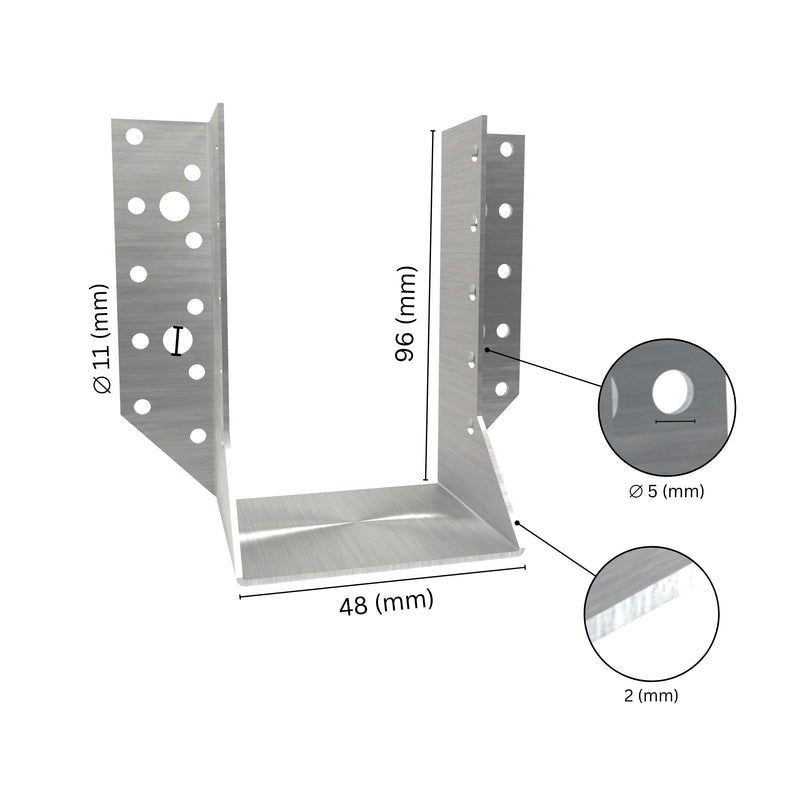
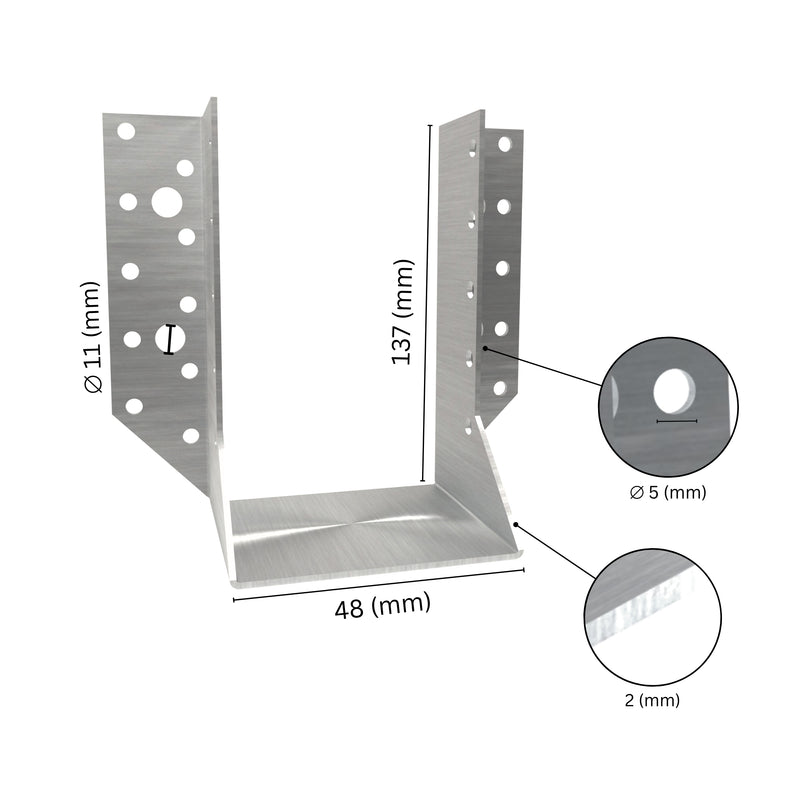
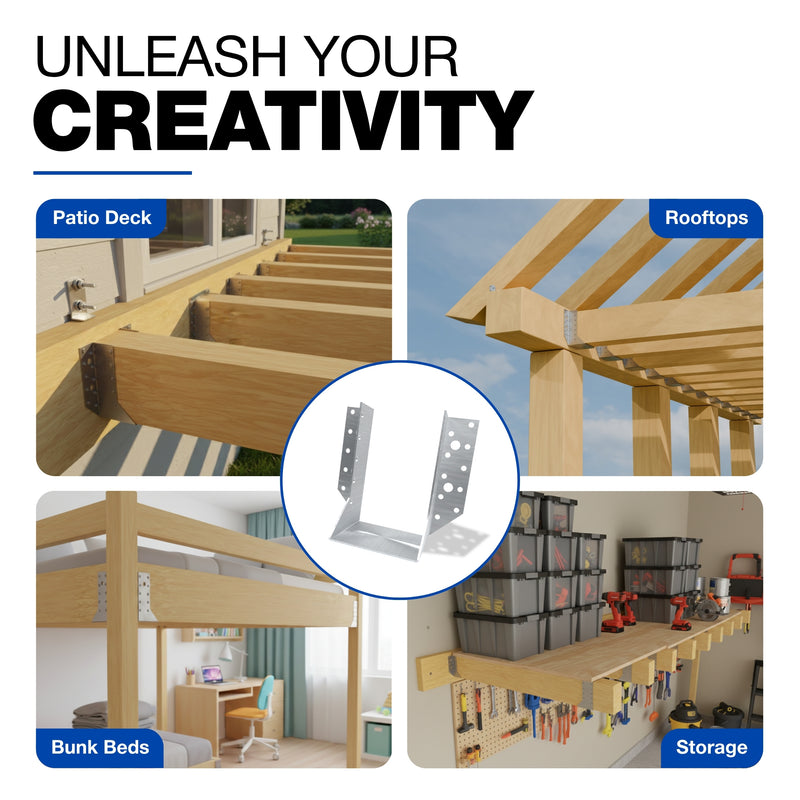
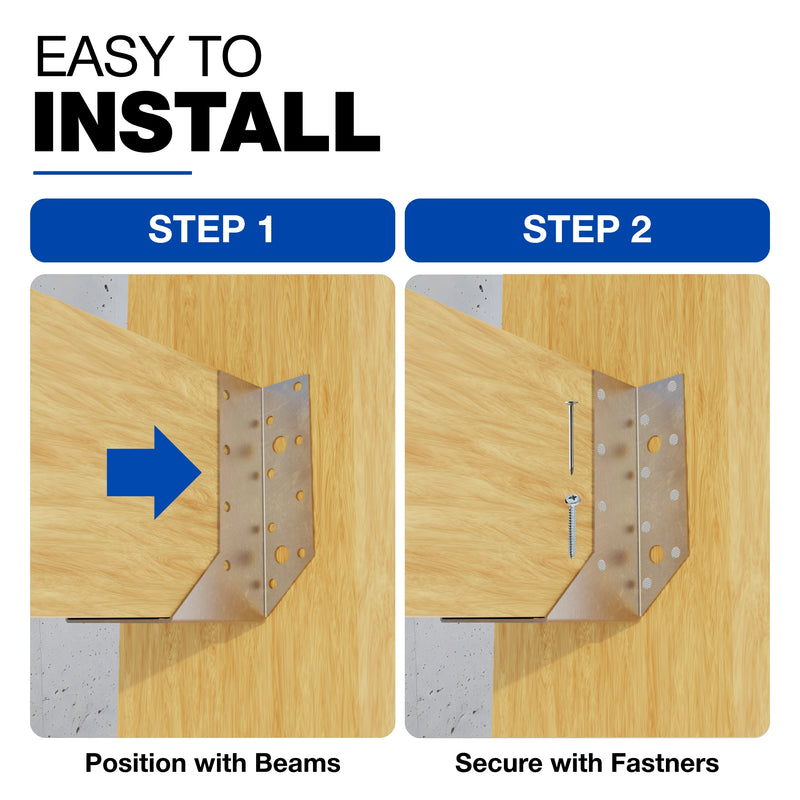
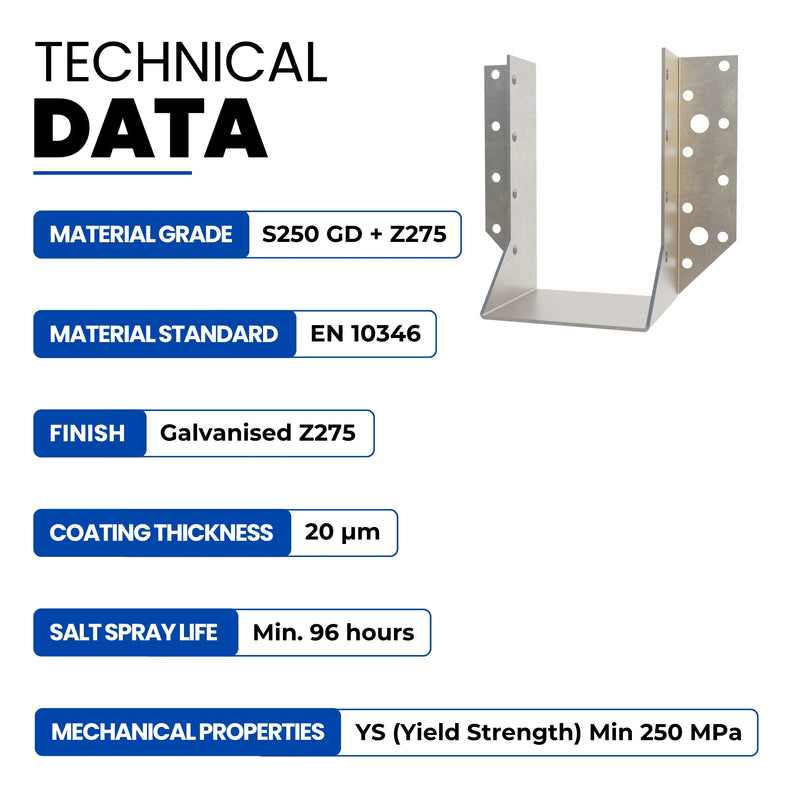
A concrete-in U post support is the simplest version: a U-shaped bracket on a 300 mm ribbed anchor that you set into the wet footing. The post drops between the two legs and is bolted through from both sides, held a couple of centimetres clear of the concrete surface. Ours are hot-dip galvanised, sized 101 to 141 mm for standard posts, and cost €5.49 to €6.39, less than the spike, though you still buy the concrete.

Where the post carries real load, a gate post, a pergola corner, a carport, step up to an H post anchor. The H profile is cast much deeper into the footing, 400 to 800 mm, and the post is bolted through the web on both flanges, which gives a visibly stiffer joint than a surface bracket. Sizes 101 to 116 mm, hot-dip galvanised, €7.45 to €13.73 depending on depth.
Where Fence Post Spikes Win
Speed is the obvious one. A fence line of ten posts is a weekend job with post mix and a one-day job with spikes, and there's no barrowing concrete across the lawn.
Post spikes also win on reversibility. Misjudged the line? Lever the spike out with a long bar and re-drive it half a metre along. Try that with a concreted footing and you'll be swinging a breaker. For rented properties, temporary screens and anything you might move later, that matters more than outright strength.
And they win on rot, quietly. Because the post never touches soil, a spiked post routinely outlives the same post concreted in with direct timber contact. If you want the digging-free approach for other jobs too, we've covered setting wooden posts without concrete more broadly, including ground screws.
Where a Concrete-In Post Support Wins
Wind is the decider. A 1.8 m close-board or solid-panel fence is effectively a sail, and in an exposed position the leverage on each post is enormous. A support set in a concreted footing resists that leverage far better than soil friction on a spike ever will. The forums are full of people whose spiked panel fence leaned after the first winter storm; the honest answer is that it was the wrong fixing for the site, not a bad product.
The concrete-in support also wins wherever the ground is poor. Sandy soil, made-up ground, soft wet clay: a spike only holds as well as the soil gripping it. And it wins for gates, because a gate post takes a swinging, twisting load all day. How deep that footing needs to be is its own question; our guide to how deep a fence post should be set gives the numbers by fence height.
How Soil Conditions Affect Fence Post Fixings
Your soil type plays an important role in deciding whether to use a fence post spike or a concrete-in post support.
Firm clay or loam that's never been dug: spikes hold beautifully. Push a screwdriver in; if it takes real effort after 100 mm, a spike will grip.
Stony ground or old building plots are spike country's border. The most common email we get is some version of "it hit something at 300 mm and now it's leaning". A spike that strikes brick or a thick root will deflect and go in crooked, and you can't steer it back. If the first test drive goes off line, dig that position out and set a concrete-in support instead; mixing fixings along one fence line is completely fine, and it's what the pros do.
Very soft or boggy ground suits neither. There, longer footings, more concrete, and sometimes a rethink of post spacing are the fix.
Fence Post Spike vs Concrete-In Post Support: Cost Comparison
A fence post spike costs around €7 to €12 per post, depending on the socket size. That's the whole bill, apart from a suitable sledgehammer.
A concrete-in post support costs around €5.49 to €6.39 for a U support or €7.45 to €13.73 for an H post anchor. You’ll also need one or two 25 kg bags of post mix, depending on the footing size. Don't forget the time it takes to dig the hole and prepare the footing.
Although the bracket may cost less than a spike, the total cost can be similar or higher once you add the concrete and labour. Need metal post spikes for a whole fence line?
Buy fence post spikes in packs of 4,8, or 16 to reduce the cost per post. Post spikes get cheaper in bundles.
FAQs
Do Fence Post Spikes Really Work?
Yes, in the right ground. In firm, undisturbed soil a correctly driven spike holds a 1.5 m fence for years. The failures you read about almost always trace back to soft or stony ground, a too-short spike, or a tall solid fence in wind.
Are Post Spikes a Permanent Solution?
Treat them as semi-permanent. A hot-dip galvanised spike will outlast the timber post in it, but the fixing can work loose in soil that swells and shrinks through the seasons. Re-tamping the soil around the spike every couple of years keeps it tight. A concrete-in support is the more permanent fixing; it's also permanent when you'd rather it wasn't.
Is Post Mix as Strong as Proper Concrete?
For fence posts, effectively yes. Bagged post mix reaches a lower final strength than a well-mixed ballast-and-cement concrete, but a fence post footing is not a structural beam; the limiting factor is the size of the footing and the soil around it, not the last few newtons of the mix.
What If the Spike Hits a Root or Rubble?
Stop driving. Pull it, move 100 mm along the line if the panel spacing allows, and try again. If you're blocked everywhere, switch that one post to a dug-and-concreted footing with a U support or H anchor. Never force a deflecting spike; a crooked socket means a crooked post forever.
What to Use: Post Spike or Concrete-In Post Support
Walk your fence line with a screwdriver and be honest about wind. Firm soil, fence up to 1.8 m, sheltered or slatted: use a fence post spike and bank the saved weekend. Exposed site, solid panels, gates, corners or suspect ground: dig and set a concrete-in post support, steel in the footing rather than bare timber. Most real fences end up with a mix of both, and that's not a compromise, it's the right tool per post.
Everything above, spikes, concrete-in supports and the bolt-down family, lives in our post support range. If you're not sure which socket size matches your posts, measure the timber and add a couple of millimetres of play; or email us the fence plan and we'll tell you what we'd use.