Scaffolding accessories for hire firms 2026 guide

Scaffolding accessories for hire firms is the working stock of couplers, base jacks, boards and fixings that a rental company keeps moving from site to site, with the aim of returning every kit complete, safe and ready to re-hire. Hiring scaffolding out is a different trade from erecting it: your components come back dirty, handled by other people's crews and rarely packed the way they left.
- Hire stock lives on turnover: every accessory must survive handling, transport and re-inspection.
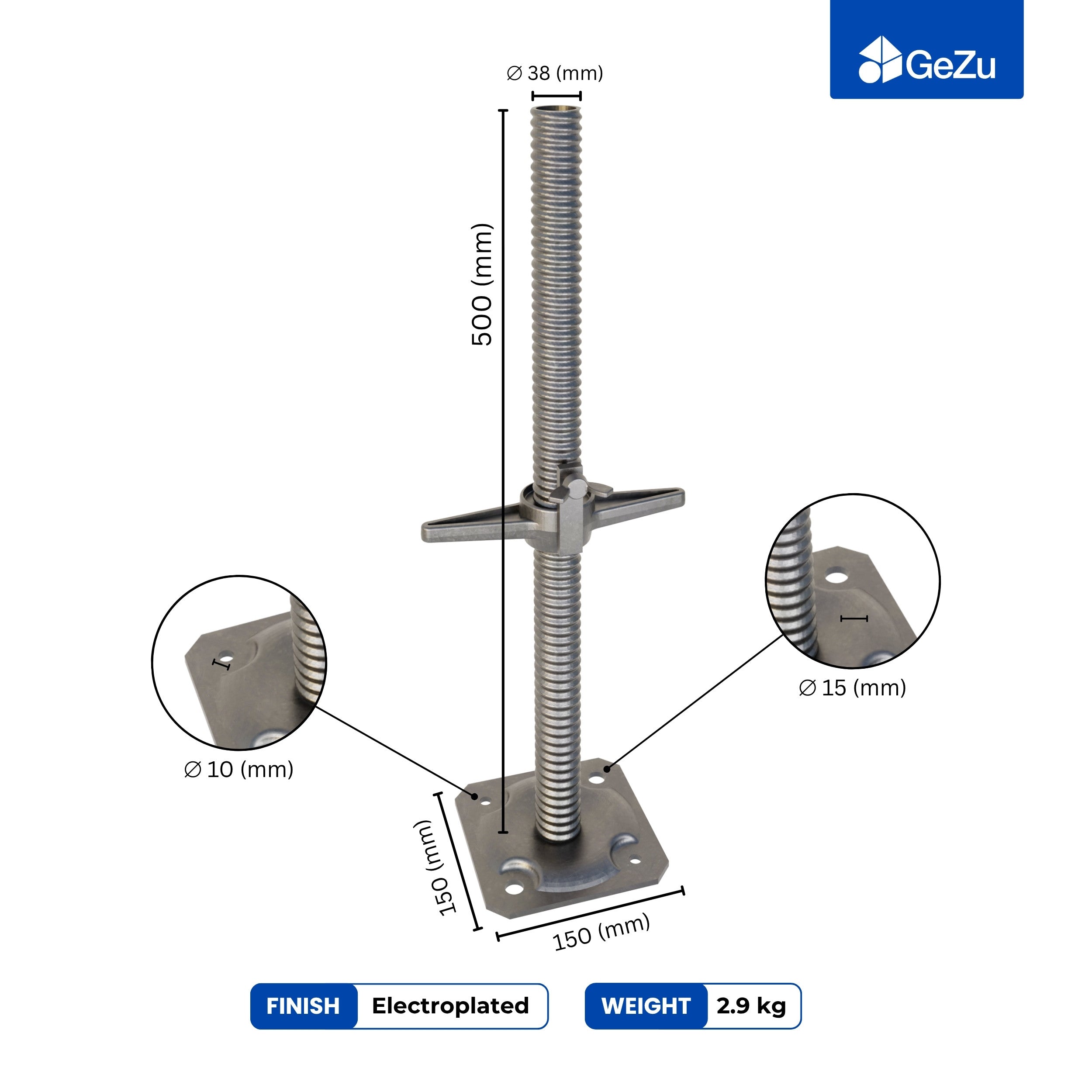
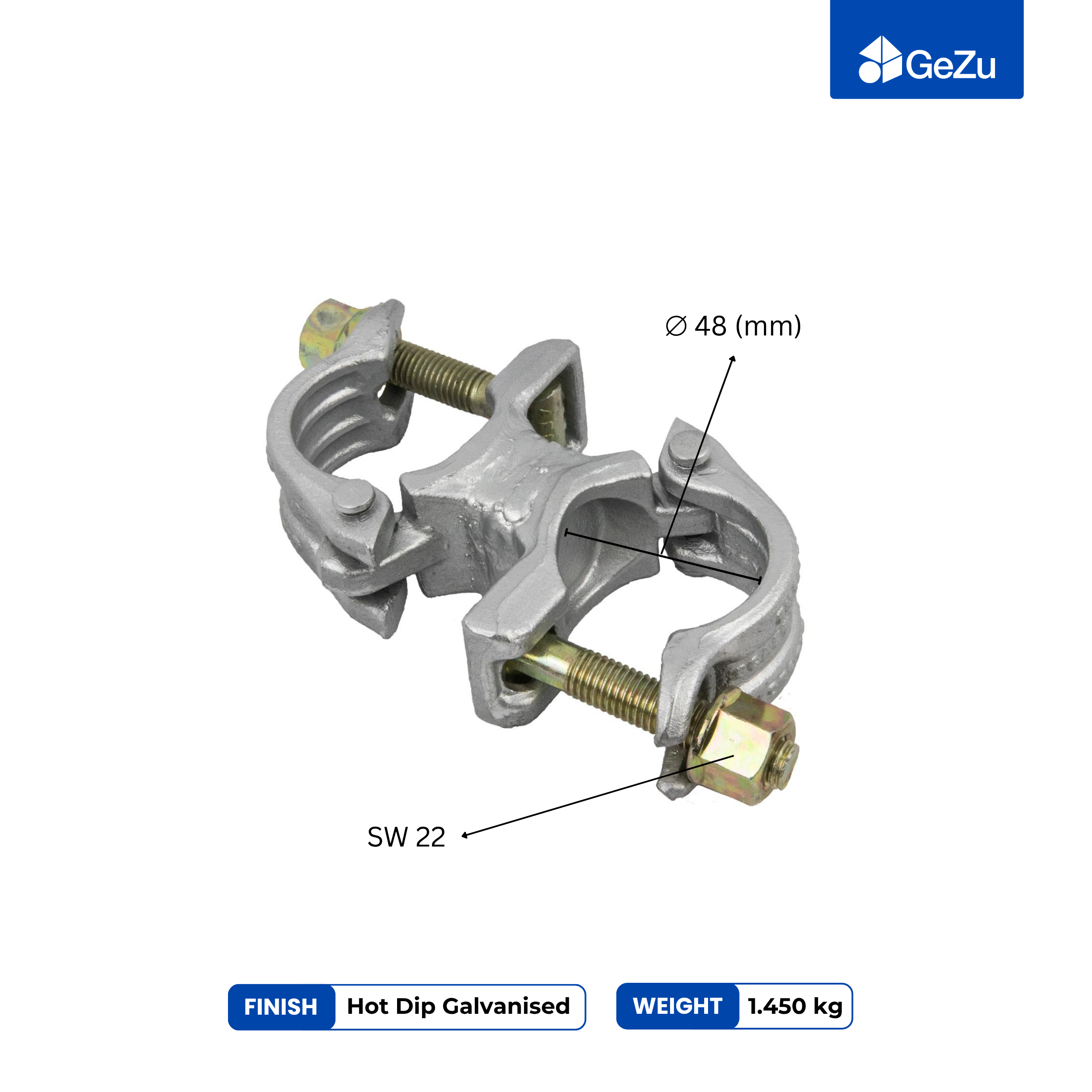
- Build the core around 48.3 mm galvanised couplers and adjustable base screw jacks — the two items every scaffolder hires.
- Inspect, clean and tag every return; retire anything with cracked welds or stripped threads.
- Pack accessories as fixed per-bay kits so incomplete returns stand out immediately.
- GeZu Impex supplies scaffold couplers, base jacks and boards direct in trade quantities.
Why scaffolding accessories matter for hire firms
Hire revenue depends on accessories being on the shelf, not on a workshop bench. A single missing swivel coupler can hold a complete kit off hire. The accessories are also the parts that absorb the abuse: dropped, over-torqued, dragged across gravel and stored outside between jobs.
In 2026 the most common hire enquiries stay remarkably stable — couplers, base jacks, boards and ties. A hire firm that stocks those four categories deeply competes on availability; one that stocks them thinly competes on price alone, and that race has no winner.
Stock around the 48.3 mm standard
British and European scaffold tube runs at 48.3 mm outside diameter, and virtually every coupler, jack and board in the rental trade is built around it. Standardising your fleet on one tube size keeps every coupler interchangeable between kits.
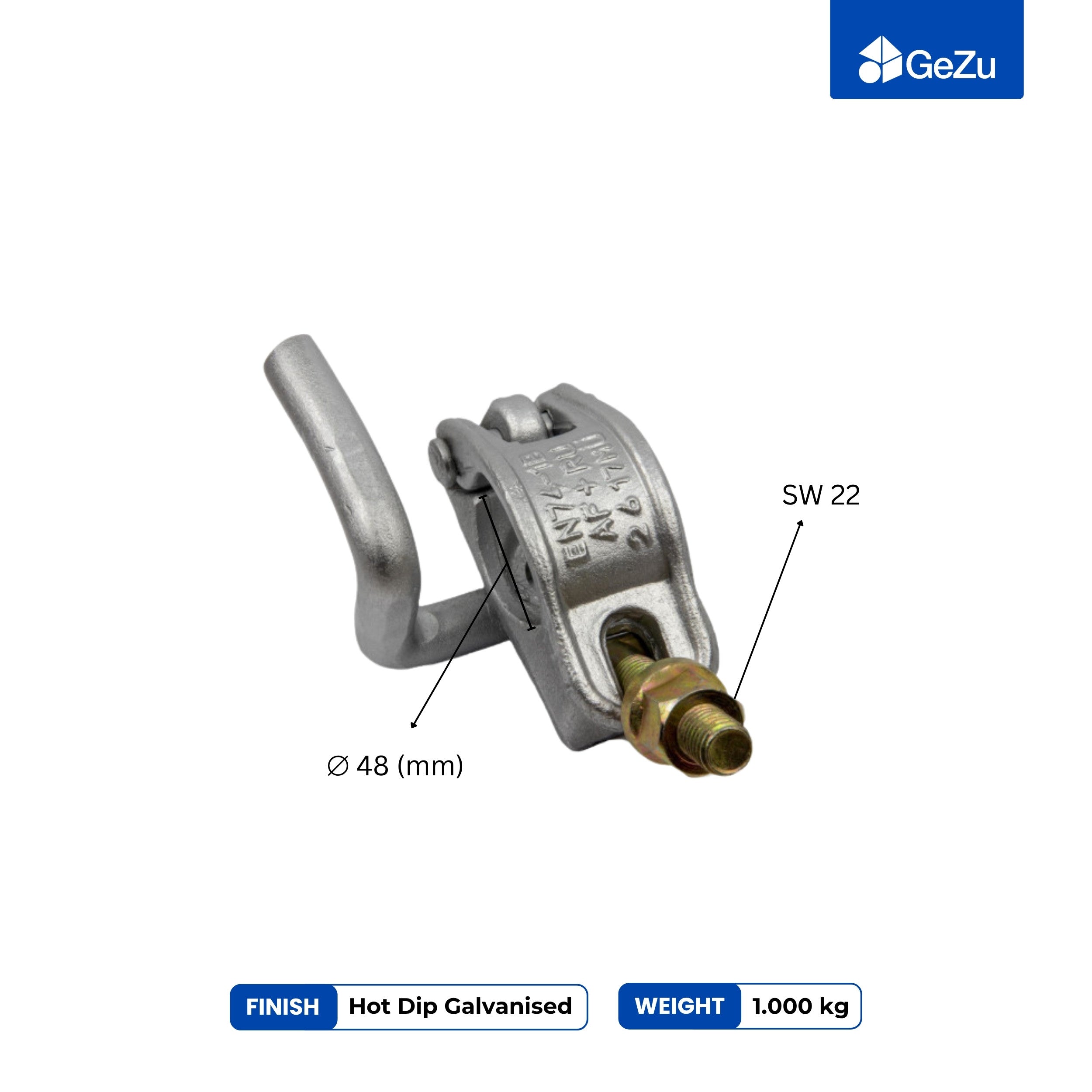
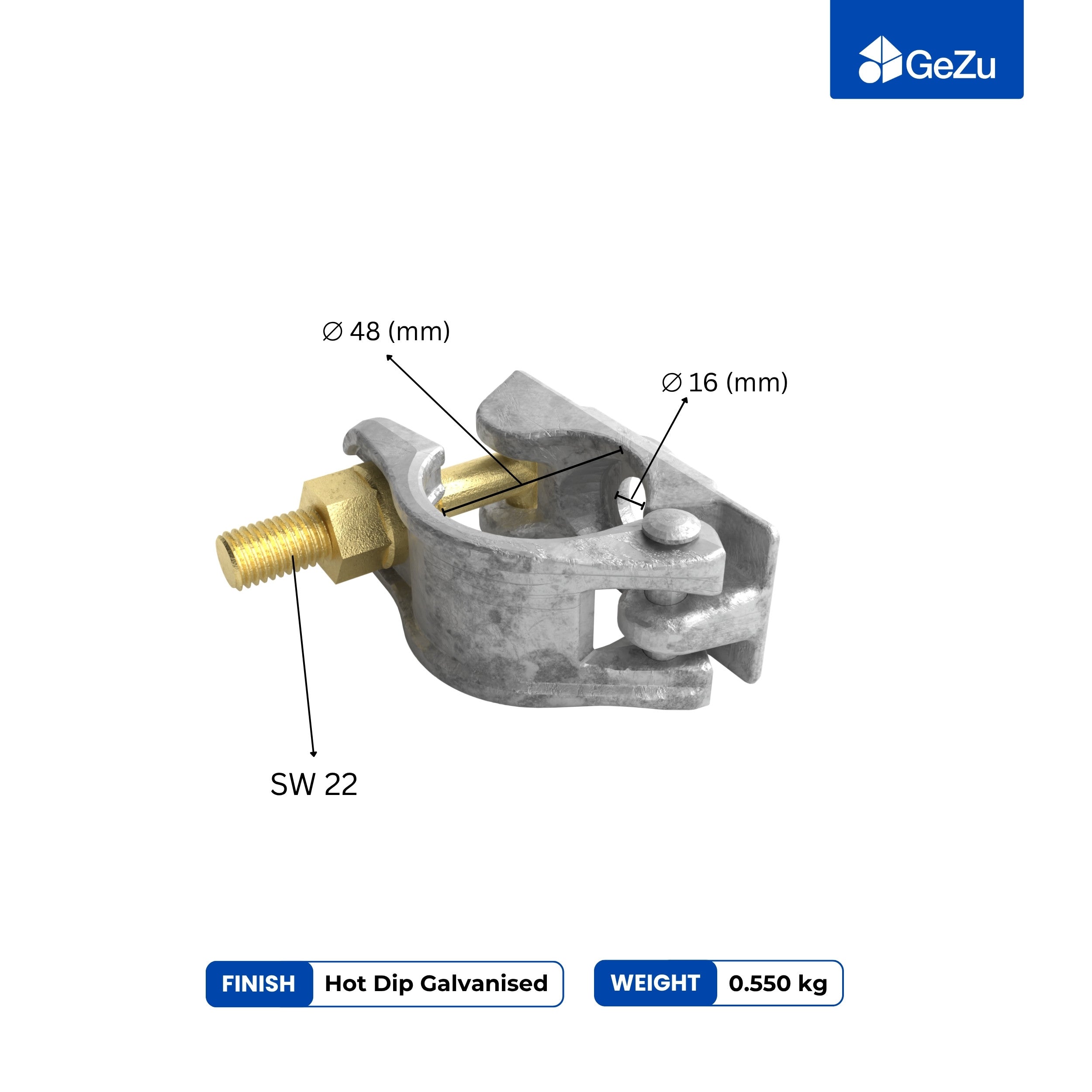
- Buy scaffold right angle couplers for fixed 90° ledger-to-standard joints — the backbone of every tube-and-fitting scaffold.
- Add swivel couplers for bracing and angled joints; they rotate through 360°, so one clamp covers any angle.
- Keep a smaller reserve of parallel (sleeve) couplers for joining tube end to end.
- Match every coupler to 48.3 mm tube and check the EN 74 marking on the body.
Make base jacks your anchor product
Ground is rarely level, and a scaffold is only as straight as its base. Adjustable base screw jacks let a crew correct for slopes and camber without packing scrap timber under standards.
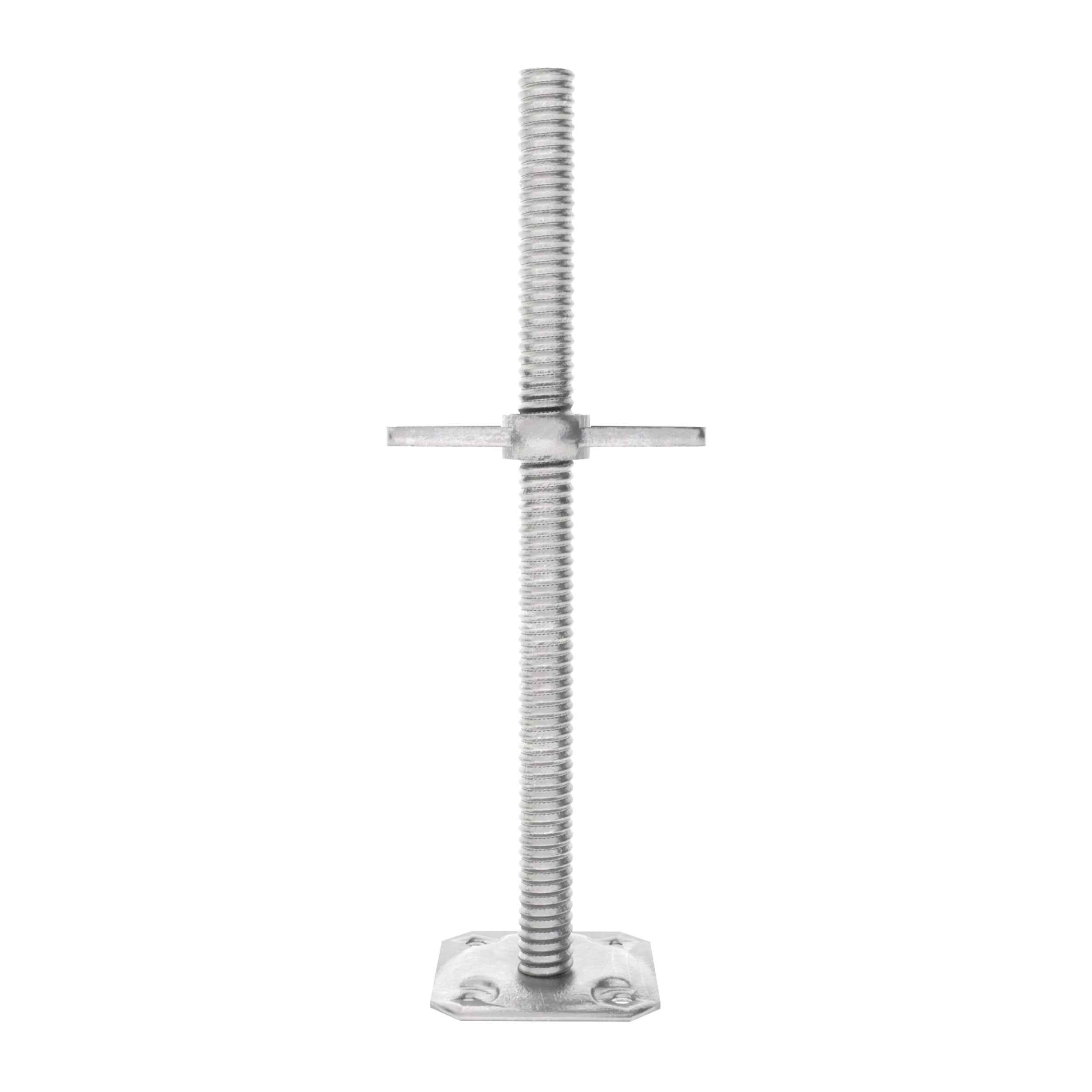
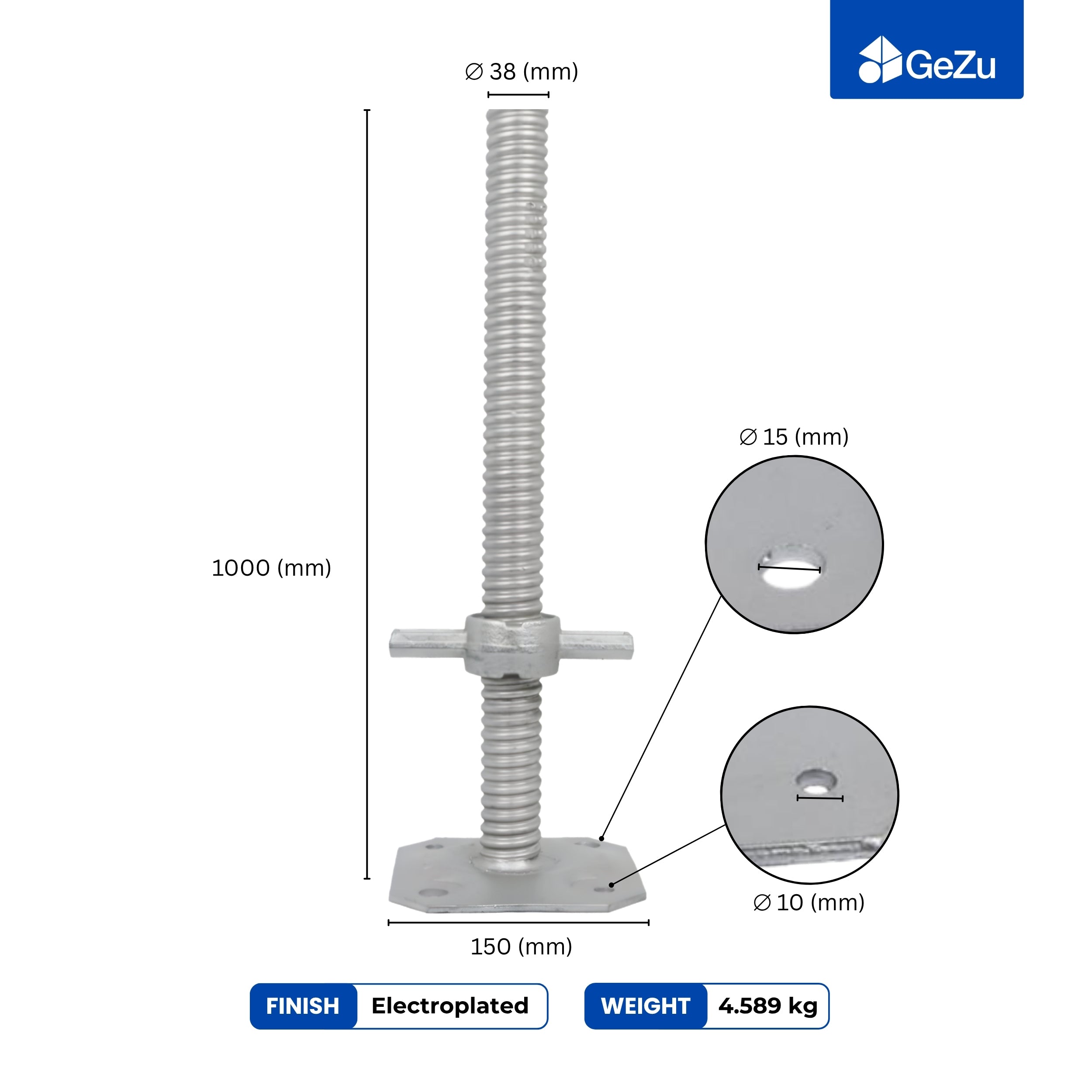
- Fit an adjustable scaffold base screw jack under every standard — one per point of contact.
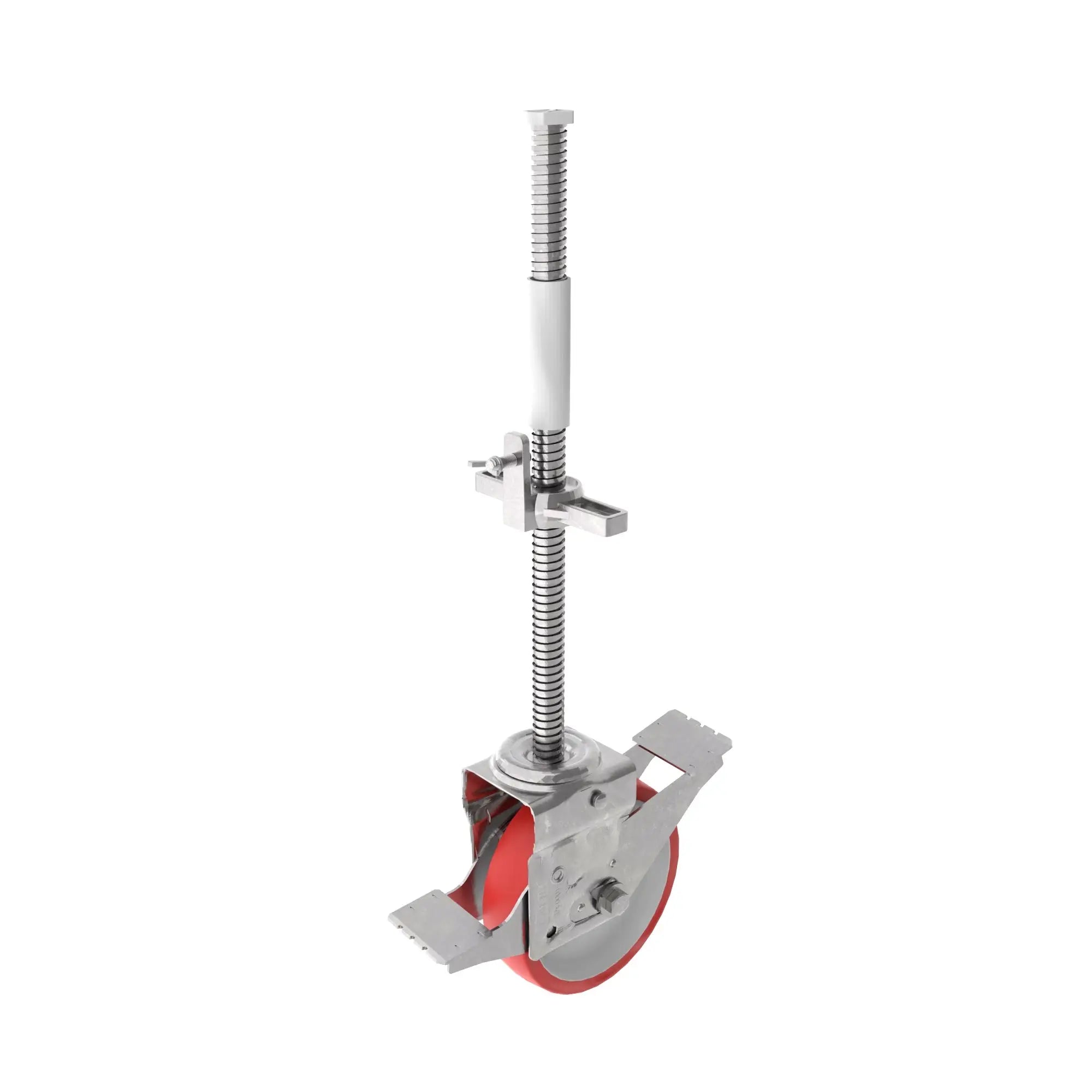
- For sloped or uneven ground, stock swivel base jacks that articulate to follow the surface.
- Check thread length and wing-nut condition on every return; a stripped thread takes a jack out of service on the spot.
Base jacks are also the item DIY customers ask for by name, which makes them the easiest counter sale. Our guide to base jacks ranked by height adjustment breaks down which type suits which ground.
Inspect and tag every return
Hire fleets that skip return inspections pay twice: once in rework, once in liability. Run every return through a fixed routine.
- Clean mud and mortar off couplers so welds and threads are visible.
- Check moving parts; couplers are typically tightened to around 54 Nm on site, and over-torqued clamps come back distorted.
- Retire any coupler with cracked welds, a distorted body or worn threads — never re-hire it "once more".
- Tag inspected kits with the date and the checker's initials.
Bundle accessories into fixed kits
Loose accessories vanish. Fixed kits come back countable.
- Pack one bay's worth — standards, ledgers, braces and base jacks — as a single kit.
- Photograph the open kit and laminate the photo inside the lid.
- Charge replacements for missing items against the photo, not against memory.
- Re-band or re-shrink kits before they go back on the shelf.
Price by the bay, not the part
Quoting per bay keeps pricing legible for the customer and stock planning simple for you. When every bay carries the same coupler and jack count, an enquiry converts directly into a kit count.
- Quote kits for standard builds and single items for top-ups only.
- Keep a stocked top-up shelf for crews that lose one component on site.
- Review which single items leave the shelf most often and fold them into the kits.
Track wear and replace on a schedule
Hire hardware fails on a curve, not at random. Threads, welds and coatings wear with each cycle, and fleet condition drifts if nobody records it.
- Log hire cycles per kit where your booking system allows it.
- Replace couplers showing rust bloom along weld lines before the next hire, not after.
- Set a written scrap rule — for example, any coupler that fails a torque check twice goes out of service permanently.
Comparison table: accessories hire firms actually stock
| Option | Best for | Key limitation |
|---|---|---|
| Right angle coupler | Fixed 90° ledger-to-standard joints | One axis only; cannot rotate |
| Swivel coupler | Bracing, struts, any angled joint | Slower to fit than a fixed coupler |
| Parallel coupler | Joining tube end to end | Not for angled joints |
| Adjustable base screw jack | Levelling on uneven ground | Needs a base plate beneath it |
| Scaffold boards | Working platform decks | Check end bands and splits each return |
Common mistakes hire firms make
- Re-hiring untagged returns. An untagged coupler is an uninspected coupler, and the risk sits with you.
- Mixing tube sizes in one kit. A coupler on the wrong diameter tube slips under load.
- Under-stocking swivels. Every braced scaffold needs them, and they are the first item a crew runs short of.
- Storing jacks threaded-end down in wet yards. Grit and water in the thread kills the adjustment.
- Keeping no condition record. Without one, every damage dispute becomes your word against the hirer's.
Build hire stock from one catalogue
Scaffold couplers, base jacks and accessories supplied direct in trade quantities.
FAQ
What scaffolding accessories do hire firms need most in 2026?
The core hire stock in 2026 is unchanged: 48.3 mm right angle and swivel couplers, adjustable base screw jacks, scaffold boards and tube. Couplers and jacks see the highest turnover.
Which couplers should a hire stock prioritise?
Right angle couplers first — every scaffold is built from 90° ledger-to-standard joints — then swivel couplers for bracing, with a smaller reserve of parallel couplers for joining tube.
What torque should scaffold couplers be tightened to?
Couplers are typically tightened to around 54 Nm on site. Torque-check returns, because over-torqued or under-torqued clamps come back distorted or loose.
What size tube do hire couplers fit?
UK scaffold tube runs at 48.3 mm outside diameter and hire couplers are made to that size. Mixing in other diameters risks slippage under load.
Are galvanised couplers worth it for rental fleets?
Yes. Galvanised couplers resist the rust that attacks weld lines in wet yards, which extends the number of hire cycles before retirement.
How do I stop accessory kits coming back incomplete?
Pack fixed per-bay kits, photograph the open kit and laminate the photo inside the lid. Charge missing items against the photo rather than memory.
How often should hire accessories be inspected?
Inspect every item on every return, before it rejoins the shelf. A cracked weld discovered by the next hirer is a liability, not a stock issue.
One last thing
The most profitable hire accessory is rarely the cheapest one — it is the one that comes back still serviceable. A galvanised coupler that survives dozens of hire cycles out-earns a budget clamp that survives a handful, and the difference shows up in the replacement budget, not the daily rate.