Types of Scaffolding Couplers (Easy & Detailed Guide)

The type of scaffolding couplers used in construction determines the stability of the structure. Without the right couplers, even the best scaffolding design can fail. Each clamp type has a specific purpose and load rating. Some create 90-degree connections, while others allow movement, rotation, or extension.
Using the wrong couplers can lead to safety risks and project delays. If you use a putlog where a swivel is required, it creates weak points. Besides, choosing undersized couplers for heavy loads can invite disaster.
Therefore, this guide breaks down different scaffold coupler types used in scaffolding. You'll learn what each one does, where to use it and how it differs from similar fittings. By the end, you know which scaffold coupler is right for your structure.
Most Common Scaffolding Couplers Types
The construction industry primarily uses seven coupler types:
- Right Angle Coupler (Double Coupler)
- Swivel Coupler (Adjustable Coupler)
- Putlog Coupler (Single Coupler)
- Sleeve Coupler (External Joint Coupler)
- Beam Coupler (Girder Coupler)
- Board Retaining Coupler (BRC)
- Half Coupler

Let's learn each scaffolding coupler type in detail!
Right Angle Coupler (Double Coupler)

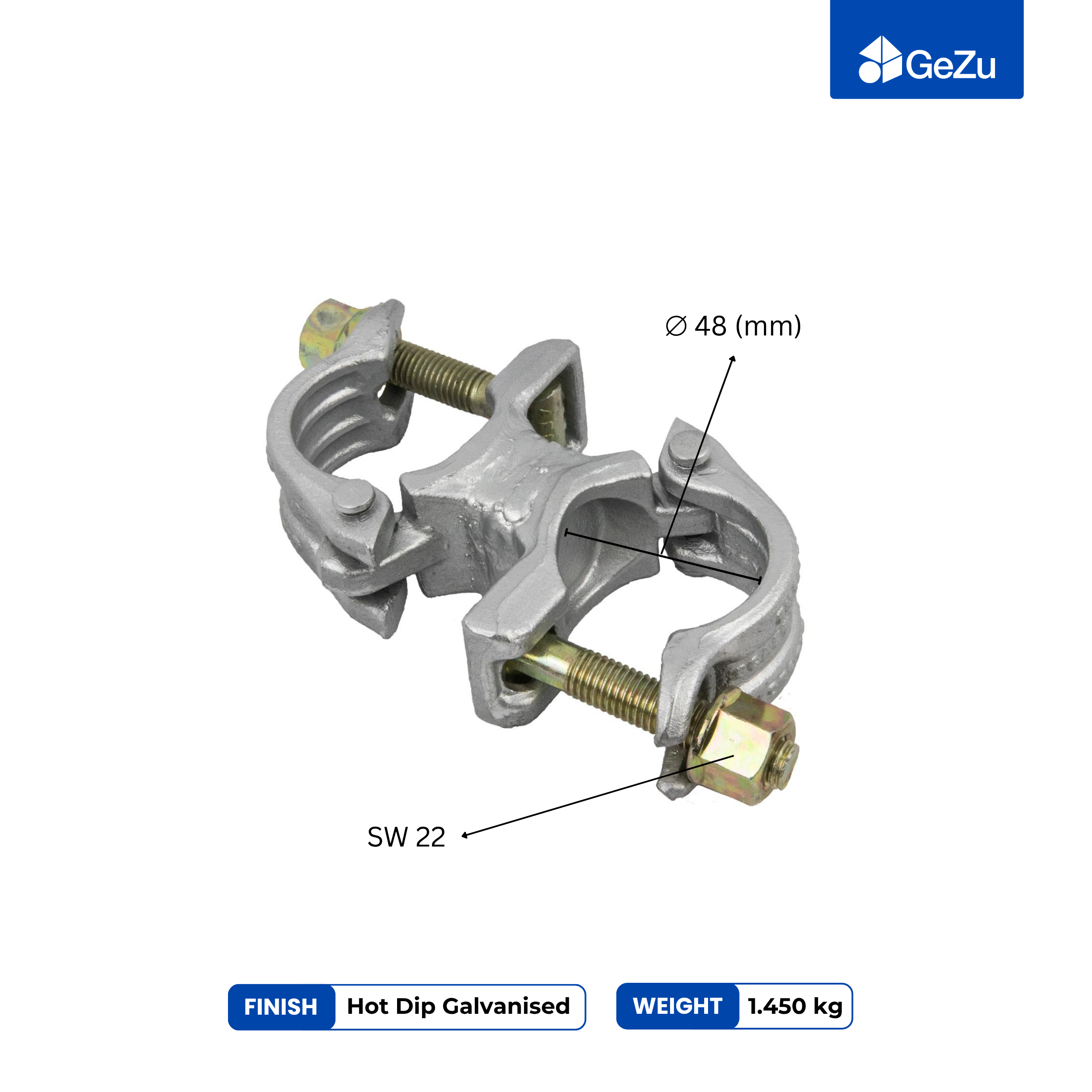
Right-angle coupler, also known as a double or fixed coupler connect two scaffold tubes at a fixed 90° angle. Most often, they join standards to ledgers (vertical pipes to horizontal pipes). Double couplers are the most widely used scaffold fittings. These couplers provide strong load-bearing capacity and structural stability.
Fixed angle coupler uses two bolts to clamp both tubes. The fixed angle creates rigid connections that resist twisting and movement. The perpendicular connection makes structures square and stable. The load capacity of right angle clamps is 610 kg, with Class A rated at 6.10 kN and Class B rated at 9.10 kN. (Load capacity for scaffold couplers means the maximum weight a coupler can safely hold.)
Besides, scaffold clamp installation takes seconds. Slip the coupler over one tube, position the second tube in the other opening, then tighten both bolts. That’s it. A right-angle scaffold clamp creates rigid joints for the main scaffold framework and is commonly used in tube and coupler scaffold systems.
Swivel Coupler (Adjustable Coupler)

Swivel couplers connect two scaffold tubes at any angle. The clamp fitting can rotate freely and this flexibility makes it ideal for diagonal bracing in scaffolding structures. The pivot mechanism provides flexibility that fixed couplers can't match.
Swivel scaffold couplers help strengthen scaffolding by allowing braces to meet tubes without forced alignment. They improve flexibility while maintaining secure connections. The design includes two independent clamps joined by a pivot point. Each clamp grips one tube. The pivot lets you adjust the angle to match your scaffold geometry.
Diagonal bracing relies heavily on swivel couplers. Building codes often require bracing at 45 degrees for lateral stability. Scaffolding swivel clamps make these angled connections possible without custom fittings. The load capacity of a swivel coupler is Class A 6.10 kN or 610 kg and Class B 9.10 kN or 910 kg, similar to a fixed coupler.
Putlog Coupler (Single Coupler)

Putlog couplers, also known as single couplers, attach a single scaffold tube to a structural element. One end clamps onto the main scaffold tube. The other end slots into brick joints or masonry. Single coupler connects transoms to toe boards and is commonly used in bricklaying scaffolds.
These couplers are not designed for heavy loads. Scaffold putlog couplers are used on independent scaffolds where one side is fixed to the building or wall. They create the connection between the scaffold and the wall.
The flat blade spreads the weight across the brick or block joints, so the pressure isn’t focused on one small spot. Single couplers are also useful when you only need to attach one tube to an existing structure. Putlog couplers are designed for lighter duties and have a load rating of 63 kg or 0.63 kN.
Sleeve Coupler (External Joint Coupler)

Sleeve couplers join two scaffold tubes end to end. These clamps are used to extend scaffold runs beyond standard tube lengths. Sleeve clamps connect one standard to another in horizontal or vertical directions and provide a continuous connection.
The design is simple. A cylindrical sleeve slides over both scaffold tube ends. Two sets of bolts, one on each side, clamp the tubes inside the sleeve. Each tube should extend at least 6 inches into the sleeve. Shorter overlaps create weak joints that can pull apart or bend under load.
Scaffolding sleeve clamps are used for light-duty connections such as handrails and temporary structures. The sleeve coupler has a load capacity of 550 kg, with Class A rated at 3.6 kN and Class B rated at 5.5 kN. When your scaffold run needs to be longer than available tube lengths, sleeve couplers provide the extension.
Beam Coupler (Girder Coupler)

Beam coupler, also known as a gravlock coupler and grider coupler, attaches scaffold tubes to structural steel beams or girders. Grider couplers are used in industrial and commercial scaffolding projects. They bridge the gap between tubular scaffolding and I-beams or H-beams.
The design includes a tube clamp on one side and an adjustable jaw on the other. The jaw opens wide enough to fit around various beam sizes. Scaffold beam clamps let you hang scaffolding from overhead steel or attach platforms to existing structural members. Maintenance work on steel buildings often requires beam couplers.
Beam couplers provide a strong connection and allow scaffolding to be built next to buildings or used where a secure fixing point is needed. One important thing to note is that beam scaffold clamps are never used alone; they are used in pairs.
Beam couplers have different load capacities depending on how they are used. When used as a pair, the load capacity is 30 kN (3000 kg). The holding capacity of the pair is 30 kN, with a vertical slip capacity of 20 kN and a horizontal slip capacity of 18.2 kN. You can increase the clamps' vertical load capacity by adding another coupler below it in a vertical arrangement.
Board Retaining Coupler (BRC)

Board retaining clamps, also called toe-board couplers, secure scaffold boards to tubes. These couplers prevent boards from sliding, lifting, or shifting under foot traffic and material loads.
Board couplers provide extra protection against movement and are often seen on high-level scaffolding, building exteriors and open sites exposed to wind. The clamp wraps around a scaffold tube with a lip that overlaps the board edge. As you tighten the bolt, the lip presses down on the plank, holding it in place.
Besides, you need multiple clamps per board. One at each end is the minimum. Longer boards require intermediate clamps to prevent bowing or movement in the middle section. BRC's weight load capacity is 1.5 kN or 150 kg.
Half Coupler

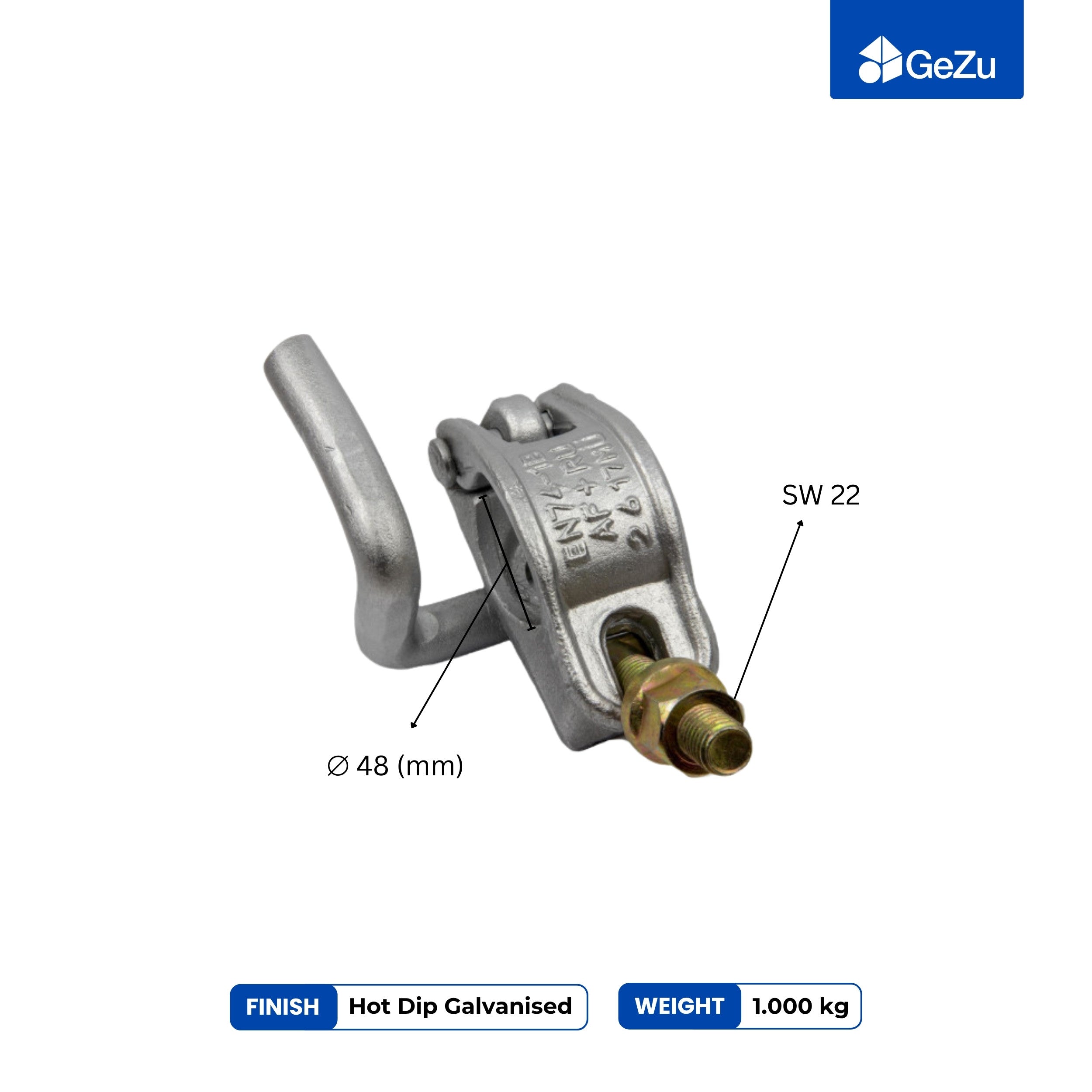
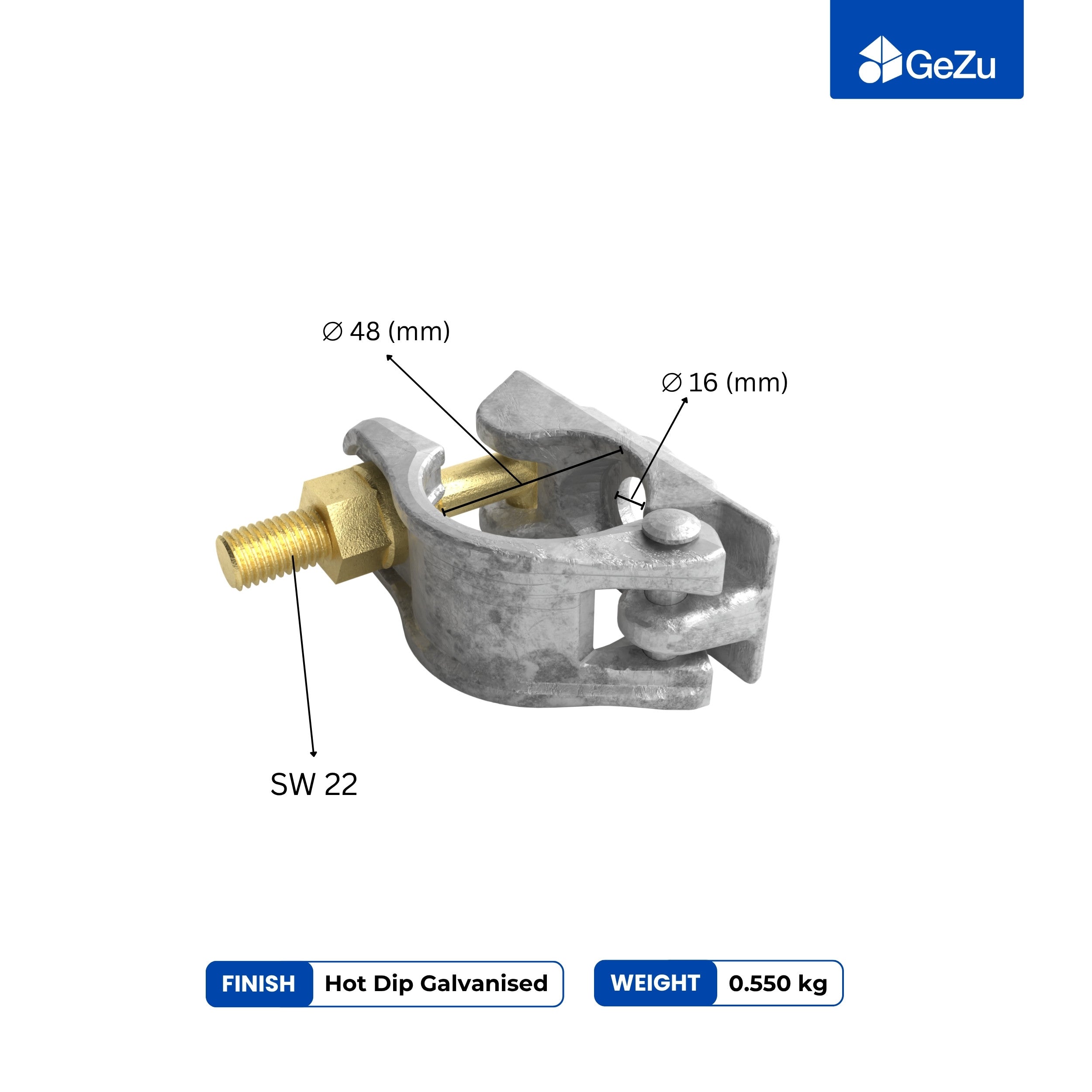
Half couplers connect a single scaffold pipe to another pipe or surface, like a wall or column. These clamps are used for tying scaffolding to a building for extra support. Half couplers provide support but are not meant for major load-bearing connections.
Scaffolding half couplers use a curved jaw that wraps partway around the supporting member. The design looks like half of a right angle coupler. One side clamps the scaffold tube. The other side has a semicircular opening that grips a pole, tube, or similar round element.
Half couplers are great for connecting scaffolds to existing structures, attaching access platforms to vertical pipes, securing braces to round columns, or tying scaffolds to fence posts. The safe weight load capacity is around 250 kg (2.5 kN) vertically and 0.4 kN or 40 kg horizontally. This type of scaffolding coupler is used for light-duty connections, not primary structural support.
Comparison Table - Scaffold Coupler Types
|
Coupler Type |
Angle |
Flexibility |
Load Capacity |
Best For |
Main Use |
|
Right Angle Clamp |
Fixed 90° |
Fixed |
610 - 910 kg |
Main framework |
Mainframe joints |
|
Swivel Clamp |
0-180° |
Rotates |
610 - 910 kg |
Bracing, curves |
Diagonal bracing |
|
Putlog Clamp |
Fixed 90° |
Fixed |
63 kg |
Board support near walls |
Platform support |
|
Sleeve Clamp |
Inline |
Fixed |
360 -550 kg |
Long runs |
Pipe extension |
|
Beam Clamp |
Variable |
Limited |
3000 kg |
Structural steel connection |
Steel beam fixing |
|
BRC Clamp |
N/A |
Fixed |
150 kg |
Plank retention |
Board safety |
|
Half Clamp |
Fixed 90° |
Limited |
250 kg |
Light-duty attachment |
Wall ties |
Conclusion
Now you've learned about the different types of scaffolding couplers and what makes each one unique. Each clamp type serves a specific purpose and has distinct load capacities that must be respected.
Right angle couplers build your main framework. In contrast, swivel couplers handle diagonal bracing and curved surfaces. Meanwhile, putlog couplers connect scaffolding to walls. On the other hand, Sleeve couplers are used to extend tube lengths. Beam couplers attach scaffolding to structural steel. For platform safety, board retaining clamps keep planks secure. Last but not least in our list, half couplers are used for light-duty single connections.
No single coupler works for every situation. Match each scaffolding coupler type to its intended application. Using a swivel where you need a right angle creates weak points. Above all, always use high-quality couplers from certified manufacturers. Cheap alternatives put workers at risk and create legal liability. Cheap things bring repeated problems; quality may cost more, but it lasts.