Best Angle Brackets for Shelving in 2026: Ranked

GeZu Impex ranks five angle brackets for shelving and framing jobs in 2026, scored on coating, gauge, hole pattern and how each one behaves under a loaded shelf.
- Best angle brackets for shelving in 2026: Perforated Reinforced Angle Bracket for heavy timber runs, Scaffold Right Angle Coupler for steel-tube frames.
- Perforated 135° Angle Bracket is the only pick here that handles a sloped or angled shelf support.
- Adjustable Angle Bracket suits modular shelving where hole spacing needs to shift on site.
- Perforated Right Angle Bracket is the budget option for light shelving and closet framing.
- Hot-dip galvanised coating outperforms electro galvanised on every bracket exposed outdoors.
Why this matters
An angle bracket looks like a commodity part until a loaded shelf sags six months in. The failure is almost never the bracket shape — it's the coating, the gauge, or a fixed angle that didn't match the joint. GeZu Impex stocks the full range tradespeople and DIY builders reach for, from perforated timber brackets to scaffold-grade tube couplers.
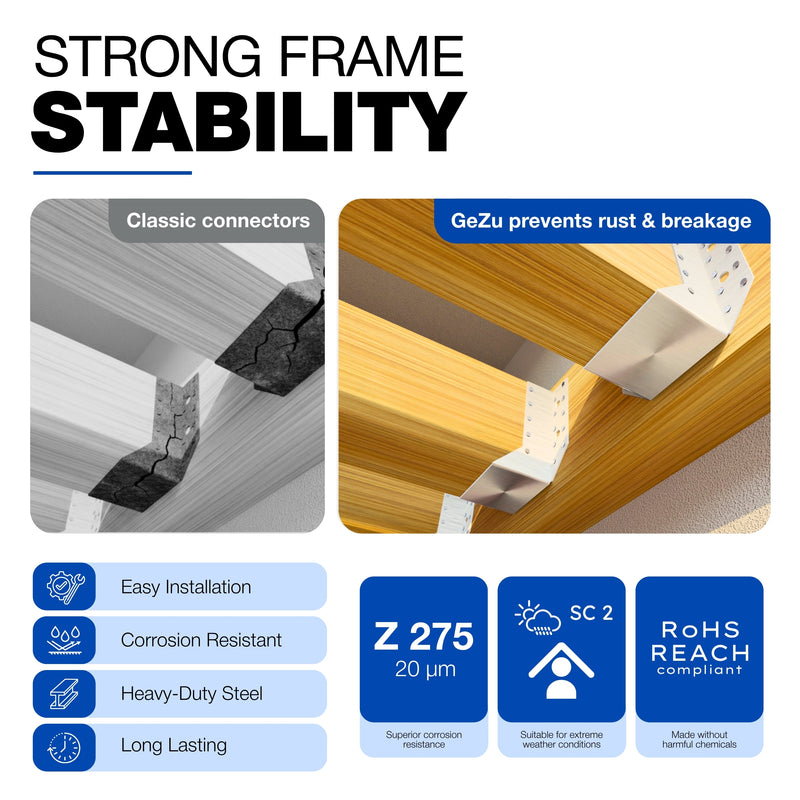
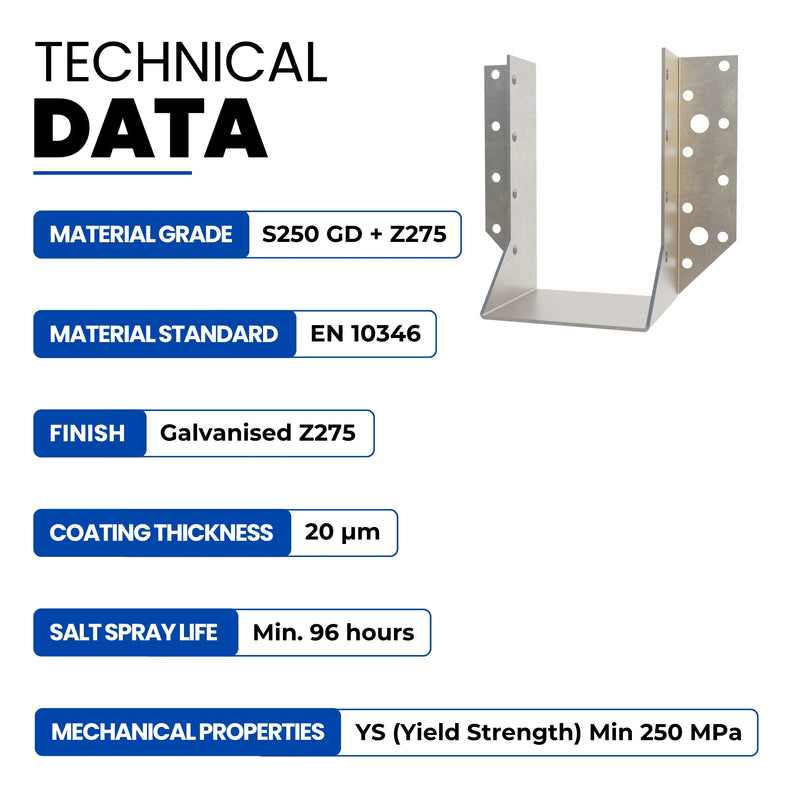
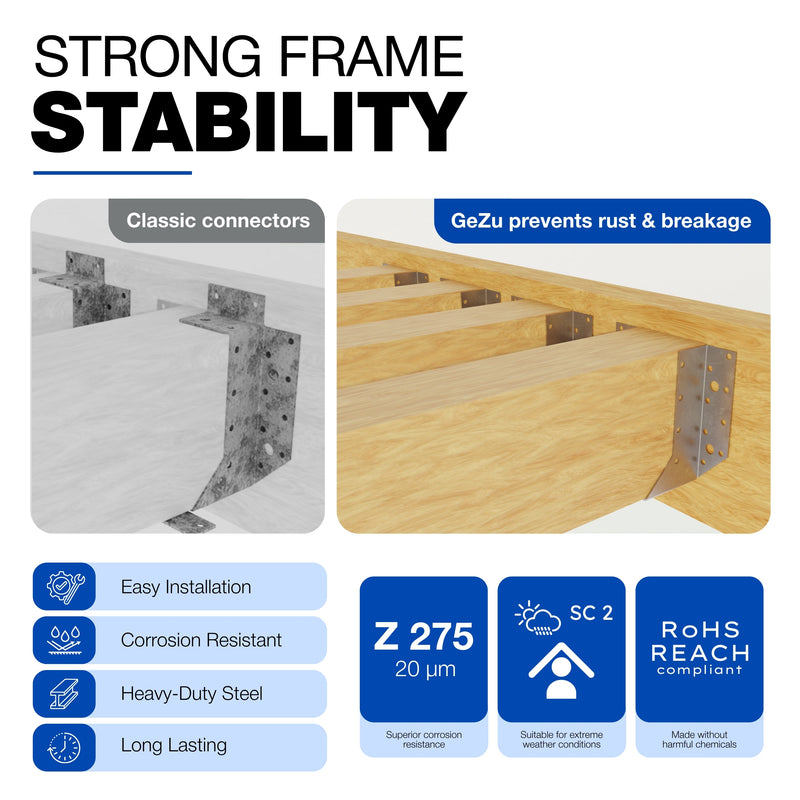
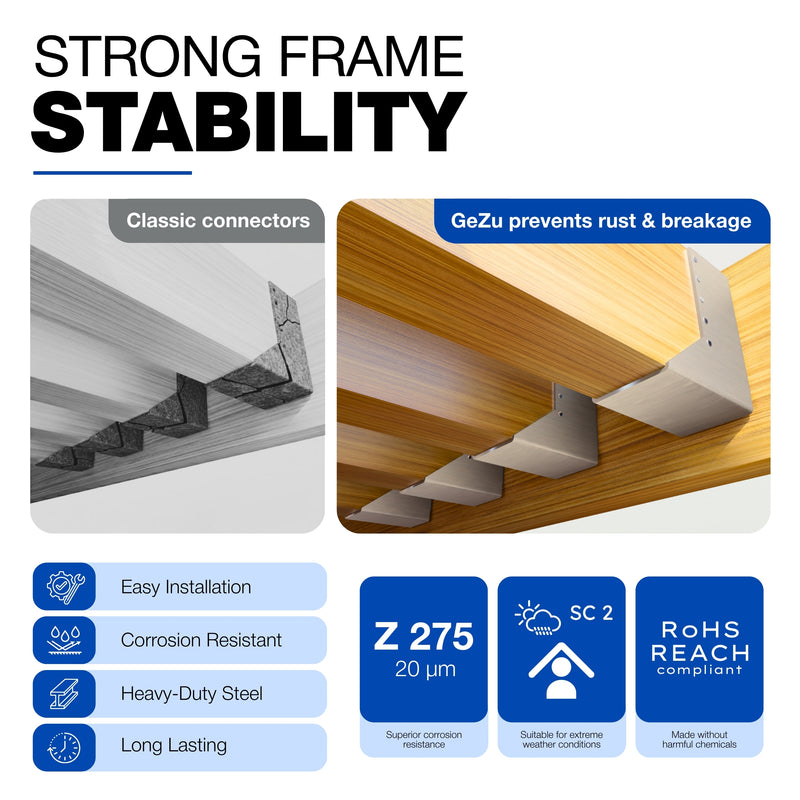
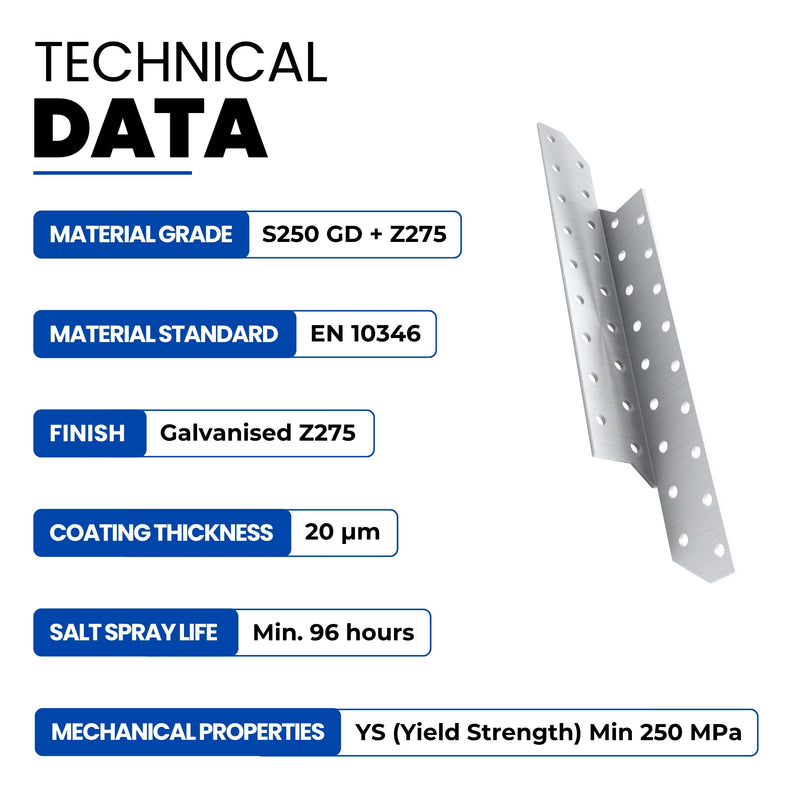
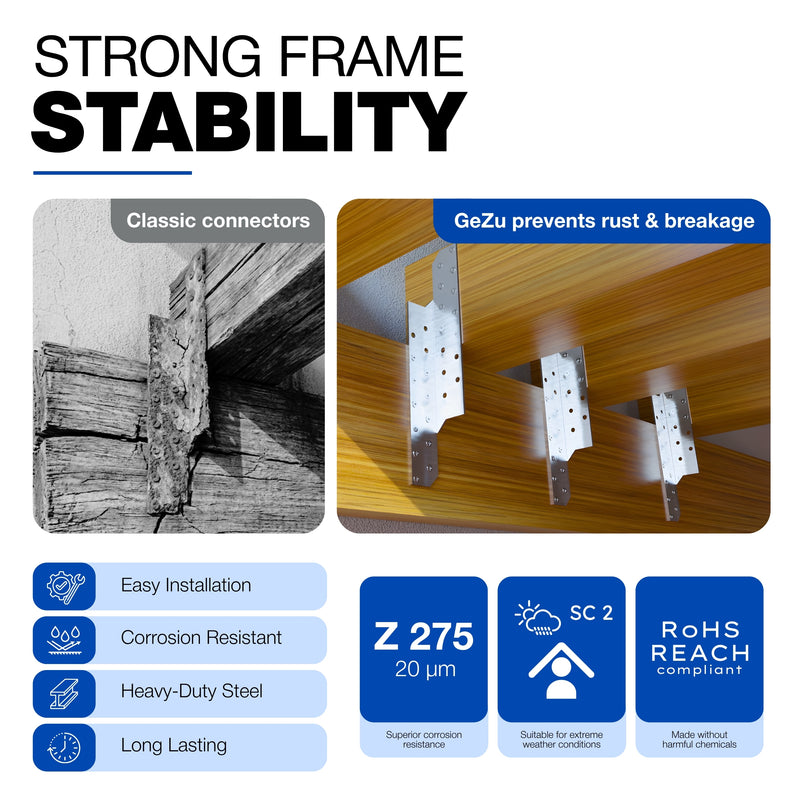
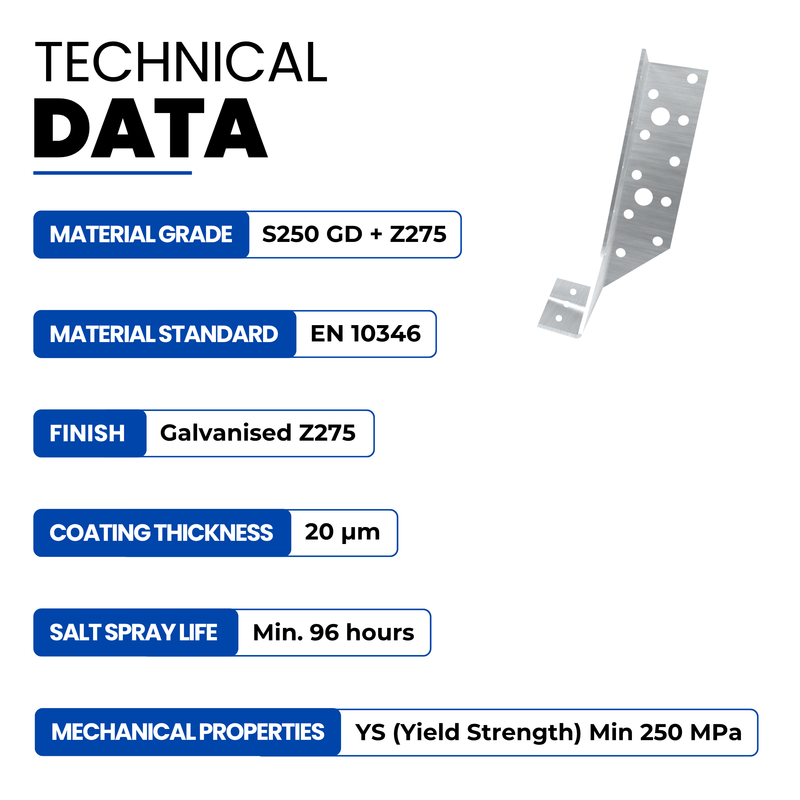
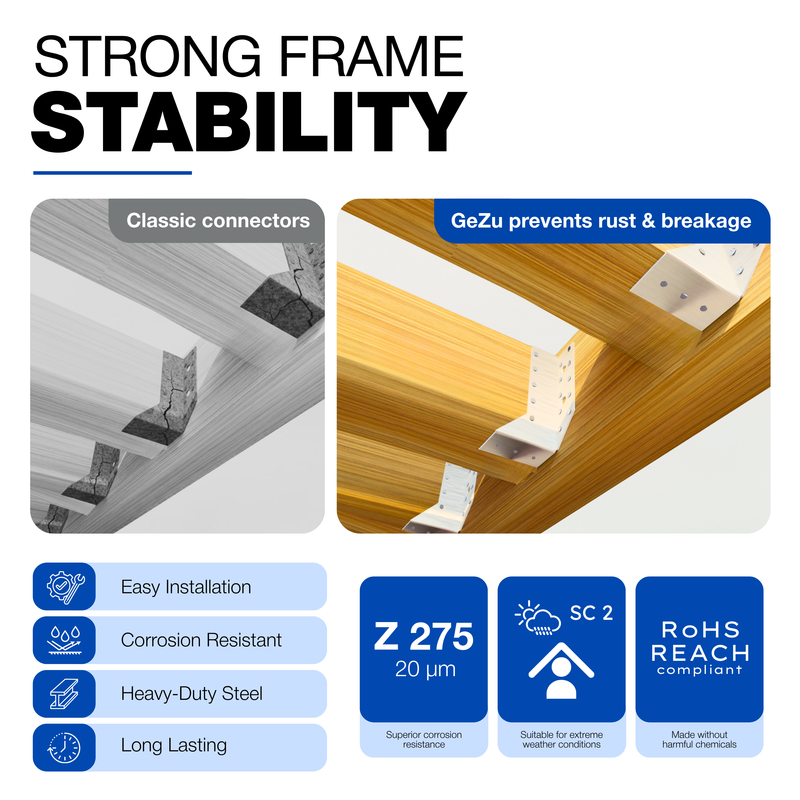
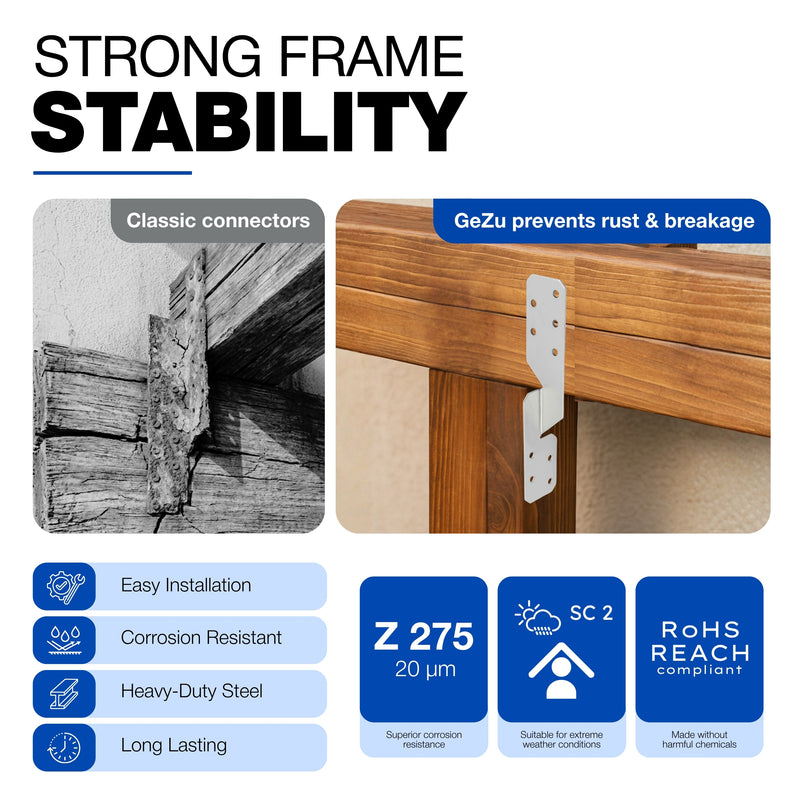
Coating matters more than most buyers expect. Hot-dip galvanising to EN ISO 1461 leaves a minimum coating thickness around 45 microns on structural steel; electro galvanising typically sits between 5 and 25 microns. That gap decides whether a bracket rusts through in a damp shed within a couple of winters or keeps holding a shelf for decades.
Gauge and hole pattern decide the rest. A thin bracket with too few fixing points will flex before it snaps — it just sags first, which is worse because you don't see the failure coming.
What makes the best angle bracket for shelving
- Coating type — hot-dip galvanised for anything outdoors or in a garage; electro galvanised is fine for dry indoor shelving only.
- Gauge (material thickness) — thicker steel resists bending under a loaded shelf edge.
- Hole pattern and fixing count — more perforations spread load across more screws.
- Corner reinforcement — a stamped rib adds rigidity without adding bulk.
- Angle type — 90°, 135°, or adjustable changes which joints the bracket can actually close.
- Load path compatibility — timber brackets and scaffold-tube couplers are not interchangeable.
Best overall: Perforated Reinforced Angle Bracket. Best for angled shelving: Perforated 135° Angle Bracket. Best budget option: Perforated Right Angle Bracket. Best for adjustable installs: Adjustable Angle Bracket. Best for steel-tube framing: Scaffold Right Angle Coupler.
At a glance
| Bracket | Best for | Standout feature | Key limitation |
|---|---|---|---|
| Perforated Reinforced Angle Bracket | Heavy timber shelving | Stamped rib adds rigidity | Fixed 90° angle only |
| Perforated 135° Angle Bracket | Angled shelf supports | Only fixed-angle option at 135° | Useless on square corners |
| Perforated Right Angle Bracket | Light shelving on a budget | Lowest cost per unit | No reinforcement rib |
| Adjustable Angle Bracket | Modular shelving systems | Multiple holes for on-site adjustment | Slightly less rigid than fixed brackets |
| Scaffold Right Angle Coupler | Steel-tube shelf frames | Rated for round scaffold tube, not just timber | Not compatible with standard shelf boards |
1. Perforated Reinforced Angle Bracket: best angle bracket for heavy shelving
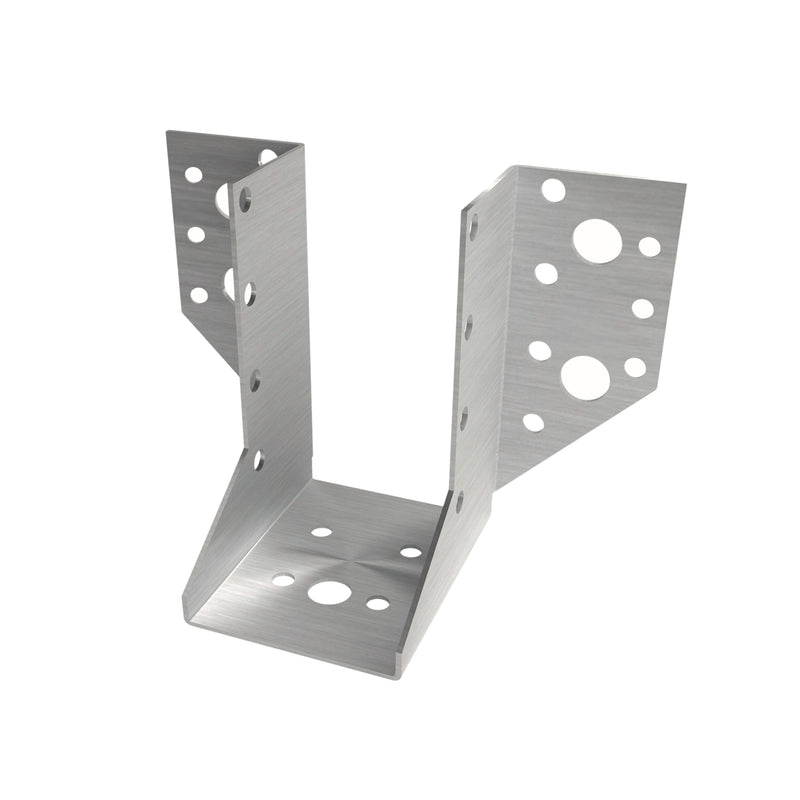
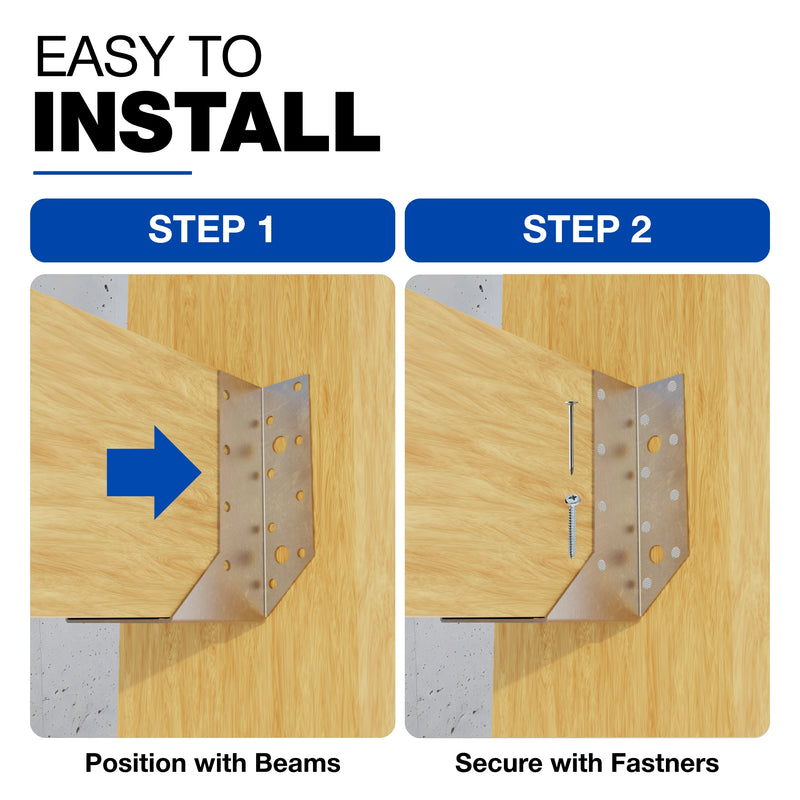
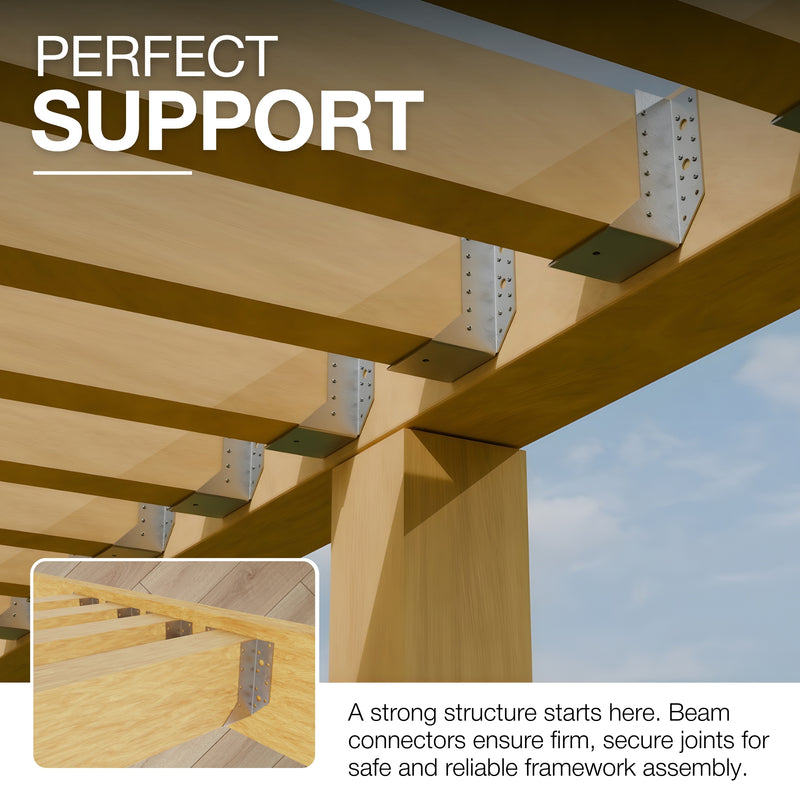
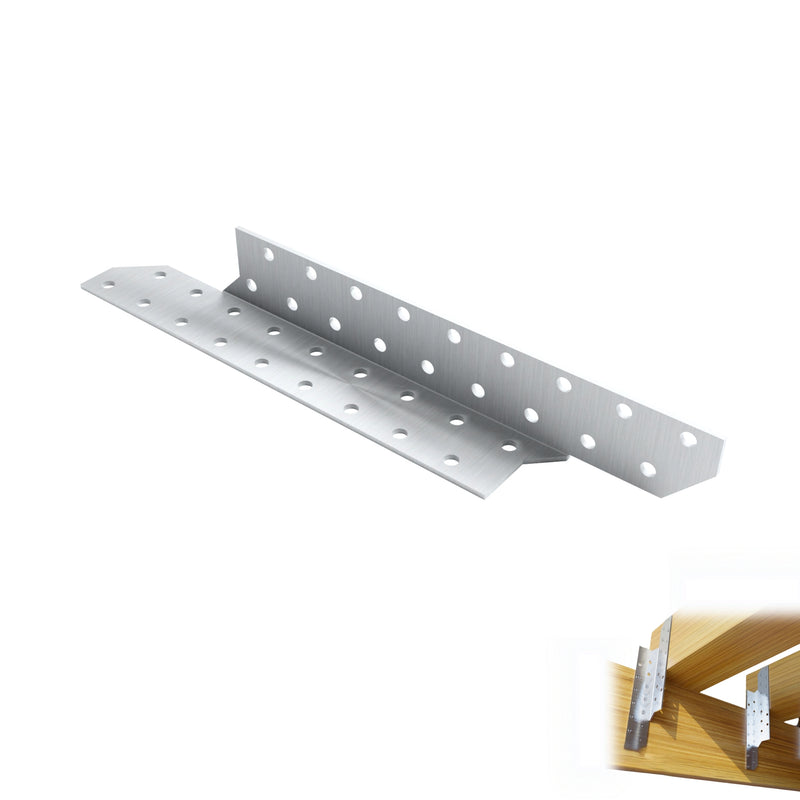
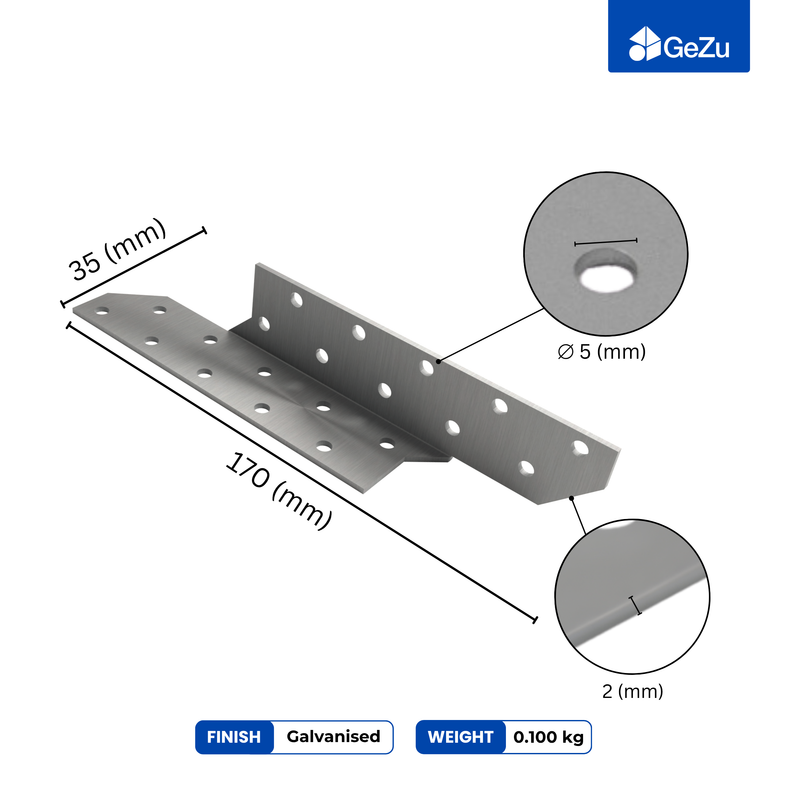
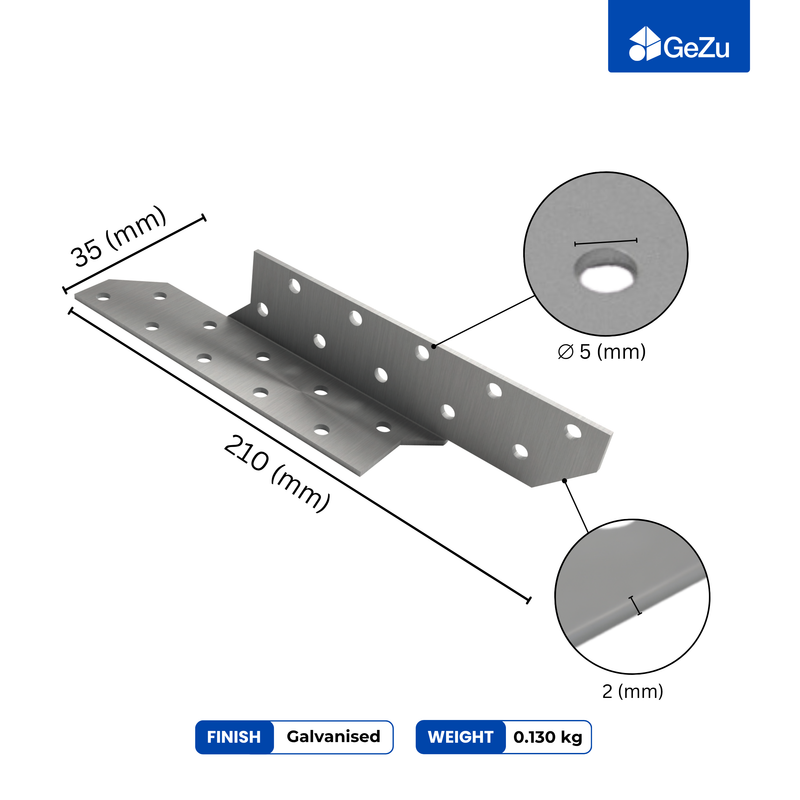
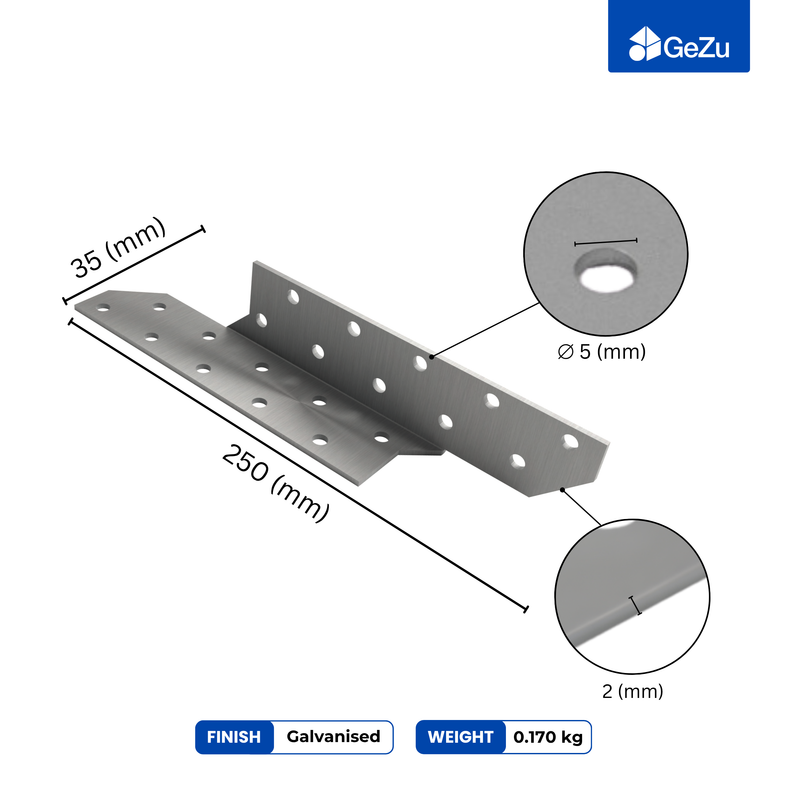
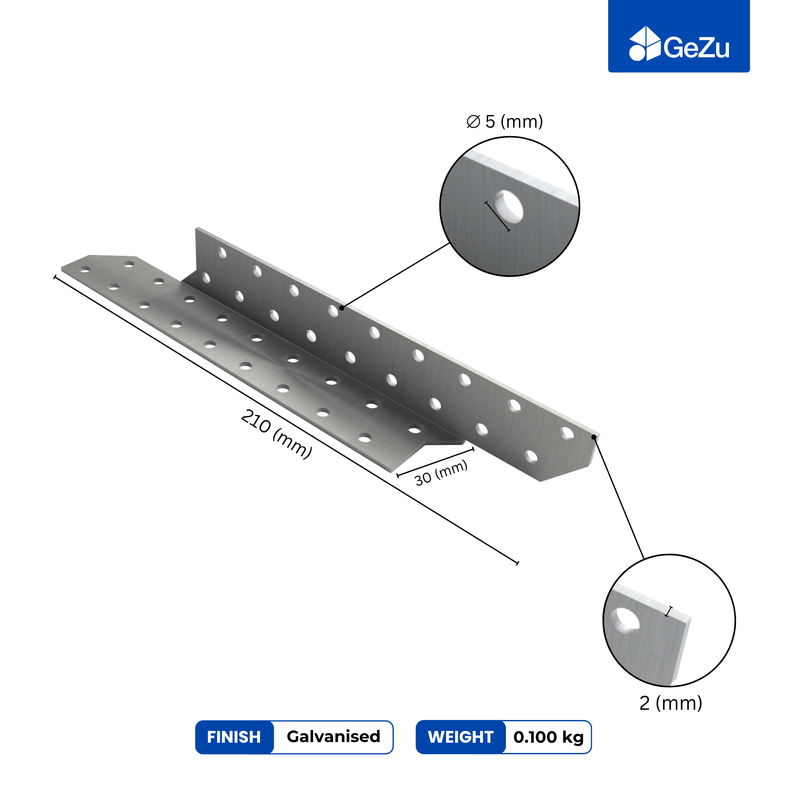
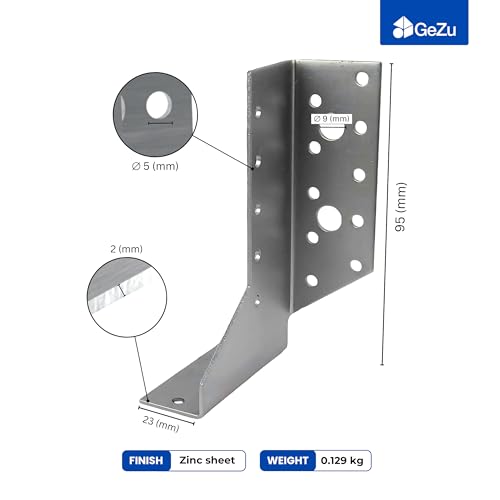
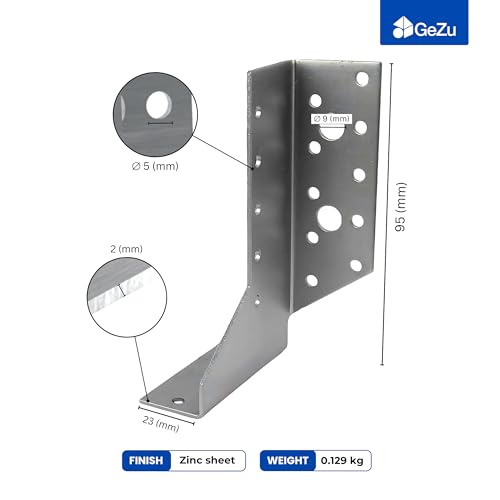
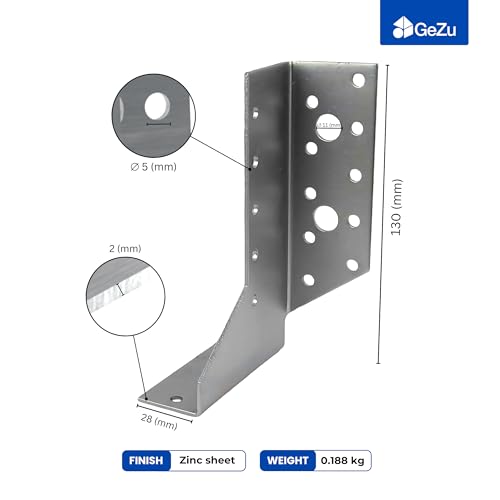
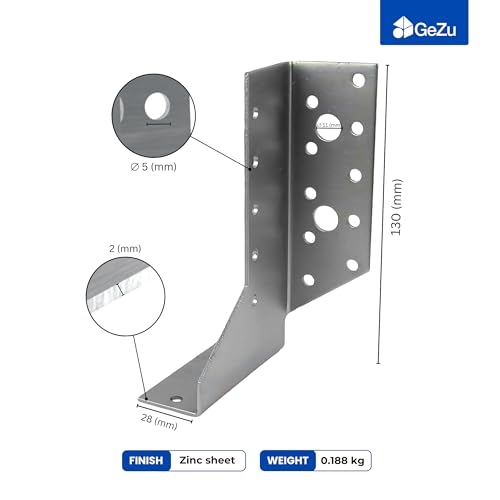
The reinforced angle bracket connects two timber pieces at a fixed 90° with a stamped rib running through the corner. That rib is what separates it from a flat perforated plate — it resists the twisting force a loaded shelf edge puts on a joint.
Perforated Reinforced Angle Bracket pros:
- Reinforced rib adds stiffness without extra gauge
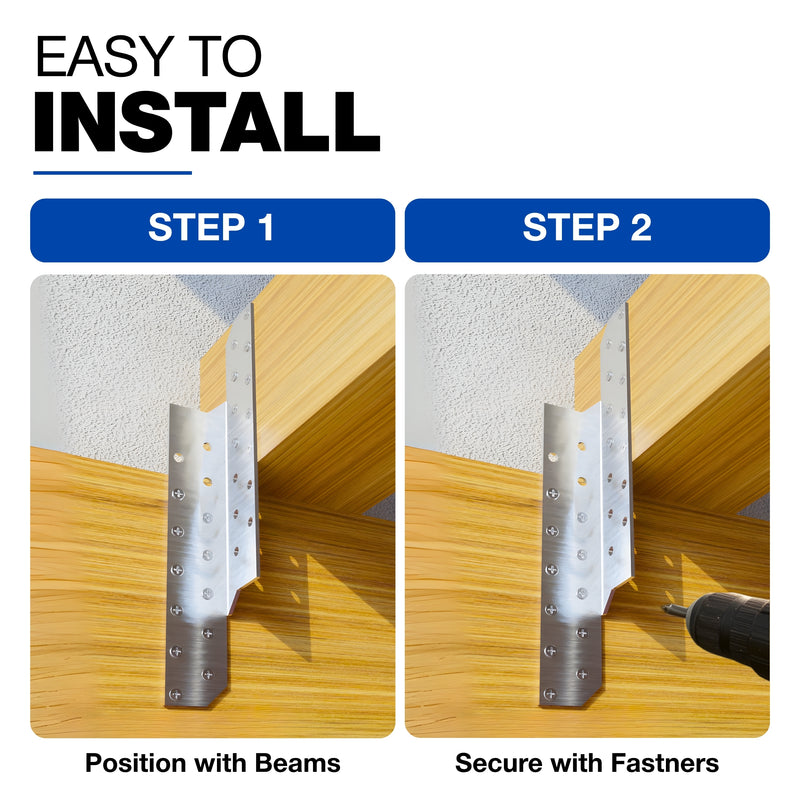
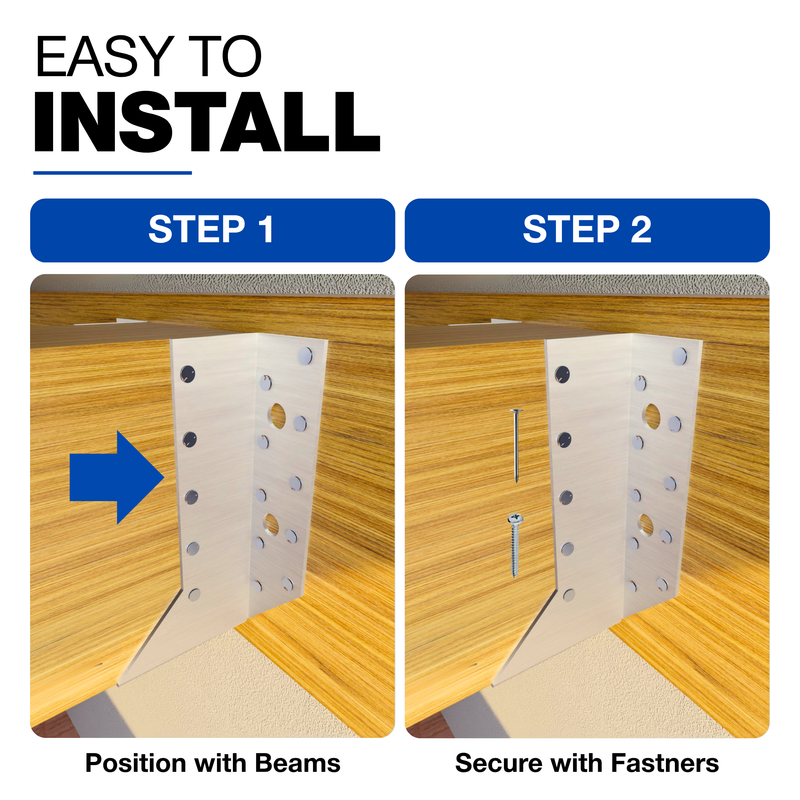
- Perforated hole pattern speeds up fixing on site
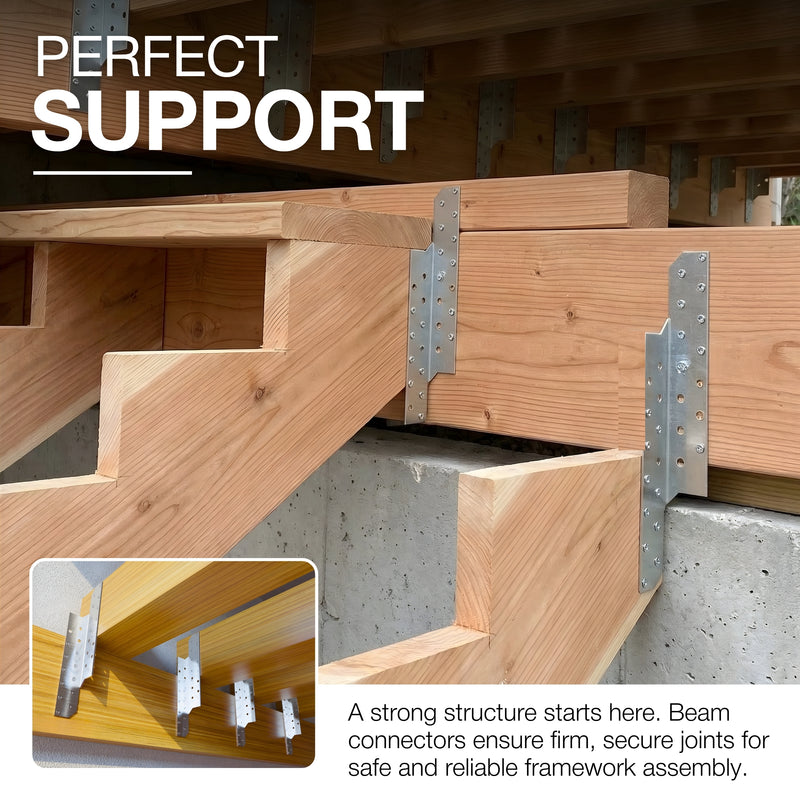
- Works equally well on shelf brackets and stud framing
- Sold as a single unit or in a pack of 50 for larger runs
Perforated Reinforced Angle Bracket cons:
- Fixed 90° angle only, no adjustment
- Rib adds a few millimetres of thickness that can show through thin shelf edging
Best for: garage and workshop shelving carrying real weight. Verdict: Buy.
2. Perforated 135° Angle Bracket: best angle bracket for angled shelf supports
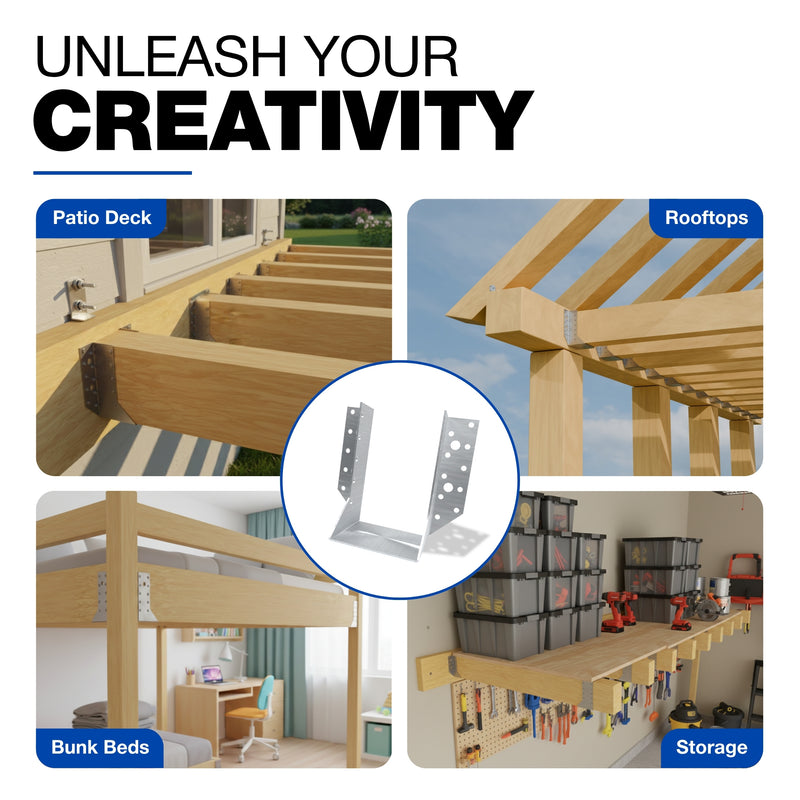
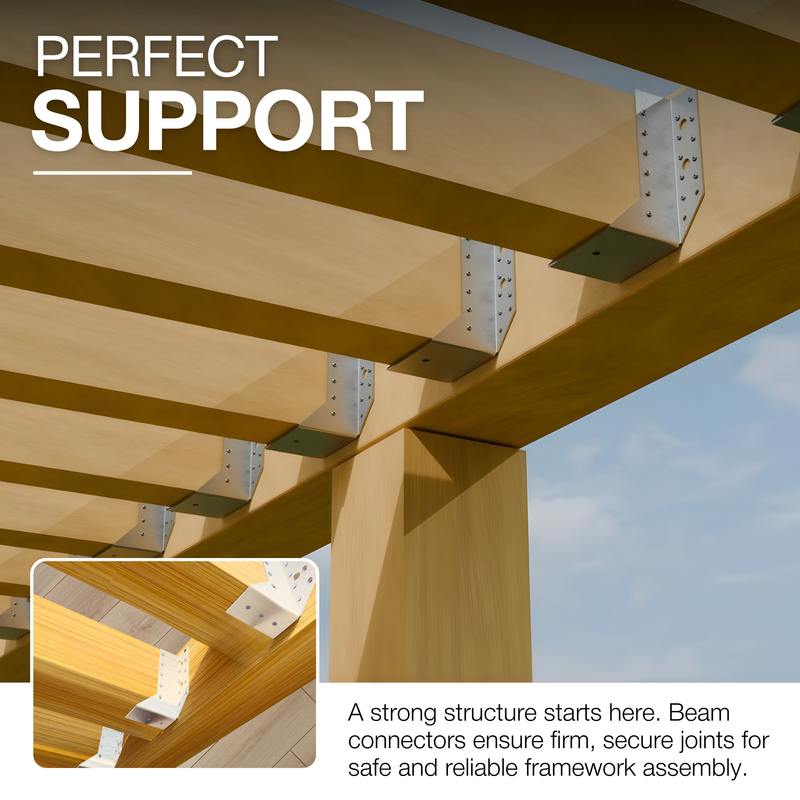
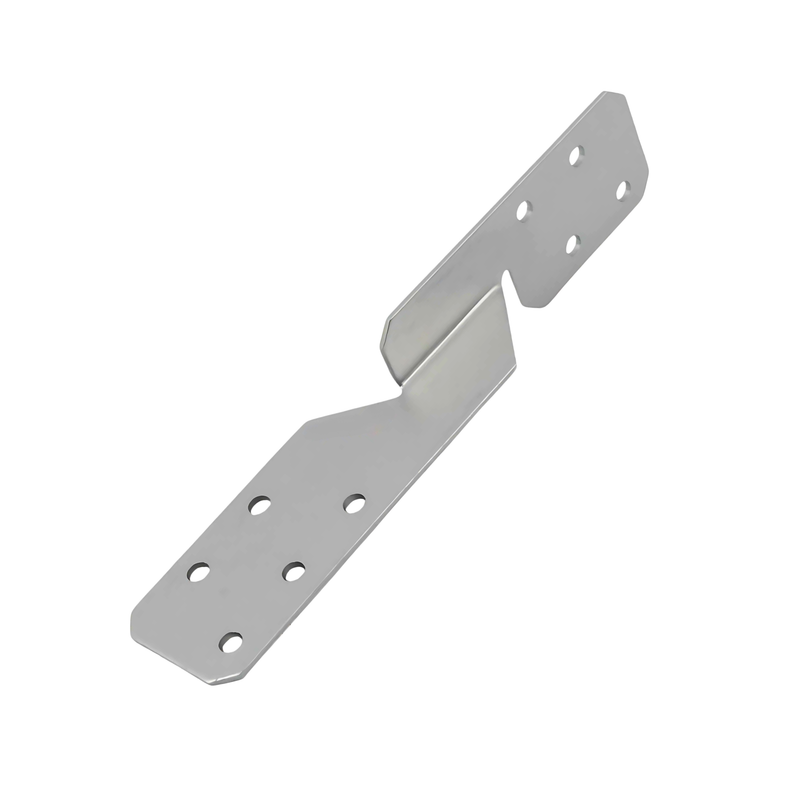
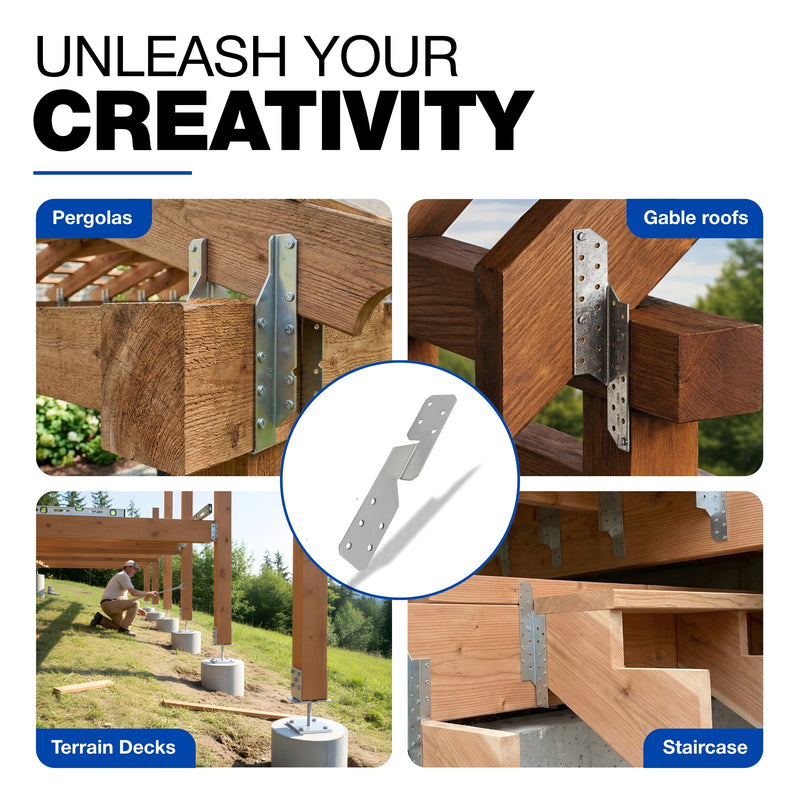
Most shelving jobs never need anything but 90°, but sloped supports, pergola rafters, and angled corner shelves do. The Perforated 135° Angle Bracket connects two wooden pieces at 135°, closing a joint that a standard right-angle bracket physically can't reach.
Perforated 135° Angle Bracket pros:
- Only bracket in this list that fixes a genuinely angled joint
- Same perforated hole spacing as the 90° version, so fixing technique doesn't change
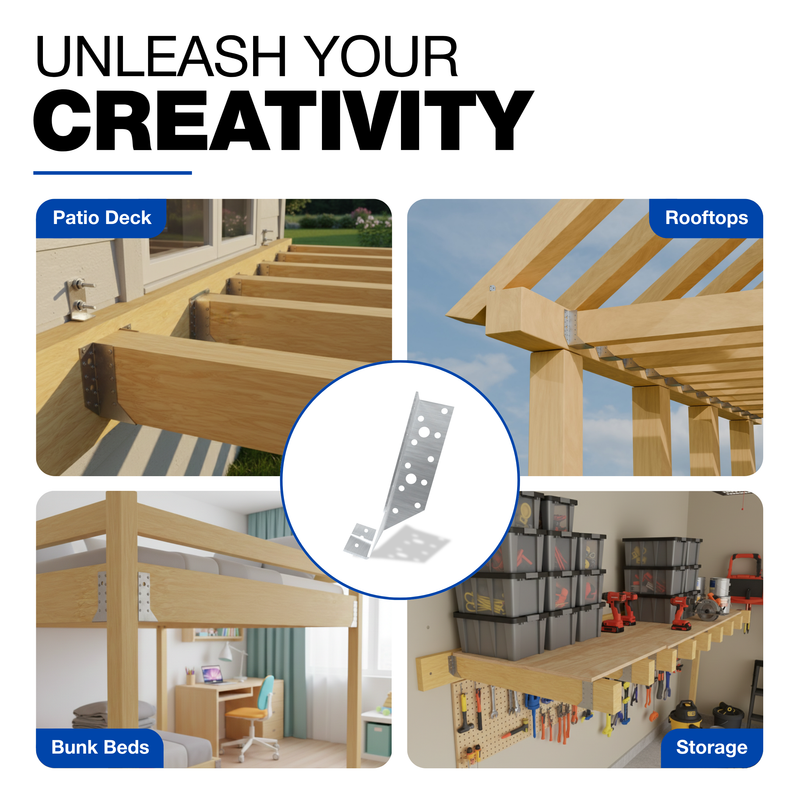
- Useful across garden planters, sloped roof supports, and angled shelf brackets
Perforated 135° Angle Bracket cons:
- Single fixed angle — no use on a standard square corner
- Less commonly stocked than 90° brackets, so plan the order ahead
Best for: angled shelf brackets and sloped framing. Verdict: Buy, situational.
3. Perforated Right Angle Bracket: best budget angle bracket for shelving
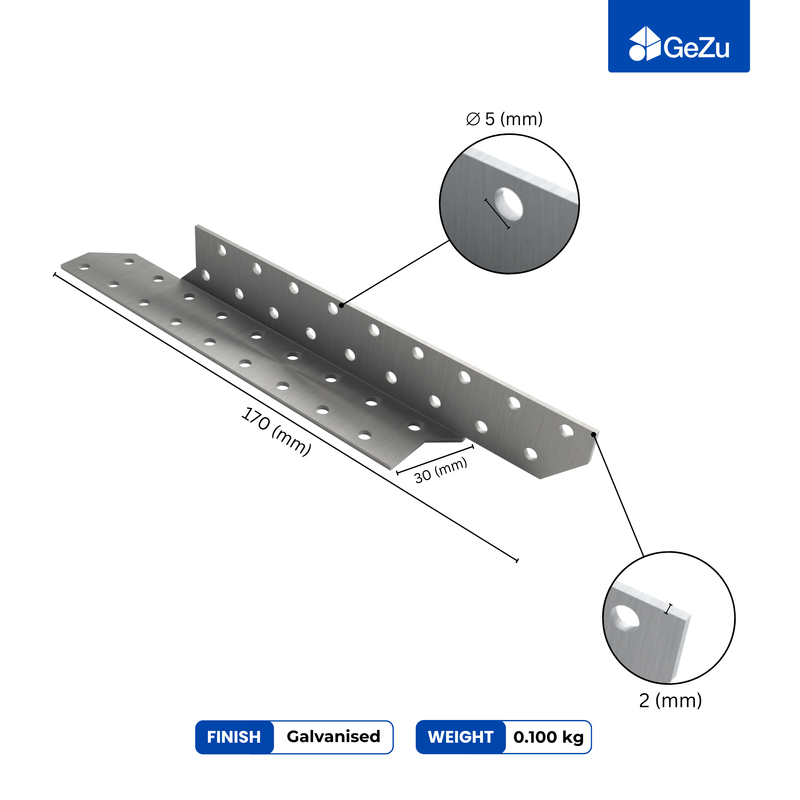
When the job is a closet organiser or a light garage shelf and not a workbench, the standard Perforated Right Angle Bracket does the job without paying for reinforcement you don't need.
Perforated Right Angle Bracket pros:
- Lowest cost per unit in the range
- Wide compatibility with standard shelf brackets
- Multiple holes give flexible fixing points
Perforated Right Angle Bracket cons:
- Thinner gauge than the reinforced version, so it sags sooner under heavy loads
- No rib reinforcement at the corner
Best for: light shelving and closet framing. Verdict: Buy for light duty, Skip for heavy loads.
4. Adjustable Angle Bracket: best angle bracket for modular shelving
Shelf depth isn't always decided before the bracket goes in — modular systems and built-in-place designs often need the joint to move a few millimetres on site. The Adjustable Angle Bracket connects two wood parts at 90° while letting multiple holes shift the installation distance.
Adjustable Angle Bracket pros:
- Hole spacing adapts on site instead of forcing a redesign
- Good fit for modular or built-in shelving systems
- Same basic 90° geometry as fixed brackets, so it's a drop-in swap
Adjustable Angle Bracket cons:
- Adjustability trades off a small amount of rigidity versus a fixed reinforced bracket
- More holes can mean more fasteners to install per joint
Best for: modular or adjustable shelving builds. Verdict: Buy.
5. Scaffold Right Angle Coupler: best angle bracket for steel-tube framing
Not every shelf frame is timber. Workshop racking and tube-and-clamp builds use round steel tube, and the scaffold right angle coupler is what closes that 90° joint instead of a timber bracket.
Scaffold Right Angle Coupler pros:
- Rated for round scaffold tube, not flat timber faces
- Scaffold-grade load rating, well above a standard timber bracket
- Reusable — no pre-drilled holes required like a timber bracket
Scaffold Right Angle Coupler cons:
- Not compatible with standard timber shelf boards without an adapter
- Heavier and bulkier per joint than any timber angle bracket
Best for: steel-tube shelf frames and scaffold-style DIY builds. Verdict: Buy for tube projects, Skip for standard timber shelving.


How we ranked these
Each bracket was scored against the same six criteria: coating type, gauge, hole pattern, corner reinforcement, angle type, and load path compatibility. The Perforated Reinforced Angle Bracket wins overall because it's the only fixed-angle timber bracket with a reinforcing rib; the Scaffold Right Angle Coupler wins its own lane because it's rated for tube, not timber, so it was never competing on the same criteria.
Which angle bracket should you choose in 2026?
For a standard timber shelf carrying real weight, buy the Perforated Reinforced Angle Bracket first — the rib earns its keep the first time a shelf takes a full load of tools or stock. Step up to the Scaffold Right Angle Coupler only if the frame is round steel tube, and reach for the Perforated 135° Angle Bracket the moment a joint isn't square. If the budget is tight and the load is light, the standard Perforated Right Angle Bracket still closes the joint fine in 2026 — just don't put a workbench on it.
FAQ
What's the best angle bracket for shelving in 2026?
The Perforated Reinforced Angle Bracket is the best overall pick for shelving in 2026 because its stamped rib adds corner rigidity that standard perforated brackets don't have. Use the Scaffold Right Angle Coupler instead if the shelf frame is steel tube rather than timber.
Is hot-dip galvanised better than electro galvanised for angle brackets?
Yes, hot-dip galvanising to EN ISO 1461 leaves a coating around 45 microns thick versus 5 to 25 microns for electro galvanising. That thicker layer holds up far longer against rust on shelving in a shed, garage, or outdoor build.
Can I use a 135° angle bracket instead of a 90° bracket?
No, a 135° angle bracket only closes a 135° joint and won't sit flush on a standard square corner. Use it specifically for sloped shelf supports, pergola rafters, or angled planter corners.
How many angle brackets does a shelf need?
Most timber shelves use two brackets per shelf edge at minimum, one at each supporting wall or upright. Longer or heavier-loaded shelves need additional brackets spaced along the run to stop mid-span sag.
Are adjustable angle brackets strong enough for heavy shelving?
Adjustable angle brackets handle standard shelving loads fine but trade a small amount of rigidity for on-site hole adjustment. For genuinely heavy loads, the Perforated Reinforced Angle Bracket's fixed rib holds up better.
What's the difference between an angle bracket and a scaffold coupler?
An angle bracket is a flat perforated plate designed to fix to timber faces, while a scaffold coupler clamps around round steel tube. They aren't interchangeable — pick the one that matches your frame material.
Do angle brackets rust outdoors?
Electro galvanised brackets can show rust within a couple of winters outdoors because the coating is thin. Hot-dip galvanised brackets resist corrosion far longer thanks to their thicker EN ISO 1461-rated coating.
What size angle bracket works for garage shelving?
Garage shelving carrying tools or stock generally needs a reinforced angle bracket rather than a light perforated one, since the rib resists the twisting load of a fully stocked shelf. Match bracket size to the shelf depth so fixing holes land on solid timber.
One last thing
The stamped rib on the Perforated Reinforced Angle Bracket does more for rigidity than switching to a thicker sheet of steel would. Geometry beats raw gauge on a small bracket — it's why a reinforced 90° bracket often outperforms a plain bracket cut from heavier stock, at a fraction of the material.