Ground Screws vs Concrete Footing: Which Base for a Garden Structure?

For most fence posts, pergola legs, carports and small decks on firm, undisturbed soil, a ground screw is the quicker and tidier base: it goes in with a bar in a few minutes, carries load straight away and can be unscrewed and reused later. Choose a concrete footing instead when the ground is stony, full of rubble or very soft, when a post takes heavy twisting load such as a gate or a tall solid fence in an exposed spot, or when you simply want a base that will never move. That's the short answer to ground screws vs concrete. The rest of this guide explains why, and how to tell which one your site needs.
We stock both, so we've no reason to push you one way. This is the same advice our warehouse team gives by email when someone sends us a photo of their garden and asks what to buy.
Ground Screws vs Concrete Footing: Quick Comparison
| Ground screw | Concrete footing with post support | |
|---|---|---|
| Digging | None, the screw cuts its own way in | A hole for every post, and spoil to get rid of |
| Ready for load | Straight away | After the concrete has set, usually the next day or later |
| Tools | Driver bar or a length of steel tube through the socket | Spade or post-hole digger, mixing tub, level, props |
| Best soils | Firm clay, loam, compact sandy soil | Almost anything, including loose, stony or made-up ground |
| Weather | Can go in during cold or wet spells | Avoid pouring in frost; heavy rain slows the job |
| Removal | Unscrew and reuse | Break out the concrete |
| Our parts from | €9.96 per screw | €4.89 per support, plus concrete or post mix |
What Is a Ground Screw Foundation?
A ground screw is a hot-dip galvanised steel shaft with a helical thread at the bottom and a bracket or socket at the top. You screw it vertically into the soil, the thread bites into undisturbed ground and the soil itself becomes the foundation. No hole, no mixing, no waiting. People call the same idea a no dig post anchor, a screw-in post base or a helical pile; the bigger versions used under garden rooms work on the same principle but are engineered and installed with machines.
The reason a ground screw foundation holds is that the soil around the thread is never dug out and loosened. That's also its limit: a screw only grips as well as the ground it's turned into.
Ground Screw Post Anchor

Our ground screw post anchor has a closed square socket on top of a tapered collar, with a welded helical flight down the shaft. The post drops into the socket and is fixed with screws or bolts through the pre-drilled holes. It's made for square timber posts on fences, pergolas, carports, play frames and deck posts where you'd rather not dig. Sizes are 71 x 71 x 650 mm, 71 x 71 x 800 mm and 91 x 91 x 800 mm, all hot-dip galvanised, from €9.96 to €12.46. The benefit over a drive-in spike is that turning it in, rather than hammering, lets you correct the angle as you go, and you can back it out if it meets an obstacle.
No Dig Ground Screw Anchor (U Model)

The no dig ground screw anchor swaps the socket for an open U bracket, so the post bolts between two side plates and sits clear of the ground. That open fork drains, which keeps the end grain dry, and it accepts posts that aren't perfectly square. It comes in eight sizes, from 46 x 46 x 650 mm up to 102 x 102 x 865 mm, priced €13.26 to €19.99. The longer 865 mm shafts are the ones we'd pick for pergolas, carports and anything with a roof, because a longer thread engages more soil.
How a Concrete Footing Works
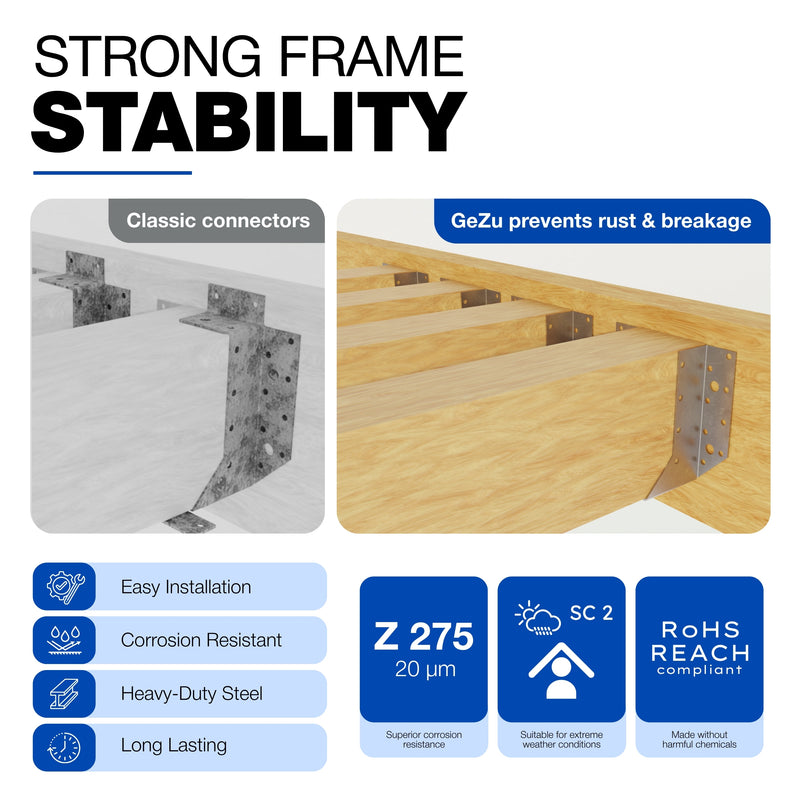
A concrete footing spreads the load of the post into a much bigger block of ground. You dig a hole, set a steel post support in it, fill around it with concrete or post mix and let it cure. The timber post then bolts to the bracket above the concrete, so it never sits in wet ground. Setting bare timber straight into concrete is the old way, and it's the reason so many posts rot off at ground level.

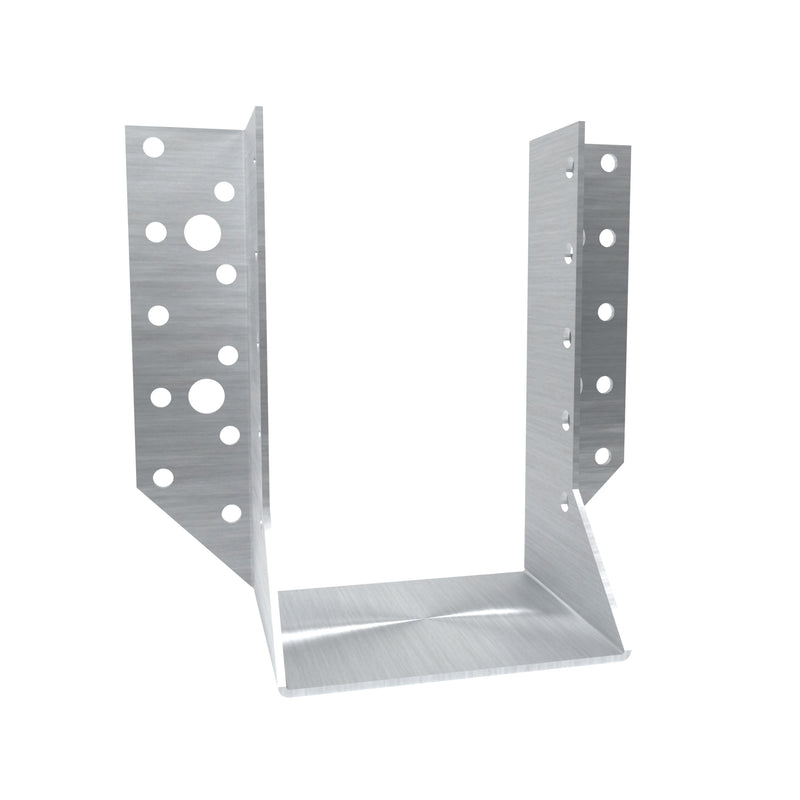
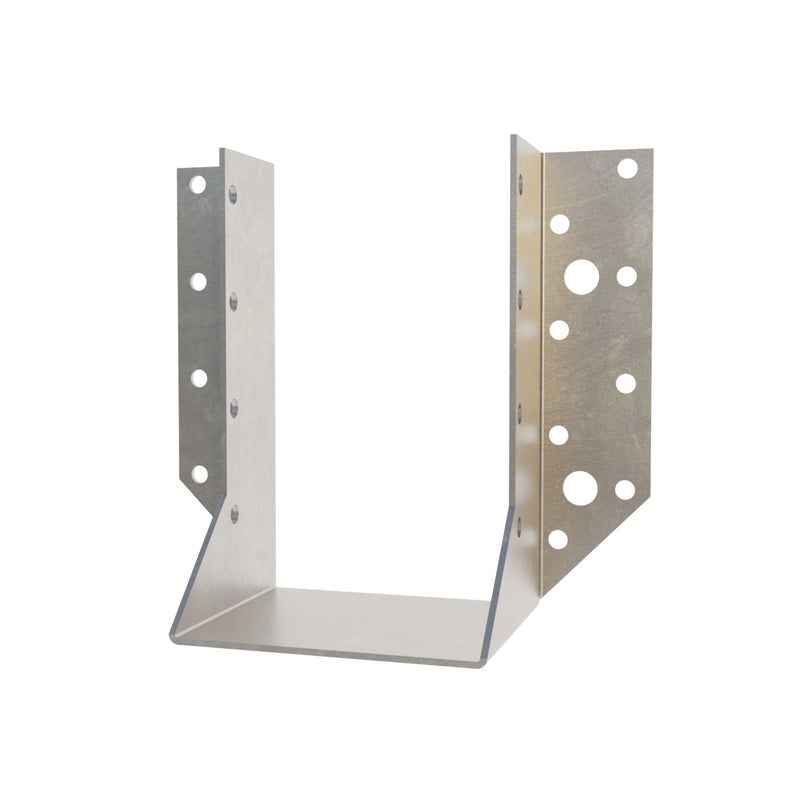
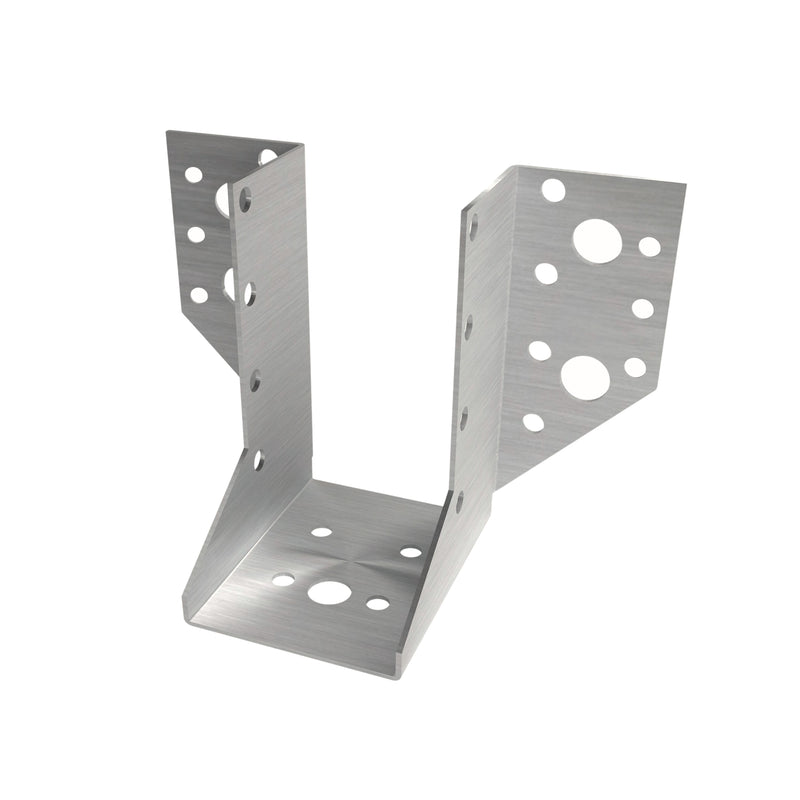
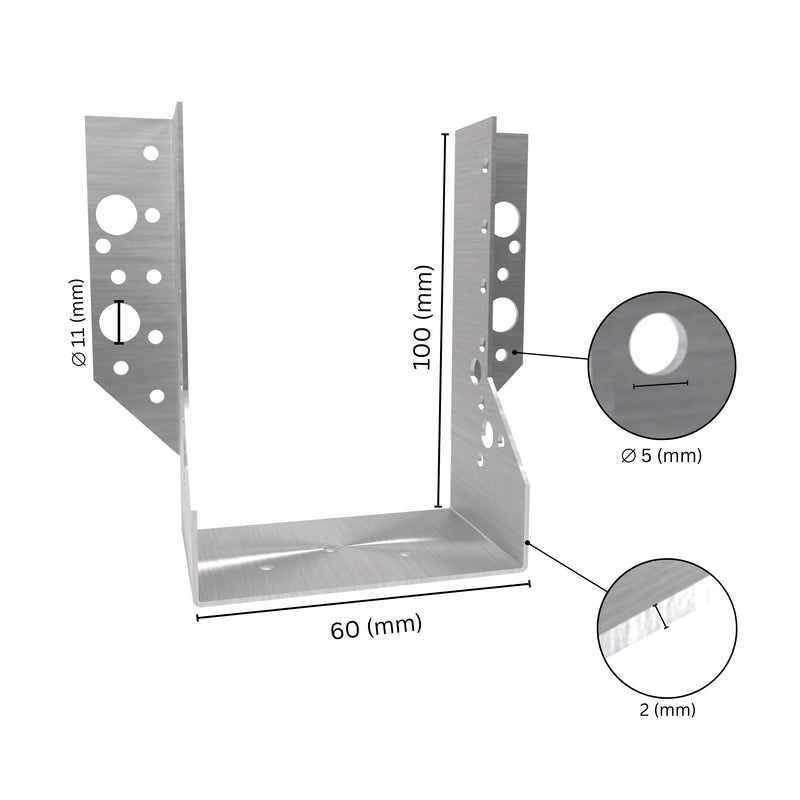
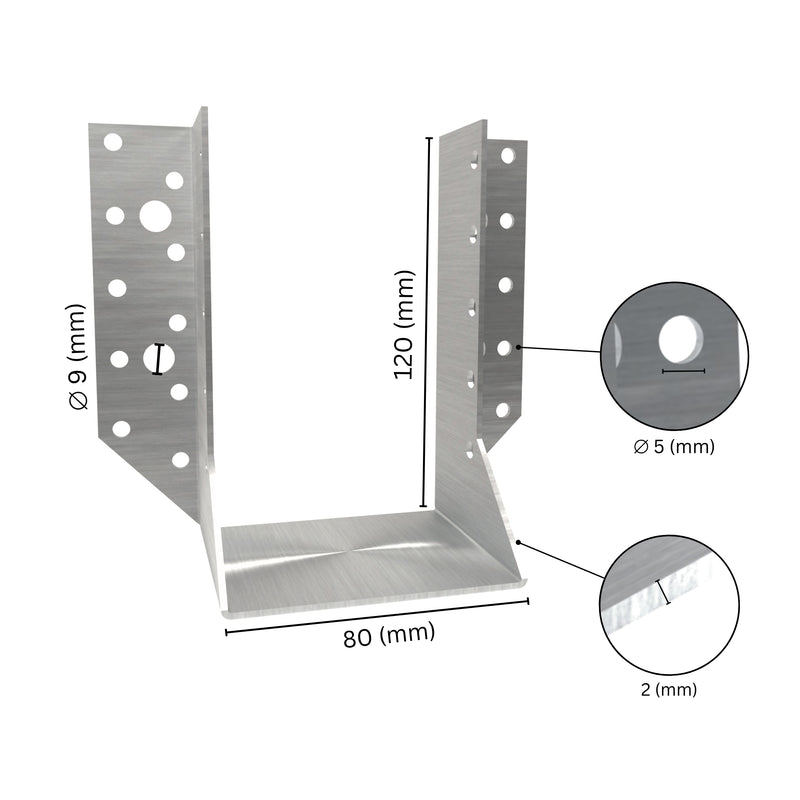
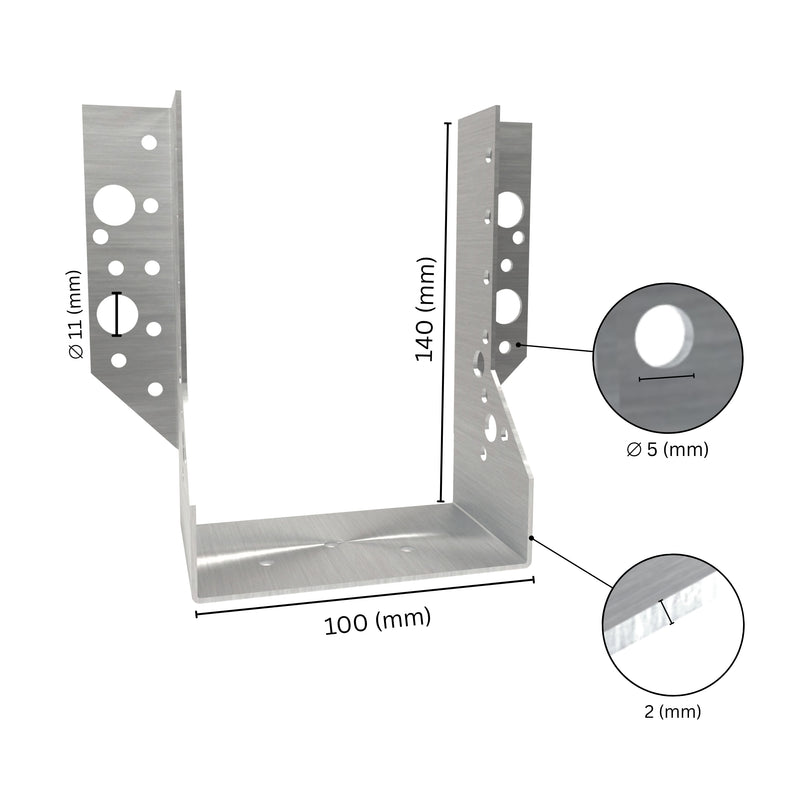
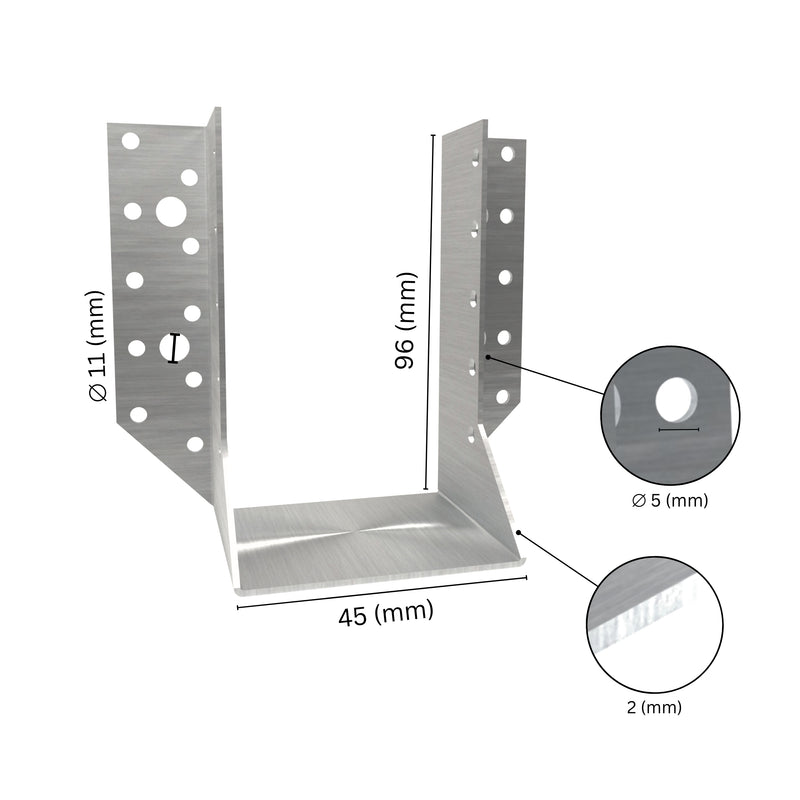
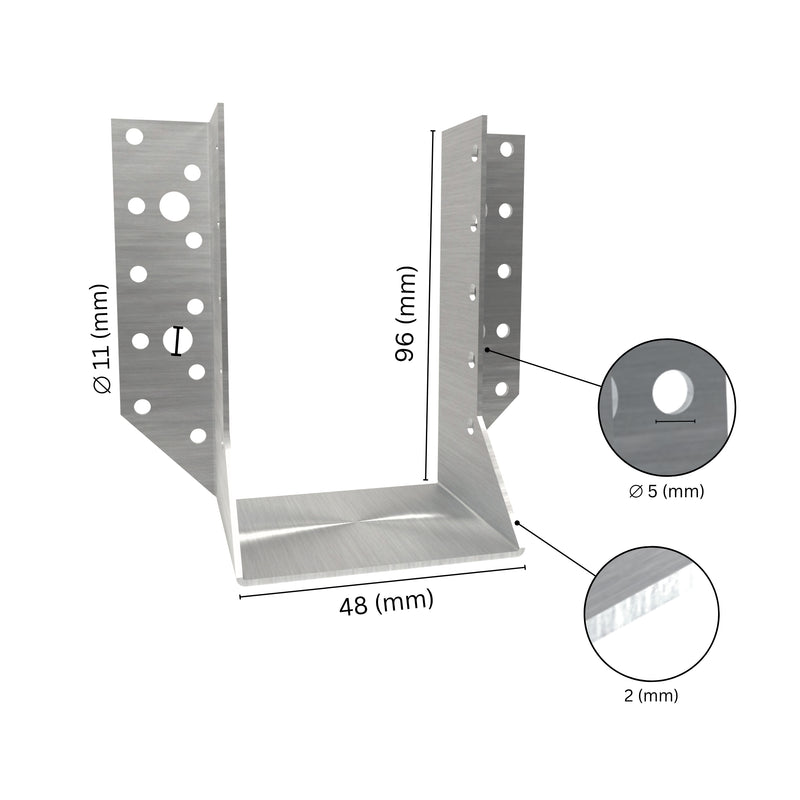
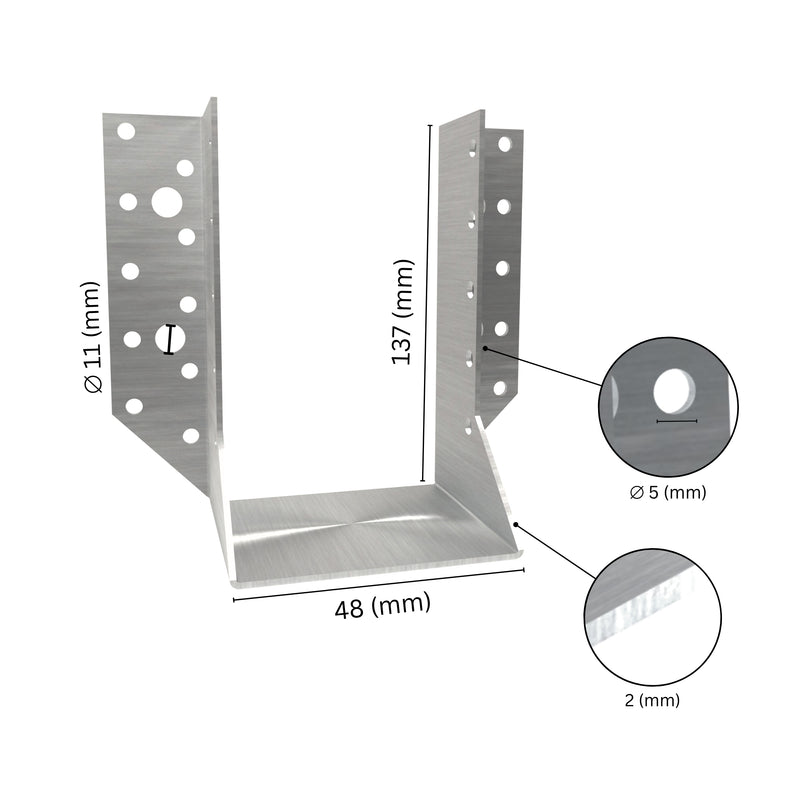
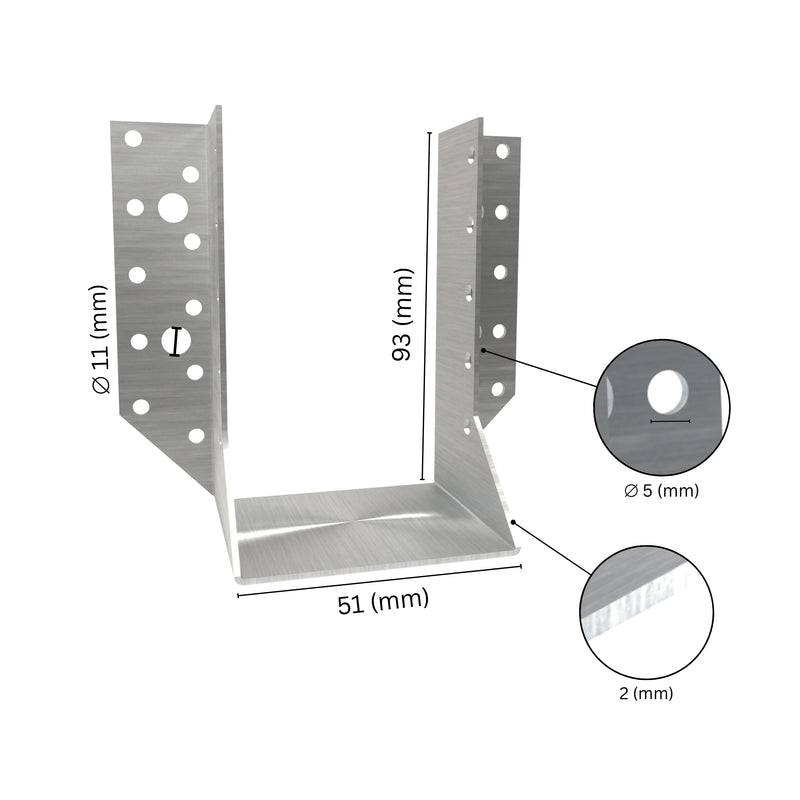
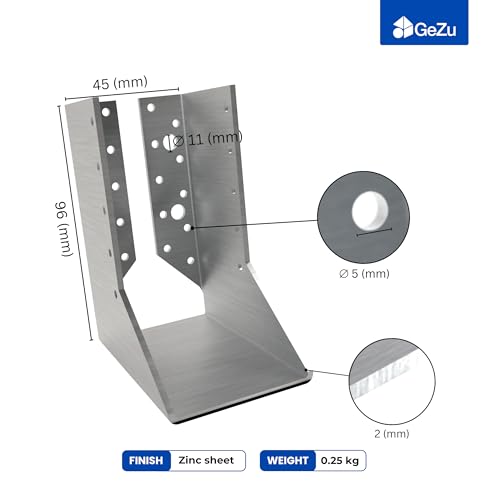
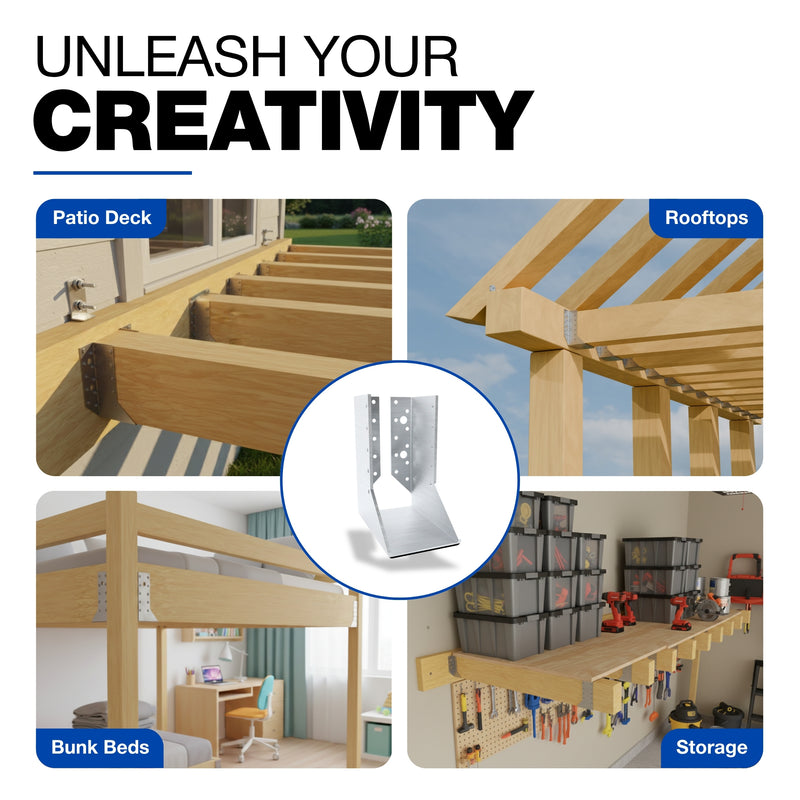
The workhorse here is our concrete-in U shape post support: a U bracket on a 300 mm anchor that you cast into the footing. It's used for fences, pergolas and decks, keeps the post above ground level to stop rot, and comes hot-dip galvanised in nine widths from 71 to 151 mm, priced €4.89 to €6.59. The bracket is cheap; the real cost of a footing is the concrete, the digging and the time. If you're wondering how much mix that takes, we've worked it out in how many bags of post mix per post you need, and the hole depth by fence height is in our fence post depth guide.
Where Ground Screws Win
Speed. A ground screw goes in and takes load in the same visit. With concrete you dig, pour, prop the post and come back once it has set. On a ten-post fence or a four-post pergola, that's the difference between one afternoon and a weekend.
No mess. There's no spoil heap, no barrowing concrete across the lawn and no washing out a mixer. On a finished garden, a patio edge or a rented property, that counts for a lot.
Removable and reusable. Got the line wrong, or moving house? Unscrew it. That makes ground screws a natural fit for temporary structures, event marquees, seasonal shade sails and anything that might be relocated. Concrete is permanent even when you'd rather it wasn't.
Weather. Concrete shouldn't be poured into frozen ground, and heavy rain turns a dug hole into a pond. A ground screw doesn't care, which is handy for winter jobs.
Rot protection. Like a good post support, the screw holds the timber above the soil line, so the post doesn't sit in wet earth. If you want the bigger picture on digging-free methods, our guide to setting wooden fence posts without concrete covers spikes and screws side by side.
Where Concrete Footings Win
Poor or awkward ground. Stony soil, old building rubble, tree roots and made-up ground are the classic ground screw problem. The thread hits an obstruction, stalls or wanders off line. A dug hole lets you see and clear what's down there, and the concrete fills around whatever's left.
Very soft or loose soil. Loose sand, peat or waterlogged clay doesn't give a thread much to grip. A wide concrete block spreads the load over far more ground.
Heavy twisting loads. Gate posts take a swinging, levering load every day. A tall close-board or solid-panel fence on an exposed site acts like a sail. In both cases the bigger bearing area of a footing is the safer bet, and it's what we'd use for hanging posts.
Engineered or regulated structures. Anything that needs a structural design or building approval, such as a habitable garden room or an extension, should follow the engineer's foundation spec, whether that's concrete or engineered screw piles. Our post anchors are for posts, not for building foundations.
How to Test Your Soil Before You Choose
Push a long screwdriver or a steel rod into the ground where each post will go. If it meets steady resistance and goes in straight, a ground screw will grip well. If it stops dead at a shallow depth, grates on stone or sinks in with no effort at all, plan on concrete for that spot.
Mixing the two along one line is completely normal. We regularly see fences with ground screws on the open runs and concreted supports on the gate posts and corners. Use the right base per post, not one rule for the whole job.
Installing a Ground Screw: The Short Version
- Mark the post positions with a string line so the brackets end up in a straight row.
- Make a small pilot hole with a steel bar to start the tip and get it upright.
- Put a bar or a length of steel tube through the holes in the bracket or socket and turn clockwise, checking plumb with a level on two faces every couple of turns.
- Stop when the bracket sits just above ground and lines up with the string. Don't overshoot; backing a screw out loosens the soil it's gripping.
- Fit the post and fix it through the pre-drilled holes with galvanised screws or bolts.
For a step-by-step deck build on screws, see our foundation-free deck workflow with ground screw anchors.
Ground Screws vs Concrete Footing: Cost
On parts alone, a concrete footing looks cheaper: our U support starts at €4.89 against €9.96 for a ground screw. But a footing also needs concrete or post mix, a digging tool and the hours spent digging, pouring and propping. Once you count those, the gap usually closes or reverses on small jobs, especially if you value your weekend. Where ground screws lose on cost is in difficult ground, where you may end up concreting some positions anyway.
FAQs
Are Ground Screws as Good as Concrete?
In firm, undisturbed soil and for the right job, yes: fences, pergolas, carports and small decks sit happily on ground screws. They're not a like-for-like swap everywhere. In loose, stony or very wet ground, and for gate posts or exposed solid fences, concrete is the more forgiving choice.
How Long Do Ground Screws Last?
Ours are hot-dip galvanised, which means a thick zinc coating that protects the steel in soil far better than paint or electroplating. The coating's life depends on how wet and acidic your soil is, so we won't quote a single figure. In ordinary garden soil, a hot-dip galvanised screw typically outlasts the timber post fixed to it.
Do Ground Screws Work in Clay?
Firm clay is good ground for screws because it grips the thread tightly. Very wet, soft clay is less reliable, and clay that shrinks and swells through the seasons can loosen any shallow fixing. Use the longest screw that suits the post and check it after the first winter.
Can Ground Screws Be Used for a Garden Room or Shed?
Garden rooms and larger sheds need a foundation designed for that building, using engineered screw piles or concrete, so follow the supplier's or engineer's spec. Our ground screw post anchors are made for posts. For light structures that need holding down against wind, a helical ground anchor is the better fit: it's a 100 x 500 mm hot-dip galvanised earth anchor with an eye for straps or cable, used to tie down tents, play equipment and small outdoor structures, at €4.06 each.
Can You Remove and Reuse a Ground Screw?
Yes. Turn it anticlockwise with the same bar you used to install it. As long as the thread and coating aren't damaged, it can go back in elsewhere.
Which Base Should You Use?
Test the soil at each post position and be honest about the load. Firm ground, fence or pergola, no gate: go with a ground screw and skip the digging. Stony, soft or made-up ground, gate posts, tall solid fences in the wind: dig and set a concrete-in post support. Plenty of good builds use both.
If you're comparing ground screws with drive-in spikes as well, our fence post spikes vs concrete-in post supports guide covers that side. Everything mentioned here lives in our post support range, and if you send us your post size and a photo of the site, we'll tell you what we'd fit.