Base Jack in Scaffolding (Complete Guide)

Have you ever seen a scaffold and thought, how does that thing not shake or fall over? The secret is at the bottom. It’s a small but important scaffolding part called the base jack. A base jack is like the shoes on your feet. If your shoes are bad, you can slip and fall.
Similarly, without a base jack, scaffolding can become unsafe. Even though it sits at the very bottom of the scaffold, it plays a huge role in safety, stability and performance. Without screw jacks, scaffolding would be shaky and unsafe.
In this guide, we’ll break down everything you need to know about base jacks in scaffolding. Whether you're a construction manager or someone new to scaffolding systems, this guide will help you understand what base jacks are and why they matter.
Let’s get into the details.
What Is a Base Jack in Scaffolding?
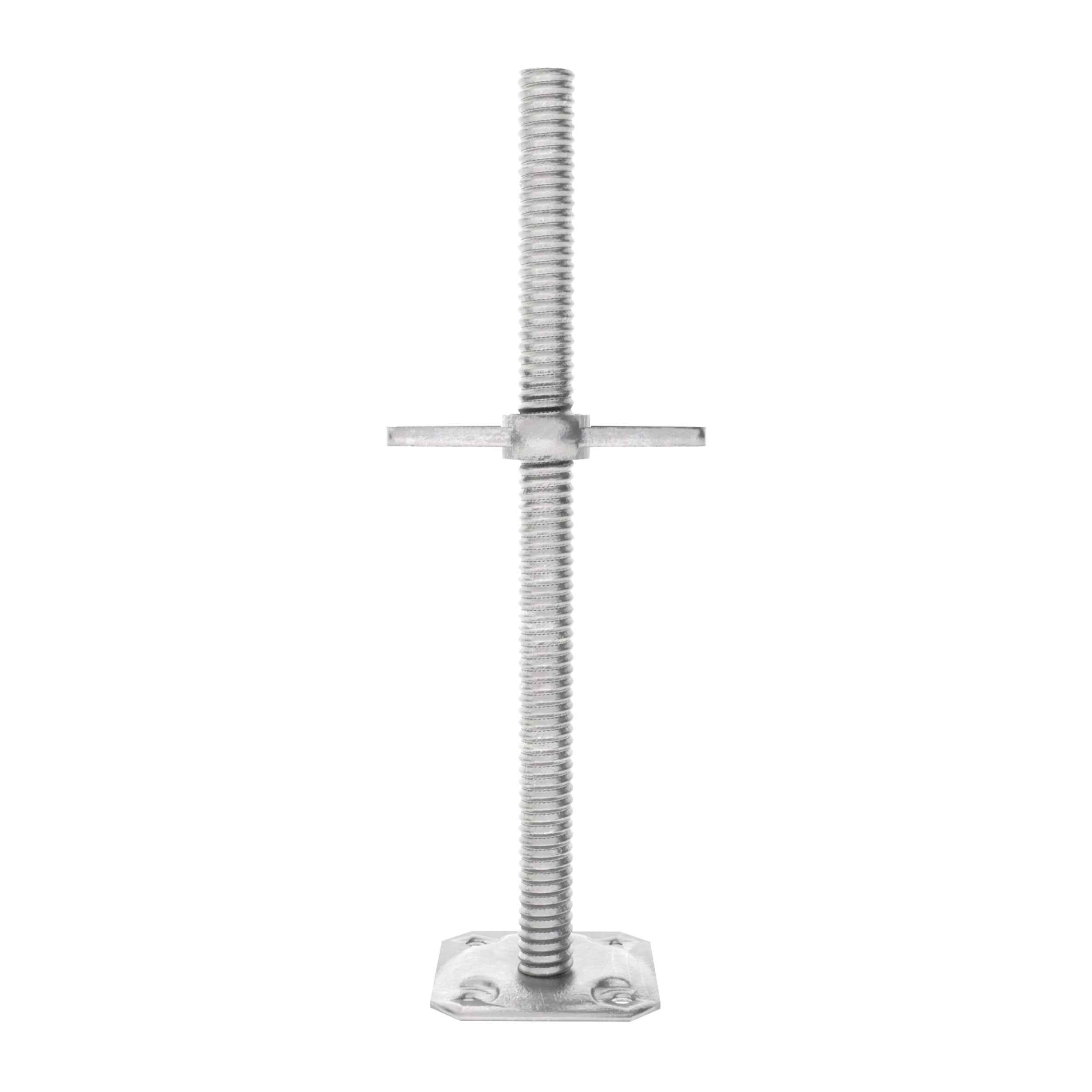
A base jack (scaffold jack) is an adjustable foot that sits at the bottom of a scaffold structure. It keeps the scaffold level on uneven surfaces and allows height adjustments. In simple terms, a base jack is the adjustable foundation of the scaffold.
Scaffold base jacks are also called scaffolding screw jacks, levelling jacks, scaffold feet, screw leg, adjustable base jacks, height adjustable screw jacks and jack base for scaffolding.

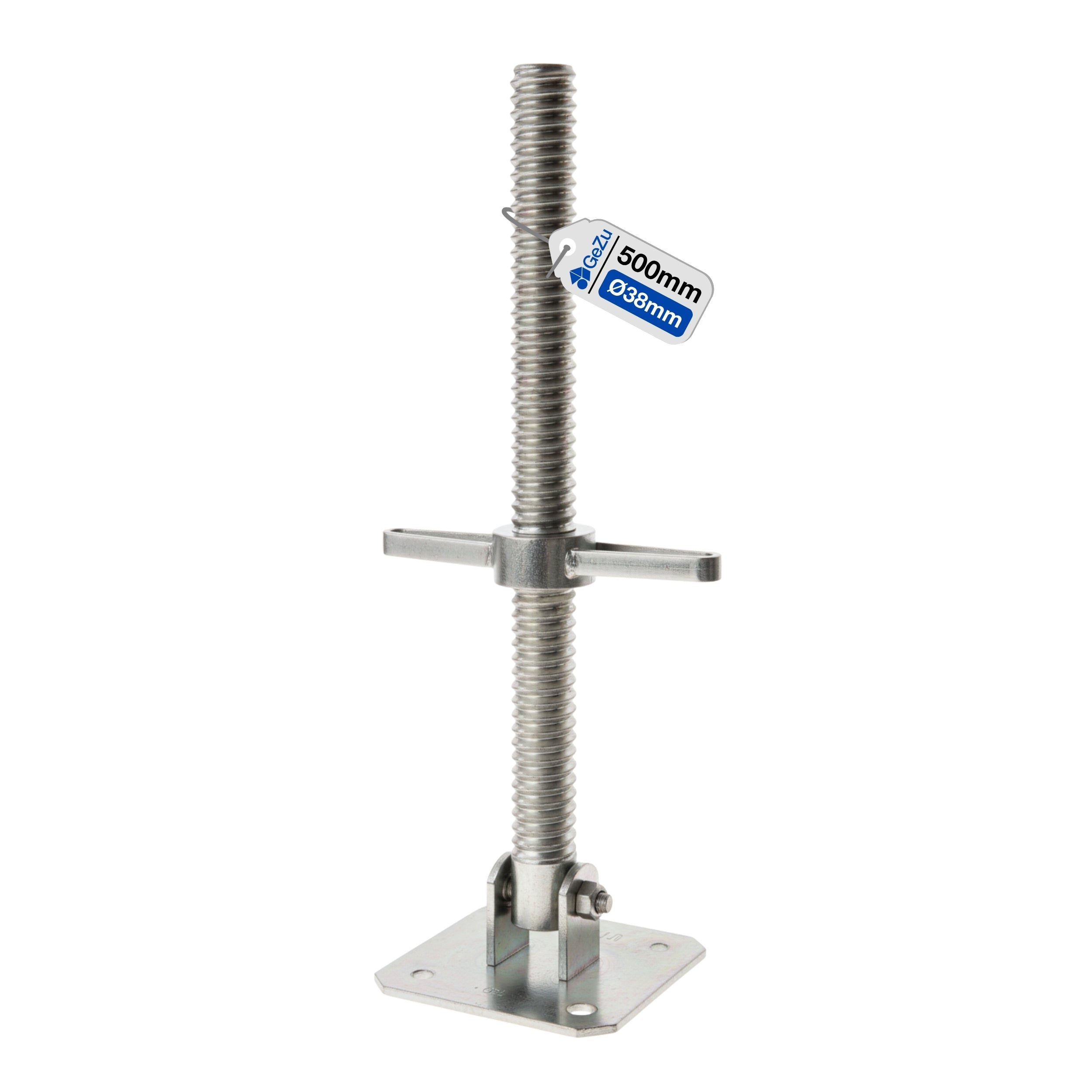
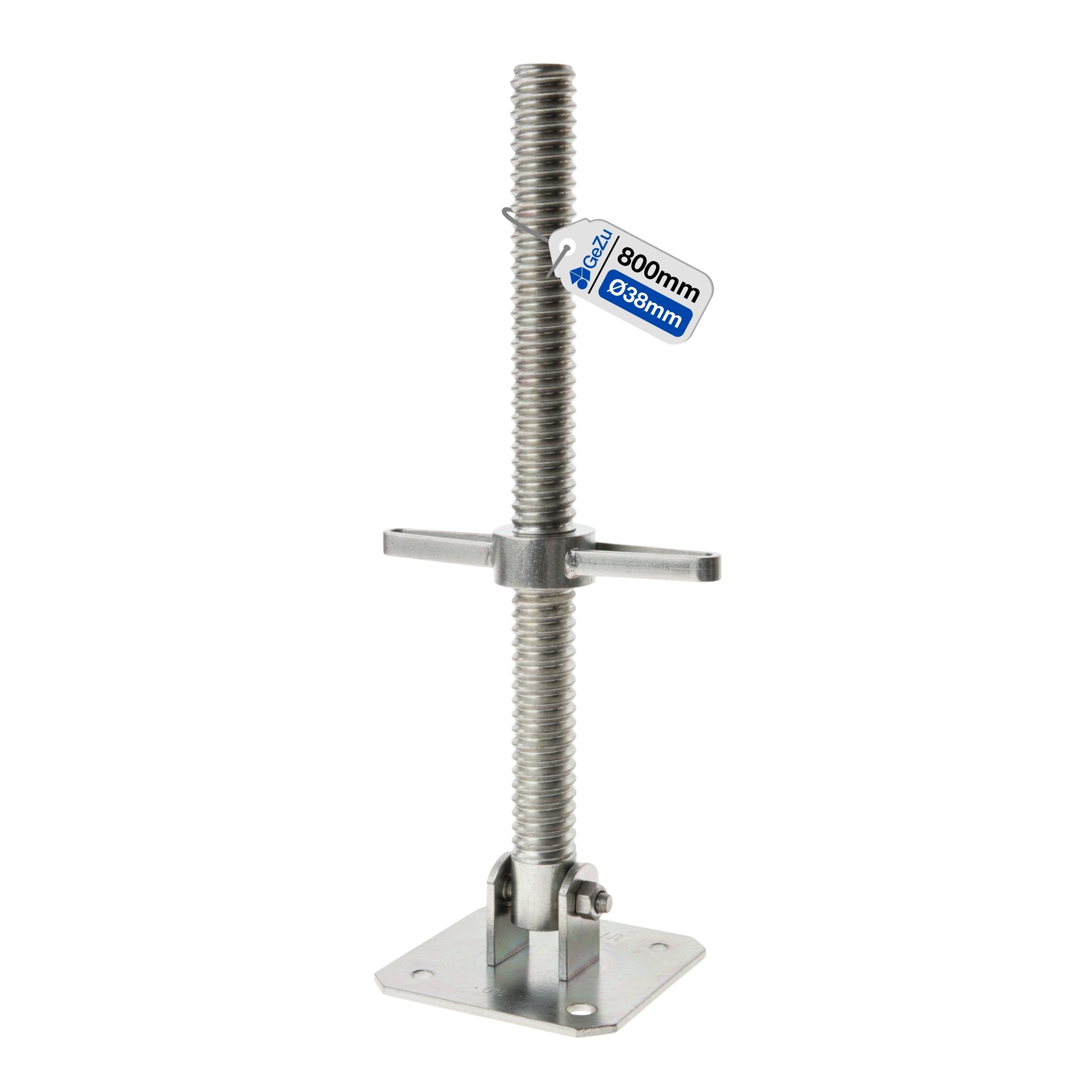
Adjustable base jacks consist of a threaded screw rod with a base plate at the bottom and a jack nut for height adjustments. By turning the jack nut, you can raise or lower the scaffold height to compensate for slopes or bumps in the ground.
Think of it like the adjustable legs on a table. If one leg is shorter, the table shakes. Adjust the legs and the table becomes steady again. That’s exactly what a levelling jack does for scaffolding. Before starting your project, review our step-by-step guide on how to install base jacks on scaffolding to avoid common setup mistakes.
What Is the Purpose of a Base Jack in Scaffolding?
Screw jack is an important scaffolding component that provides a level foundation and allows workers to adjust the height as needed for different tasks. Besides, the scaffold leg also ensures the scaffold stays level and stable on uneven or sloping ground.
Base jacks serve three main purposes on any scaffold:
-
Leveling the Scaffold. Construction sites rarely have even ground. Base jacks let you adjust each leg of the scaffold independently, creating a level platform regardless of the terrain underneath.
-
Height Adjustment. Adjustable threaded screw base jack provides height adjustment when needed. You can increase or decrease the scaffold height by turning the jack nut. They're particularly useful when you need just a bit more reach without adding an entire scaffold lift.
-
Distributing Load Evenly. When a scaffold is properly leveled using base jacks, the weight gets distributed evenly across all standards. This prevents overloading on one side and reduces the risk of collapse.
What Is the Base Lift in Scaffolding?
In scaffolding, the base lift (kicker lift or foot lift) is the first horizontal level of a scaffold structure. It's the lowest section that sits directly on the base jacks and ground-level base plates.
When you extend a base jack, you're raising that entire first lift off the ground. The base lift height is measured from the ground (or base plate surface) to the first ledger connection point.
In simple terms, base lift is the vertical distance from the ground to the first working platform of the scaffold. This is your starting point before you add additional lifts to reach your working height.
What are the Different Types of Base Jacks?
Base jacks come in several types, each designed for different scaffolding systems, including ringlock, cuplock and frame scaffolds. They provide support, stability and height adjustment to scaffolding structures.
Below are the different types of base jacks for scaffolding:
Hollow Base Jack
Hollow base jacks have a threaded rod with a hollow core, making them lighter and easier to handle. They are suitable for most scaffolding systems and lightweight support structures. Hollow base jacks are ideal when you need adjustability without the extra weight of solid jacks.

Solid Screw Jack
Screw jacks are among the most popular base jacks in construction due to their simplicity and reliability. They feature a threaded rod, base plate and jack nut, which can be rotated to adjust the height precisely.

Solid base jacks have a threaded rod without any hollow core, giving them a greater load-bearing capacity than hollow base jacks. Adjustable scaffolding screw jacks are commonly used in commercial construction and large infrastructure projects for stability.
Swivel Base Jack
Scaffold swivel base jacks are a versatile type of jack similar to screw jacks, but they feature a swivel base that can tilt to match the angle of the ground. This flexibility makes the swivel base screw jack perfect for uneven or sloped surfaces, ensuring that scaffolding remains stable and level.

Swivel screw jack allows you to adjust the jack to your desired angle, even on challenging surfaces. This versatility makes them popular across industrial, commercial and residential construction, where terrain varies.
Adjustable Base Jack with Wing Lock
This scaffold levelling jack is similar to a screw jack but offers extra stability with a butterfly-head locking bolt. It features a welded threaded screw rod, base plate, jack nut, and a wing bolt, allowing easy height adjustment for scaffolding on uneven ground.

The jack nut moves along the threaded rod and the additional wing lock secures it in place, preventing movement under load. The locking bolt ensures the scaffold stays at the set height safely. Scaffolding base jack with wing nut is ideal for heavy-duty construction projects and scaffolding systems.
U Head Jack (Top Jack)
U-jacks (also called U-head jacks or top jacks) are installed at the top of scaffold standards. U-shaped head is designed to support horizontal beams, wooden planks, or formwork in concrete construction.

U-head jacks are used on top of uprights along with base jacks to form a stable scaffolding or support system. While base jacks push down into the ground to level and support, U jacks push up to hold beams in place. They're used in building construction, tunnels and other infrastructure projects.
Caster Base Jack
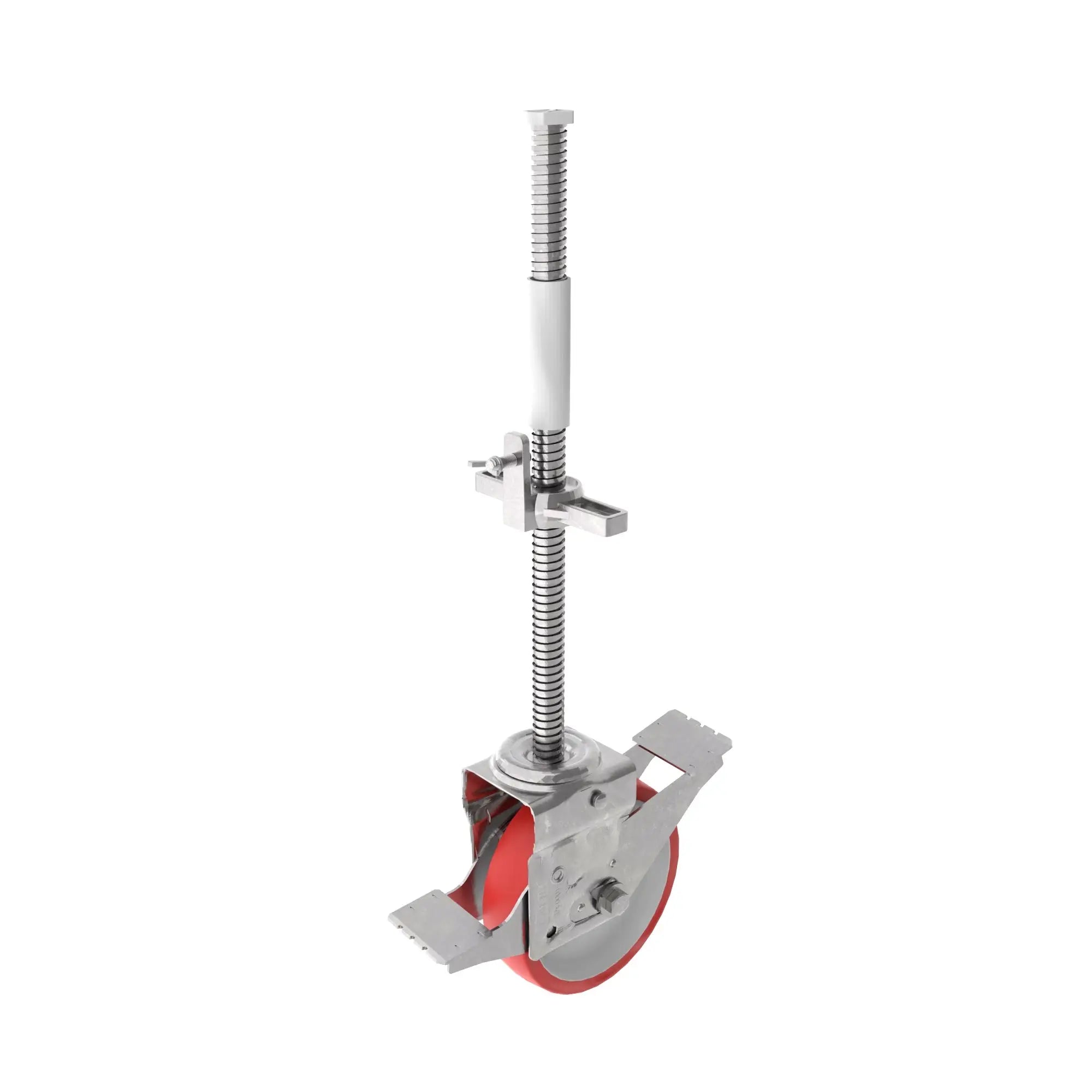
Caster base jacks come with wheels, allowing scaffolding to move easily while maintaining a level platform. Instead of a fixed base plate, these base jacks have heavy-duty casters that allow the entire scaffold structure to roll across the work area.

The height of each screw leg can be adjusted individually and the casters can be swapped for fixed bases. Scaffolding castors are ideal for projects where frequent repositioning is needed, such as maintenance, industrial sites, or temporary structures.
Are There Different Sizes of Base Jacks?
Yes, scaffold base jacks come in different sizes. Before we look at the sizes, it’s important to understand how the dimensions are measured.
Standard Dimensions of Scaffold Jacks:
-
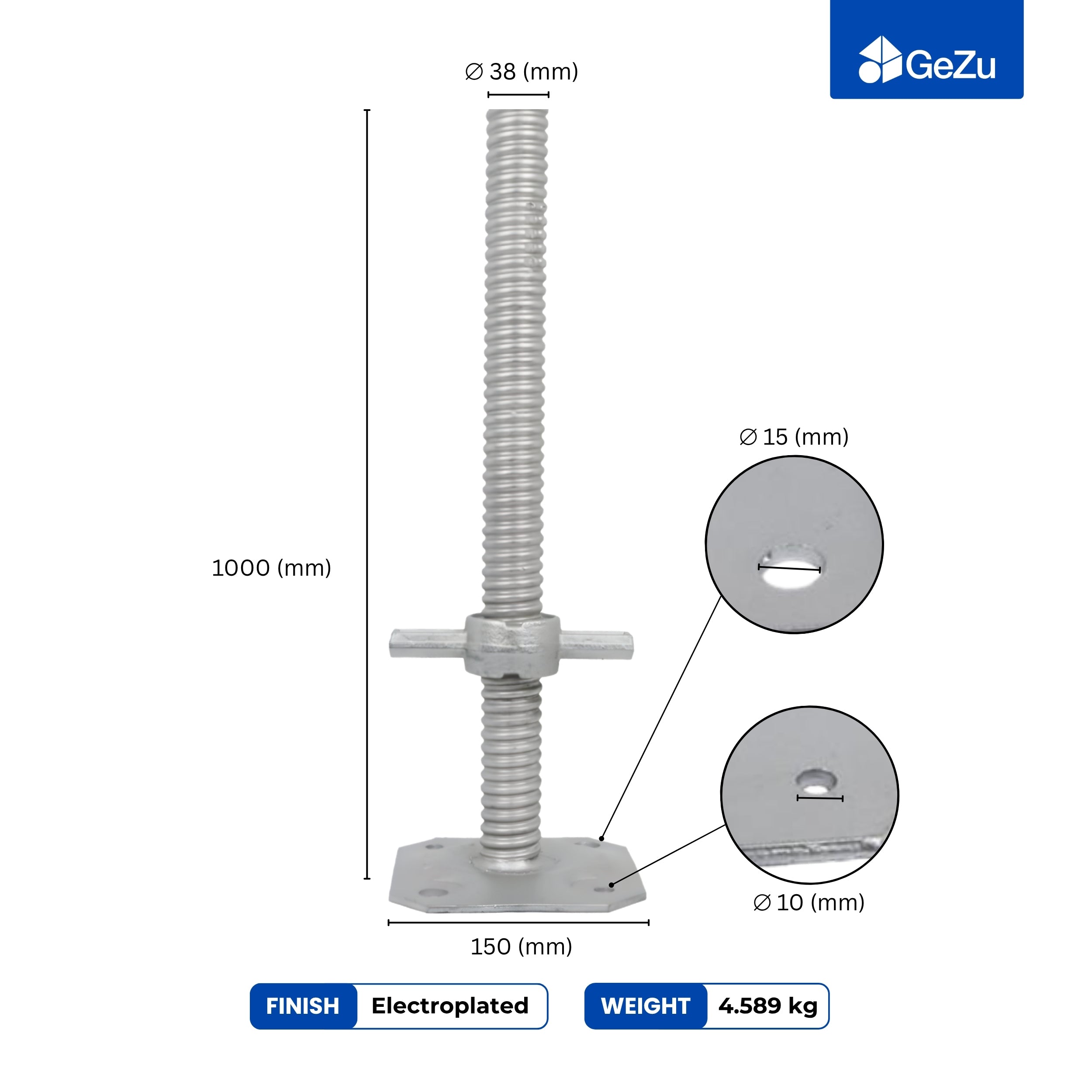
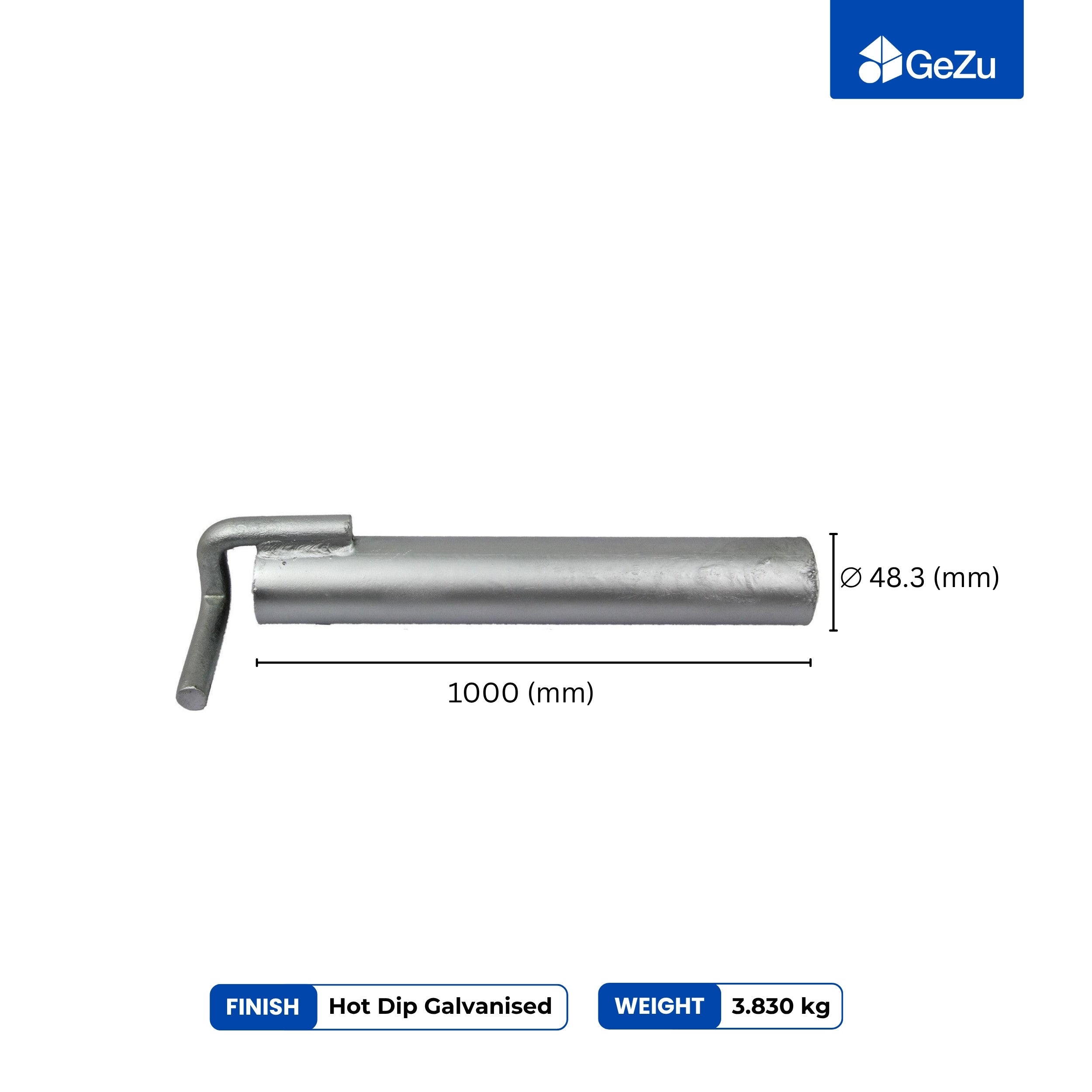
Stem Diameter: The thickness of the threaded rod, usually Ø 32 mm, 34 mm, 38 mm and 48 mm. The threaded screw rod fits into the scaffolding leg.
-
Length: Common lengths of the screw rod include 300 mm, 500 mm, 600 mm, 650 mm, 800 mm, 950 mm and 1000 mm. The length is adjustable to level scaffolding on uneven ground.
-
Base Plate: The flat plate at the bottom, usually around 150 mm × 150 mm, spreads the weight and keeps the scaffold stable.
Knowing these dimensions helps you choose the right jack base for stable scaffolding.
Base jacks for scaffolding are available in the following sizes:
Adjustable Base Jack
Swivel Screw Jack
Adjustable Scaffold Base Jack (with wing lock)
What Is the Maximum Height of a Scaffold Base Jack?
The maximum recommended height of a scaffold base jack is 24 inches. This limit is set to maintain scaffold stability and ensure worker safety. According to OSHA, base jacks must not be extended beyond 24 inches.
ANSI A10.8 (American National Standards Institute) also sets base jack height limits based on scaffold type. ANSI standards recommend:
-
18 inches for medium-duty scaffolds
-
24 inches for heavy-duty scaffolds
-
12 inches for mobile scaffolds
How to Choose the Right Base Jack?
Picking the right base jack comes down to three main factors: load capacity, ground conditions and compatibility with your scaffold system.
Load Capacity
Start with load capacity. Calculate the total weight of the scaffold, including workers, tools, and materials. Select a jack rated above that weight to ensure safety. Solid base jacks handle higher loads than hollow versions. If you're building a heavy-duty scaffold, go with solid jacks and for lighter work like painting or light maintenance, hollow jacks usually work fine.
Ground Conditions
Check the surface where the scaffold will stand. Hard concrete or asphalt can support smaller base plates. Softer surfaces like soil, gravel, or wooden decking need larger plates to distribute the weight. For uneven or sloped surfaces, use swivel base jacks to level the scaffold on uneven surfaces.
Scaffold System Compatibility
This should be obvious, but it's worth stating clearly: use base jacks designed for your scaffold system, such as cuplock or ringlock. Tube diameter, connection method and thread pitch all need to match. Make sure the pipe diameter matches the specifications. Also, use approved components to maintain stability and compliance.
Final Thought: Protect Your Team & Invest in Scaffold Base Jack
A scaffold is only as strong as its foundation and the base jack is the key to a stable setup. Base jacks might seem like simple scaffold components, but they're fundamental to scaffold safety and functionality. Jack bases level your structure, distributes loads properly and gives you the height adjustment you need to work on uneven ground.
Don't take shortcuts with screw jacks. Using the wrong type, over-extending them, or skipping proper leveling creates exactly the kind of instability that leads to scaffold failures. Take the time to do it right, follow manufacturer specifications and keep your crew safe.
When you build a scaffold, you're building a temporary structure that people's lives depend on. Adjustable screw jacks are where it all starts. Get them right and everything else follows. So, don’t leave safety to chance; invest in heavy-duty base jacks, level your scaffold properly and protect your team on every project.