Types of Base Jacks For Scaffolding (Don’t Start Without Reading This)

Every scaffolding collapse starts the same way. Something at the bottom gives out. The foundation fails and workers thirty feet up suddenly have nothing beneath them. That's why the base jack type for scaffolding matters more than most people realize.
Base jacks are the base of scaffolding that keep everything level and stable. Even small mistakes with screw jacks can lead to leaning scaffolds or unsafe platforms. Without them, you're building on hope instead of solid ground.
So, this guide explains the different types of base jacks used in scaffolding, how they differ and when each one should be used. Different building sites require different screw jacks. Some need a higher load capacity. Others need flexibility for uneven ground.
Below are the most common scaffold levelling jacks used across the construction industry.
Solid Base Jack
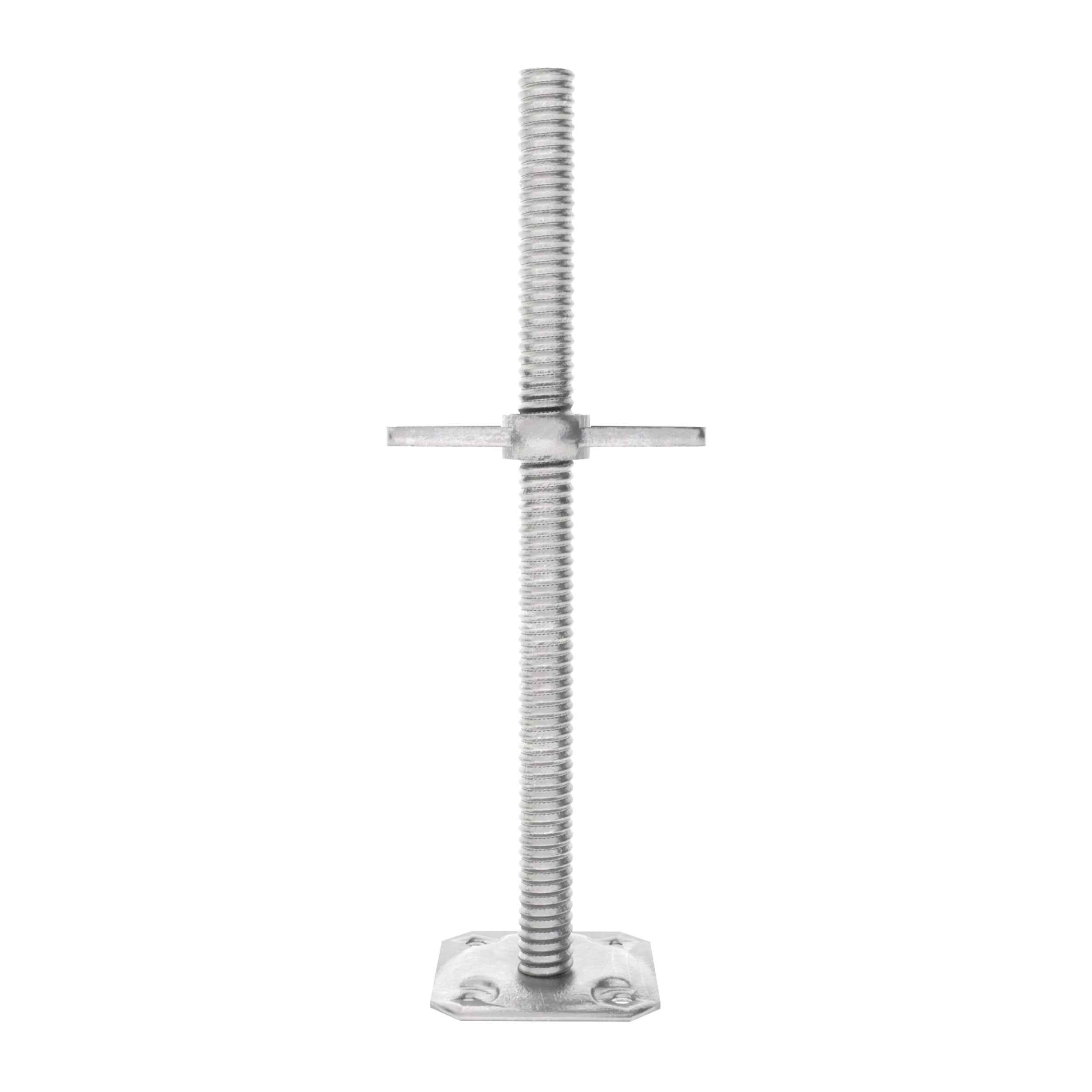
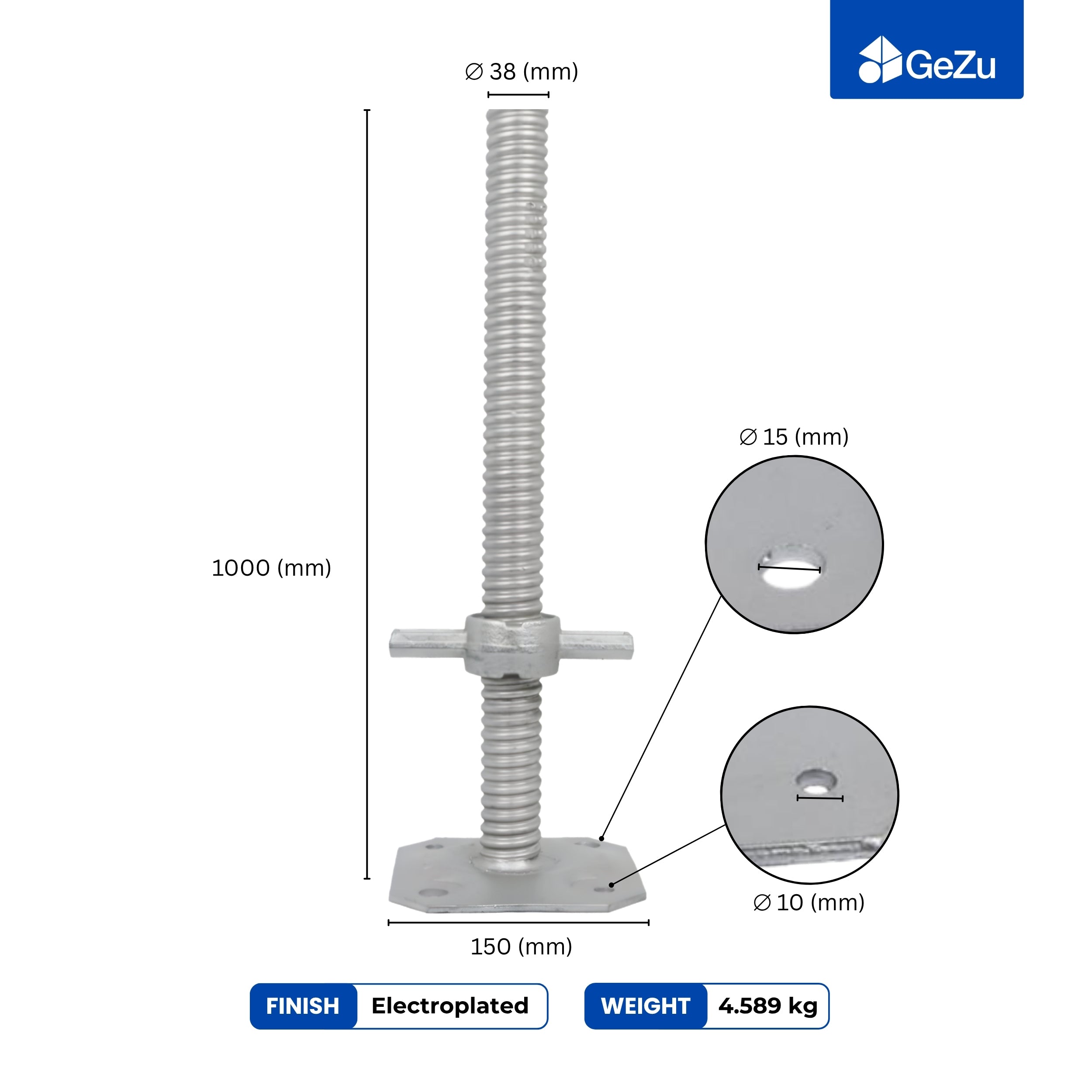
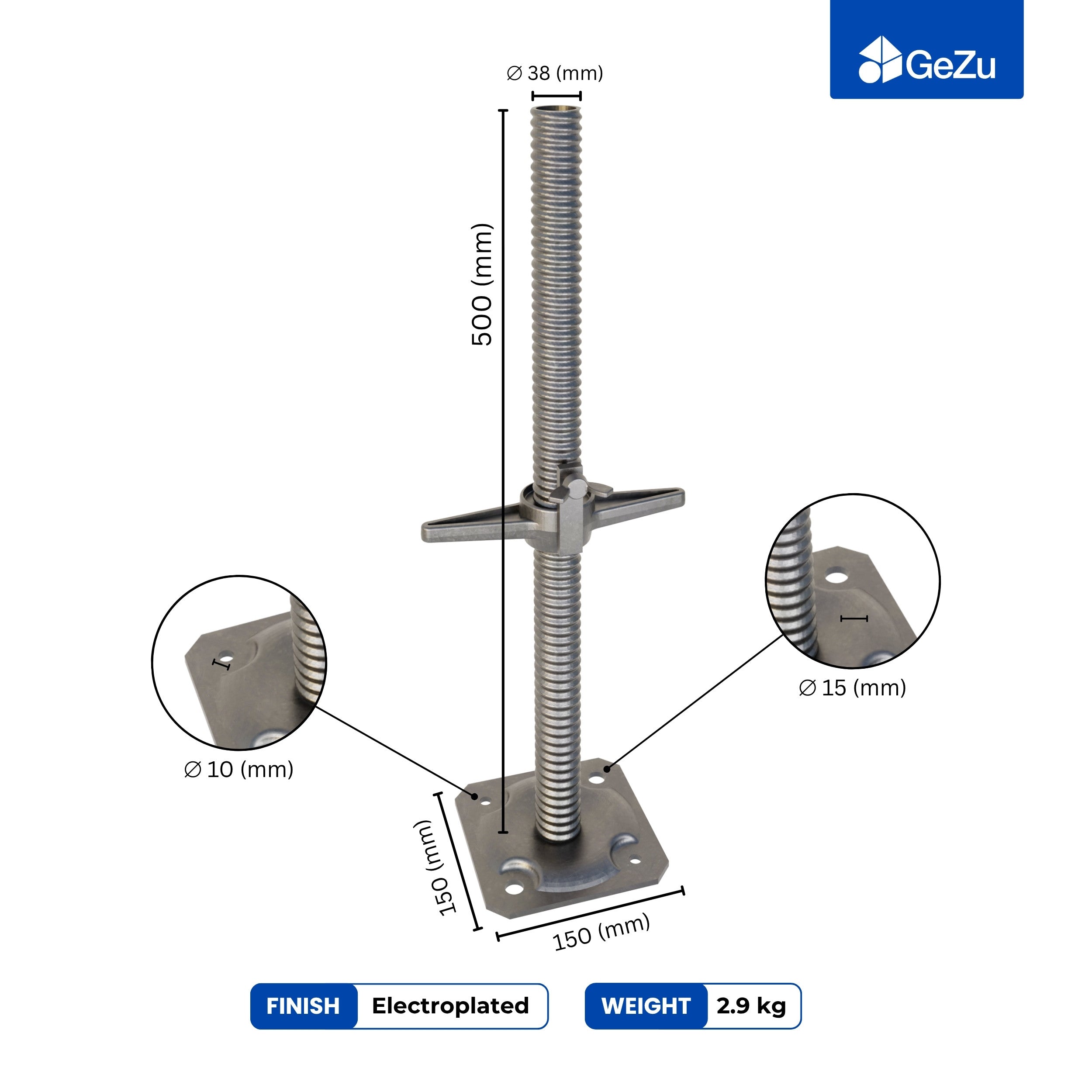
Solid scaffold base jack is the most commonly used jack in the construction industry. It is used for scaffold stability and height adjustment on uneven surfaces. Screw jack is a strong metal piece that sits under the scaffolding pole.
Solid base jacks are stronger and heavier and have greater load-bearing capacity than hollow base jacks. They feature a fully solid steel threaded stem rather than a hollow tube. This makes scaffold jacks heavier and stronger.

Solid screw jack has a flat base plate at the bottom for stability and a threaded rod running through the center and a jack nut that allows you to adjust the height. You turn the jack nut to adjust the height. It gives you about 12-24 inches of height adjustment. That's enough to compensate for most uneven ground.
Solid base jacks are valued for their strength and long-term durability. As there is no hollow space inside the shaft, solid stems resist compression, vibration and constant weight better than hollow alternatives.
They can support high loads without bending or deforming, making them well-suited for heavy-duty scaffolding systems, high-rise buildings, industrial scaffolding and construction projects.
|
Pros |
Cons |
|
Maximum strength and durability |
Heavier than other base jack types |
|
Longest service life of all jack types |
Slower to transport and install |
|
No weak points or connection failures |
Higher upfront cost |
|
Reliable for tall or heavily loaded scaffolds |
Limited flexibility on sloped ground |
|
Excellent stability in wind and weather |
Bulky to store and handle |
Hollow Base Jack
As the name suggests, a hollow base jack uses a hollow tube instead of a solid rod. Hollow screw jacks are lighter than solid base jacks and function in a similar way. The main difference is the hollow design, which reduces the weight by roughly half compared to solid jacks.

Load capacity is still strong but lower than that of solid jacks. Hollow base jacks are not meant for extreme loads or heavy industrial use. Despite being lighter, hollow jacks still handle serious loads.
You can use them across modern scaffolding systems. Ringlock, cuplock and modular scaffolds often rely on hollow jacks because they balance strength and efficiency. Besides, they are easier to handle, transport and install.
Hollow screw jacks are designed for use in light-duty scaffolding systems and adjustable support frameworks. With easy height adjustment and dependable stability, this type of base jack is perfect for medium height scaffolding, temporary platforms, construction support, renovation projects and maintenance operations.
|
Pros |
Cons |
|
Lightest weight for easy transport |
Lower load capacity than solid base jacks |
|
Faster setup and teardown times |
Can bend or deform if overloaded |
|
Lower cost than solid base jacks |
Often cheaper to replace than repair |
|
Adequate strength for most applications |
Higher failure rate than solid jacks |
Swivel Base Jack
Swivel base jack includes a base plate that can tilt. Swivel screw jacks add a tilting joint between the base plate and the vertical adjustment section. This joint allows the jack to pivot and adjust to angles, making it possible to level scaffolding on slopes and irregular terrain.

The swivel mechanism allows a 180 degree tilt in any direction, managing most ground irregularities without the need to dig or build up the surface underneath. The base plate remains flat against the ground while the upper section adjusts to meet the scaffolding frame at the correct angle.
This type of base jack is designed for flexibility, making adjustable scaffold base jacks incredibly useful on hillsides, rough terrain and areas where the ground naturally slopes. Swivel base jack adapts to the terrain, so you don’t need to level each scaffolding leg.
Construction on roofs, ramps and sloped driveways becomes much easier with swivel screw jacks. They are also valuable for scaffolding that needs to follow the contour of a building or structure that isn’t perfectly vertical.
|
Pros |
Cons |
|
Works on sloped and uneven terrain |
More expensive than other types |
|
Reduces uneven load transfer |
Lower load capacity than solid jacks |
|
Saves time on difficult sites |
Overkill for flat surface work |
|
180° tilt to settle on angled structures |
Requires careful installation and alignment |
U Jack (Top Jack)
U head jack, also called a top jack, is different from other base jacks. Instead of supporting the scaffold from the ground, it supports horizontal beams from above. U jack is used at the top of a scaffold or shoring system and has a U-shaped cradle designed to hold beams.

The U shaped head is the defining feature of this type of base jack. This curved channel holds beams and keeps them from sliding sideways. The threaded adjustment rod works the same as base jacks, allowing you to raise or lower the beam to get it level or at the desired working height.
The main benefit of a U jack is control. It helps you adjust and position loads accurately at the top of the scaffold. This is especially important in formwork, where even small height differences can affect structural integrity. They are commonly used for slab support, bridge formwork and heavy shoring work.
One thing to watch with U jacks is beam placement. The beam needs to sit properly in the U channel with enough contact area to prevent sliding. Improper placement is a common cause of accidents. The beam should rest in the center of the channel, not hanging off one edge.
Technically, U-screw jacks are not base jacks because they don't go at the bottom of the scaffolding. Instead, they install at the top of the scaffold frame to support horizontal planks. But they're included in most discussions about scaffolding jacks because they serve a similar adjustment function. U-jacks must be used with base jacks or other supports underneath.
|
Pros |
Cons |
|
Essential for overhead work |
Only functions at top of scaffolding |
|
Adjusts height without frame changes |
Requires base jacks underneath |
|
Prevents beams from sliding sideways |
Limited use outside formwork systems |
|
Greater adjustment range than base jacks |
Cannot be used as a base support |
Base Jack Types - Quick Comparison Table
|
Type |
Function |
Load Capacity |
Ground Flexibility |
Weight |
Use |
Best For |
|
Solid Base Jack |
Ground support |
Very high |
Low |
Heavy |
Heavy duty scaffolding |
Heavy duty exterior work |
|
Hollow Base Jack |
Ground support |
Medium to high |
Medium |
Light |
General construction |
Light duty interior work |
|
Swivel Base Jack |
Ground support |
Medium |
High |
Medium |
Uneven terrain |
Uneven ground, slopes, angled applications |
|
U Jack/Top Jack |
Top support |
High |
Not applicable |
Medium |
Formwork and shoring |
Overhead work, platform leveling |
Which Type of Base Jack Is Best?
There is no single best base jack for every job. The right choice depends on load, ground conditions and scaffold type. Scaffold solid screw jacks are best when strength is the priority. Heavy loads, tall scaffolds and long-term installations benefit from their durability.
Hollow base jacks suit most standard construction projects. They are easier to work with and cost-effective. For many contractors, they are the default option. Scaffolding swivel screw jacks are the best choice for uneven ground. When leveling the surface is not possible, swivel action improves safety and stability.
U jacks are essential for formwork and shoring. They are not interchangeable with base jacks but play a critical supporting role. The right choice comes down to matching the jack type to your specific needs.
Consider the terrain you work on, how often you move equipment, the loads you'll be supporting and your budget. Most contractors end up with a mix of different base jack types because different projects have different requirements.
Conclusion
Base jacks are small scaffolding components with a big impact. They control how weight moves from the scaffold to the ground. Choosing the right type of base jack improves safety, setup speed and structural stability.
Scaffold screw jacks keep scaffolding stable and level, allowing workers to focus on their actual work instead of worrying about the platform beneath them. Solid base jacks offer strength. Hollow base jacks offer efficiency. Swivel screw jacks provide flexibility. Last but not least, U jacks deliver precise support.
Each type exists for a reason. Understanding these differences helps avoid mistakes that lead to uneven platforms or overloaded components. In scaffolding, details matter. The base is where everything begins.
Beyond this, what matters most is using quality jacks. The cheapest jack that fails is infinitely more expensive than a high-quality one that lasts for years. Your crew’s safety depends on these small but critical components working properly every single time. So, always invest in high-quality, heavy-duty base jacks!