Base jacks to a level formwork platform: 2026

Levelling formwork on uneven ground by packing bearers with offcuts and rammed soil is slow, and it moves under load. Instead of guessing the levels, sit the timber bearers on adjustable base jacks and bring the whole platform to level with a spanner and a spirit level.
- Base jacks level formwork bearers on uneven ground without concrete.
- Wind every jack to the same thread exposure before fine-tuning.
- Adjust the platform at the jack nuts, not by re-seating plates.
- A swivel base jack keeps its plate flat on sloping ground.
- GeZu Impex stocks adjustable base jacks in trade quantities.
Before you start
- One base jack per support point from the formwork design, plus one or two spares.
- Sole plates — timber pads that spread each jack's load into the ground.
- A spirit level or laser level and a string line for cross-checks.
- The bearers themselves, cut to the platform plan.
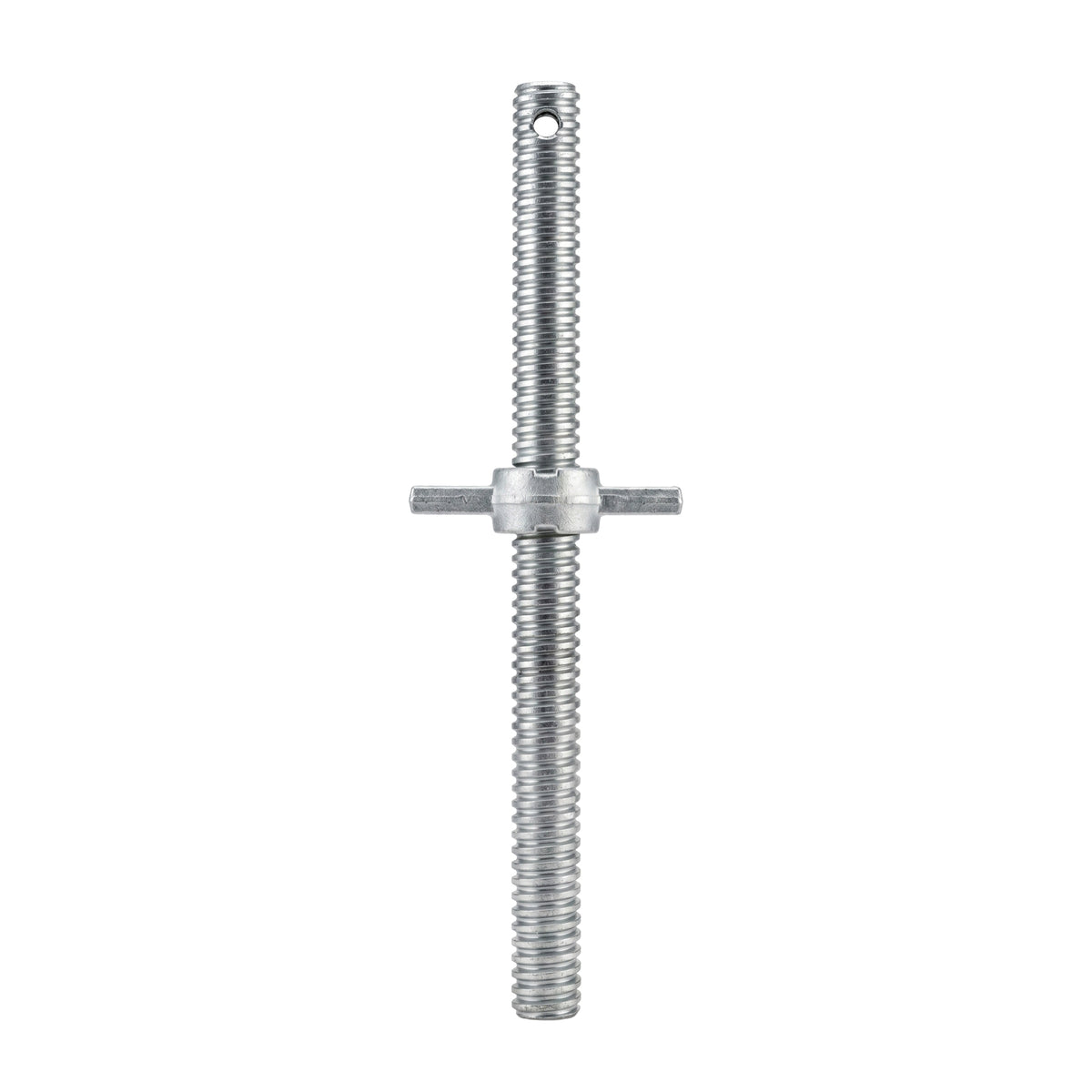
One gotcha bites most first-time setups: wind every jack down to roughly the same thread exposure before levelling anything. Fine adjustment then happens at the nuts — a jack that starts fully extended has nowhere left to go.
Setting out and positioning the base jacks
- Mark the support points from the formwork plan and set a sole plate flat at each one.
- Place a base jack on every plate, base plate flat and thread vertical.
- Bring each jack close to the target height with its adjusting nut.
- Stretch a string line along the row and true the jacks to it — end supports first, then the middle.
Expected result: a row of jacks sitting within a few millimetres of level before any timber goes on.
Levelling the platform with the jack nuts
- Lay the bearers across the jack plates.
- Find the highest point and bring its neighbours up to it with the adjusting nuts — levelling up beats levelling down.
- Check level along and across the bearers with the spirit level or laser.
- Check the diagonals too, then adjust until every reading agrees.
- Where the jack has one, tighten the lock nut so the setting holds under load — a wing-bolt jack makes this faster between adjustments.
Expected result: bearers that sit level and do not rock under hand pressure.
Loading the bearers and final checks
- Load the bearers gradually and watch each jack plate — any that starts to punch into the ground needs a wider sole plate.
- Re-check level once the first load is on; this is when a settled sole plate shows.
- Confirm every jack still carries load and no bearer has lifted off a plate.
Using swivel base jacks on sloping or stepped ground
A swivel base jack keeps its plate flat where the ground falls away or steps, so the plate bears on the full sole plate instead of one edge. Use it on sloping sites and anywhere the support points land at different levels.
Troubleshooting a base jack setup
- The thread is fully extended and the platform is still low. Add a thicker sole plate under the jack or step up to a longer jack rather than leaving the nut at its limit.
- A jack spins without lifting. The nut is binding — back it off, clean the thread and reload it gradually.
- The platform settles under load. The sole plate is punching into soft ground — widen or double the sole plates.
- A bearer rocks on its plates. One jack sits high — bring the neighbours up to it instead of dropping the high one.
What to do next
Once the platform works, standardise the kit: a wing-bolt base jack speeds up repeated adjustments, and GeZu Impex supplies base jacks in bundles sized for a full formwork run.


FAQ
What is a base jack used for?
A base jack carries and levels timber bearers or scaffold standards on uneven ground. The adjusting nut sets the height, so the platform comes to level without concrete or packing.
How do you level formwork with base jacks?
Set every jack to the same thread exposure, lay the bearers, then adjust the nuts starting from the highest point. Check level along, across and on the diagonals.
What goes under a base jack?
A sole plate — a timber pad that spreads the jack's load into the ground. On soft ground, widen or double the sole plates.
What is the difference between a base jack and a swivel base jack?
A swivel base jack's plate pivots, so it stays flat on sloping or stepped ground. A fixed base jack suits level footing.
Can a base jack be used on sloping ground?
Yes — a swivel base jack on a sole plate keeps its plate flat as the ground falls away. Set the sole plates level first, then adjust the threads.
How much adjustment does a base jack give?
As much as its threaded section allows — check the product specification for the exact adjustment range before ordering.
One last thing
Set the thread exposure before the first bearer goes on and the whole level-up takes minutes instead of an hour. Crews running the same formwork design through 2026 keep one jack spec in the kit for every support point — and GeZu Impex supplies adjustable base jacks from single units to bundles.