Door latches to a self-closing gate: complete 2026 workflow

A gate that stays open is a gate nobody trusts — around pets, children or a driveway, the latch has to close the loop every single time. Door latches are what turn a hung gate into a self-closing gate: an automatic latch that catches the gate as it swings shut, on hinges strong enough to carry the leaf for years. Build it in order — hinges first, latch second, closing force last — and the gate does its job without anyone remembering to push it. GeZu Impex supplies the galvanised gate hinges, the auto gate latch and the double gate latch the job needs.
- An auto gate latch catches the gate automatically as it swings past.
- Hinges carry the load first — size them to the gate leaf before buying the latch.
- A self-closing gate needs a closing force: spring hinges or a gate spring.
- Latch and strike line up on the same height, plumb posts, level rails.
- GeZu Impex stocks gate band hinges, T hinges, auto and double gate latches.
What makes a gate self-closing
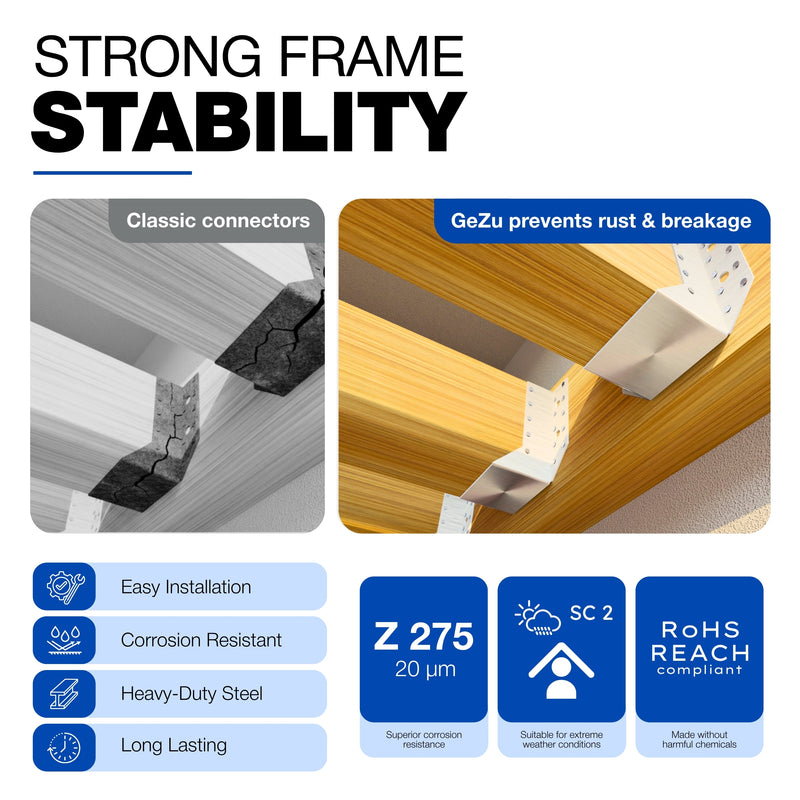
Three parts do the work. The hinges carry the leaf and decide how it swings; the closing force — spring-loaded hinges or a gate spring fitted between post and gate — pulls it back to the closed position; the automatic latch catches the gate as it arrives and holds it there. Remove any one of the three and the gate is just a gate. The latch is the part people buy first and the part that works last: an auto latch cannot close a gate that has no reason to swing shut, and no spring can help a gate hung on hinges that sag. Galvanised steel is the default for outdoor gates — it stands up to weather where bright hardware starts spotting within a season.
Before you start
- Gate hinges sized to the leaf — a gate band hinge for heavy garden and driveway gates, a T hinge for lighter side gates.
- The auto gate latch — the self-closing catch — plus its fixings.
- A gate spring or spring hinges if the gate must return on its own, not just latch when pushed.
- Drill, bits, spanners, tape measure, spirit level, pencil.
- Posts that are solid and plumb — no latch fixes a leaning gate frame.
One check saves the whole build: weigh up the leaf before ordering hinges. A light side gate on undersized hinges sags within a year, and a sagging gate drags its latch out of alignment — the complaint that starts most gate repairs.
Hang the gate
- Set the hinge height: top hinge near the top rail, bottom hinge near the bottom rail, both on the plumb line of the post.
- Fix the hinges to the gate and the post, then swing the leaf through its full travel — it must clear the ground and the stop without binding.
- Check with a level: gate rails level, posts plumb. Shims now, not after the latch is fitted.
Expected result: a gate that swings freely, settles closed under its own weight or with light help, and stands square in its opening.
Fit the auto gate latch
- Mount the latch body on the gate at a comfortable hand height — the same height on both sides so the gate opens from either direction.
- Mount the strike on the post, then close the gate by hand and check the catch engages on its own as the gate arrives — before any closing force is fitted.
- Adjust the strike up or down until the latch drops into the catch cleanly without a slam; a latch that needs a shove is misaligned, not broken.
Expected result: a gate that, pushed to within a few centimetres of closed, latches itself with a single click.
Add the closing force and test the cycle
- Fit the gate spring between post and gate frame — or swap to spring hinges — so the leaf is pulled back to the latch from any open position.
- Open the gate fully and let go. It should swing home and click shut without help.
- Repeat the cycle ten times from different openings. If it sticks short of the catch, the spring is too weak or the hinge is binding; if it bounces off, dampen the swing with a floor gate stopper or a softer spring rate.
Expected result: ten consecutive self-closing cycles ending in a clean latch, no second push.
Which latch for which gate
The auto gate latch is the default for a single-leaf gate that must always close — garden gates, pet gates, pool-adjacent gates. For a double gate that meets in the middle, a double gate throw-over latch drops across both leaves and locks them to each other, and for a gate that should stay open by choice rather than by accident, a cabin hook and eye holds it back deliberately. Match the hardware to the behaviour you want, not the other way round.
Troubleshooting a self-closing gate
- The gate will not latch on its own. Strike misaligned or no closing force — re-align the strike to the catch line and check the spring.
- The gate slams. Spring too strong or nothing damping the swing — reduce the spring rate or fit a stop that cushions the leaf.
- The latch rubs or sticks. The gate has sagged — re-shim the hinges level before touching the latch.
- Rust spots on the hardware. Bright or lightly coated fittings outdoors — switch to galvanised hinges and latches.
What to do next


FAQ
Can a normal gate latch be self-closing?
No — a standard latch only holds the gate once it arrives. Self-closing needs an automatic catch plus a closing force such as a gate spring or spring hinges.
How do I make my gate close automatically?
Fit spring-loaded hinges or a gate spring for the pull, and an auto gate latch that catches the leaf as it arrives. Test ten full open-close cycles before calling it done.
What height should a gate latch be fitted?
At a comfortable hand height — roughly waist height — on both sides of the gate so it opens from either direction.
Why does my self-closing gate only close halfway?
The closing force is too weak for the leaf, or the hinges are binding. Fit a stronger gate spring or re-shim the hinges before adjusting the latch.
Which hinge carries a heavy gate?
Band-and-gate hinges spread the load along the gate rail; match the band length to the leaf weight and keep both hinges on the post's plumb line.
Galvanised or stainless gate hardware?
Galvanised steel is the practical default for garden gates; stainless earns its price near the coast or where appearance matters most.
One last thing
Fit the hardware in order and test the cycle before you call the gate finished. A gate that self-closes ten times in a row on day one will keep doing it — and if it ever stops, the fault is almost always a sagged hinge, not the latch. GeZu Impex stocks the hinges, the latches and the galvanised fixings.