Scaffold Tube to Braced Platform: 2026 Workflow

Instead of guessing which coupler goes where and torquing bolts by feel, this workflow takes a scaffold tube from a bare length of 48.3 mm steel to a braced, decked working platform using standard BS EN 74 fittings — the same route a trained scaffolder follows on site in 2026.
- A braced scaffold tube platform needs four fitting types: base jacks, right angle couplers, swivel couplers and a toe board or ledger to finish the deck.
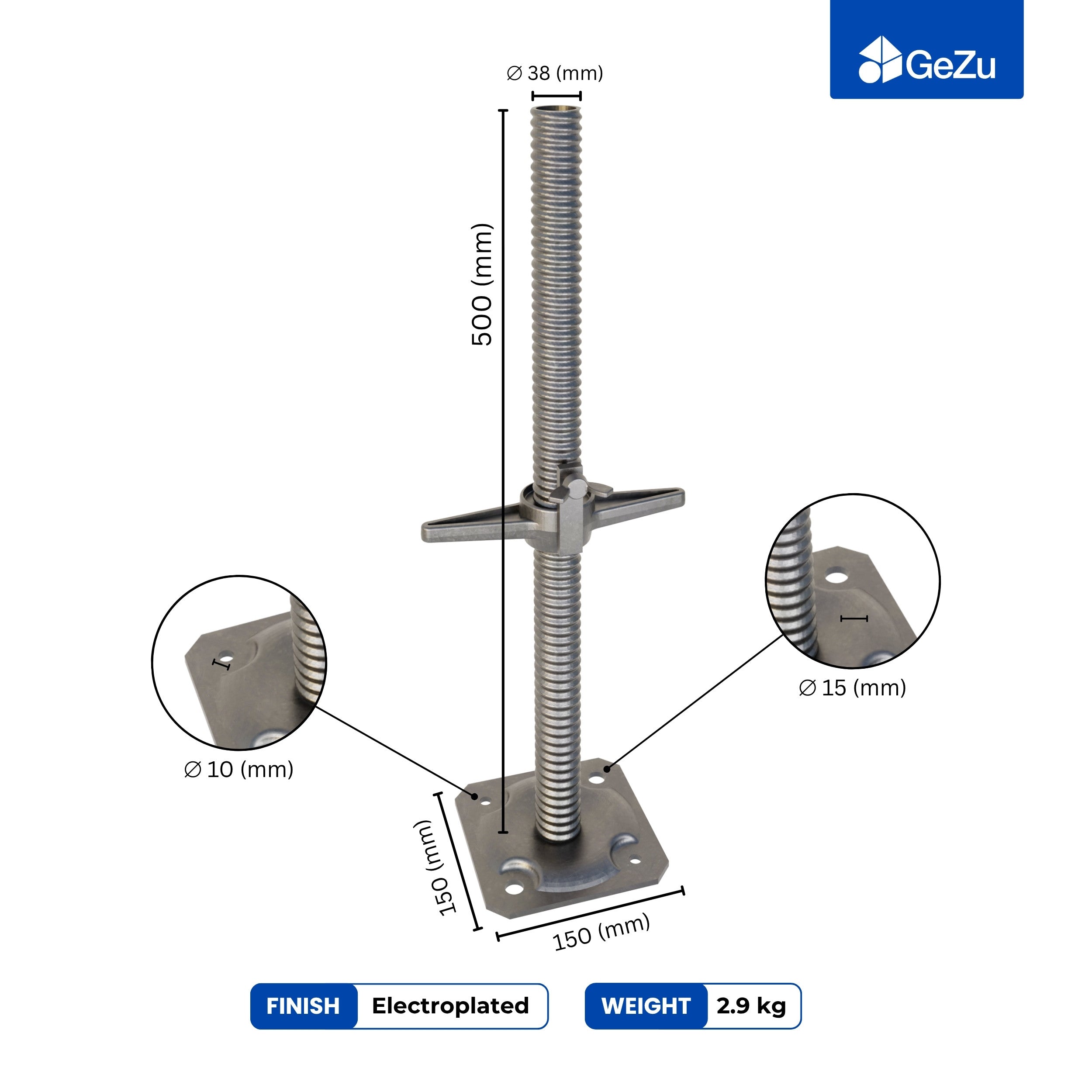
- Base jacks go down first and get levelled before a single tube is cut, not adjusted afterward.
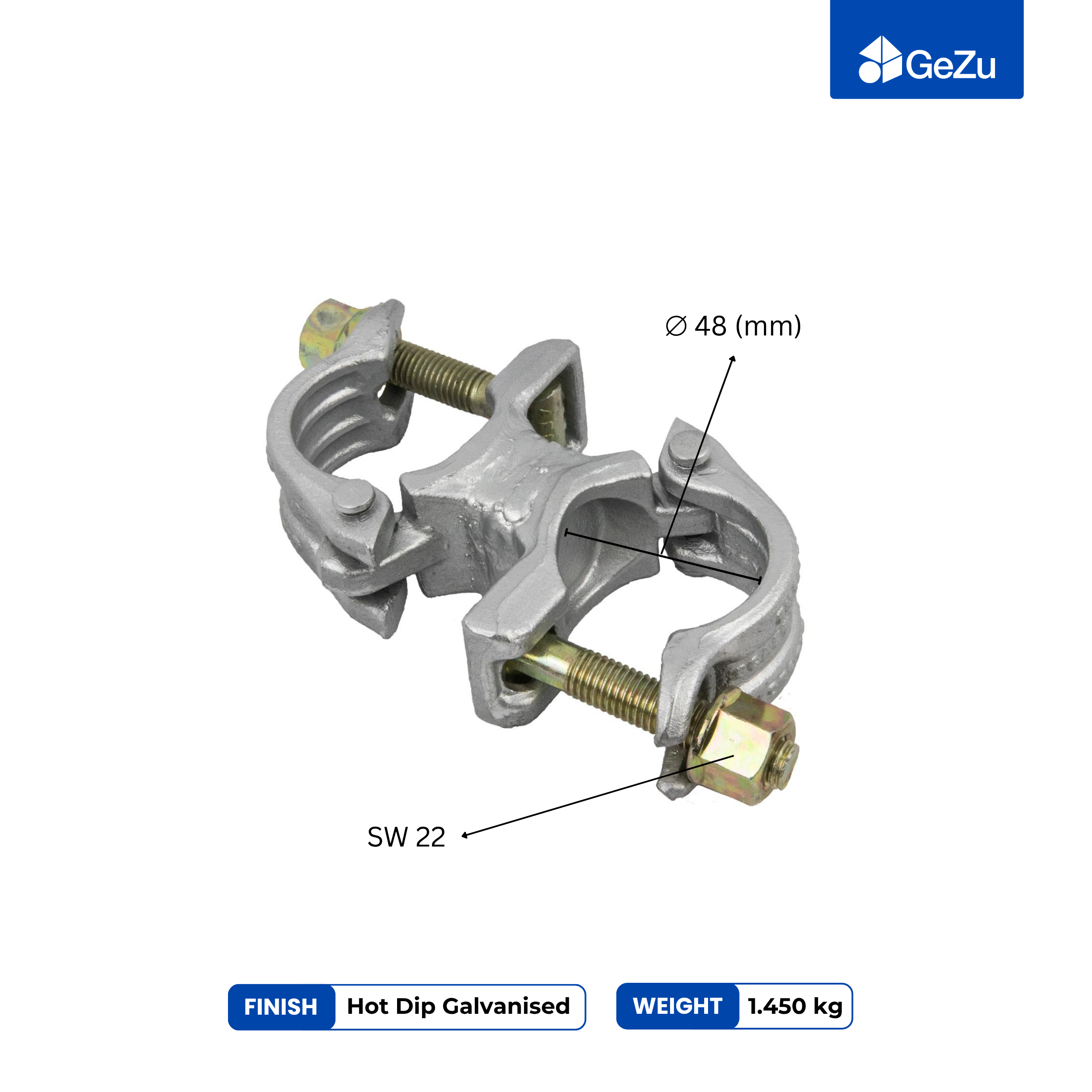
- Right angle couplers join tubes meeting at 90 degrees; swivel couplers handle any other angle, including diagonal braces.
- Every coupler needs its bolt torqued to spec — a loose swivel coupler is the single most common cause of platform sway.
- The same tube-and-coupler build doubles as a fixed workbench or a full elevated working platform depending on height and bracing.
Before you start
- Materials: 48.3 mm galvanised scaffold tube cut to length, right angle couplers for every 90-degree joint, swivel couplers for diagonal braces, base jacks or base plates for each leg, and scaffold boards or timber planking sized to the frame.
- Tools: a 19 mm or 22 mm spanner (coupler bolts vary by manufacturer), a spirit level, a tape measure, and a torque wrench if you want to check bolts against a published spec rather than "tight by feel".
- The gotcha: couplers tighten in a specific order. Set every joint hand-tight first, square and level the whole frame, then go back and torque every bolt fully. Torquing joints one at a time as you build locks in any small misalignment permanently — the classic reason a finished frame sits half a degree out of square.
Set up your base and legs
- Mark out the footprint of the platform on the ground and stand a tube upright at each corner.
- Fit a base jack or base plate to the foot of each leg tube and set it on solid, level ground — never on soil that can compress under load.
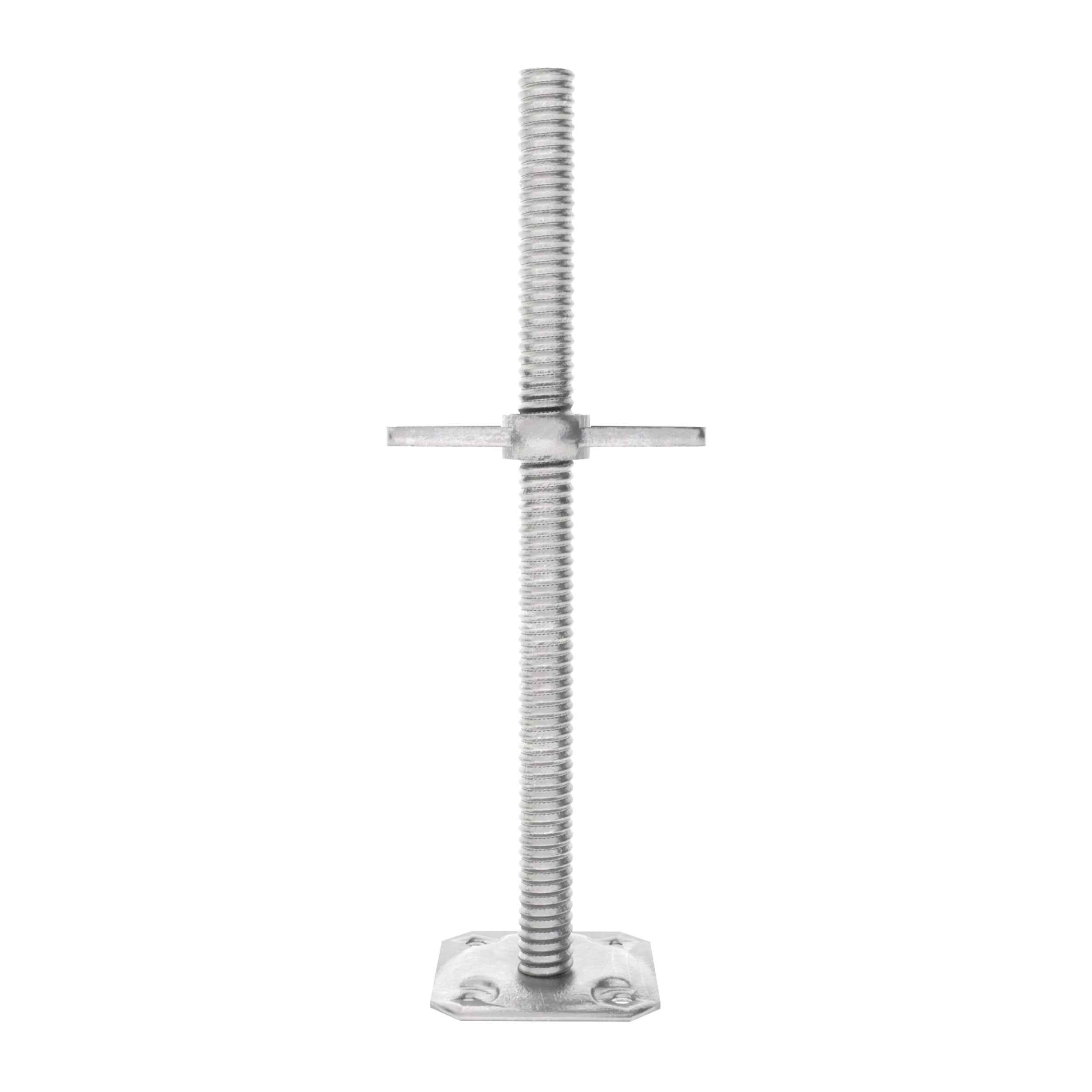
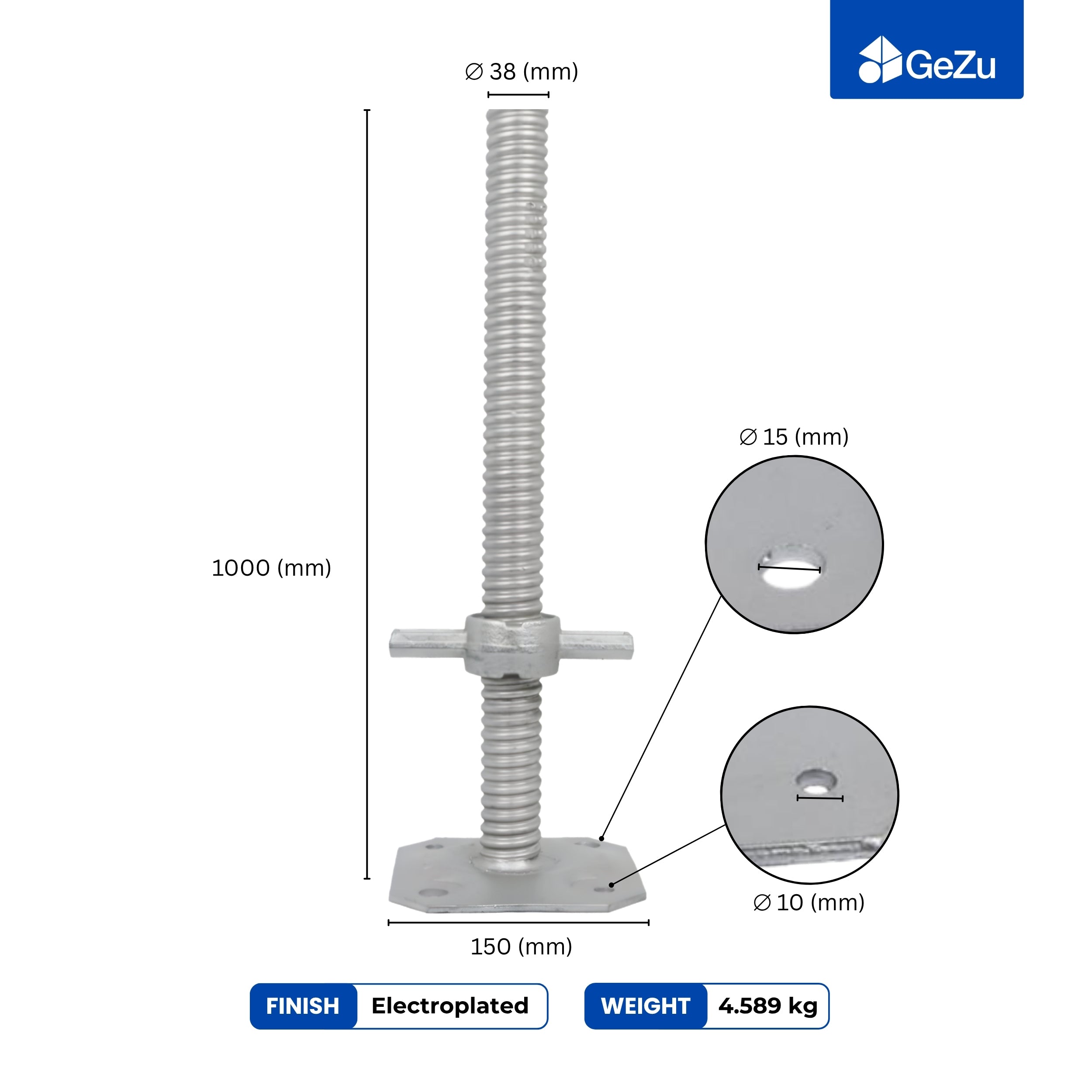
- Use a spirit level on each leg before anything else connects to it. A base jack's threaded spindle lets you fine-tune height without re-cutting tube, which is the entire reason to use one instead of a fixed base plate on uneven ground.
- Expected result: four (or more) vertical tubes, all plumb, all at the same finished height, resting on load-bearing feet.
Fit the ledgers and transoms
- Measure and cut horizontal ledger tubes to span between the legs at the height you want the platform surface.
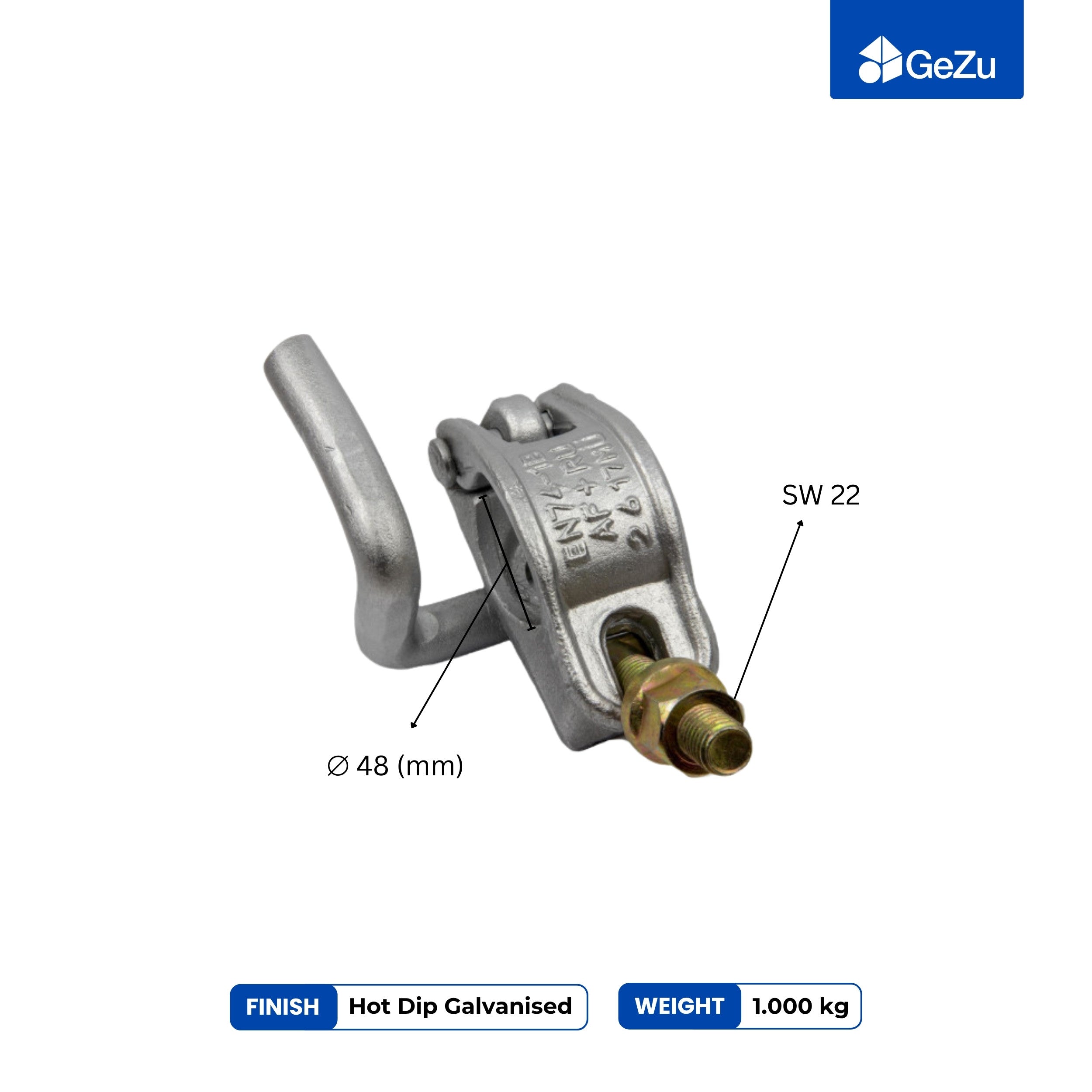
- Connect each ledger to its leg with a right angle coupler (also called a double coupler) — this is the load-bearing joint in the whole structure, so it takes the fitting rated for structural connections, not a lighter hook or half coupler.
- Add transoms (the shorter horizontal tubes that run across, supporting the boards) using right angle couplers where they meet the ledgers.
- Expected result: a rectangular horizontal frame at deck height, square in both directions, with every structural joint on a right angle coupler.
Brace the frame
- Run a diagonal tube from the top of one leg to the base of the adjacent leg on at least one face of the structure — two faces for anything load-bearing or over about a metre high.
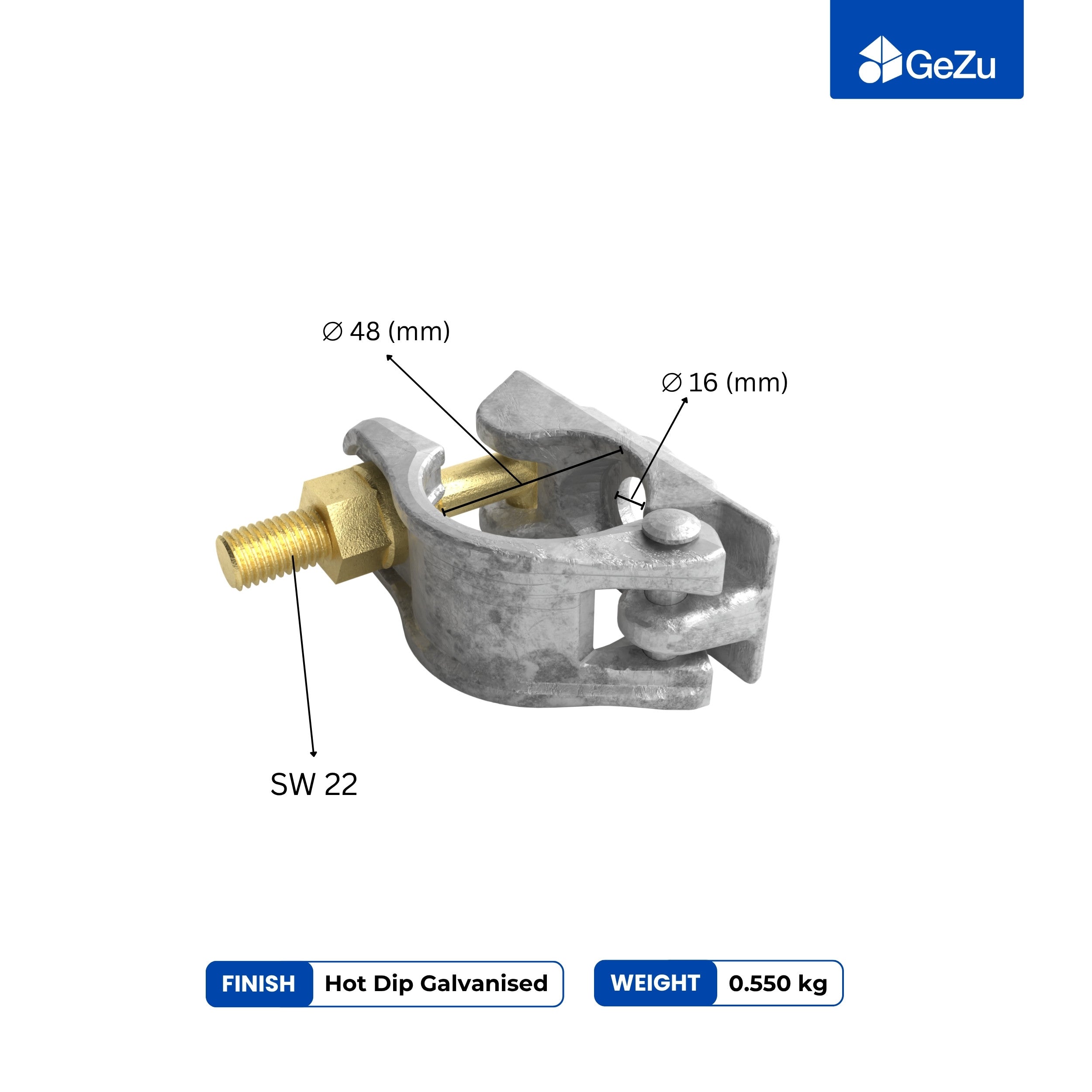
- Connect each end of the diagonal with a swivel coupler, since a diagonal brace meets the vertical and horizontal tubes at an angle other than 90 degrees.
- Tighten every coupler bolt to the fitting manufacturer's torque spec once the whole frame is square and level — this is the step that turns a wobbly rectangle into a rigid structure.
- Expected result: no lateral sway when you push the top of the frame by hand. If it moves, a swivel coupler bolt is under-torqued or a diagonal is missing.
Deck and guard the platform
- Lay scaffold boards or timber planks across the transoms, fully supported at both ends with no overhang beyond the last transom.
- Butt boards tightly together and check nothing rocks underfoot before loading the platform.
- For anything above working-at-height thresholds, add a top guardrail tube fixed with right angle couplers and a mid-rail below it.
- Expected result: a flat, stable deck that takes a full standing load without flex at the board joints.
Fixed workbench vs elevated working platform
The same four-fitting method builds two different things depending on scale. A fixed workbench — legs at worktop height, two or three boards across, braced on one face — needs only base jacks, right angle couplers and a single diagonal brace per side; it is the fastest build and the one most DIY users need. A full elevated working platform at height needs bracing on every face, guardrails, and toe boards, and falls under formal scaffolding and work-at-height requirements rather than DIY practice. Build the workbench version first if you are new to tube and coupler — the coupler and torque discipline is identical, just the consequences of getting it wrong are smaller.


Troubleshooting
- The frame sways under load after assembly. A swivel coupler on a diagonal brace is under-torqued, or a brace is missing from a second face. Recheck every bolt with a spanner before adding a diagonal on the opposite side.
- Boards rock at the joints. A transom is not sitting level with its neighbours — check that every right angle coupler on the transom line was fitted at the same height, not eyeballed tube by tube.
- A leg won't sit flush on the ground. Uneven ground under a fixed base plate telegraphs straight into the frame. Swap that leg to a base jack and level it with the threaded spindle instead of packing the plate with offcuts.
- Couplers feel loose after a few weeks of use. Vibration and load cycling can back off a bolt that was torqued once and never rechecked. A seasonal recheck of every structural coupler is standard scaffolding maintenance, not overkill.
- The structure is square but still shifts diagonally. This means bracing exists on one face only. Add a matching diagonal on the opposite face — a single brace resists sway in one direction, not both.
Customize your workflow
Once the base build is solid, the same coupler logic extends to bigger jobs: read which tube clamp fitting size you actually need before ordering for a larger frame, or see how the identical right-angle-and-swivel combination builds a handrail in under 30 minutes using the same two coupler types. For platforms that need to meet formal site standards, EN 74 and BS 1139 explained covers what those ratings mean for the couplers you buy.
FAQ
What coupler do I need to join two scaffold tubes at 90 degrees?
A right angle coupler, also sold as a double coupler, is rated for structural 90-degree joints in 2026 tube-and-fitting systems. It is the fitting used at every ledger-to-leg and transom-to-ledger connection.
What coupler works for a diagonal brace?
A swivel coupler, because it pivots to match any angle other than 90 degrees. Every diagonal brace on a tube-and-coupler frame uses swivel couplers at both ends.
Do I need a base jack or will a fixed base plate work?
A base jack's threaded spindle lets you level each leg independently on uneven ground; a fixed base plate only works on a surface that is already flat. Use base jacks whenever the ground is not guaranteed level.
How tight should scaffold coupler bolts be?
Torqued to the fitting manufacturer's published spec, checked with a spanner or torque wrench once the whole frame is square. Hand-tight during assembly, full torque only after the frame is aligned.
Can I build a workbench with the same fittings as a scaffolding platform?
Yes. A fixed workbench at worktop height uses the same base jacks, right angle couplers and swivel couplers as a full working platform, just at a smaller scale with lighter bracing requirements.
How often should I recheck coupler bolts on a standing structure?
A seasonal recheck of every structural coupler is standard practice in 2026, since load cycling and vibration can back off a bolt that was torqued correctly at build time.
One last thing
The order of operations matters more than the fittings themselves: hand-tighten every coupler across the whole frame before fully torquing any single one. Builders who torque joint-by-joint as they go lock a small misalignment into the structure permanently — the fix at that point is to loosen everything and start the tightening pass again, not to force the last few joints square.