Pipe Fittings for Greenhouse Frames Without Welding 2026

You can build a complete greenhouse frame from galvanised pipe fittings and steel tube without touching a welder. Every joint is a bolt-on coupler clamped around standard 48 mm tube, so the frame goes up with a spanner and a hex key, and any joint can be loosened and corrected long after the frame is standing. For most DIY growers in 2026, that mix of strength and adjustability is exactly why bolted frames have replaced welded ones in the home workshop.
- Yes — greenhouse frames assemble cleanly from galvanised tube and bolt-on couplers, with no welding.
- Right angle couplers make the fixed corners; swivel couplers handle roof pitches and bracing.
- Zinc-plated fittings corrode quickly in humid greenhouses — choose hot-dip galvanised.
- Plan the frame around one tube diameter, commonly 48 mm, so every fitting matches.
- A bolted joint can be squared up or extended later; a welded one cannot.
Why this matters
A greenhouse frame has to survive things an indoor workbench never sees: wind loading on the gable ends, the weight of glazing panels and years of trapped humidity. Welding solves all of that, but it needs equipment, skill and a workshop where sparks are welcome. Bolt-on fittings solve the same problems with hardware you can order and assemble on the patio — and if a corner comes out of square, you loosen the bolts and square it up.
Can pipe fittings be used for greenhouse frames without welding?
Yes, and each fitting type maps directly onto a joint the frame needs. The core set is small:
| Fitting | Where it goes on a greenhouse frame | What it joins |
|---|---|---|
| Right angle coupler | Every fixed 90° corner: uprights to base rails, side rails to posts | Two tubes at a locked right angle |
| Swivel coupler | The pitched roof and diagonal bracing, where the angle is never exactly 90° | Two tubes at any angle you set |
| Parallel coupler | Extending a rail that is shorter than the run | Two tubes end to end, in line |
| Half coupler | Attaching a purlin or a brace flat against a main frame member | A tube against the face of another tube |
Right angle couplers carry the structure. They clamp two tubes at exactly 90° with two hex bolts, and because the clamp grips the tube rather than piercing it, the tube stays full-strength along its whole length.
Swivel couplers do everything the right angle cannot. A greenhouse roof slopes, so the joint between the eaves rail and the rafter is an angle unique to your design. A swivel fitting rotates freely until you tighten it, which means it also takes the diagonal bracing that stops the frame racking sideways.
Choosing fittings that survive a greenhouse
The inside of a greenhouse is a corrosion chamber: warm, humid air every day of the year. This is the one place where the finish on your fittings matters more than anywhere else in the garden.
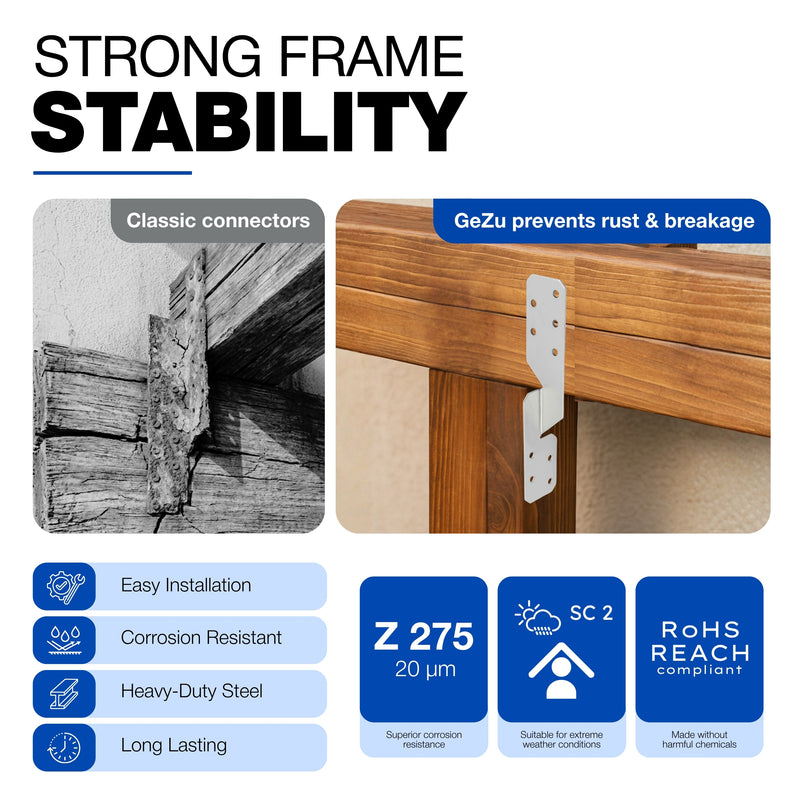
- Hot-dip galvanised fittings are dipped in molten zinc, leaving a thick coating bonded to the steel. This is the standard choice for greenhouse frames and any structure that stays outdoors.
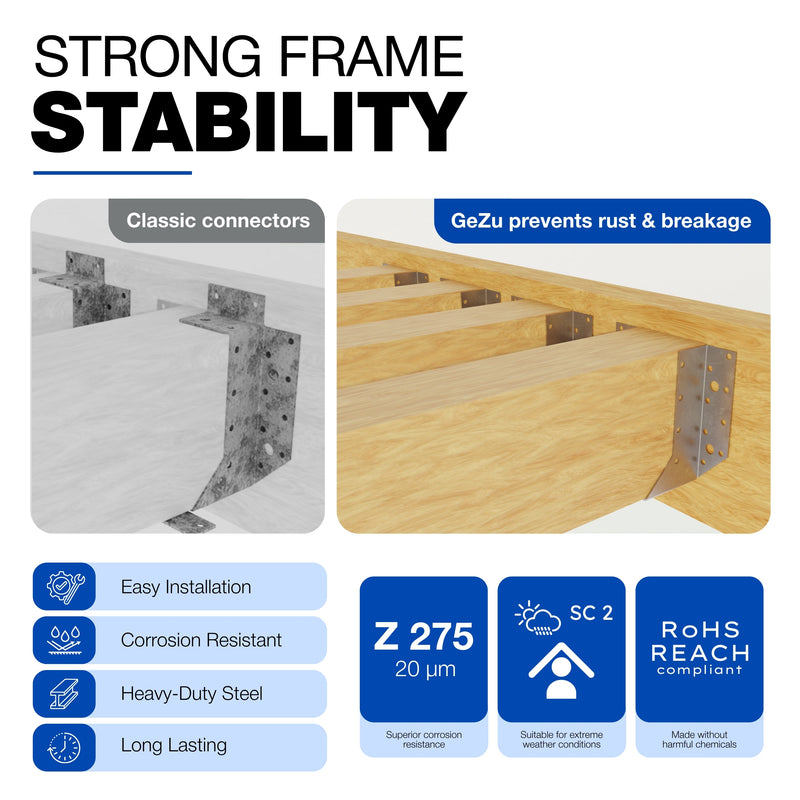
- Zinc-plated fittings carry only a thin electro-plated layer. They are fine for a dry indoor build, but in greenhouse humidity the plating breaks down first at the bolt holes, and rust creeps in from there.
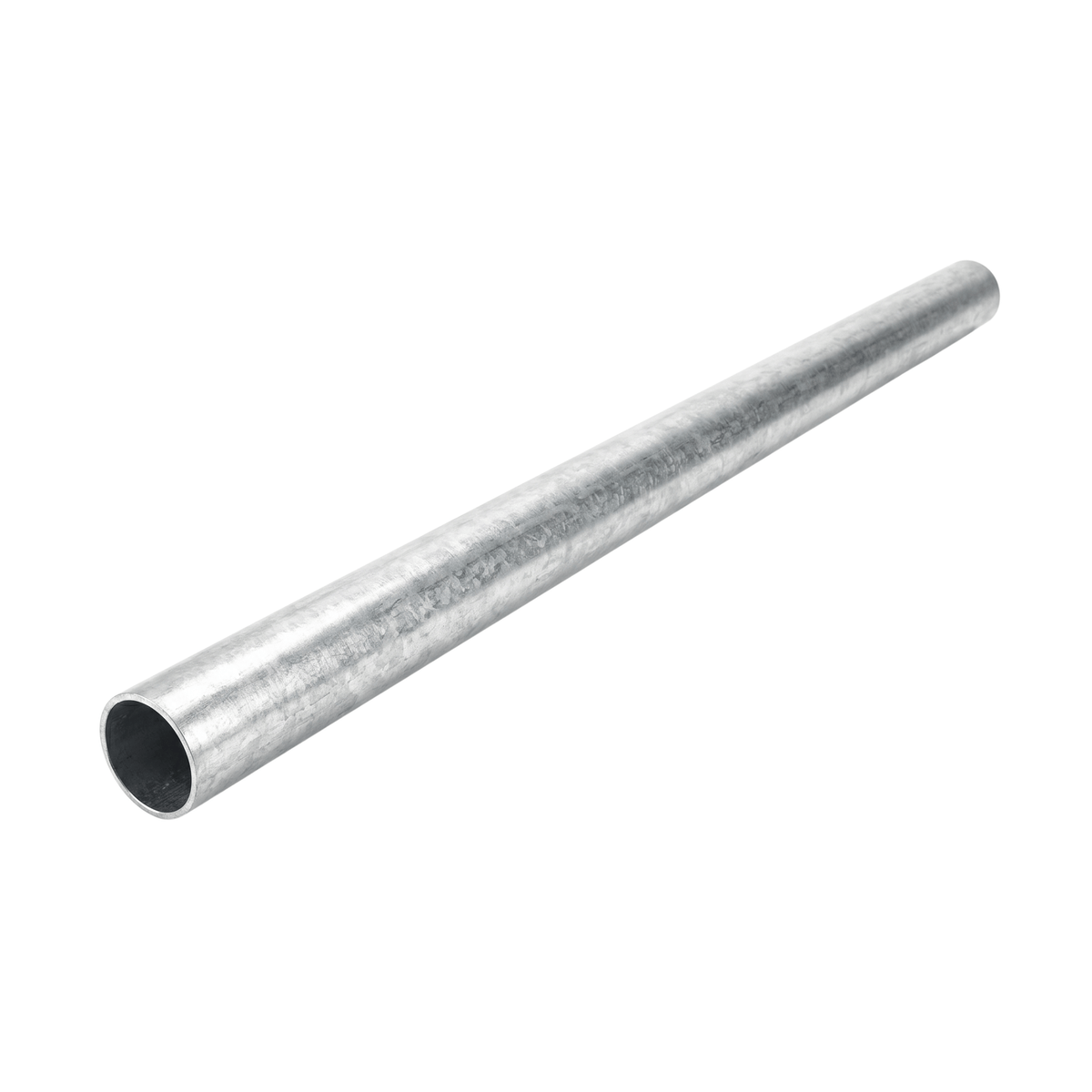
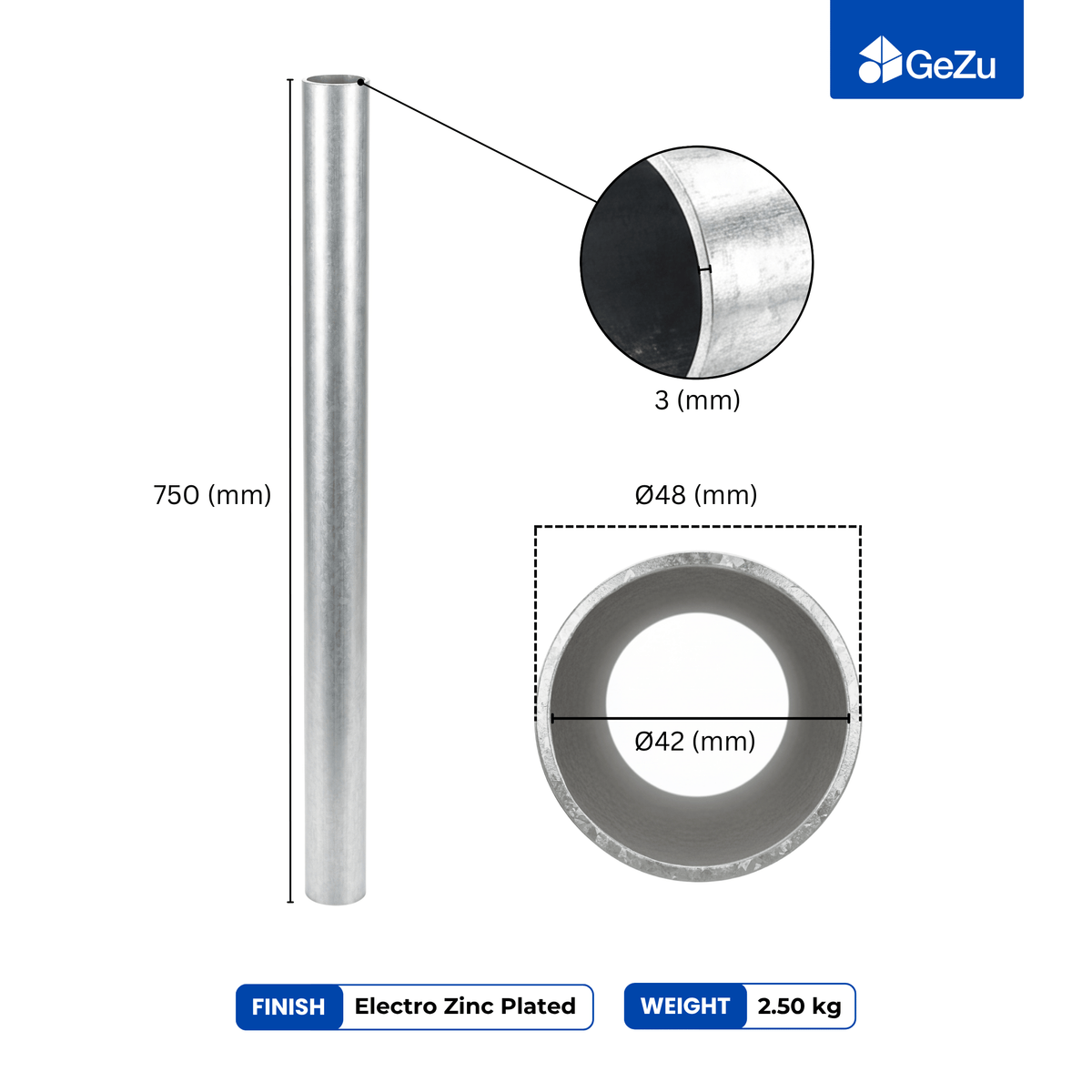
- Match the tube. Scaffolding fittings are made for 48 mm outside-diameter tube. Buying one tube size and one fitting family keeps every joint snug.


What the frame has to stand up to
A greenhouse is a light structure, but it is not a light-duty structure. Three forces decide whether the frame lasts:
- Wind. The gable ends act like sails. Diagonal braces, joined with swivel couplers from corner to corner, are what keep a rectangular frame rectangular when the wind pushes on it.
- Glazing weight. Glass or polycarbonate adds permanent load to every roof joint. Tighten every coupler fully and re-check them after the first month, when everything has settled.
- Humidity. Trapped moisture attacks thin plating long before it attacks a hot-dip coating. This is why the finish matters more here than on a fence.
Assembling the frame in six steps
- Draw the frame on paper first with every tube length and every joint marked as right angle, swivel or parallel. Cutting once beats cutting twice.
- Lay the base rails out square on level ground and join them with right angle couplers at each corner. Check the diagonals — equal diagonals mean a square base.
- Stand the uprights into the base corners and clamp them with right angle couplers. Brace two adjacent sides temporarily so the frame holds itself.
- Add the roof rails and rafters with swivel couplers, setting each pitch by eye against the opposite side before tightening.
- Fit diagonal bracing across the back wall and both gables with swivel couplers, then walk around the frame and tighten every bolt properly.
- Fix the base down to your foundation or ground anchors, then square the whole frame one last time before the glazing goes on.
Why greenhouse frames vary
No two bolted greenhouse frames are built from the same shopping list, because:
- Size and shape. A 2 × 3 m lean-to needs fewer joint types than a freestanding 3 × 6 m ridge house.
- Glazing choice. Polycarbonate sheets weigh far less than glass, which changes how much bracing the roof needs.
- Wind exposure. An allotment in open country needs more bracing than a courtyard garden.
- Base type. A timber or concrete base changes how the frame anchors and whether the lowest rail is needed at all.
- Tube source. Scaffolding-grade 48 mm tube is the common choice because the fittings are cheap and everywhere.
Can a bolted frame really match a welded one?
For a greenhouse, yes. A weld is stronger than a clamp at the joint itself, but a greenhouse frame is not loaded anywhere near the limit of either. What the bolted frame wins on is correction and extension: you can re-square a warped frame in an afternoon, add a door frame next season, and strip the whole thing for a house move. A welded frame would need cutting for any of those.
What size tube should a DIY greenhouse frame use?
Standard 48 mm scaffolding tube is the practical answer in 2026, because every right angle, swivel and parallel coupler sold for scaffolding is sized for it. It is strong enough for glazing loads in typical garden sizes and cheap enough to over-specify the bracing.
Do pipe fittings rust inside a greenhouse?
Zinc-plated fittings can start showing rust within a season or two of greenhouse humidity, usually around the bolt holes. Hot-dip galvanised fittings resist it for years because the zinc coating is far thicker and protects the steel even where it is scratched.
FAQ
Can you build a greenhouse frame without welding?
Yes. Galvanised right angle, swivel and parallel couplers clamp standard 48 mm tube into any greenhouse shape, and the whole frame assembles with hand tools.
Which pipe fittings do I need for a greenhouse frame?
Right angle couplers for the fixed corners, swivel couplers for the roof pitch and bracing, and parallel couplers to extend rails. A half coupler helps mount purlins flat against the frame.
Is a welded greenhouse frame stronger than a bolted one?
The weld itself is stronger than a clamp, but for greenhouse loads both are far stronger than the forces on them. The bolted frame wins on adjustability and repair.
Do I need galvanised fittings for a greenhouse?
Yes. Greenhouse humidity destroys thin zinc plating quickly, while hot-dip galvanised fittings are the standard for outdoor steel frames.
What tube size fits standard greenhouse pipe fittings?
Scaffolding fittings are made for 48 mm outside-diameter tube, which is the easiest size to source in 2026.
How do I stop a bolted greenhouse frame from racking?
Add diagonal braces across the back wall and gables using swivel couplers. A braced rectangle resists sideways wind load far better than an unbraced one.
One last thing
Tighten every coupler once after the frame has been standing a month and again after the first storm. Bolts settle into the tube coating over the first weeks, and a two-minute re-torque in 2026 is what keeps a greenhouse square for the decade after it.