Best pipe fittings for handrail builds in 2026

For a steel tube handrail built in 2026, the fitting matters as much as the tube: every elbow, tee and wall bracket decides whether the rail stays tight after thousands of grips. Best pipe fitting for handrails overall: the Wall Mount Handrail Bracket from GeZu Impex, for anchoring a handrail straight into masonry. Best for direction changes: the 90° elbow tube clamp. Best for a T junction: the 3 way mid rail corner tube clamp, on 27 mm tube.
- The GeZu Impex wall mount handrail bracket is the best pipe fitting for handrails fixed to a wall in 2026.
- The 90° elbow tube clamp handles handrail corners without mitre cuts or welding.
- The single lugged bracket closes the end of a handrail cleanly on a post or pillar.
- 3 way mid rail corners and two socket crosses structure straight deck railing runs.
- For scaffolding guardrails, swivel couplers for 48.3 mm tube take over.
Why this choice matters
A handrail takes load from every direction: a vertical lean when someone rests on it, lateral pull along a staircase, knocks at the ends. A badly chosen fitting, or one tightened with the wrong fixings, works loose within months — and always exactly where the hand grabs it. On a staircase this stops being a comfort question and becomes a safety one: a rail that pivots holds nobody.
In 2026, most handrails built by tradespeople and DIYers run on round steel tube. Two fitting families coexist: set-screw tube fittings for 27 mm and 33.7 mm tube, and scaffolding couplers for 48.3 mm scaffold tube. The first family covers handrails, balustrades and garden structures; the second covers demountable construction-site guardrails. Mixing the two families is the most common ordering mistake — the diameters simply do not match.
What makes a good pipe fitting for handrails
- Tube diameter: 27 mm for most handrails, 33.7 mm for wider runs, 48.3 mm for scaffolding tube.
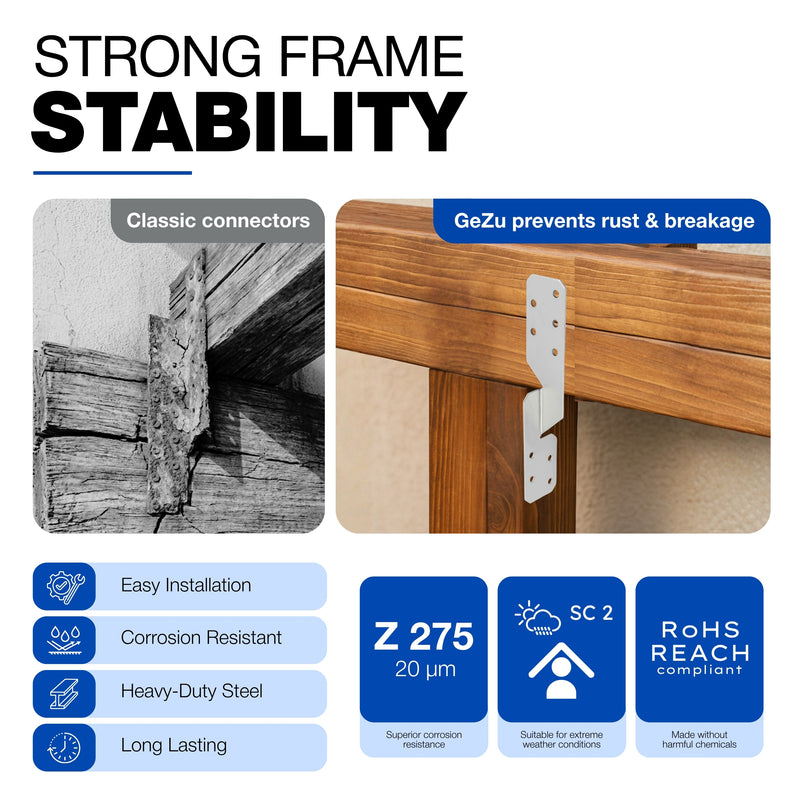
- Finish: galvanised steel outdoors; black powder-coated where the fitting stays visible on a façade or indoors.
- Joint type: an elbow for a turn, a tee for a T junction, a cross for a crossing, a lug bracket for an end fixing.
- Set screw access: the through set screw must stay reachable once the fitting is installed, so the joint can be re-tightened after the first season.
- Rigidity: a handrail fitting works in bending; casting thickness counts for more than price.
- Compliance: a guardrail on a terrace or mezzanine is built at 1 m height, with a continuous handrail within direct reach.
Pipe fittings for handrails in 2026: at a glance
| Fitting | Best for | Standout feature | Key limitation |
|---|---|---|---|
| Wall mount handrail bracket | Handrail fixed to a wall | Anchors straight into masonry | Takes no angle |
| 90° elbow tube clamp | Corners and direction changes | Weld-free right-angle joint | One fitting per turn |
| Single lugged bracket | End of a handrail run | Discreet end-of-tube fixing | Small clamping surface |
| 3 way mid rail corner | T junctions on a post | Three directions in one piece | Bulkier than a plain tee |
| Scaffolding swivel coupler | Construction-site guardrails | Free angle between two tubes | 48.3 mm tube only |
1. Wall mount handrail bracket: the best fitting for a wall-fixed handrail
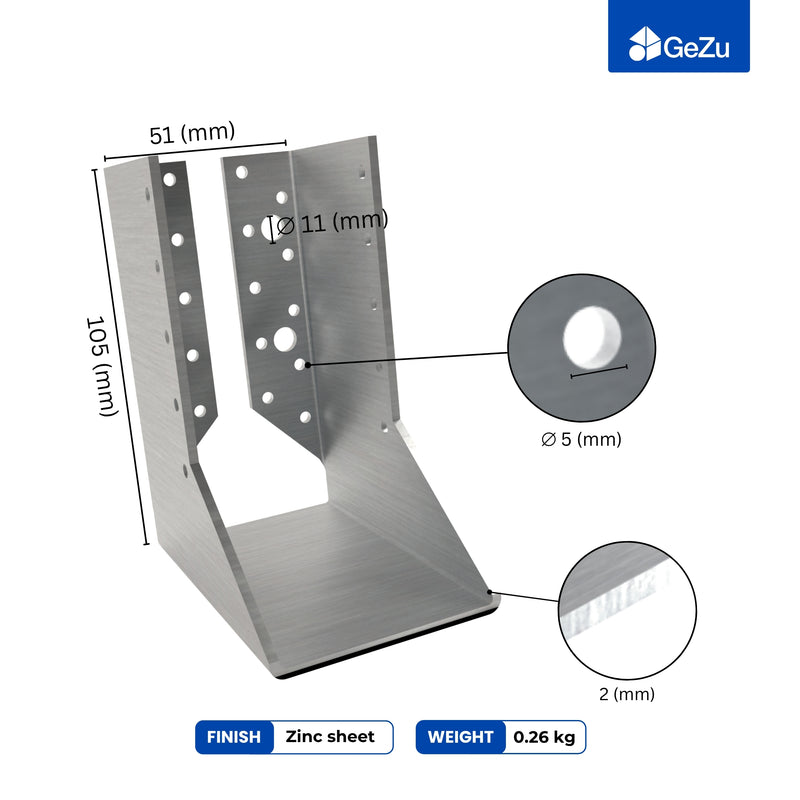
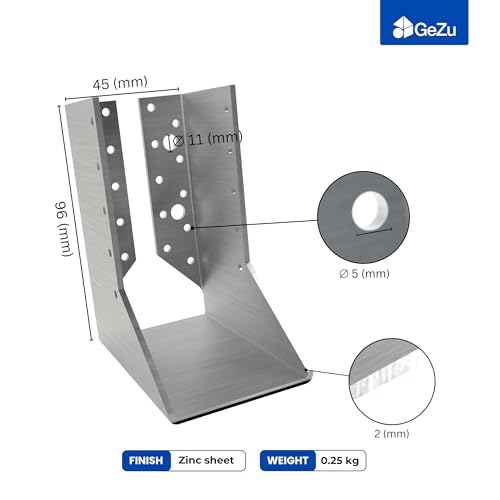
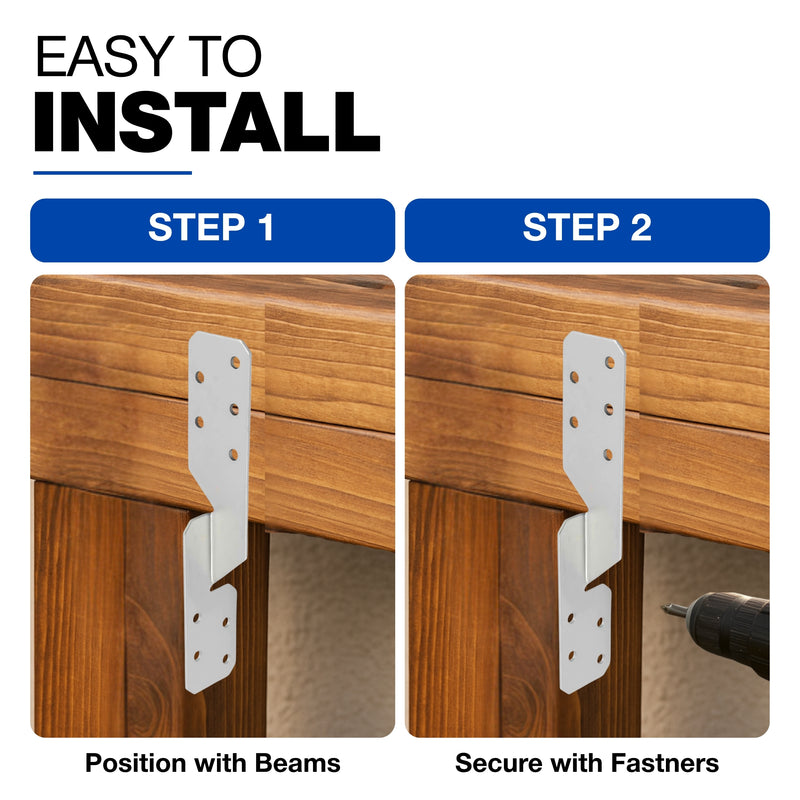
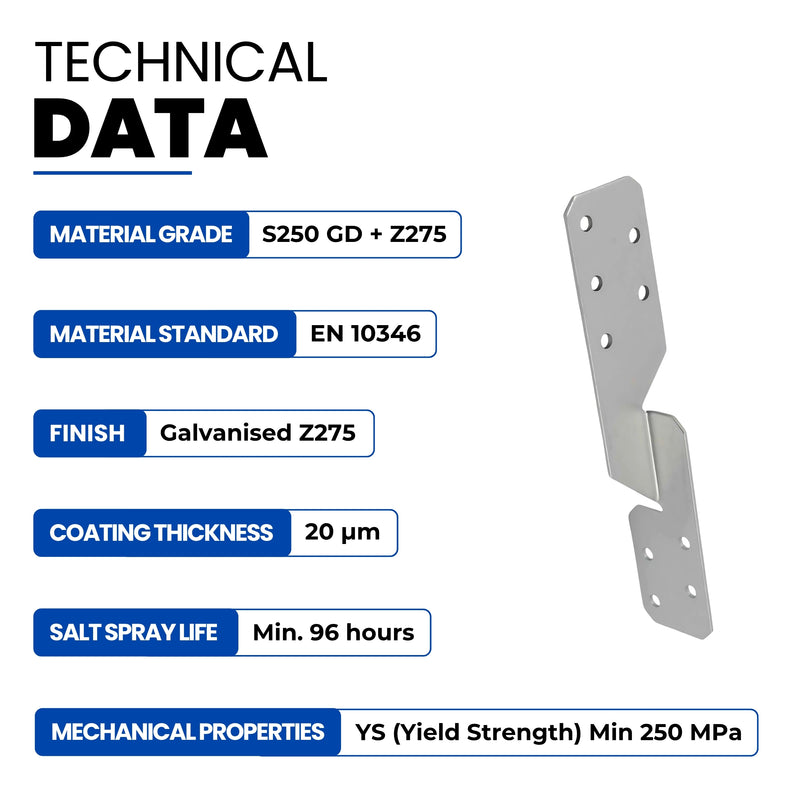
The wall mount handrail bracket receives the handrail tube on one side and bolts into the wall with the other. The lug holds the tube clear of the wall surface, which leaves the hand free to pass along the full length of the rail — the detail that separates a comfortable staircase from an annoying one. The wall mount handrail bracket from GeZu Impex comes in black powder-coated and galvanised versions, for 27 mm and 33.7 mm tube.
Wall mount handrail bracket pros:
- Anchors directly into masonry, no intermediate post
- Tube held clear of the wall for a free hand path
- Works with every tube fitting of the same diameter
Wall mount handrail bracket cons:
- Drilling and plugging the masonry is unavoidable
- No angle adjustment: the rail follows the wall line exactly
Verdict: Buy. It is the base fitting of every wall-fixed staircase handrail in 2026.
2. 90° elbow tube clamp: the best fitting for direction changes
As soon as the handrail turns — a landing, a terrace corner, a return along a wall — you need an elbow. The cast 90° elbow joins two tubes at a right angle and tightens with set screws, with no mitre cuts and no welding. The 90° elbow tube clamp from GeZu Impex combines with the tees and lug brackets of the same range to build a complete run.
90° elbow tube clamp pros:
- Exact angle without fine measuring
- Fits and re-tightens with one hex key
- Finish matched to the rest of the range
90° elbow tube clamp cons:
- Every turn consumes one fitting
- Angles other than 90° need an adjustable or swivel fitting
Verdict: Buy. As soon as the rail turns, the elbow is the part that is missing.
3. Single lugged bracket: the best fitting for a handrail end
The single lugged bracket holds the end of a handrail against a post, a panel or a pillar, where a full fitting makes no sense. It clamps the tube on one side and takes two fixing points on the other. The single lugged bracket from GeZu Impex earns its place on railing runs that end against a gate or a wall.
Single lugged bracket pros:
- Discreet at the end of the run
- Quick to fit, two fixing points
- Closes a railing line cleanly
Single lugged bracket cons:
- Less clamping surface than a full fitting
- For ends only, never for load-bearing junctions
Verdict: Buy as a complement. It never replaces a tee or an elbow; it finishes the line.
4. 3 way mid rail corner tube clamp: the best fitting for T junctions
On a deck railing, the handrail regularly crosses a post or an intermediate rail. The 3 way mid rail corner carries all three directions in a single piece: two outlets in line with the tube, one at 90° toward the post. The 3 way mid rail corner tube clamp from GeZu Impex avoids stacking two tees at the same point.
3 way mid rail corner pros:
- One piece instead of two fittings side by side
- Alignment of all three tubes guaranteed
- Independent set screw on each outlet
3 way mid rail corner cons:
- Bulkier than a plain tee on thin tube
- Costs more than a simple fitting
Verdict: Buy. For any T junction — a rail crossing a post — it is the cleanest part.
5. Scaffolding swivel coupler: the option for construction guardrails
A scaffolding guardrail follows different rules: 48.3 mm tube, erected and struck on every site, with angles that are rarely exact. The swivel coupler accepts a free angle between the two tubes, so it follows the real line of the scaffold instead of imposing one. GeZu Impex supplies swivel couplers that tighten with through set screws and survive repeated assembly and dismantling from one site to the next.
Scaffolding swivel coupler pros:
- Free angle between the two tubes
- Built for repeated erection and striking
- Forged steel, high clamping force
Scaffolding swivel coupler cons:
- Fits 48.3 mm tube only, never 27 mm handrail tube
- Exposed fixings, with no decorative role
Verdict: Reserve for scaffolding. For a fixed domestic handrail, stay with tube fittings.
How these fittings were ranked
The ranking applies the criteria listed above — diameter, finish, joint type, set screw access, rigidity — to three real 2026 contexts: the staircase handrail fixed to a wall, the tube-built deck railing, and the demountable scaffolding guardrail. Each fitting sits where it does the most good, not where it shines on a spec sheet.
Which pipe fitting should you choose for your handrail?
For a staircase handrail, the wall mount handrail bracket remains the default choice in 2026, completed by a 90° elbow at every turn and a single lugged bracket at each end. For a deck railing built on posts, the combination of tees and crosses does the job. For a scaffolding job, 48.3 mm couplers are the only compatible option. In every case, build the rail at 1 m height and re-tighten every set screw before first use.
FAQ
What is the best pipe fitting for a staircase handrail?
The wall mount handrail bracket is the best fitting for a staircase handrail in 2026. Add a 90° elbow at every turn and a single lugged bracket at each end.
What is the difference between a tube fitting and a scaffolding coupler?
A tube fitting clamps 27 mm or 33.7 mm tube, while a scaffolding coupler is made for 48.3 mm scaffold tube. The two families are not interchangeable.
Can you build a handrail without welding?
Yes, every tube fitting tightens with a set screw and dismantles with a hex key. Welding is only needed for fully bespoke work.
How high should a deck railing be?
A guardrail on a terrace or mezzanine is built at 1 m height, with the handrail at the top, within direct reach of the hand.
Which tube size suits a handrail?
27 mm tube is the standard for a handrail because it sits well in the hand. 33.7 mm suits wider balustrades or intensive use.
Galvanised or black fittings for outdoor use?
Galvanised resists weather longest. The black powder-coated version also suits outdoor use, with a more discreet look on a façade.
How do you handle a turn that is not 90°?
A scaffolding swivel coupler accepts any angle between two 48.3 mm tubes. On 27 mm tube, cut square and use the elbow closest to the real angle.
One last detail
The part that fails first on a handrail is almost never the fitting: it is the wall plug. A solid-concrete plug set in hollow brick holds for a few weeks, until the drilled hole deforms. Match the plug to the substrate — solid concrete, solid brick, hollow block — and load-test the rail with your full weight before calling the job finished.