Frost Heave and Fence Posts: Why Winter Moves Your Fixings

Frost heave is what happens when water in the soil freezes, swells into layers of ice and pushes the ground upwards, taking your fence posts with it. If a post looks a centimetre or two taller every spring, leans after a cold snap, or the gate suddenly scrapes the path, frost heave is the usual suspect. The fix isn't more force. It's a fixing that frozen soil can't grip, sitting on ground that drains.
We sell post supports to fencers and gardeners across Europe, and winter is when the "my post has moved" questions land in our inbox. This guide explains why it happens, how deep you need to go, and which fixings cope best with freeze-thaw ground.

What Is Frost Heave?
Frost heave is the upward movement of soil caused by ice forming underground. Water doesn't just freeze where it sits. As the cold works down from the surface, moisture is drawn up towards the freezing zone and builds thin, growing layers of ice called ice lenses. Each lens adds thickness, and the soil above has nowhere to go but up.
Three things have to be present at the same time:
- Freezing temperatures that reach into the ground, not just a frosty lawn.
- Water in the soil, ideally a steady supply from a high water table or poor drainage.
- Frost-susceptible soil, meaning fine soils such as silts, chalk and some clays that wick water upwards.
Take one away and heave drops sharply. That's the whole principle behind every fix below.
Why Frost Heave Lifts Fence Posts
Frozen soil grabs whatever is set in it. Once the top layer locks onto the sides of a post or a concrete footing, the rising ground drags that fixing up with it. That grip on the sides is called adhesion freezing, and some builders call the whole effect frost jacking.
The real damage comes at the thaw. The ground drops back as the ice melts, but the post doesn't, because loose soil and grit fall into the gap underneath. Repeat that over a few winters and a post creeps out of the ground a little each year. Shallow posts suffer most because the frozen zone grips a large share of their buried length.
The Concrete Collar Problem
A footing that's wider at the top than at the bottom, often called a mushroom or carrot shape, gives frozen soil a lip to push against. The ground lifts the whole plug of concrete like a cork. A straight-sided or slightly bell-shaped hole, wider at the base, is much harder for the frost to jack upwards.
How Deep Do Fence Posts Need to Be to Avoid Frost Heave?
Set the bottom of the post or footing below the depth that frost normally reaches in your area. In the UK, house-building warranty guidance and council building control notes use 450mm below finished ground level as the minimum foundation depth on frost-susceptible soils, with clay sites often taken deeper because of seasonal shrink and swell. Colder parts of Europe and North America work to much deeper local frost lines, so check your local figure.
For most garden fences, the usual rule of setting about a quarter to a third of the post's length in the ground already gets you below the UK frost zone. We go into the full depth maths in our guide on setting fence posts at the right depth.
| Ground type | Heave risk | What helps most |
|---|---|---|
| Free-draining sand or gravel | Low | Normal depth, gravel base |
| Silty or chalky soil | High | Depth below local frost line, drainage, straight-sided footing |
| Clay | Medium to high | Extra depth, gravel at the base, smooth collar at the top |
| Waterlogged or low-lying ground | Very high | Drainage first, then depth; consider a bolt-down base on a slab |
How to Prevent Frost Heave in Fence Posts
You can't stop the ground freezing, but you can make it hard for frozen ground to get hold of your posts. Work through these in order.
1. Get Below the Frost Zone
Depth is the single biggest factor. If the bottom of the footing sits in ground that doesn't freeze, the unfrozen soil anchors it while the top layer moves.
2. Give Water Somewhere to Go
Put a layer of gravel or hardcore in the bottom of the hole before you set the post or support. It drains water away from the base, so there's less to freeze, and it helps protect the timber from sitting wet. We cover the rot side of this in ways to stop fence posts rotting.
3. Shape the Footing So Frost Can't Grip It
Keep the hole straight-sided or slightly wider at the bottom. Trowel the top of the concrete smooth and slope it away from the post so water runs off rather than pooling against the timber.
4. Keep the Timber Out of the Wet Ground
This is where a metal post support earns its keep. Instead of burying the timber, you set a galvanised steel support in concrete and bolt the post into it, clear of the soil. The concrete and steel do the anchoring, the timber stays dry, and there's no soaked wood in the freeze zone to swell and split.
5. Cap the Top
Water that soaks into the end grain of a post freezes and opens up cracks over the winter. A metal post cap sheds rain and keeps the top of the post dry.
Which Post Fixings Cope Best With Freeze-Thaw Ground?
| Fixing | How it resists frost movement | Best for | Watch out for |
|---|---|---|---|
| Concrete-in U support | Steel anchor cast in a footing; timber held clear of the soil | New fences, pergolas and gate posts on soft or wet ground | Footing shape and depth still matter |
| Concrete-in sleeve support | Square sleeve cast in concrete, post slots in at ground level | Hard or stony ground where spikes won't drive | Needs a neat, smooth concrete collar |
| Drive-in spike | Holds by friction in undisturbed soil | Light garden fences on firm, well-drained ground | Short anchors sit inside the freeze zone in heave-prone soil |
| Ground screw anchor | Helical thread bites deep into the ground | No-dig bases and removable structures | Choose a length that reaches firm ground below the frost zone |
| Bolt-down base | Fixed to an existing slab or patio | Posts on concrete or paving | The slab itself must be stable |
If you're weighing spikes against concrete for a new run, our fence post spike vs concrete-in comparison goes through ground conditions in more detail, and the ground screws versus concrete footing guide covers the no-dig route.
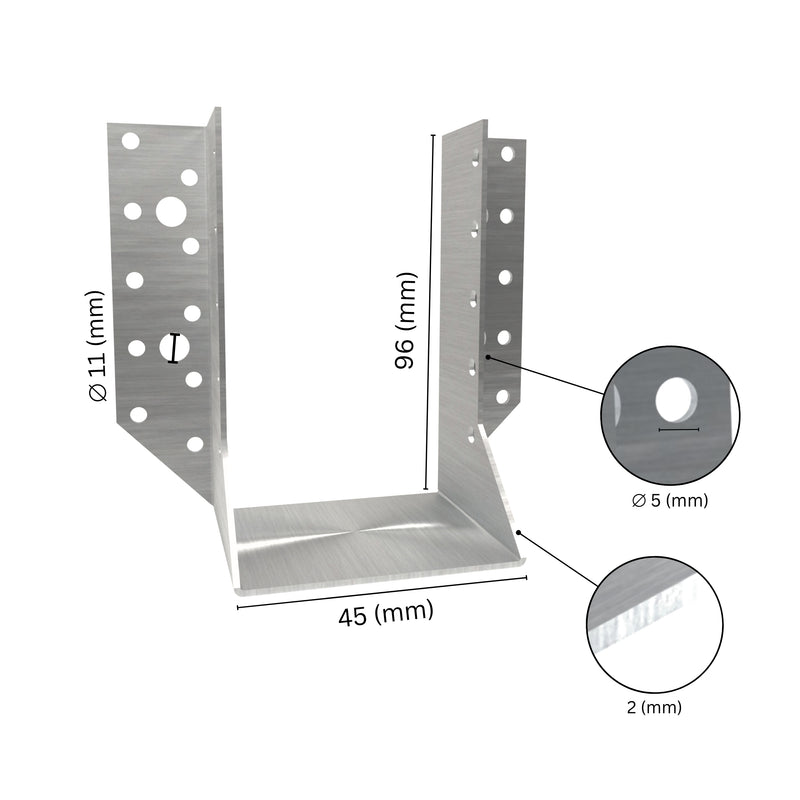
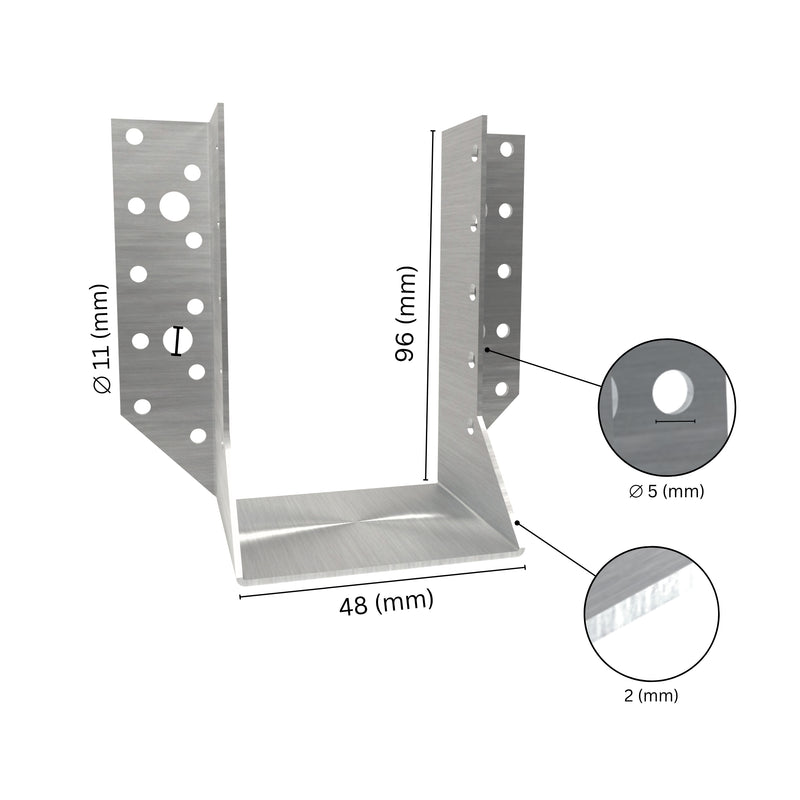
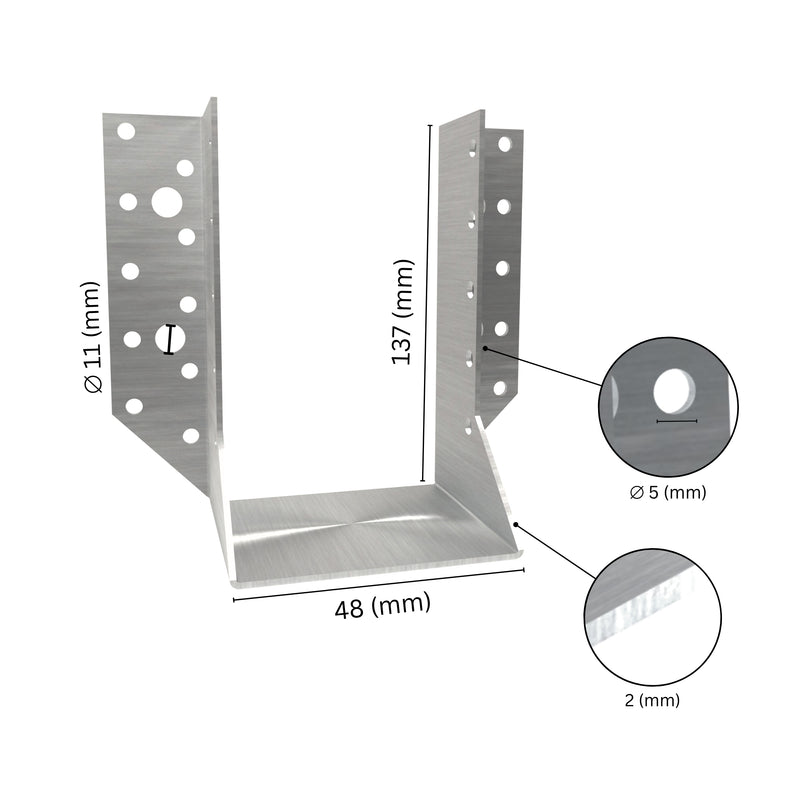
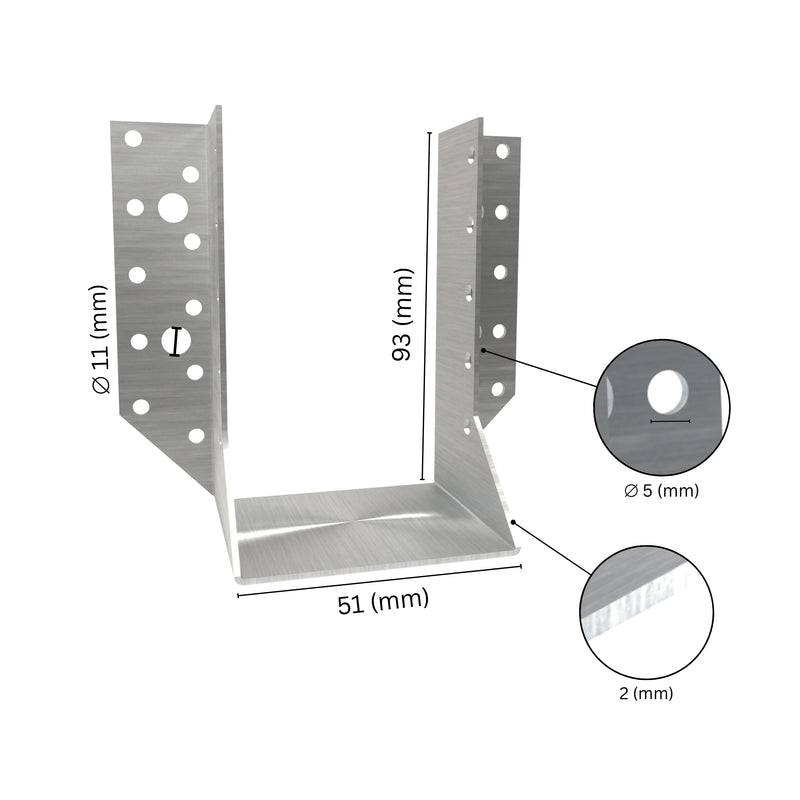
Concrete-In U Post Support
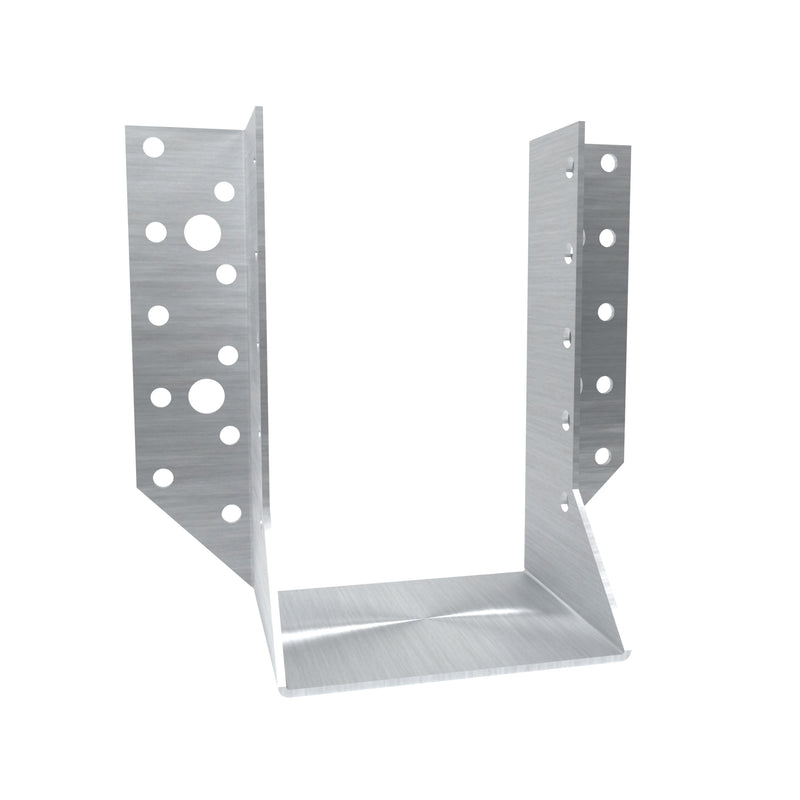
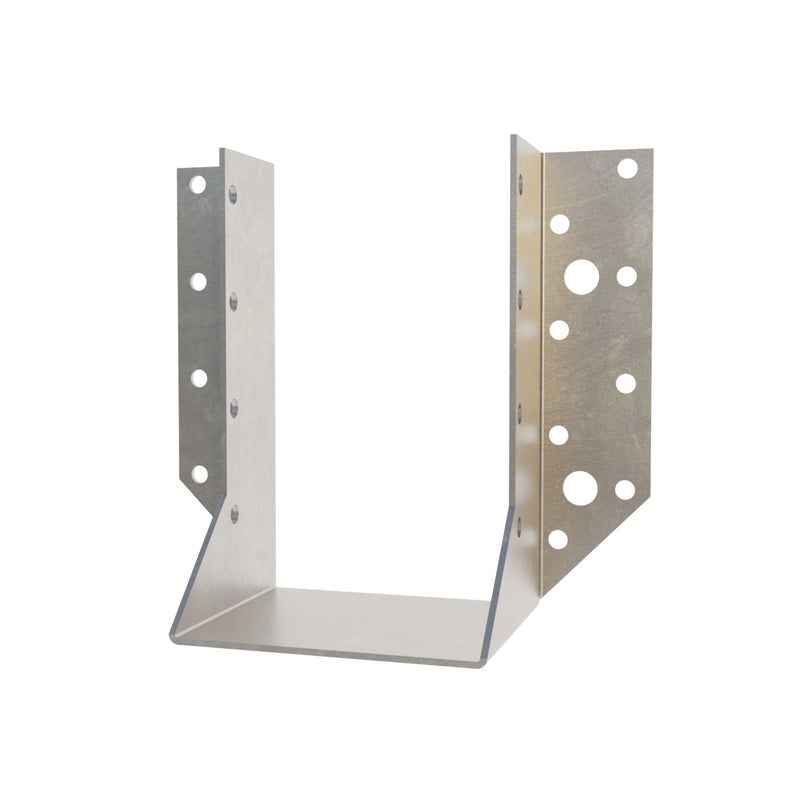
Our concrete-in U-shaped post support is a hot-dip galvanised steel bracket with a long rod that you set in concrete. The post sits in the U above ground level and is bolted through, so the timber never touches the soil.
- What it's for: anchoring square timber posts for fences, pergolas, carports and decks.
- Features: 4mm thick steel, 300mm long, hot-dip galvanised finish.
- Benefits: keeps the post off wet ground, so there's no buried timber to rot or swell, and the anchor depth comes from the concrete footing.
- Applications: new fence runs on clay or poorly drained ground, gate posts, pergola legs.
- Sizes: U widths of 71, 81, 91, 101, 111, 116, 121, 141 and 151mm to suit common post sections.
Concrete-In Sleeve Support
The concrete-in post sleeve with short fin is a square socket you cast into a footing. The post drops into the sleeve, so it's a tidy option where stones make driving a spike impossible.
- What it's for: a permanent, concrete-set base for square timber posts.
- Features: 350mm long sleeve with a short fin to lock into the concrete.
- Benefits: works in hard or unstable ground and gives a firm square seat for the post.
- Applications: fencing, pergolas and decking where the ground won't take a spike.
- Sizes and finishes: 71, 81, 91 and 121mm sleeves in hot-dip galvanised, black or anthracite grey.
Square Pyramid Post Cap
A square pyramid metal post cap fits over the top of a square post.
- What it's for: stopping rain soaking into the end grain at the top of the post.
- Features: pyramid top that sheds water, metal construction.
- Benefits: less water in the timber means less freeze-thaw cracking and splitting at the top.
- Applications: fence posts, gate posts, railings and pergola posts.
- Sizes and finishes: 71, 77, 91 and 101mm, in hot-dip galvanised, stainless steel or black depending on size.
What to Do if a Post Has Already Heaved
Don't hammer it back down while the ground is frozen. It won't go, and if it does, it'll lift again at the next freeze. Wait for a proper thaw, then work out why it moved.
- Prop it for now. If the fence is leaning, brace the post temporarily so the panels don't strain. Our guide on bracing a fence post shows the quick methods.
- Check the base after the thaw. Dig around it. A shallow post, a mushroom-shaped collar or a hole full of standing water tells you the cause.
- Reset it properly. Lift the post, deepen the hole, add a gravel base and re-set it with straight sides and a smooth, sloped top. If the timber has rotted at ground level, swap to a concrete-in steel support so the new post sits clear of the soil.
- Repair rather than replace where you can. A sound post that's only rotten at the base can often be saved with a repair spur. See fixing a leaning fence post for the options.
Signs Frost Is Moving Your Fence
- Posts sitting higher than their neighbours after winter.
- A gap opening between the bottom of a panel and the gravel board.
- Gates that bind, drop or scrape after a cold spell, then improve in spring.
- Cracked or lifted concrete collars around the base of the post.
- Panels popping out of their slots or brackets bending.
Frost Heave FAQs
Does concrete stop frost heave?
Not on its own. Frozen soil can grip a concrete footing and lift it, especially a shallow one that's wider at the top. Concrete works when the footing goes below the frost zone, sits on a gravel base and has straight or slightly flared-out sides at the bottom.
Are fence post spikes OK in frost-prone ground?
On firm, well-drained soil they're fine for light garden fences. In wet, silty or clay ground that heaves, a short spike sits mostly inside the freeze zone, so a concrete-in support or a longer ground screw is the safer choice.
How deep does frost go in the UK?
UK foundation guidance works to a minimum of 450mm below finished ground level on frost-susceptible soils, with clay often taken deeper. Exposed and northern sites can freeze deeper in a hard winter, so check with your local building control if you're unsure.
Can you push a heaved fence post back down?
Not reliably. While the ground is frozen it won't move, and a post knocked back down with the same footing will usually lift again. Wait for the thaw and reset it deeper with better drainage.
Which soils are worst for frost heave?
Fine soils that hold and wick water, such as silts and chalk, are the most frost-susceptible. Clay holds a lot of water too. Clean sand and gravel drain quickly and rarely heave.
The Short Version
Frost heave needs cold, water and fine soil. Go below the frost zone, drain the base, keep the footing straight-sided and keep the timber out of the wet ground with a galvanised post support. Cap the top while you're at it. Do that once and your fence should still be standing straight after the next hard winter.